
Cosmic Gardening: Aligning Planting with Lunar and Astrological Cycles | StarPluto
Cosmic gardening, often referred to as lunar gardening or astrological planting, is an ancient practice that seeks to harmonize agricultural activities with the celestial rhythms of the moon and planets. This method, rooted in traditions spanning millennia and across diverse cultures, proposes that the subtle energies exerted by celestial bodies can significantly influence plant growth, vitality, and yield. Far from being a mere superstition, proponents argue that these practices tap into natural cycles that govern life on Earth, offering a holistic approach to cultivation that respects and leverages cosmic forces.

The core principle of cosmic gardening revolves around the idea that just as the moon's gravitational pull affects ocean tides, it also impacts the moisture levels in soil and plants, influencing sap flow and seed germination. Beyond the moon, the zodiac signs and planetary positions are believed to exert specific qualitative energies that can be harnessed to optimize various gardening tasks, from sowing seeds to harvesting crops. This introductory guide will delve into the fundamental concepts of cosmic gardening, providing an educational framework for those interested in exploring this fascinating intersection of astronomy and horticulture.
Understanding these cosmic rhythms can transform gardening into a more intuitive and productive endeavor, fostering a deeper connection between the gardener and the natural world. By observing and working with these subtle forces, cultivators aim to enhance the health, resilience, and abundance of their gardens. This approach encourages a mindful interaction with the environment, moving beyond conventional methods to embrace a more integrated and sustainable form of agriculture.
Jump Menu
- Lunar Phases: The Moon's Influence on Plant Growth
- Zodiacal Energies: Elemental Qualities in the Garden
- Planetary Aspects: Subtle Influences on Cultivation
- Biodynamic Gardening: A Holistic Approach
- Practical Application: Timing Your Garden Tasks
- Benefits and Challenges of Cosmic Gardening
- The Scientific Perspective and Modern Research
- Getting Started with Cosmic Gardening
Lunar Phases: The Moon's Influence on Plant Growth
The moon's journey through its phases is arguably the most recognized aspect of cosmic gardening. The gravitational pull of the moon is believed to affect the movement of water, not just in oceans but also in the soil and within plants themselves. This influence is thought to regulate sap flow, nutrient uptake, and even seed germination rates. Gardeners who follow lunar cycles typically divide their activities according to the four main phases of the moon: New Moon, Waxing Moon, Full Moon, and Waning Moon.
Each phase is associated with specific types of plants and gardening tasks, optimizing the chances of success. For instance, the period leading up to the Full Moon (the Waxing Moon) is generally considered ideal for planting leafy greens and annuals that produce above-ground growth, as the increasing light and gravitational pull are thought to encourage strong upward development. Conversely, the Waning Moon, with its decreasing light, is often recommended for root crops and perennials.
- New Moon (First Quarter): This phase, characterized by minimal moonlight, is considered a resting period for plants. It's often recommended for planting seeds that germinate quickly or for pruning to encourage vigorous growth later.
- Waxing Moon (Second Quarter): As the moon grows towards fullness, its light and gravitational pull increase. This is believed to stimulate strong leaf growth and is ideal for planting annuals that produce fruit or seeds above ground, such as corn, beans, and tomatoes.
- Full Moon (Third Quarter): The peak of lunar energy, the Full Moon is associated with abundant moisture and strong growth. It's an excellent time for transplanting, grafting, and planting flowering plants.
- Waning Moon (Fourth Quarter): As the moon wanes, its light and gravitational pull decrease. This phase is thought to encourage root development and is best for planting root crops like carrots, potatoes, and onions. It's also suitable for pruning, harvesting, and cultivating the soil.
Understanding these subtle shifts in lunar energy allows gardeners to align their efforts with nature's rhythm, potentially leading to healthier plants and more abundant harvests. This is not about magic, but rather about observing and responding to natural patterns that have been recognized by farmers and gardeners for centuries. The consistency of these observations across different cultures lends credence to the idea that there is indeed a measurable effect, even if modern science is still catching up to fully explain it.
Zodiacal Energies: Elemental Qualities in the Garden
Beyond the lunar phases, cosmic gardening incorporates the influence of the zodiac signs. As the moon passes through each of the twelve zodiac constellations, it is believed to impart specific elemental energies that favor different parts of a plant. The zodiac signs are traditionally grouped into four elements: Water, Earth, Air, and Fire, each corresponding to particular plant types or growth aspects.
This layer of astrological influence adds a nuanced dimension to lunar planting, allowing for even more precise timing of gardening activities. By combining the moon's phase with the zodiac sign it is currently traversing, gardeners can create a highly tailored planting schedule designed to maximize specific outcomes. For example, planting leafy greens during a Waxing Moon in a Water sign is considered highly auspicious for lush foliage.
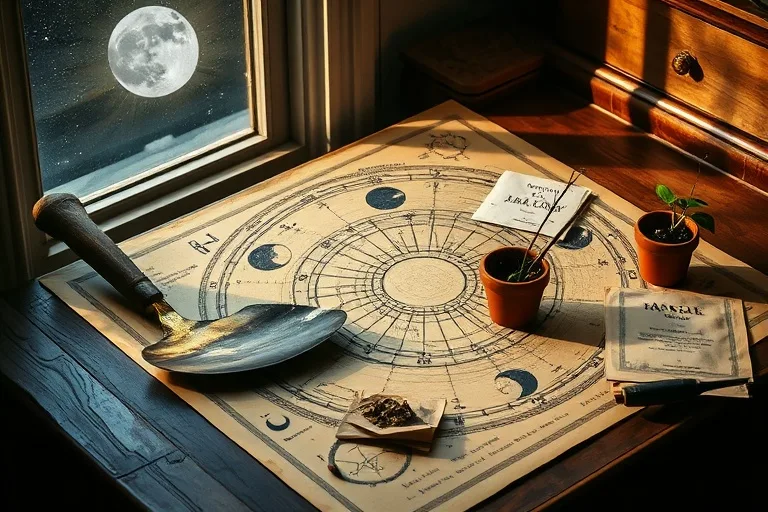
- Water Signs (Cancer, Scorpio, Pisces): These signs are associated with leaves and moisture. When the moon is in a Water sign, it's considered an excellent time for planting leafy vegetables like lettuce, spinach, and cabbage, as well as for watering and applying liquid fertilizers.
- Earth Signs (Taurus, Virgo, Capricorn): Earth signs govern roots and soil. This period is ideal for planting root crops such as carrots, potatoes, radishes, and onions. It's also favorable for tilling, composting, and general soil improvement.
- Air Signs (Gemini, Libra, Aquarius): Air signs are linked to flowers and pollination. Activities like planting flowering annuals, harvesting flowers, and encouraging pollination are favored during these times. It's also a good period for pest control and cultivation.
- Fire Signs (Aries, Leo, Sagittarius): Fire signs are associated with fruits and seeds. When the moon is in a Fire sign, it's considered optimal for planting fruit-bearing plants, harvesting fruits and seeds, and general cultivation. However, some traditions suggest these are less fertile times for planting and better for weeding or clearing.
By integrating these zodiacal influences, gardeners can fine-tune their planting schedules to align with the specific needs of different plant types. This detailed approach allows for a more harmonious interaction with the garden, ensuring that each task is performed when the cosmic energies are most supportive. It's a testament to the belief that everything in nature is interconnected, and by understanding these connections, we can foster greater vitality.
Planetary Aspects: Subtle Influences on Cultivation
While lunar phases and zodiac signs form the backbone of cosmic gardening, some advanced practitioners also consider the positions and aspects of other planets. Each planet is traditionally associated with certain qualities and influences that can further refine gardening practices. For example, Mars is often linked to growth and vigor, while Venus is associated with beauty and fertility. These planetary influences are typically more subtle than lunar or zodiacal effects but can provide additional layers of insight for dedicated cosmic gardeners.
Considering planetary aspects involves a deeper understanding of astrological charts and ephemerides, which track the movements of celestial bodies. While this level of detail might be overwhelming for beginners, it highlights the comprehensive nature of traditional cosmic agriculture. The idea is that the entire solar system acts as a complex energetic system, and by understanding its dynamics, we can better attune our earthly activities.
- Sun: Represents life force, vitality, and growth. Its position in the zodiac influences the overall growing season.
- Mercury: Associated with communication and quick growth. May favor planting fast-growing crops or herbs.
- Venus: Planet of fertility, beauty, and abundance. Excellent for flowering plants, fruits, and enhancing garden aesthetics.
- Mars: Linked to energy, drive, and protection. Can be beneficial for robust growth or for tasks requiring strength, like tilling tough soil.
- Jupiter: Planet of expansion and good fortune. Favors abundant harvests and large-scale planting.
- Saturn: Associated with structure, discipline, and root systems. Good for establishing perennial plants and strengthening plant structure.
- Uranus, Neptune, Pluto: Outer planets with more generational or subtle influences, often considered in biodynamic contexts for broader energetic patterns rather than daily tasks.
Integrating planetary influences requires a commitment to learning and observation, but it can deepen one's connection to the cosmic rhythms. For those starting out, focusing on the moon and zodiac signs is usually sufficient, with planetary aspects being an advanced consideration. The key is to observe how these various influences seem to correlate with the health and productivity of your garden over time.
Biodynamic Gardening: A Holistic Approach
Biodynamic gardening is a holistic, ecological, and ethical approach to farming, gardening, and food. Developed by Rudolf Steiner in the early 20th century, it is often considered an advanced form of organic agriculture that explicitly incorporates cosmic rhythms. Biodynamic practitioners use a planting calendar that integrates lunar phases, zodiac signs, and planetary positions to guide their activities, much like cosmic gardening. However, biodynamics goes further by emphasizing the farm or garden as a self-sustaining organism, using specific compost preparations and fostering biodiversity.
The philosophy behind biodynamics is that the Earth is a living organism, and all its parts—soil, plants, animals, and even humans—are interconnected and influenced by cosmic forces. This perspective aligns perfectly with the principles of cosmic gardening, viewing celestial movements not just as external phenomena but as integral parts of the Earth's life processes. Biodynamic calendars, such as Maria Thun's, are widely used by cosmic gardeners to determine optimal planting, cultivating, and harvesting times.
- Holistic View: Treats the garden as a single, interconnected ecosystem, where soil health, plant vitality, and cosmic rhythms are all interdependent.
- Cosmic Rhythms: Utilizes detailed astrological calendars to time all gardening activities, from sowing to harvesting, aligning with lunar, solar, and planetary influences.
- Biodynamic Preparations: Employs specific herbal and mineral preparations to enhance soil fertility, plant health, and stimulate life forces within the garden.
- Closed-Loop System: Aims for self-sufficiency, often integrating livestock and producing its own compost and fertilizers.
While biodynamic gardening is a more comprehensive system, its emphasis on cosmic timing provides a strong framework for cosmic gardeners. Many of the principles and practices of cosmic gardening find their most developed expression within the biodynamic movement. For those seeking to deepen their practice, exploring biodynamic resources can offer valuable insights and practical tools for aligning with celestial rhythms.
Practical Application: Timing Your Garden Tasks
Implementing cosmic gardening principles involves consulting a lunar or biodynamic calendar, which provides daily guidance based on the moon's phase and zodiacal position. These calendars typically indicate the best days for specific tasks, such as planting seeds, transplanting seedlings, watering, fertilizing, weeding, and harvesting. The goal is to perform each task when the cosmic energies are most conducive to its success.
For beginners, starting with the lunar phases is the easiest way to integrate cosmic principles into your gardening routine. Once comfortable, you can gradually incorporate the zodiacal influences. It's important to remember that these are guidelines, not rigid rules. The weather, soil conditions, and specific needs of your plants will always play a crucial role, but cosmic timing can provide an additional layer of optimization.

Here's a simplified guide to timing common gardening tasks:
| Gardening Task | Optimal Lunar Phase / Zodiac Sign | Rationale |
|---|---|---|
| Sowing Seeds (Fast Germination) | Waxing Moon (Water/Fire Signs) | Increased moisture and light promote rapid sprouting and upward growth. |
| Sowing Seeds (Root Crops) | Waning Moon (Earth Signs) | Energy directed downwards, encouraging strong root development. |
| Transplanting & Grafting | Waxing Moon (Water/Earth Signs) | High sap flow aids in establishment and reduces transplant shock. |
| Watering & Fertilizing | Waxing Moon (Water Signs) | Increased moisture absorption and nutrient uptake. |
| Pruning & Weeding | Waning Moon (Fire/Air Signs) | Lower sap flow minimizes stress; less fertile times for unwanted growth. |
| Harvesting (Fruits/Vegetables) | Waxing Moon (Fire/Water Signs) | Believed to enhance flavor and juiciness due to higher moisture content. |
| Harvesting (Root Crops/Storage) | Waning Moon (Earth Signs) | Lower moisture content for better storage and concentration of energy in roots. |
By following these guidelines, gardeners can experiment with cosmic timing and observe the differences in their garden's performance. Keeping a garden journal to track planting dates, lunar phases, and results can be an invaluable tool for understanding these subtle influences. This hands-on approach allows for personal discovery and adaptation to your specific microclimate and plant varieties.
Benefits and Challenges of Cosmic Gardening
Embracing cosmic gardening offers a range of potential benefits, both for the garden and the gardener. Advocates report increased yields, improved plant health, enhanced flavor, and greater resistance to pests and diseases. Beyond the tangible results, many gardeners find a deeper connection to nature and a more mindful approach to cultivation. This practice encourages observation, patience, and a holistic understanding of ecological systems.
- Enhanced Plant Vitality: Proponents claim plants grown according to cosmic cycles exhibit stronger growth, better resilience, and overall improved health.
- Increased Yield and Quality: Some gardeners report more abundant harvests and produce with superior flavor and nutritional content.
- Reduced Pest and Disease Issues: By promoting healthy plant growth, cosmic gardening may naturally reduce susceptibility to common garden problems.
- Environmental Harmony: Encourages a sustainable and ecological approach, working with natural rhythms rather than against them.
- Personal Connection: Fosters a deeper, more intuitive relationship between the gardener and their plants, promoting mindfulness and observation.
However, cosmic gardening also presents certain challenges. The primary hurdle for many is the need to consult and understand lunar or biodynamic calendars, which can be complex. It requires a shift in mindset from conventional, convenience-based gardening to a more scheduled and observant approach. Flexibility is also key, as weather conditions or unexpected events might necessitate deviating from the ideal cosmic timing. Furthermore, the scientific community often views these practices with skepticism, calling for more rigorous, peer-reviewed research to substantiate the claims.
Despite these challenges, the growing interest in sustainable and holistic living continues to draw new adherents to cosmic gardening. For many, the benefits extend beyond the garden, influencing their broader philosophy of living in harmony with natural cycles. The journey of cosmic gardening is often one of continuous learning and adaptation, rewarding those who commit to its principles with a more vibrant and productive garden.
The Scientific Perspective and Modern Research
From a conventional scientific standpoint, the direct influence of lunar phases and zodiac signs on plant growth is often debated and lacks widespread empirical validation. While the moon's gravitational pull on large bodies of water is undeniable, its effect on the minute moisture content within soil and plants is considered by many scientists to be negligible or unproven. Skeptics often attribute reported successes to the placebo effect, increased gardener attention, or other uncontrolled variables in experimental setups.
However, some research has explored the topic, with mixed results. Studies on seed germination and plant growth under different lunar phases have occasionally shown statistically significant differences, though these findings are not consistently replicated across all experiments or plant species. The complexity of isolating cosmic variables from other environmental factors (soil quality, water, sunlight, temperature, genetics) makes rigorous scientific study challenging. For instance, the planetary dignities, which are crucial in astrological interpretations, are not easily quantified in a botanical context.
Despite the scientific skepticism, the practice of cosmic gardening persists and thrives among many gardeners and farmers. This resilience suggests that there may be subtle, yet-to-be-fully-understood mechanisms at play, or that the holistic approach itself contributes to overall garden health in ways not easily measured by reductionist scientific methods. The field of chronobiology, which studies biological rhythms, offers a potential avenue for future research into how organisms, including plants, might respond to subtle environmental cues, including those of celestial origin.
Ultimately, for the cosmic gardener, the proof often lies in the observed results within their own garden. The emphasis is on empirical observation and personal experience, rather than solely on formal scientific validation. As understanding of complex ecological systems deepens, and as scientific tools become more sophisticated, it is possible that more definitive answers regarding the efficacy of cosmic gardening will emerge. Until then, it remains a practice rooted in tradition, observation, and a deep appreciation for the interconnectedness of life.
Getting Started with Cosmic Gardening
Embarking on your cosmic gardening journey can be a rewarding experience. The best way to begin is to start small and observe. You don't need to overhaul your entire gardening practice overnight. Begin by incorporating one or two lunar principles and gradually expand as you gain confidence and see results. A good starting point is to focus on the New Moon and Full Moon phases, as their influences are generally considered the most pronounced.
Here are some practical steps to help you get started:
- Obtain a Cosmic Gardening Calendar: Many online resources and physical almanacs provide lunar and biodynamic planting calendars. Maria Thun's calendar is a popular and respected choice.
- Start Simple: Choose one or two gardening tasks, like sowing leafy greens during the Waxing Moon or planting root crops during the Waning Moon, and stick to those.
- Keep a Garden Journal: Document your planting dates, lunar phases, zodiac signs, and the subsequent growth and health of your plants. This will help you identify patterns and understand what works best in your specific environment.
- Observe and Adapt: Pay close attention to your plants. Nature is dynamic, and local conditions (weather, soil) will always play a role. Use cosmic guidance as a framework, but be prepared to adapt.
- Experiment: Try planting the same type of seed on different lunar phases to compare results. This hands-on experimentation is key to personal discovery.
- Connect with Communities: Join online forums or local gardening groups that practice cosmic or biodynamic gardening. Sharing experiences and tips can be incredibly helpful.
Cosmic gardening is not just about following a schedule; it's about cultivating a deeper awareness of the natural world and your place within it. By aligning your gardening efforts with the rhythms of the cosmos, you may discover a more harmonious and productive way to grow your food and nurture your garden. It's an invitation to view your garden not just as a plot of land, but as a vibrant ecosystem connected to the vast universe.
Fuente: Contenido híbrido asistido por IAs y supervisión editorial humana.


Comments
Post a Comment