
Planetary Dignities: Beyond Rulerships in Electional Astrology
In the intricate tapestry of astrological practice, planetary dignities form the bedrock upon which interpretations are built. While traditional rulerships, exaltations, detriments, and falls are foundational, a truly advanced understanding of electional astrology demands a deeper dive into more nuanced forms of dignity. This exploration moves beyond the basic assignment of strength or weakness to planets and delves into the subtle interplay of essential and accidental dignities, mutual receptions, and other sophisticated techniques that empower astrologers to select the most auspicious moments for significant undertakings.
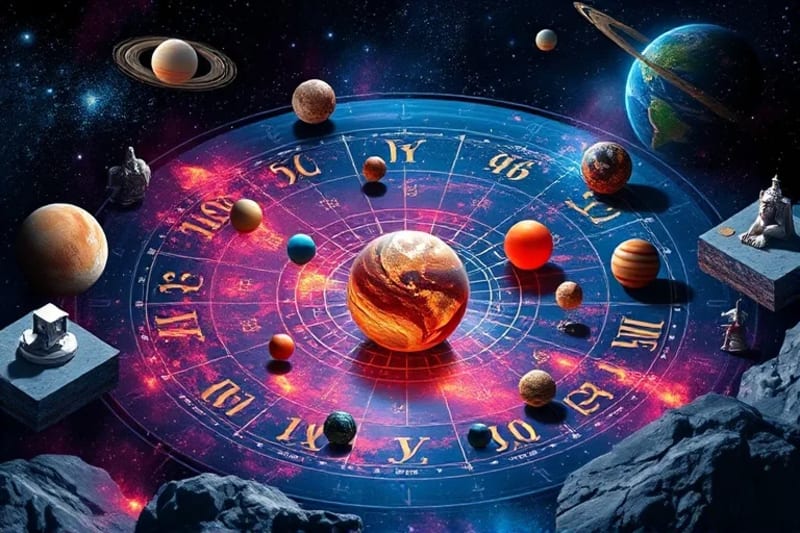
Precursors intellectuales, diagramas fundamentales y representaciones conceptuales que forjaron la visión de la astrología sobre las dignidades planetarias.
Fuente visual sujeta a disponibilidad del ecosistema: Wikimedia Commons bajo licencia CC BY-SA 4.0 o renderizado conceptual IA.Electional astrology, the art of choosing the best time to begin an endeavor, relies heavily on assessing the strength and condition of the planets involved. A planet's dignity indicates its ability to act effectively and beneficently in a given situation. Without a thorough grasp of these principles, an electional chart can easily fall short of its potential, leading to outcomes that are less than ideal. This advanced perspective seeks to equip practitioners with the tools to refine their selections, moving beyond generic "good" or "bad" times to truly optimized moments.
Table of Contents
- Essential Dignities: The Foundation Revisited
- Accidental Dignities: Contextual Strength
- Mutual Reception: A Powerful Alliance
- Minor Dignities: Terms, Faces, and Triplicities
- Planetary Joys: Houses of Comfort
- Combustion and Cazimi: Proximity to the Sun
- Applying Advanced Dignities in Electional Astrology
Essential Dignities: The Foundation Revisited
Essential dignities refer to a planet's inherent strength based on its placement in a specific zodiac sign. The most commonly known are rulership and exaltation, which grant a planet significant power and influence. A planet in its domicile (ruler) is like a king in his own kingdom, operating with full authority. An exalted planet is like a respected guest of honor, receiving accolades and support, enabling it to perform its functions with grace and effectiveness.
However, the traditional understanding often stops there. For advanced electional work, it's crucial to understand the nuances. For instance, a planet in its domicile might be powerful, but if it's afflicted by malefic aspects, its power could be directed negatively. Conversely, a planet in its fall might still yield positive results if it receives strong support through mutual reception or beneficial aspects from other well-dignified planets. This layered approach allows for a more flexible and accurate assessment.
Detriment and fall are the opposite ends of the spectrum, indicating a planet's weakness or discomfort in a particular sign. A planet in detriment is in the sign opposite its domicile, akin to a ruler in exile, struggling to exert its natural influence. A planet in its fall is in the sign opposite its exaltation, similar to a guest who is unwelcome or out of place, finding it difficult to express its qualities harmoniously. Understanding these conditions is vital for identifying potential obstacles in an electional chart.
Accidental Dignities: Contextual Strength
While essential dignities speak to a planet's intrinsic nature, accidental dignities describe its strength or weakness based on its placement within the astrological houses and its relationship to other planets. These are "accidental" because they are not inherent to the planet itself but arise from its specific position in a given chart. A planet might be essentially weak but accidentally strong, or vice-versa, leading to complex interpretations.
- Angular Houses (1st, 4th, 7th, 10th): Planets in these houses are generally considered accidentally strong. They are prominent and have a direct, noticeable impact on the native or the event. The Ascendant (1st house cusp) and Midheaven (10th house cusp) are particularly powerful positions.
- Succeedent Houses (2nd, 5th, 8th, 11th): Planets here have moderate accidental strength. They are still capable of action but with less immediate force than angular planets.
- Cadent Houses (3rd, 6th, 9th, 12th): Planets in these houses are generally considered accidentally weak, particularly the 12th house, which can diminish a planet's ability to manifest openly. However, even cadent planets can be significant, especially in specific types of elections.
- Direct Motion: A planet moving direct is stronger than one in retrograde motion, which can indicate delays, reversals, or internal processes.
- Speed: Planets moving at their average speed or faster are generally more effective than those moving slowly.
- Aspects: Conjunctions, trines, and sextiles from benefics (Jupiter, Venus) enhance a planet's accidental strength, while squares and oppositions, especially from malefics (Mars, Saturn), can diminish it.
The interplay between essential and accidental dignities is critical. A planet that is essentially dignified (e.g., in domicile) but accidentally weak (e.g., in the 12th house and retrograde) may still have good intentions but struggle to manifest them effectively. Conversely, an essentially debilitated planet (e.g., in fall) that is accidentally strong (e.g., angular, direct, and well-aspected) might still produce results, though perhaps with more effort or unexpected challenges. This complex assessment is key to understanding relationship potential and other life events.
Mutual Reception: A Powerful Alliance
Mutual reception occurs when two planets are in each other's signs of essential dignity. For example, if Mars is in Taurus (Venus's sign) and Venus is in Aries (Mars's sign), they are in mutual reception by domicile. This arrangement is highly significant because it allows the planets to "help" each other, acting as if they were in their own signs, or at least mitigating their debilitation.
Abstract representation of planetary connections and their energetic interplay in a chart.
Mutual reception can occur by domicile, exaltation, triplicity, term, or face, with domicile and exaltation being the strongest forms. When planets are in mutual reception, they form a powerful alliance, often working together to achieve a common goal. This is particularly valuable in electional astrology, as it can transform a potentially weak chart into a strong one, or enhance an already strong chart.
Consider a scenario where a planet crucial for an election is in its detriment. If this planet is in mutual reception with another planet that is well-dignified, the detriment is significantly ameliorated. The planets essentially exchange places or lend their strength to each other, allowing for a smoother and more effective manifestation of their combined energies. This concept is vital when analyzing Mars in signs and houses, as its fiery nature can be either constructive or destructive depending on its dignity and receptions.
Minor Dignities: Terms, Faces, and Triplicities
Beyond the major dignities, classical astrology employs minor essential dignities: triplicity, terms (or bounds), and faces (or decans). While individually weaker than domicile or exaltation, their cumulative effect can significantly influence a planet's overall strength and ability to act. Neglecting these can lead to an incomplete picture of a planet's condition.
- Triplicity Rulership: Each of the four elements (Fire, Earth, Air, Water) has three rulers: a diurnal ruler, a nocturnal ruler, and a participating ruler. A planet in a sign ruled by its triplicity lord gains some comfort and support, especially relevant in horary and electional charts where the time of day matters. For example, in a diurnal chart, a planet in a Fire sign ruled by the Sun (diurnal ruler) is stronger than if it were ruled by Jupiter (nocturnal ruler).
- Terms (Bounds): Each sign is divided into unequal segments, each ruled by one of the five traditional planets (excluding the luminaries). A planet in its own term gains a small but noticeable boost in dignity, providing a sense of control and stability within that specific degree range. This is particularly useful for fine-tuning electional charts to the exact degree.
- Faces (Decans): Each sign is divided into three 10-degree segments, each ruled by a planet in a specific order (often the Chaldean order). A planet in its own face gains the least amount of essential dignity, but it still provides a slight edge, indicating that the planet has some familiarity and expressiveness in that specific decan.
The cumulative score of these dignities (often using a point system, e.g., William Lilly's system) provides a comprehensive measure of a planet's essential strength. An electional chart where the significator planets are strong by multiple minor dignities, even if not in domicile or exaltation, can still be highly effective. This intricate system allows for a meticulous harmonization of cosmic influences, similar to Feng Shui principles.
Planetary Joys: Houses of Comfort
Planetary joys are another form of accidental dignity, indicating a house where a planet feels particularly comfortable and can operate effectively, regardless of its sign placement. These are fixed assignments based on ancient observations of planetary natures and their symbolic resonance with specific house meanings. When a planet is in its joy, it is said to be "rejoicing," enhancing its beneficence or mitigating its maleficence.
| Planet | House of Joy | Significance |
|---|---|---|
| Sun | 9th House | Higher learning, philosophy, long journeys, spirituality. |
| Moon | 3rd House | Communication, short journeys, siblings, immediate environment. |
| Mercury | 1st House | Self-expression, intellect, personal identity, communication. |
| Venus | 5th House | Creativity, pleasure, children, romance, speculation. |
| Mars | 6th House | Work, service, health, daily routines, conflict resolution. |
| Jupiter | 11th House | Friendships, hopes, wishes, groups, humanitarian efforts. |
| Saturn | 12th House | Solitude, hidden matters, self-undoing, spiritual retreat. |
A planet in its house of joy can often overcome some essential debility. For example, even a debilitated Mars in the 6th house (its joy) might still be effective in matters of work or health, channeling its energy into practical solutions rather than pure conflict. This is a crucial consideration for electional charts, as it can offer a "hidden strength" to a planet that might otherwise appear weak. This concept also ties into bio-astrological synchronization, where planetary placements align with natural rhythms.
Combustion and Cazimi: Proximity to the Sun
The Sun's powerful light can either diminish or enhance other planets, depending on their exact proximity. These conditions, known as combustion and cazimi, are critical accidental dignities that can dramatically alter a planet's effectiveness in an electional chart.
Historical instruments and texts symbolizing the deep roots of astrological knowledge.
- Combustion: A planet is "combust" when it is within approximately 8.5 degrees of the Sun. In this state, the planet is said to be "burned up" or overwhelmed by the Sun's rays, losing its independent ability to function. Its significations become obscured, weakened, or even negatively influenced. This is generally considered a significant debility in electional astrology, making the combust planet unsuitable as a primary significator for the matter at hand.
- Under the Sun's Beams: A planet between 8.5 and 17 degrees from the Sun is "under the Sun's beams." While not as debilitated as combustion, it still suffers from some obscuration and reduced efficacy.
- Cazimi: This is a rare and highly auspicious condition where a planet is precisely conjunct the Sun, within 17 minutes of arc (0 degrees 17 minutes). "Cazimi" means "in the heart of the Sun," and here, the planet is not burned but rather empowered and purified by the Sun's essence. A cazimi planet is considered exceptionally strong and capable of manifesting its significations with great clarity and success. This is a highly sought-after condition for significators in electional charts.
Understanding the precise degrees of proximity to the Sun is paramount. A planet just outside the cazimi range but within combustion can be a major flaw in an election, whereas a planet exactly cazimi can be a powerful boon. This level of precision underscores the advanced nature of electional astrology and the need for meticulous chart analysis. It's a critical factor when navigating spiritual evolution during Neptune transits, as the clarity or obscuration of planetary influence can significantly impact the journey.
Applying Advanced Dignities in Electional Astrology
The ultimate goal of delving into these advanced dignities is to apply them effectively in electional astrology. This involves a systematic process of identifying the significators for the event, assessing their essential and accidental dignities, and looking for mitigating or enhancing factors like mutual reception, planetary joys, and cazimi conditions. The more dignified and well-placed the significators, the more likely the endeavor is to succeed and bring favorable outcomes.
Key Considerations for Electional Charts:
1. Identify the primary significator planet(s) for the event (e.g., Venus for marriage, Mercury for contracts).
2. Ensure the primary significator is essentially dignified (domicile, exaltation, strong by triplicity/terms).
3. Check for accidental strength (angular houses, direct motion, good aspects from benefics).
4. Avoid combustion or severe debilities for the significator.
5. Look for mutual receptions that strengthen debilitated planets or enhance strong ones.
6. Consider planetary joys for additional comfort and efficacy.
7. Ensure the Moon is well-placed, applying to a benefic, and not void of course.
8. Avoid applying aspects to malefics (Mars, Saturn) or the malefic fixed stars.
Advanced electional astrology is not merely about avoiding bad times, but actively seeking out the most potent and supportive cosmic configurations. It requires patience, a deep understanding of astrological principles, and the ability to synthesize multiple layers of information. By integrating these advanced concepts of planetary dignities, astrologers can move beyond basic timing and truly harness the celestial energies to initiate ventures under the most propitious stars. This rigorous approach is akin to the detailed analysis required for financial education for entrepreneurs, where every detail impacts the outcome.
Ultimately, the mastery of planetary dignities in electional astrology transforms the practice from a simple interpretive art into a powerful tool for conscious creation. It allows individuals to align their actions with the cosmic flow, increasing the likelihood of success, harmony, and fulfillment in their chosen endeavors. This deep dive into the subtle mechanics of planetary strength provides the discerning astrologer with an unparalleled advantage in navigating the complexities of fate and free will.
Further Reading & Related Topics
- Neptune Transits: Navigating Spiritual Evolution, Illusions | StarPluto - Explore how planetary conditions influence spiritual journeys.
- Dragon Chinese Zodiac: Mastering Power Dynamics | StarPluto - Delve into different systems of power and influence.
- Feng Shui Natal Chart Harmony: Cosmic Home Blueprint - Discover parallels between cosmic alignment and environmental harmony.
- Mars in Signs and Houses: Drive, Passion, Assertion | StarPluto - Understand the nuanced expression of planetary energies.
- Karmic Astrology: North Node and South Node Explained | StarPluto - Connect planetary placements to karmic paths and destiny.
- Augmented Reality Spiritual Growth: Interactive Meditation Energy Healing - Explore modern applications of spiritual and energetic principles.
- Runes Ancient Divination Self-Discovery Tool | StarPluto - Learn about other ancient systems for guidance.
- Runes Divination: Ancient Wisdom for Modern Guidance | StarPluto - Another perspective on ancient wisdom.
- Rooster Chinese Zodiac: Elemental Traits | StarPluto - Dive into elemental influences in other astrological systems.
- Descendant Sign: Decoding Ideal Partnerships | StarPluto - Understand the dynamics of relationships through astrological lenses.
- Leo Zodiac Sign: Traits, Leadership, Creative Expression | StarPluto - Explore the characteristics of zodiac signs.
- Metaphysical Dream Weaving Universal Consciousness Interpretation - Connect astrological concepts to broader metaphysical understanding.
- Planetary Dignities Synastry: Relationship Potential | StarPluto - A direct link to dignities in relationship astrology.
- Healing Planetary Debilitations: Alchemical Remedies Natal Challenges - Learn about remedies for challenging planetary placements.
- Chinese Astrology Five Elements: Wood, Fire, Earth, Metal, Water | StarPluto - Compare dignity systems across different astrological traditions.
- Educación Financiera Emprendedores: Claves para Gestionar el Dinero | Althox - Practical application of timing and strategic planning.
- Software Sostenible: Reducir Huella Carbono Digital Estrategias - Explore sustainable practices and efficient resource management.
- Ábaco Definición: Historia, Tipos y Legado Matemático | Althox - Understand the historical tools of calculation and precision.
- Sincronización Bio-Astrológica: Rutina, Ciclos, Ritmos Circadianos - Explore the alignment of personal rhythms with cosmic cycles.
- Remedios Jyotish: Gemas, Mantras, Rituales Védicos | AstroFuturo - Discover remedies for planetary challenges.
- Predicciones Astrológicas 2025: Tránsitos Clave por Signo | AstroFuturo - Future astrological insights and their implications.
- Oraciones Familia: Protección, Armonía y Bendición | Profecías de la Virgen - Connect spiritual protection to well-being.
- Misticismo Ignaciano: Contemplación Unión con Dios | Profecías de la Virgen - Explore mystical paths and spiritual connection.
- Serafines Canción Celestial Misterio: Alabanza Divina Profunda | Profecías de la Virgen - Delve into celestial and divine concepts.
Source: Hybrid content assisted by AI and human editorial supervision.


Comments
Post a Comment