
Feng Shui Natal Chart Harmony: Cosmic Home Blueprint
In an increasingly complex world, the pursuit of harmony and well-being within our personal spaces has become paramount. Ancient wisdom traditions like Feng Shui and Astrology offer profound insights into how our environment influences our lives. While often studied independently, these disciplines share a common goal: to align human experience with cosmic and earthly energies for optimal health, prosperity, and happiness. This comprehensive guide explores the fascinating synergy between Feng Shui and your natal chart, providing a framework for harmonizing your home with your unique cosmic blueprint.
By understanding the energetic interplay between your birth chart and your living environment, you can consciously design spaces that support your personal growth, mitigate challenges, and amplify your inherent strengths. This approach moves beyond generic Feng Shui advice, offering a personalized strategy rooted in your individual astrological makeup. We will delve into the foundational principles of both systems and then illustrate practical methods for their integration, ensuring your home becomes a true sanctuary reflecting your highest potential.
- What is Feng Shui?
- Understanding Your Natal Chart
- The Synergy: Astrology and Space
- Key Astrological Elements for Home Harmonization
- Integrating Chinese Zodiac into Feng Shui
- Practical Feng Shui Adjustments by Natal Chart Influence
- Benefits of Harmonizing Your Space
- Conclusion: Crafting Your Cosmic Sanctuary
What is Feng Shui?
Feng Shui, an ancient Chinese art and science, literally translates to "wind and water." It is a complex system of laws considered to govern spatial arrangement and orientation in relation to the flow of energy (Qi), and whose favorable or unfavorable effects are taken into account when siting and designing buildings. The core principle of Feng Shui is to balance the five elements (Wood, Fire, Earth, Metal, Water) and the Yin and Yang energies within a space to promote health, wealth, and happiness.
Practitioners utilize various tools and techniques, such as the Bagua map, compass directions, and the placement of specific objects, to optimize the flow of Qi. The goal is to create an environment that supports the occupants' well-being and aspirations. While traditional Feng Shui schools can be quite intricate, modern applications often focus on practical adjustments to improve comfort, aesthetics, and energy within homes and workplaces.
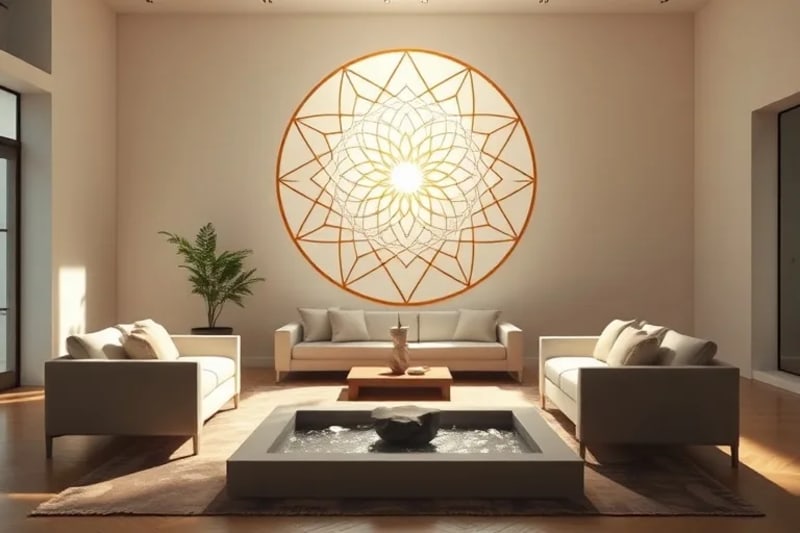
A serene living space, carefully designed to promote balanced energy and well-being through thoughtful Feng Shui principles.
Understanding Your Natal Chart
Your natal chart, also known as a birth chart, is a snapshot of the heavens at the exact moment of your birth. It reveals the positions of the Sun, Moon, planets, and other celestial bodies across the twelve zodiac signs and twelve houses. Each component of the natal chart represents different facets of your personality, life path, strengths, challenges, and potential.
Astrology posits that these planetary placements and their angular relationships (aspects) influence your character and destiny. For instance, the Sun sign indicates your core identity, the Moon sign your emotional nature, and the Ascendant (rising sign) your outward personality and how you approach the world. Understanding these elements is crucial for a personalized approach to home harmonization.
The Synergy: Astrology and Space
The synergy between astrology and Feng Shui lies in their shared understanding of energy and its influence on life. Just as your natal chart maps your personal energy blueprint, Feng Shui maps the energy of your physical environment. By integrating these two systems, you can create a home that not only feels good but actively supports your unique astrological predispositions and life goals.
For example, if your natal chart indicates a strong emphasis on a particular element (e.g., Fire), you might find yourself naturally drawn to spaces that incorporate that element. However, an excess of that element in your environment could lead to imbalance. The goal is to use Feng Shui to either enhance areas where you need more support or to balance areas where there might be an overabundance of a particular energy, as revealed by your natal chart.
Key Astrological Elements for Home Harmonization
To effectively harmonize your home with your natal chart, it's essential to identify key astrological elements that have a significant impact on your life. These include your dominant elements, planetary placements, and house rulerships. Each of these can be translated into Feng Shui principles.
- Dominant Elements (Fire, Earth, Air, Water): Your birth chart will often reveal an imbalance or dominance of certain elements. For instance, a strong Fire element might suggest a need for calming Water or Earth elements in your home to prevent burnout.
- Sun and Moon Signs: These represent your core identity and emotional needs. Your Sun sign's ruling planet and element can guide the overall aesthetic and energy of your main living areas. Your Moon sign can inform the design of your bedroom or personal sanctuary.
- Ascendant (Rising Sign): This sign dictates how you present yourself to the world and can influence the energy of your home's entrance and public-facing areas. Aligning your entryway with your Ascendant's element can enhance your first impressions and welcome positive opportunities.
- Planetary Placements in Houses: Each of the twelve astrological houses corresponds to different areas of life (e.g., career, relationships, family). The planets residing in these houses, and their ruling signs, can indicate which areas of your home (corresponding to Bagua sectors) need particular attention or enhancement.

Symbolic representation of astrological and Feng Shui elements merging, creating a holistic approach to environmental harmony.
Integrating Chinese Zodiac into Feng Shui
Beyond Western astrology, the Chinese Zodiac offers another powerful layer of personalization for Feng Shui. Each of the twelve animal signs is associated with specific characteristics, elements, and directions. Knowing your Chinese Zodiac animal and its associated element can provide additional insights into optimizing your living space.
For instance, if you are a person born in the year of the Dragon (associated with Wood and East), you might benefit from incorporating more Wood elements and colors (greens, browns) in the East sector of your home. Conversely, if your animal sign's element clashes with another dominant element in your natal chart or your home, Feng Shui can be used to mediate these energies. This dual approach creates a more robust and finely tuned energetic environment.
Consider the productive and destructive cycles of the Five Elements in Chinese philosophy. For example, Water nourishes Wood, Wood feeds Fire, Fire creates Earth (ash), Earth bears Metal, and Metal carries Water. Understanding these cycles allows you to strategically place elements to support or temper energies related to your Chinese Zodiac animal and its elemental associations. This adds a dynamic layer to your home's energetic design.
Practical Feng Shui Adjustments by Natal Chart Influence
Once you have identified the key astrological influences from your natal chart and Chinese Zodiac, you can begin to make specific Feng Shui adjustments. Here are some examples:
- Fire Dominance (Aries, Leo, Sagittarius, strong Mars/Sun): If your chart is heavy on Fire, you might experience restlessness or anger. Introduce calming Water elements (fountains, aquariums, blue/black colors) or Earth elements (ceramic, stone, brown/yellow colors) in areas where you spend a lot of time, such as your bedroom or meditation space. Avoid excessive red or sharp, angular decor.
- Earth Dominance (Taurus, Virgo, Capricorn, strong Saturn/Venus): An abundance of Earth can lead to stagnation or feeling stuck. Incorporate Wood elements (plants, wooden furniture, green colors) to encourage growth and movement. Ensure good air circulation and declutter regularly to prevent energetic blockages.
- Air Dominance (Gemini, Libra, Aquarius, strong Mercury/Uranus): Too much Air can result in scattered energy or anxiety. Grounding Earth elements (heavy furniture, crystals, warm tones) can provide stability. Create dedicated spaces for focus and minimize distractions.
- Water Dominance (Cancer, Scorpio, Pisces, strong Moon/Neptune): An excess of Water may lead to emotional overwhelm or lethargy. Introduce Earth elements for stability and structure, and some Fire elements (candles, warm lighting) to bring warmth and vitality. Avoid overly dark or cluttered spaces.
- Career (10th House/Midheaven): If your 10th House is in a particular sign or has significant planetary placements, you can enhance your career sector (typically North on the Bagua) with corresponding elements. For example, a strong Capricorn influence might benefit from Metal elements (organizational tools, metallic decor) to support structure and ambition.
- Relationships (7th House/Descendant): For relationship harmony, focus on the Southwest sector. If your 7th House has a strong Libra or Venus influence, emphasize balance, beauty, and pairs of objects. Ensure this area is well-lit and inviting.
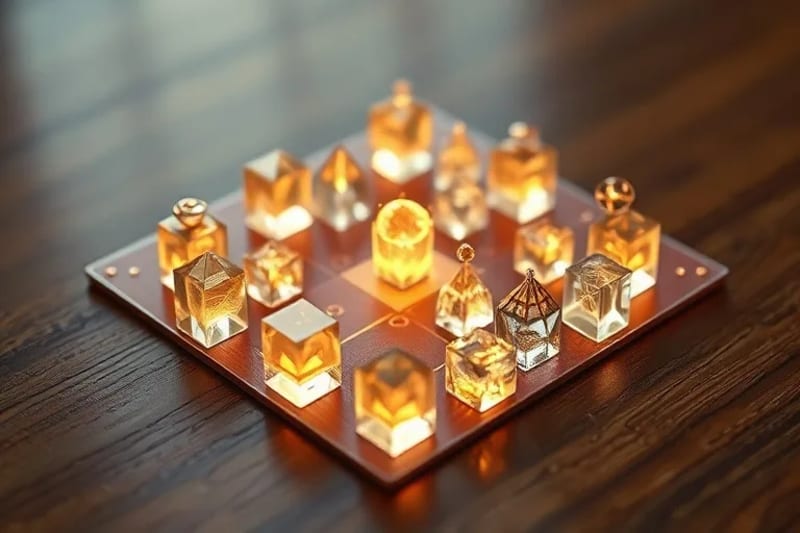
An intricately arranged crystal grid, symbolizing the precise alignment of personal energy with universal cosmic patterns.
Benefits of Harmonizing Your Space
The practice of aligning your home with your natal chart and Chinese Zodiac offers a multitude of benefits, extending beyond mere aesthetics. This personalized approach to environmental design can profoundly impact various aspects of your life:
- Enhanced Well-being: A harmonized space reduces stress, promotes relaxation, and supports emotional balance, leading to improved mental and physical health.
- Increased Productivity and Focus: By creating an environment that supports your natural inclinations and minimizes energetic distractions, you can experience greater clarity and efficiency in your work and daily tasks.
- Improved Relationships: Specific adjustments to relationship sectors, guided by your astrological chart, can foster better communication, understanding, and love in your personal connections.
- Attraction of Opportunities: When your home's energy aligns with your cosmic blueprint, it acts as a magnet for opportunities that are in harmony with your life path and aspirations, whether in career, finance, or personal growth.
- Deeper Self-Awareness: The process of analyzing your chart and applying Feng Shui principles can deepen your understanding of yourself, your needs, and how you interact with your environment.
- Greater Sense of Security and Belonging: A home that resonates with your core being provides a strong foundation, fostering a sense of security, comfort, and true belonging.
By consciously shaping your environment in accordance with your unique cosmic energies, you are not just decorating; you are engaging in a powerful act of self-care and manifestation. This holistic approach transforms your living space into an active participant in your journey towards a more fulfilling and harmonious life.
Conclusion: Crafting Your Cosmic Sanctuary
The integration of Feng Shui with your natal chart and Chinese Zodiac offers a sophisticated and deeply personal method for creating a living environment that truly supports your unique essence. Moving beyond generalized advice, this approach empowers you to design spaces that resonate with your individual energetic blueprint, fostering a profound sense of harmony and purpose. It is a continuous journey of observation, adjustment, and connection with both your inner self and the external world.
By consciously aligning the energies of your home with your cosmic predispositions, you unlock a powerful potential for personal growth, well-being, and the manifestation of your deepest desires. Embrace this ancient wisdom, interpret your personal cosmic map, and transform your home into a vibrant sanctuary that reflects and amplifies your highest self. The journey to a harmonized home is a journey to a harmonized life, guided by the timeless wisdom of the stars and the earth.
Source: Hybrid content assisted by AIs and human editorial supervision.


Comments
Post a Comment