
Techno-Shamanism: Bridging Ancient Rituals Digital Healing
In an increasingly digital world, the quest for spiritual connection and holistic healing often leads individuals down unexpected paths. One such emerging frontier is techno-shamanism, a fascinating synthesis that bridges ancient spiritual practices with cutting-edge digital technologies. This innovative approach seeks to harness the power of both worlds, offering new avenues for personal transformation, healing, and expanded consciousness in the modern era.
Techno-shamanism is not merely a trend; it represents a profound re-evaluation of how spirituality can manifest in the 21st century. It acknowledges the timeless wisdom embedded in traditional shamanic rituals while embracing the potential of digital tools to amplify, personalize, and disseminate these practices. This article will explore the core concepts of techno-shamanism, its historical roots, its contemporary applications, and the ethical considerations that accompany this powerful synthesis.
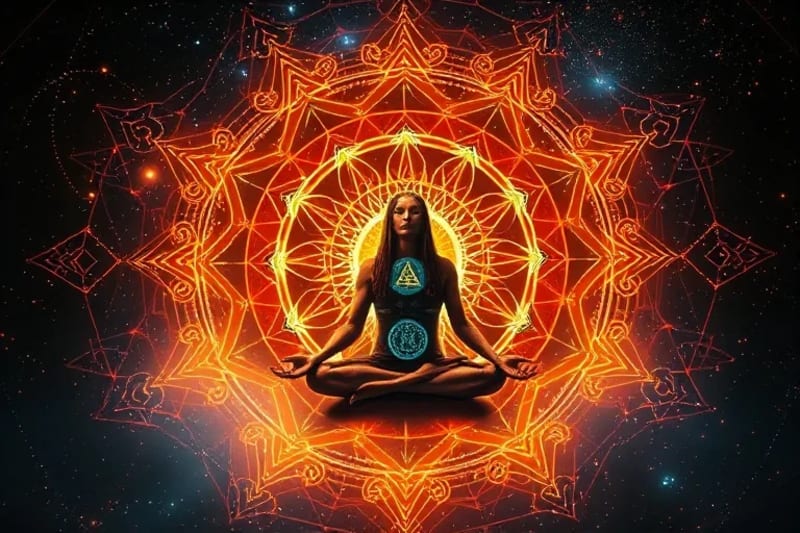
Conceptual rendering of a techno-shamanic experience, merging ancient spiritual practices with advanced digital interfaces.
Fuente visual sujeta a disponibilidad del ecosistema: Wikimedia Commons bajo licencia CC BY-SA 4.0 o renderizado conceptual IA.
Table of Contents
- Understanding Traditional Shamanism
- The Digital Age and Spiritual Evolution
- Pillars of Techno-Shamanism: Tools and Techniques
- Benefits and Practical Applications
- Ethical Considerations and Challenges
- The Future of Techno-Shamanism
Understanding Traditional Shamanism
Before delving into its digital counterpart, it is crucial to understand the foundational principles of traditional shamanism. Shamanism is an ancient spiritual practice found in various indigenous cultures worldwide, characterized by a practitioner (the shaman) who acts as an intermediary between the human world and the spirit world. Shamans typically enter altered states of consciousness to communicate with spirits, retrieve lost souls, heal illnesses, and gain knowledge for their community.
These practices often involve rituals, drumming, chanting, dancing, and sometimes the use of psychoactive plants to facilitate spiritual journeys. The core purpose is to restore balance, harmony, and well-being within individuals and their communities. The shaman's role is not merely ceremonial; it is deeply rooted in practical healing and guidance, often involving a profound connection to nature and the unseen forces of the cosmos.
Key elements of traditional shamanism include:
- Altered States of Consciousness: Achieved through various techniques to access non-ordinary reality.
- Spirit Communication: Interacting with spirits of ancestors, animals, plants, and other entities.
- Healing: Addressing physical, emotional, and spiritual ailments.
- Guidance and Divination: Seeking wisdom and foresight for individuals or the community.
- Community Role: Shamans often serve as healers, counselors, and spiritual leaders.
The Digital Age and Spiritual Evolution
The advent of the digital age has profoundly impacted nearly every aspect of human life, including spirituality. While some view technology as a distraction from inner work, others see it as a powerful tool for spiritual exploration and connection. The internet has democratized access to information about diverse spiritual traditions, allowing individuals to explore practices that were once geographically or culturally inaccessible. This global exchange of ideas has fostered a more eclectic and personalized approach to spirituality.
Digital platforms have also enabled the creation of virtual communities where like-minded individuals can connect, share experiences, and practice together. This is particularly relevant for practices such as Tarot Quantum Mechanics Intersecting Divination Reality, where online sessions and apps have made mindfulness more accessible than ever. The ability to instantly access spiritual teachings, guided journeys, and supportive groups has fundamentally reshaped how many people engage with their inner lives.
Techno-shamanism emerges from this confluence, recognizing that technology can mimic or enhance aspects of traditional shamanic journeys. It leverages digital tools to create immersive environments, generate specific sensory stimuli, and even facilitate altered states of consciousness, all within a controlled and accessible framework. This evolution reflects a broader trend of integrating ancient wisdom with modern innovation across various fields, from health to education.
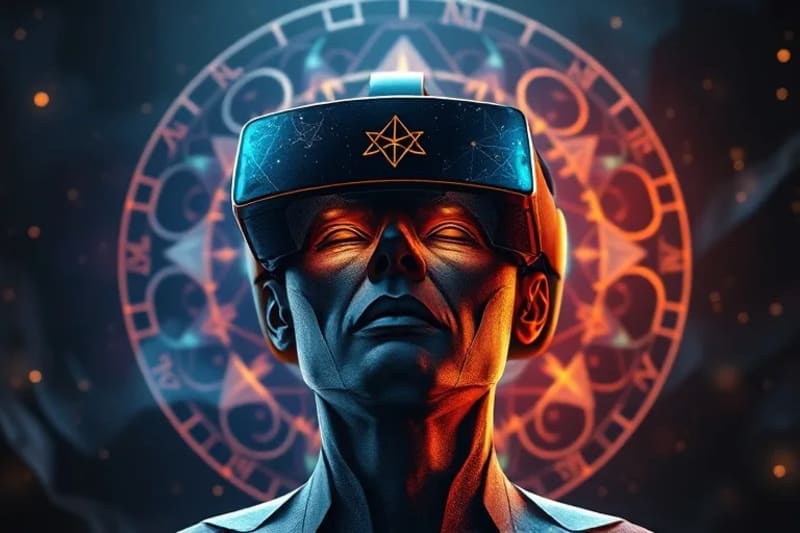
A conceptual still-life illustrating the symbolic fusion of virtual reality technology with ancient sacred geometry and digital circuit patterns.
Pillars of Techno-Shamanism: Tools and Techniques
Techno-shamanism is characterized by its innovative blend of digital tools and ancient practices. The key is not to replace traditional methods but to augment and expand them, making spiritual exploration more accessible and impactful for a contemporary audience. Here are some of the primary components:
Digital Tools
- Virtual Reality (VR) and Augmented Reality (AR): These immersive technologies can transport users to simulated sacred spaces, ancient landscapes, or abstract visionary realms. VR can facilitate deep meditative states, allowing users to experience shamanic journeys without physical travel or psychoactive substances. AR can overlay spiritual symbols or energy fields onto the real world, enhancing perception and interaction.
- Biofeedback and Neurofeedback: Devices that monitor physiological responses (heart rate, brainwaves) can provide real-time feedback, helping individuals learn to control their body and mind. This can be used to train for specific meditative states or to deepen self-awareness, mirroring the shaman's mastery over their own consciousness.
- Generative Art and Soundscapes: AI-powered algorithms can create dynamic visual and auditory experiences tailored to the user's state or intention. These can replicate traditional shamanic drumming, chanting, or natural sounds, inducing trance states or facilitating emotional release.
- Wearable Technology: Smart devices can track sleep patterns, stress levels, and other biometric data, offering insights into an individual's well-being and providing personalized recommendations for spiritual practices.
- AI and Machine Learning: AI can analyze vast amounts of spiritual texts and practices to offer personalized guidance, create custom rituals, or even act as a virtual "spirit guide" for users seeking direction. This can complement the traditional role of spirit guides in offering celestial wisdom.
Ancient Rituals and Concepts
- Shamanic Journeying: The core practice of entering non-ordinary reality is adapted using VR environments or binaural beats to induce trance states.
- Intention Setting: Users are guided to set clear intentions for their digital journeys, just as shamans do for their physical ones.
- Symbolism and Archetypes: Digital experiences are often designed around universal symbols and archetypes, drawing from collective unconscious knowledge.
- Integration Practices: Emphasis is placed on integrating insights gained from digital experiences into daily life, often through journaling, reflection, or community sharing. This aligns with principles of mindful manifestation and spiritual growth.
- Energetic Cleansing: Digital tools can simulate energetic cleansing rituals through guided visualizations and sound frequencies.
Benefits and Practical Applications
The integration of technology and shamanism offers a range of potential benefits, addressing many of the challenges faced by individuals in contemporary society:
- Enhanced Accessibility: Techno-shamanism makes spiritual practices available to a wider audience, including those with physical limitations, geographical barriers, or financial constraints that might prevent participation in traditional retreats or ceremonies.
- Personalized Experiences: Digital platforms can tailor experiences to individual needs and preferences, offering customized soundscapes, visual journeys, and guided meditations based on user input or biometric data.
- Mental and Emotional Healing: Immersive VR experiences can be used in therapeutic settings to address anxiety, depression, PTSD, and phobias by providing safe spaces for emotional processing and trauma release.
- Stress Reduction and Mindfulness: Biofeedback and VR meditation apps can effectively reduce stress, improve focus, and promote mindfulness, offering a modern antidote to the pressures of daily life.
- Self-Discovery and Personal Growth: By facilitating altered states and symbolic journeys, techno-shamanism can help individuals gain deeper insights into their psyche, uncover hidden potentials, and navigate life transitions with greater clarity.
- Community Building: Online platforms foster global communities of practitioners, allowing for shared experiences, mutual support, and the exchange of wisdom, transcending physical boundaries.
- Safe Exploration: Digital environments can offer a controlled and safe space to explore intense spiritual experiences or altered states of consciousness without the potential risks associated with certain traditional practices or substances.
An abstract 3D render depicting a glowing neural network linking ancient tribal artifacts within a cosmic digital environment, symbolizing the profound integration of technology and ancestral knowledge.
Ethical Considerations and Challenges
While the potential of techno-shamanism is vast, it also presents several ethical considerations and challenges that must be carefully addressed:
- Authenticity vs. Commercialization: There is a risk that traditional shamanic practices, which are deeply rooted in specific cultural contexts and lineages, could be trivialized or commodified when translated into digital formats. Ensuring respect for the origins and avoiding cultural appropriation is paramount.
- Digital Dependence: Over-reliance on technology for spiritual experiences might lead to a disconnect from direct experience, nature, or the physical body. A balanced approach that encourages integration with real-world practices is essential.
- Misinformation and Lack of Guidance: The internet is rife with unverified information. Users engaging in techno-shamanism need reliable sources and, ideally, guidance from experienced facilitators to navigate complex spiritual experiences safely.
- Technological Glitches and Limitations: The quality of the experience is dependent on the technology. Glitches, poor design, or limited sensory input could detract from the intended spiritual depth.
- Data Privacy and Security: As personal biometric and psychological data are collected by wearable devices and apps, concerns about privacy, data security, and the ethical use of this information arise.
- The Role of the Human Facilitator: While AI can offer guidance, the nuanced, empathetic, and intuitive support of a human shaman or spiritual guide cannot be fully replicated by technology. Techno-shamanism should ideally complement, not replace, human mentorship.
Addressing these challenges requires a thoughtful and responsible approach to development and practice, prioritizing ethical guidelines, cultural sensitivity, and user well-being. The community around techno-shamanism must actively engage in dialogues about these issues to ensure its sustainable and beneficial growth.
The Future of Techno-Shamanism
The trajectory of techno-shamanism points towards an exciting future where the boundaries between technology, spirituality, and healing continue to blur. As VR and AR technologies become more sophisticated and accessible, we can anticipate even more immersive and personalized spiritual journeys. AI could evolve to create truly adaptive and responsive spiritual companions, capable of guiding users through complex inner landscapes with unprecedented precision.
The integration of bio-hacking and neuro-enhancement with spiritual practices might also become more prevalent, allowing individuals to fine-tune their brain states for optimal meditation or visionary experiences. Furthermore, the concept of collective consciousness could be explored through networked VR environments, enabling groups to undertake shared spiritual journeys and healing rituals, fostering a new form of digital communal spirituality.
Ultimately, techno-shamanism has the potential to redefine what it means to be spiritual in the digital age, offering tools that can help individuals navigate the complexities of modern life while staying connected to ancient wisdom and their inner selves. It represents a bold step forward in the ongoing human quest for meaning, healing, and transcendence.
The convergence of ancient spiritual wisdom with advanced technological innovation offers a unique pathway for modern spiritual healing.
This evolving field emphasizes personalized experiences and expanded accessibility, pushing the boundaries of traditional practices.
As we continue to explore the vast possibilities, it is imperative to approach techno-shamanism with both enthusiasm and discernment, ensuring that technology serves as a bridge to deeper understanding and genuine well-being, rather than a barrier. The journey into the digital spirit world is just beginning, promising profound insights for those willing to embark upon it.
Related Searches & Further Reading
Delve deeper into related topics to expand your understanding of spiritual and technological convergence:
- Conscious Coupling: Law Attraction Soulmate Synastry Guide
- Synastry Davison Charts: Shared Soul Purpose Relationships
- Lunar Phases Manifesting: Advanced Rituals Celestial Mechanics
- Mindful Lunar Phase Horoscopes: Daily Emotional Guidance
- Creative AI & Copyright in Music: Challenges for the Future
- Mercury Retrograde Dreams: Deciphering Subconscious Messages
Source: Hybrid content assisted by AI and human editorial supervision.


Comments
Post a Comment