
Synastry Davison Charts: Shared Soul Purpose Relationships | StarPluto
In the vast and intricate world of astrology, understanding relationships goes far beyond simple sun sign compatibility. While many people are familiar with basic zodiac pairings, the true depth of interpersonal dynamics is revealed through advanced techniques such as Synastry and Davison charts. These methods offer profound insights into the energetic interplay between two individuals, helping to uncover shared soul purposes, potential challenges, and areas for growth within a partnership.
This comprehensive guide will introduce you to the fundamental principles of Synastry and Davison charts, explaining how they are constructed, what they reveal, and how to interpret their intricate symbolism. By exploring these powerful astrological tools, you can gain a deeper appreciation for the unique blueprint of your relationships and navigate them with greater awareness and understanding.

Exploring the cosmic threads that bind two souls in a shared journey.
Table of Contents
- Understanding Relationship Astrology: Beyond Sun Signs
- What is Synastry? Decoding Interpersonal Dynamics
- Key Elements of Synastry: Planets, Aspects, and House Overlays
- Interpreting Synastry Aspects: The Language of Connection
- What is a Davison Chart? The Relationship's Birth Chart
- Calculating and Interpreting the Davison Chart
- Davison Chart vs. Composite Chart: A Key Distinction
- Shared Soul Purpose: Integrating Synastry and Davison Insights
- Practical Applications: Navigating Relationships with Astrological Wisdom
- Conclusion: The Journey of Two Souls
- Frequently Asked Questions about Relationship Astrology
Understanding Relationship Astrology: Beyond Sun Signs
Relationship astrology, often referred to as relational astrology, is a specialized branch that examines the compatibility and dynamics between two or more individuals. While popular astrology often focuses on the general traits of sun signs, professional relationship astrology delves much deeper, analyzing the intricate connections between entire birth charts.
This approach acknowledges that each person is a complex tapestry of planetary placements, aspects, and house cusps. When two individuals come together, their unique astrological blueprints interact, creating a distinct relational energy. Understanding this energy can illuminate the strengths, weaknesses, and evolutionary potential inherent in any partnership, from romantic relationships to family bonds and professional collaborations.
What is Synastry? Decoding Interpersonal Dynamics
Synastry is the most common and foundational technique in relationship astrology. It involves overlaying two individual birth charts to see how the planets and houses of one person interact with those of another. Imagine placing one transparent chart on top of another; the points where planets from one chart fall into the houses of the other, or form aspects with the other's planets, reveal significant insights.
This method highlights the specific ways in which individuals trigger, support, challenge, or complement each other. Synastry essentially describes the "chemistry" between two people, detailing the attractions, repulsions, and areas of mutual influence. It's an excellent tool for understanding the subjective experience of a relationship from each person's perspective.
Key Elements of Synastry: Planets, Aspects, and House Overlays
When analyzing a synastry chart, astrologers focus on several key components:
- Planetary Aspects: These are the angular relationships between planets in one person's chart and planets in the other's. For example, if your Mars conjuncts your partner's Venus, it suggests a strong physical attraction and passionate dynamic.
- House Overlays: This refers to where one person's planets fall into the houses of the other's chart. If your partner's Moon falls into your 7th House of Partnership, they may deeply impact your relationship needs and how you experience partnership.
- Sign Compatibility: While not the sole factor, the elemental and modal relationships between sun, moon, and ascendant signs still provide a foundational understanding of natural rapport or friction.
- Nodes of the Moon: The North and South Nodes in synastry often point to karmic connections and past-life influences, indicating lessons to be learned or patterns to be resolved together.
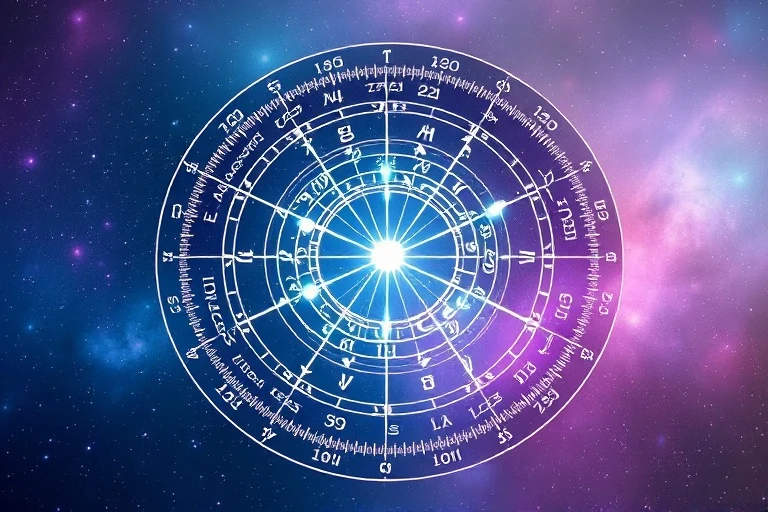
Visual representation of two birth charts interacting, highlighting synastric connections.
Interpreting Synastry Aspects: The Language of Connection
The aspects formed between planets in synastry are crucial. They describe the quality of interaction between two individuals' psychological functions and life areas. Here’s a brief overview of common aspects:
- Conjunctions (0°): Indicate a strong merging of energies. The planets involved will function in a unified or highly impactful way within the relationship.
- Sextiles (60°) and Trines (120°): These are harmonious aspects, suggesting ease, flow, and mutual support. They represent natural areas of compatibility and understanding.
- Squares (90°): Point to tension, challenges, and areas where growth is required. While often difficult, squares can be powerful catalysts for development and change if consciously addressed.
- Oppositions (180°): Represent attraction and awareness of differences. They can lead to balance through compromise or create polarity and conflict if not integrated.
- Quincunxes (150°): Indicate an awkward or adjusting energy, where two planetary energies don't quite understand each other but are forced to adapt.
Each aspect, whether harmonious or challenging, contributes to the rich tapestry of the relationship. A balance of supportive and dynamic aspects is often considered ideal for a relationship that fosters both comfort and growth.
What is a Davison Chart? The Relationship's Birth Chart
While synastry describes how two individuals experience each other, a Davison chart offers a unique perspective: it creates a birth chart for the relationship itself. It treats the relationship as a separate entity with its own destiny, personality, and purpose. This chart is calculated by finding the midpoint in time and space between the birth data of two individuals.
Specifically, the Davison chart uses the exact mathematical midpoint of the birth dates, times, and locations of both people. This results in a single, distinct astrological chart with its own Ascendant, Midheaven, planetary placements, and aspects. It provides a holistic view of the relationship's inherent nature, its potential trajectory, and the overarching themes it will encounter.
Calculating and Interpreting the Davison Chart
The calculation of a Davison chart involves averaging the geographical coordinates (latitude and longitude) and the birth times and dates of both individuals. This generates a new "birth" date, time, and location for the relationship itself. Once calculated, the Davison chart is interpreted much like a natal chart, but with the understanding that it describes the relationship as a whole.
- Ascendant (Rising Sign): Represents the relationship's outward personality, how it appears to the world, and its initial approach to life.
- Sun Sign: Indicates the core identity, purpose, and central drive of the relationship.
- Moon Sign: Reveals the emotional tone, inner needs, and subconscious patterns that define the relationship's emotional landscape.
- Planetary Placements in Houses: Show the areas of life where the relationship will experience its most significant activity and focus. For instance, a strong 7th House in a Davison chart emphasizes partnership itself, while a prominent 10th House might point to shared public goals or career impact.
- Aspects: Describe the internal dynamics and challenges within the relationship entity, similar to natal chart aspects but applied to the partnership's journey.
Davison Chart vs. Composite Chart: A Key Distinction
It's important to differentiate the Davison chart from another common relationship chart called the Composite chart. While both represent the relationship as a separate entity, their calculation and interpretation differ significantly:
| Feature | Davison Chart | Composite Chart |
|---|---|---|
| Calculation Method | Midpoint in time and space (averaging dates, times, locations). | Midpoint of planetary positions (e.g., midpoint between two Suns). |
| Represents | The relationship as a living entity, its journey, and external manifestation. | The merged energy of the relationship, its internal feeling, and shared experience. |
| Focus | The objective reality and timeline of the relationship. | The subjective experience and psychological dynamics within the relationship. |
| Interpretation | Like a natal chart for the relationship, showing its life path. | The "we" experience, how the couple operates as a unit. |
Both charts offer valuable, complementary perspectives. The Davison chart provides a more tangible, chronological narrative of the relationship's existence, while the Composite chart describes the psychological atmosphere and internal dynamics. For a complete picture, both are often used.

A conceptual representation of the Davison chart, showing a relationship's unique cosmic blueprint.
Shared Soul Purpose: Integrating Synastry and Davison Insights
The true power of relationship astrology emerges when Synastry and Davison charts are integrated. Synastry reveals the raw, individual interactions and the "why" behind the attraction or friction, while the Davison chart shows the overarching "what" and "where" of the relationship's journey. Together, they can illuminate a shared soul purpose.
By examining the interplay, one can identify karmic connections, areas of mutual healing, and collective lessons. For example, challenging aspects in synastry might be softened or given purpose by harmonious aspects in the Davison chart, indicating that the difficulties serve a higher relational goal. Conversely, a challenging Davison chart might explain persistent external struggles, even if the synastry suggests good personal chemistry.
- Identifying Karmic Connections: Look for nodal connections in synastry (one person's planets conjuncting the other's Nodes) and significant planetary placements in the Davison chart's 12th or 8th houses, which often point to past-life ties and karmic lessons.
- Understanding Relationship Dynamics: Synastry shows how you individually impact each other. The Davison chart reveals the collective identity and purpose of your union. For instance, a strong Mars in the Davison chart might mean the relationship itself is driven and action-oriented, while a Venus emphasis suggests a focus on harmony and aesthetics.
- Evolutionary Potential: Both charts highlight areas for growth. Synastry aspects can show where individuals need to adjust or learn from each other. The Davison chart's aspects and house placements indicate the relationship's inherent challenges and opportunities for collective evolution.
The shared soul purpose often lies in the themes that repeatedly emerge from both analyses. Is it a relationship designed for mutual healing, for creative collaboration, for raising a family, or for spiritual awakening? The charts provide clues to these profound questions.
Practical Applications: Navigating Relationships with Astrological Wisdom
Applying the insights from Synastry and Davison charts can significantly enhance relationship quality and understanding. Here are some practical applications:
- Enhanced Self-Awareness: Understanding how your planets impact another's helps you recognize your role in relationship dynamics.
- Empathy and Compassion: Seeing the astrological blueprint of a partner's reactions can foster greater empathy, helping you understand their core needs and sensitivities.
- Conflict Resolution: Identifying challenging aspects in synastry or the Davison chart allows couples to address root causes of conflict rather than just surface issues.
- Maximizing Strengths: Harmonious aspects and strong Davison placements highlight areas where the relationship naturally excels, encouraging couples to lean into these strengths.
- Navigating Life Transitions: By understanding the relationship's inherent purpose (Davison chart) and individual contributions (Synastry), couples can make more informed decisions about shared goals, family planning, career moves, and spiritual paths.
Ultimately, relationship astrology is not about predicting a fixed future but about providing a map. This map empowers individuals and couples to consciously work with their energies, fostering deeper connection, mutual growth, and the fulfillment of their shared soul purpose. For a deeper dive into planetary influences, consider exploring Mercury Astrology: Communication, which can shed light on how communication styles interact in relationships.
Conclusion: The Journey of Two Souls
Synastry and Davison charts are invaluable tools for anyone seeking to understand the profound complexities of their relationships. By moving beyond superficial compatibility, these astrological techniques offer a nuanced and deeply insightful perspective into the individual contributions, shared dynamics, and ultimate purpose of any partnership. Whether you are exploring a romantic bond, a family connection, or a professional alliance, the wisdom gleaned from these charts can guide you toward more conscious, fulfilling, and purposeful interactions. Embracing this astrological knowledge allows you to honor the unique journey of two souls intertwining and evolving together.
Frequently Asked Questions about Relationship Astrology
Here are some common questions regarding Synastry and Davison charts:
Source: Hybrid content assisted by AIs and human editorial supervision.


Comments
Post a Comment