
Advanced Planetary Dignities Horary Astrology Precision Timing
Advanced Planetary Dignities in Horary Astrology: Precision Timing for Fated Events
Horary astrology, an ancient and highly precise branch of astrological practice, offers a unique methodology for answering specific questions by casting a chart for the exact moment the question is understood by the astrologer. At its core, the efficacy of horary judgment hinges significantly on the meticulous evaluation of planetary dignities. These dignities, far from being mere abstract concepts, quantify a planet's strength, influence, and capacity to act within a given chart, providing critical insights into the potential outcome and timing of events.
While basic dignities like domicile and exaltation are foundational, an advanced understanding delves into the intricate interplay of essential and accidental dignities, receptions, and debilities. This comprehensive approach allows horary practitioners to discern the nuanced power dynamics between planets, translating celestial configurations into tangible predictions with remarkable accuracy. Mastering these advanced techniques is paramount for anyone seeking to unlock the full predictive potential of horary astrology, particularly when aiming for precision timing in fated events.
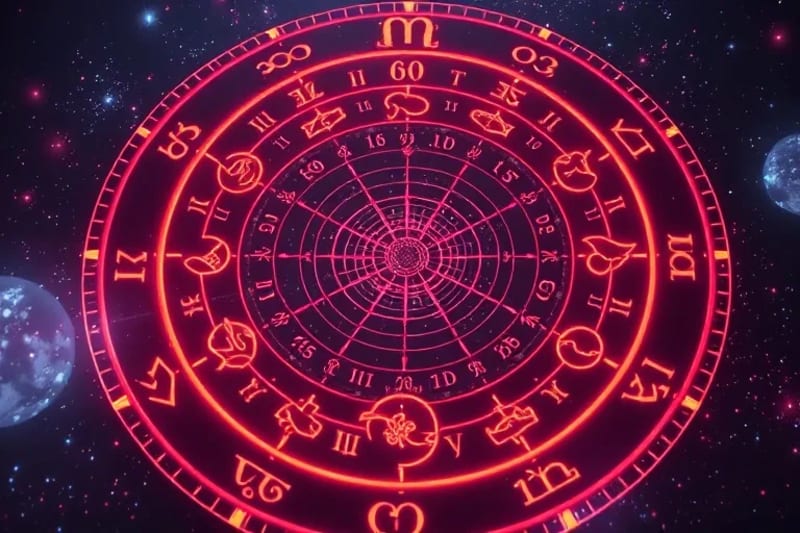
Precursors, fundamental diagrams, and conceptual representations that forged the vision of horary astrology regarding fated events and precise timing.
Fuente visual sujeta a disponibilidad del ecosistema: Wikimedia Commons bajo licencia CC BY-SA 4.0 o renderizado conceptual IA.This deep dive will explore the multifaceted layers of planetary dignities, moving beyond the elementary definitions to embrace their complex applications in horary charts. We will examine how these strengths and weaknesses are assessed, how they interact, and how they ultimately inform the astrologer's judgment regarding the likelihood, nature, and timing of the querent's inquiry. The goal is to provide a robust framework for advanced practitioners to refine their interpretive skills and achieve unparalleled accuracy.
Table of Contents
- Essential Dignities: Intrinsic Planetary Strength
- Accidental Dignities: Circumstantial Fortification
- Reception: The Art of Mutual Support
- Planetary Debilities: Weaknesses and Challenges
- Applying Dignities in Horary Questions
- Advanced Nuances and Considerations
Essential Dignities: Intrinsic Planetary Strength
Essential dignities refer to a planet's inherent strength based on its zodiacal position. These dignities describe a planet's ability to express its nature freely and effectively, akin to a person being in their own home or a position of power. A planet in essential dignity is considered strong, capable, and well-disposed to bring about its significations. The primary essential dignities include domicile, exaltation, triplicity, term, and face.
- Domicile: A planet in its domicile is in its ruling sign, where it is most comfortable and powerful. For example, Mars rules Aries and Scorpio. This is its strongest position, indicating self-sufficiency and full expression of its qualities.
- Exaltation: A planet in its sign of exaltation is in a sign where its qualities are celebrated and amplified, though not necessarily in a way that is entirely comfortable for the planet. The Sun is exalted in Aries, for instance, where its drive and leadership are highly prominent.
- Triplicity: This dignity is based on the element of the sign and the sect of the chart (day or night). Each element has three rulers (day, night, and co-ruler), providing a moderate level of strength. For example, in a day chart, the Sun rules fire signs by day, Jupiter by night, and Saturn as a co-ruler.
- Term (Bounds): Terms divide each sign into unequal segments, with each segment ruled by a specific planet. This provides a minor, yet significant, boost to a planet's strength. A planet in its own term has some control over its immediate environment.
- Face (Decan): The weakest of the essential dignities, each sign is divided into three 10-degree segments, or decans, each ruled by a planet. While minimal, a planet in its own face still has a slight advantage, indicating a superficial level of control or recognition.
Understanding the hierarchy and interplay of these dignities is crucial. A planet in domicile is generally stronger than one merely in its exaltation. The combined score of these dignities provides a numerical value for a planet's essential strength, guiding the astrologer in determining its capacity to manifest the querent's desires or the outcome of the question. This intrinsic strength forms the bedrock upon which all further analysis is built, influencing the timing and nature of events.
| Dignity Type | Description | Strength Level | Example |
|---|---|---|---|
| Domicile | Planet in its ruling sign. | Very Strong (+5) | Mars in Aries |
| Exaltation | Planet in sign where its qualities are amplified. | Strong (+4) | Sun in Aries |
| Triplicity | Planet ruling by element and sect. | Moderate (+3) | Jupiter in Aries (night chart) |
| Term (Bounds) | Planet ruling a segment of the sign. | Minor (+2) | Venus in the Venusian terms of Gemini |
| Face (Decan) | Planet ruling a 10-degree segment of the sign. | Weak (+1) | Mercury in the first decan of Gemini |
Accidental Dignities: Circumstantial Fortification
While essential dignities describe a planet's inherent nature, accidental dignities refer to its strength or weakness based on its position within the houses of the chart, its speed, direction, and aspects to other planets. These are external factors that can either fortify or debilitate a planet's ability to act, much like a person's effectiveness being influenced by their social standing or immediate environment. A planet with strong accidental dignities can overcome some essential debilities, and vice versa.
- House Position: Planets in angular houses (1st, 4th, 7th, 10th) are generally stronger and more active, signifying immediate and direct influence. Succedent houses (2nd, 5th, 8th, 11th) offer moderate strength, indicating stability and resources. Cadent houses (3rd, 6th, 9th, 12th) are the weakest, often indicating delays, hidden matters, or lack of direct control.
- Speed: A planet moving faster than its average speed is considered stronger and more eager to act, signifying quick developments. Conversely, a slow-moving planet may indicate delays or reluctance.
- Direction: A direct planet is moving forward as expected, indicating progress. A retrograde planet, however, suggests reversals, delays, reconsiderations, or a turning back of events. While often seen as a debility, retrograde motion can sometimes signify a return of something lost or a re-evaluation.
- Aspects: Benefic aspects (trines, sextiles) from Jupiter or Venus can greatly enhance a planet's accidental strength, providing support and ease. Malefic aspects (squares, oppositions) from Mars or Saturn can weaken a planet, indicating obstacles and challenges. Conjunctions can be either strengthening or weakening depending on the nature of the conjuncting planet.
- Being Oriental or Occidental: A planet is considered oriental when it rises before the Sun and occidental when it sets after the Sun. This distinction, particularly for the inner planets, can influence their expression and visibility in the chart.
The interplay between essential and accidental dignities is complex. A planet with strong essential dignity but weak accidental dignity might have the intrinsic capacity but lack the opportune circumstances to act. Conversely, a planet with weak essential dignity but strong accidental dignity might be propelled by circumstances despite its inherent limitations. This nuanced assessment is vital for accurate horary judgment, especially when determining the timing of events. For a deeper understanding of how planetary positions influence outcomes, consider exploring Planetary Dignities: Exaltation Detriment Natal Chart Impact.
| Accidental Factor | Effect on Strength | Signification |
|---|---|---|
| Angular House (1, 4, 7, 10) | Strong fortification (+5) | Active, direct influence, quick manifestation |
| Succedent House (2, 5, 8, 11) | Moderate fortification (+3) | Stable, resourceful, sustained effort |
| Cadent House (3, 6, 9, 12) | Weakening (-5) | Delays, hidden matters, lack of control |
| Direct Motion | Strengthening (+4) | Progress, forward movement, resolution |
| Retrograde Motion | Weakening (-5) | Reversals, delays, reconsideration, return |
| Fast in Motion | Strengthening (+2) | Quick developments, eagerness to act |
| Slow in Motion | Weakening (-2) | Delays, reluctance, protracted situations |
| Conjunction with Benefic | Strong fortification (+4) | Support, good fortune, enhanced outcome |
| Conjunction with Malefic | Strong weakening (-4) | Obstacles, misfortune, detrimental influence |
Reception: The Art of Mutual Support
Reception is a sophisticated concept in horary astrology that describes the mutual relationship between two planets. It occurs when one planet is in a sign ruled or dignified by another planet, and vice versa. This mutual placement indicates a willingness or capacity for the planets to work together, supporting each other's significations. Reception significantly alters the interpretation of aspects, transforming potentially challenging configurations into cooperative ones, or strengthening beneficial ones.
- Mutual Reception by Domicile: This is the strongest form of reception, where two planets are in each other's ruling signs (e.g., Mars in Libra and Venus in Aries). It signifies a powerful and harmonious working relationship, often leading to successful outcomes despite apparent challenges.
- Mutual Reception by Exaltation: Similar to domicile reception but slightly less potent, this occurs when planets are in each other's signs of exaltation. It suggests a strong affinity and mutual respect, leading to beneficial cooperation.
- Reception by Triplicity, Term, or Face: These lesser forms of reception still indicate some level of mutual understanding and support, though their influence is less pronounced than domicile or exaltation receptions. They can soften difficult aspects or add a layer of cooperation.
- Application and Separation: The timing of reception is also critical. Reception is most potent when planets are applying to an aspect with each other. If they are separating, the mutual support has already occurred or is waning.
Reception is particularly important in horary for determining whether a situation will resolve favorably. If the significator of the querent and the significator of the matter are in mutual reception, it strongly suggests a positive outcome, even if other factors seem challenging. It indicates that the parties or energies involved are willing to help each other, leading to a resolution. This concept is crucial for understanding the flow of karma and destiny, as explored in topics like Mesoamerican Astrology AI Oracles Bridging Ancient Modern.

A conceptual representation of the intricate mechanisms and symbolic tools used to decipher the precise timing of events in horary astrology.
Planetary Debilities: Weaknesses and Challenges
Just as planets can be dignified, they can also be debilitated, indicating a lack of strength, difficulty in expressing their nature, or a tendency to cause problems. Debilities are crucial in horary as they often point to obstacles, delays, or unfavorable outcomes. Understanding these weaknesses is as important as recognizing strengths.
- Detriment: A planet in the sign opposite its domicile is in detriment (e.g., Mars in Libra). Here, the planet is in a sign whose energies are contrary to its own, making it uncomfortable and ineffective. It struggles to act according to its true nature.
- Fall: A planet in the sign opposite its exaltation is in its fall (e.g., Sun in Libra). This position signifies a place where the planet's qualities are undermined or disrespected, leading to a sense of weakness or humiliation.
- Peregrine: A planet that has no essential dignity (not in domicile, exaltation, triplicity, term, or face) is considered peregrine. This planet lacks inherent strength and is often seen as a wanderer, easily influenced by other planets or circumstances, and less capable of acting independently.
- Combustion: When a planet is very close to the Sun (within 0° to 17' of arc), it is said to be combust. This is a severe debility, as the Sun's rays are believed to "burn up" the planet's influence, rendering it powerless or hidden. The significations of the combust planet become obscured or ineffective.
- Cazimi: A rare and powerful exception to combustion, cazimi occurs when a planet is exactly conjunct the Sun (within 17' of arc of the Sun's center). Instead of being debilitated, the planet is said to be "in the heart of the Sun," gaining immense strength and clarity. Its significations are greatly empowered and brought to light.
- Under the Sunbeams: A planet within 17' to 8.5° of the Sun is "under the Sunbeams." This is a milder form of debility than combustion, where the planet's influence is somewhat obscured but not entirely destroyed.
Other accidental debilities include being besieged by malefics (Mars and Saturn), being in a cadent house, or being retrograde. The combination of these debilities paints a picture of the challenges and potential failures inherent in the question. A heavily debilitated significator for the querent suggests they are in a weak position, while a debilitated significator for the matter indicates difficulties in achieving the desired outcome. These insights are critical for understanding the "fated" nature of events and the timing of their unfolding. For example, a question about a lost item might be answered by considering the planet's debilities and its aspects, which can also be explored through AI Dream Interpretation: Algorithms Unravel Subconscious Symbolism, as both involve deciphering hidden meanings.
Applying Dignities in Horary Questions
The true art of horary astrology lies in synthesizing all these factors to answer a specific question. The first step is to identify the significators: the planet representing the querent (usually the ruler of the 1st house) and the planet representing the matter of the question (ruler of the relevant house). Once identified, their essential and accidental dignities are assessed, along with any receptions or debilities.
- Determining Outcome:
- If the querent's significator is strong and applies to a benefic aspect with the matter's significator (especially with reception), a positive outcome is likely.
- If the querent's significator is weak or applies to a malefic aspect with the matter's significator (especially without reception), a negative outcome or significant challenges are indicated.
- Mutual reception between significators is a strong indicator of success, even if other factors are challenging.
- Precision Timing: Timing in horary is often determined by the number of degrees separating applying planets, or the number of signs/houses to be traversed.
- Each degree can represent a unit of time (days, weeks, months, years) depending on the context of the question and the speed of the planets.
- Fast-moving planets (Moon, Mercury, Venus) often indicate quicker events (days, weeks).
- Slow-moving planets (Jupiter, Saturn) suggest longer durations (months, years).
- The nature of the aspect (conjunction, square, trine) and the houses involved also influence the timing. For example, angular houses imply faster results than cadent houses.
For example, if a querent asks "Will I get the job?" and their significator (e.g., Mercury) is strong in an angular house and applies to a trine with the significator of the job (e.g., Jupiter), the answer is likely yes. The number of degrees to the exact aspect, combined with Mercury's speed, would give the precise timing. This intricate process requires both technical skill and intuitive insight, allowing the astrologer to provide highly specific answers to life's most pressing questions. Further insights into astrological timing can be gained by studying Emerald Tablet Hermetic Principles Manifestation Transformation, as fundamental principles often cross over between different astrological branches.
Advanced Nuances and Considerations
Beyond the foundational dignities and debilities, advanced horary practitioners incorporate several other nuanced factors to refine their judgments and timing. These elements add layers of complexity and precision, allowing for a more comprehensive understanding of the chart's message.
- Antiscia and Contra-Antiscia: These are points of equal light or shadow in the zodiac. A planet's antiscion is its "shadow point," located at the same degree from the solsticial axis (0° Cancer/Capricorn) as the planet itself. Contra-antiscia are opposite these points. Aspects to antiscia or contra-antiscia can indicate hidden connections, secret allies or enemies, or subtle influences that are not immediately apparent through standard aspects. They often relate to fated or karmic events that operate beneath the surface.
- Fixed Stars: Conjunctions of significators or house cusps with prominent fixed stars can significantly alter the outcome or timing of a horary question. Fixed stars are powerful, often bringing sudden, dramatic, or fated events, either highly beneficial or intensely challenging, depending on the star's nature. Their influence can override or amplify planetary significations.
- Via Combusta (The Combust Way): A specific arc of the zodiac, roughly from 15° Libra to 15° Scorpio, is known as the Via Combusta. Planets located within this region are considered particularly debilitated, even if they hold some essential dignity. This area is traditionally associated with misfortune, danger, and difficult outcomes, making any significator placed here a cause for concern in horary judgment.
- Part of Fortune and Other Arabic Parts: The Part of Fortune and other Arabic Parts (e.g., Part of Spirit, Part of Marriage) are sensitive points derived from specific calculations involving planets and ascendant. Their placement and aspects to significators can provide additional clues about the querent's resources, luck, or the nature of the outcome.
Integrating these advanced techniques requires extensive practice and a deep understanding of traditional astrological principles. They allow the astrologer to move beyond a simplistic "yes/no" answer, providing rich detail about the circumstances, challenges, and opportunities surrounding the querent's question. For those interested in visualizing these complex interactions, tools like Techno-Shamanism: Bridging Ancient Rituals Digital Healing Spirituality can offer new perspectives on planetary dynamics.
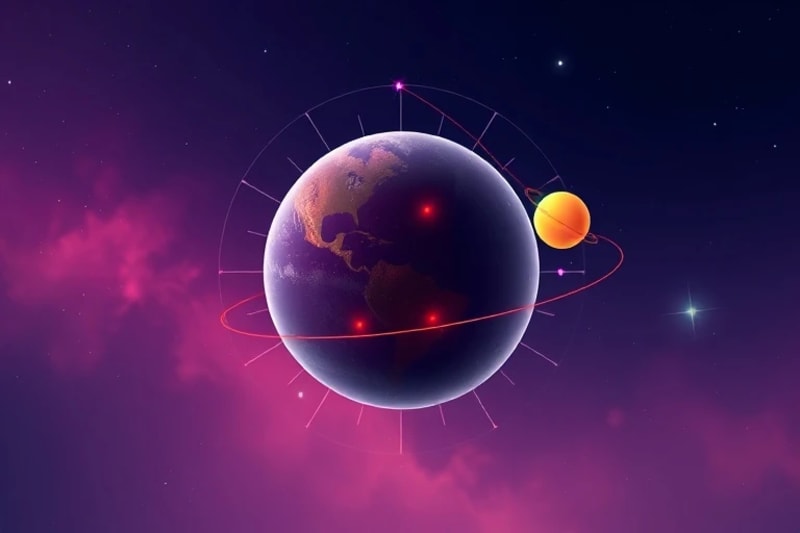
A conceptual visualization of planetary interactions and the flow of influence, illustrating the abstract concepts of dignity and reception.
The careful consideration of these advanced factors ensures that horary judgments are not only accurate but also comprehensive, offering the querent a full picture of their situation and the potential timeline of events. This level of detail is what elevates horary astrology from a simple divinatory tool to a profound system for understanding the unfolding of destiny.
The precision timing of fated events in horary astrology is not merely about predicting "when" something will happen, but understanding the "how" and "why" behind it. By meticulously analyzing essential and accidental dignities, receptions, debilities, and advanced considerations like antiscia and fixed stars, astrologers can unlock a profound level of insight. This comprehensive approach allows for highly accurate predictions and offers invaluable guidance to querents navigating critical life decisions. Mastery of these techniques transforms horary into a powerful tool for discerning the intricate tapestry of fate and free will.
The profound impact of planetary dignities extends beyond individual horary questions, offering a window into the broader cosmic influences that shape our lives. Whether interpreting a natal chart or a horary chart, the strength and disposition of planets are foundational to understanding potential outcomes and the flow of energy. Continual study and practice of these advanced principles are essential for any astrologer committed to providing deep, meaningful, and accurate interpretations.
Source: Hybrid content assisted by AI and human editorial supervision.


Comments
Post a Comment