
AI Dream Interpretation: Algorithms Unravel Subconscious Symbolism
The Dawn of AI-Enhanced Dream Interpretation: Unraveling Subconscious Symbolism
Dreams have fascinated humanity for millennia, serving as a mysterious window into the subconscious mind. From ancient civilizations seeking divine messages to modern psychology exploring hidden desires, the quest to understand dream symbolism has been a constant. Today, the advent of Artificial Intelligence (AI) is revolutionizing this ancient practice, offering unprecedented tools to analyze, categorize, and interpret the complex narratives woven in our sleep. This exploration delves into how AI algorithms are being developed and utilized to unravel subconscious symbolism, transforming how we approach dream analysis.
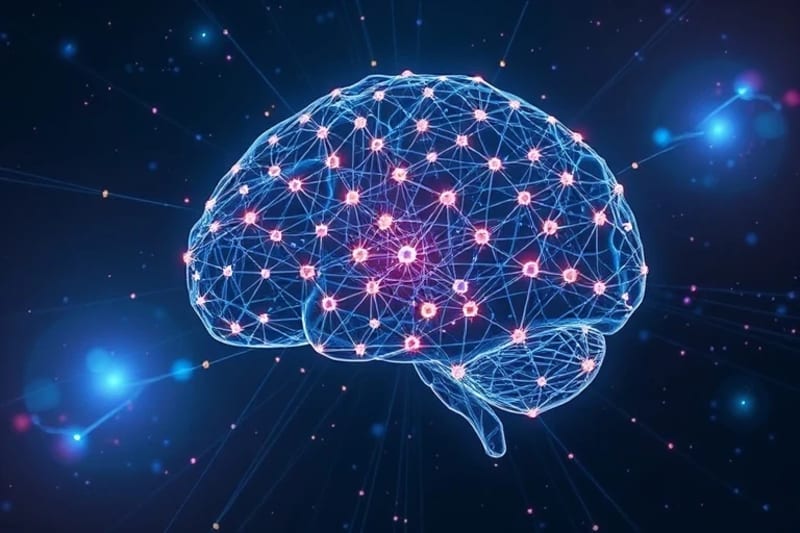
The intricate neural pathways of AI illuminate the depths of subconscious dreamscapes, revealing hidden meanings.
Traditional dream interpretation often relies on subjective analysis, cultural symbols, and personal associations. While invaluable, this approach can be time-consuming and prone to individual biases. AI, with its capacity for processing vast datasets and identifying subtle patterns, introduces a new layer of objectivity and scalability to this field. By leveraging advanced algorithms, AI systems can analyze dream narratives, identify recurring themes, and connect them to psychological theories or personal experiences in ways previously unimaginable.
This article will explore the historical foundations of dream analysis, the technological advancements enabling AI's role, the specific algorithmic approaches used, and the profound benefits and challenges that accompany this innovative intersection of technology and psychology. We will also touch upon the ethical considerations crucial for responsible development and the exciting future prospects of AI-enhanced dream interpretation.
Table of Contents
- Historical Context of Dream Analysis
- The Rise of AI in Cognitive Science
- How AI Interprets Dreams: Algorithmic Approaches
- Benefits of AI-Powered Dream Analysis
- Challenges and Limitations
- Ethical Considerations and Future Outlook
Historical Context of Dream Analysis
The practice of interpreting dreams dates back to ancient civilizations, where dreams were often considered divine communications or omens. In ancient Egypt, dream books cataloged symbols and their meanings, while in Mesopotamia, priests and priestesses served as dream interpreters for rulers and common people alike. These early forms of dream analysis laid the groundwork for understanding the symbolic nature of dreams, even if their methodologies were rooted in spiritual or mystical beliefs rather than empirical observation.
The scientific study of dreams gained prominence in the late 19th and early 20th centuries with pioneering figures like Sigmund Freud and Carl Jung. Freud, in his seminal work "The Interpretation of Dreams," proposed that dreams are disguised fulfillments of repressed wishes, offering a "royal road to the unconscious." He introduced concepts like manifest content (the dream as remembered) and latent content (the underlying, hidden meaning) and emphasized the importance of symbols derived from personal history and universal human experiences.
Carl Jung, a student of Freud who later diverged, expanded on these ideas by introducing the concept of the collective unconscious and archetypes. Jung believed that dreams not only reflect personal experiences but also tap into a universal reservoir of human experience and imagery shared across cultures. His approach often involved amplification, where dream symbols are explored through various cultural, mythological, and historical contexts to uncover their deeper significance. Both Freud's and Jung's theories, while foundational, highlight the inherently subjective and often labor-intensive nature of traditional dream interpretation, setting the stage for technological assistance.
The Rise of AI in Cognitive Science
The past few decades have witnessed an exponential growth in AI capabilities, particularly in areas like natural language processing (NLP), machine learning (ML), and pattern recognition. These advancements have profound implications for cognitive science and the study of the human mind. AI systems are now capable of analyzing vast amounts of text, identifying complex patterns, and even generating human-like language, making them ideal candidates for tackling the intricacies of dream narratives.
In cognitive science, AI is employed to model human thought processes, understand language acquisition, and even simulate neural networks. This allows researchers to test hypotheses about how the brain processes information, forms memories, and generates creative content like dreams. The ability of AI to learn from data, adapt its models, and make predictions based on observed patterns is particularly relevant to dream interpretation. As AI becomes more sophisticated, its capacity to mimic and even augment human cognitive functions continues to expand, opening new avenues for psychological exploration.
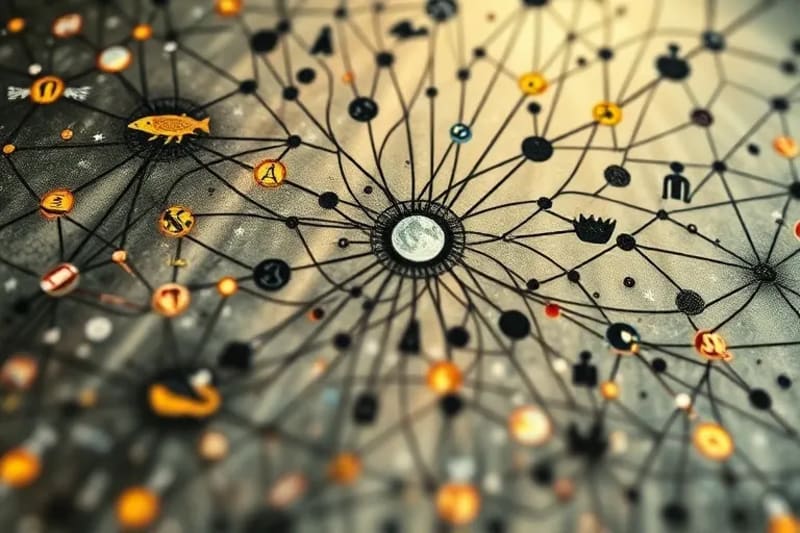
A complex neural network visually represents AI's ability to map and connect diverse dream symbols.
The development of deep learning, a subset of machine learning, has been a game-changer. Deep neural networks can process unstructured data, such as natural language descriptions of dreams, and extract meaningful features without explicit programming for every possible scenario. This capability is crucial for dream analysis, where narratives are often fragmented, metaphorical, and highly personal. By training these models on large datasets of dreams and their associated interpretations, AI can learn to identify latent connections and offer insights that might elude human analysis due to cognitive biases or limited exposure to diverse dream patterns.
How AI Interprets Dreams: Algorithmic Approaches
AI-enhanced dream interpretation leverages several sophisticated algorithmic approaches to convert subjective dream narratives into actionable insights. These methods work in conjunction to provide a comprehensive analysis.
- Natural Language Processing (NLP) for Dream Narratives: NLP is the cornerstone of AI dream analysis. When a user inputs a dream description, NLP algorithms parse the text, identifying key entities (people, objects, places), actions (verbs), and emotional tones. Techniques like sentiment analysis can detect the prevailing mood of the dream, while named entity recognition helps categorize specific elements. Advanced NLP models can even understand metaphors and abstract concepts, which are abundant in dream language.
- Pattern Recognition for Symbols and Themes: Once the dream narrative is processed by NLP, pattern recognition algorithms come into play. These algorithms compare the identified elements and their relationships within the dream to vast databases of dream symbols, archetypes, and psychological associations. They can detect recurring patterns within a single dream, across multiple dreams of an individual, or even across a large population, revealing common themes and underlying psychological dynamics.
- Machine Learning for Personalized Insights: Machine learning models, particularly deep learning networks, are trained on extensive datasets comprising dream reports, their traditional interpretations (from psychological texts, cultural folklore, etc.), and potentially user feedback. Over time, these models learn to associate specific dream elements and narrative structures with particular meanings. For personalized insights, the AI can learn from an individual's past dream entries and their interpretations, refining its understanding of their unique symbolic language. This allows the AI to offer interpretations that are increasingly tailored to the individual's psychological profile and life circumstances.
- Data Aggregation from Vast Dream Databases: The power of AI lies in its ability to process and learn from massive amounts of data. Dream interpretation platforms often aggregate anonymous dream reports from thousands or millions of users. This creates an unparalleled database for cross-referencing symbols, identifying statistical correlations between dream elements and waking life events (where consented), and uncovering universal dream patterns that might not be apparent from individual cases.
By combining these techniques, AI can move beyond simple dictionary-style symbol lookup. It can analyze the context in which a symbol appears, its interaction with other elements, and the emotional landscape of the dream to generate more nuanced and holistic interpretations. This multi-faceted approach aims to bridge the gap between subjective human experience and objective algorithmic analysis.
Benefits of AI-Powered Dream Analysis
The integration of AI into dream interpretation offers several compelling advantages, enhancing accessibility, objectivity, and depth of insight for individuals seeking to understand their nocturnal experiences.
- Objectivity and Speed: Unlike human interpreters who may bring their own biases or theoretical frameworks, AI can process dream narratives with a high degree of objectivity. It applies learned patterns consistently and can generate interpretations almost instantaneously, providing immediate feedback that can be particularly useful for those who want quick insights into their dreams.
- Access to Diverse Interpretations: AI models can be trained on a vast array of psychological theories, cultural symbolisms, and historical dream dictionaries. This allows them to offer a broader spectrum of potential interpretations for a given dream symbol or narrative, exposing users to different perspectives they might not encounter through a single human interpreter or a limited set of resources.
- Identification of Recurring Patterns: One of AI's most powerful capabilities is its ability to identify subtle, recurring patterns across multiple dream entries over time. An individual might not consciously notice that they frequently dream of certain animals, locations, or emotional states. AI can highlight these patterns, suggesting underlying psychological concerns, unresolved issues, or emerging themes in the dreamer's life that warrant further attention.
- Personalized Insights Over Time: As an AI system collects more data from a specific user, it can refine its interpretations to become increasingly personalized. By learning the individual's unique symbolic language, emotional responses, and life circumstances, the AI can offer insights that resonate more deeply and accurately with the dreamer's personal journey, moving beyond generic interpretations to highly tailored analyses.
- Accessibility and Affordability: AI-powered dream interpretation tools can be made widely accessible through mobile applications and web platforms, often at a lower cost than traditional therapy or one-on-one sessions. This democratizes access to self-exploration and psychological insight, enabling more people to engage with their subconscious minds regardless of geographical or financial barriers.
These benefits collectively contribute to a more efficient, comprehensive, and personalized approach to understanding dreams, empowering individuals with tools for self-discovery and personal growth.

The fusion of ancient dream texts with modern AI components represents a new era of understanding.
Challenges and Limitations
Despite the promising advancements, AI-enhanced dream interpretation faces significant challenges that must be addressed for its responsible and effective implementation. The subjective nature of dreams and the complexities of human psychology present inherent limitations for purely algorithmic approaches.
- Subjectivity of Human Experience: Dreams are deeply personal, influenced by individual life experiences, emotions, cultural background, and current psychological state. While AI can identify patterns, it struggles to fully grasp the nuanced, subjective meaning that a symbol holds for a specific individual. A "snake" might represent fear for one person, transformation for another, or a cultural deity for a third. AI's interpretations are statistical, not experiential.
- Lack of Emotional and Contextual Nuance: AI currently lacks genuine emotional intelligence and the ability to understand the subtle emotional context of a dream as a human therapist would. The emotional tone conveyed in a dream narrative might be misinterpreted, or the AI might miss crucial non-verbal cues that a human would pick up during a conversation. The "feeling" of a dream is often as important as its content.
- Ethical Concerns: Privacy and Data Security: Dream reports often contain highly sensitive personal information. Storing and processing this data raises significant privacy concerns. Robust data anonymization, encryption, and strict ethical guidelines are paramount to protect users' personal information from misuse or breaches. Users must be fully informed about how their data is collected, stored, and utilized.
- Risk of Over-Reliance and Misinterpretation: Over-reliance on AI interpretations could lead to superficial understanding or even misinterpretation if the AI's analysis is taken as absolute truth. Dreams are complex, and a single interpretation, even an AI-generated one, rarely captures the full depth of their meaning. There's a risk that users might stop engaging in critical self-reflection or seeking professional human guidance when needed.
- The "Black Box" Problem of AI: Many advanced AI models, particularly deep learning networks, operate as "black boxes," meaning their decision-making processes are not easily understandable or explainable by humans. This lack of transparency can make it difficult to trust or validate the AI's interpretations, especially when dealing with sensitive psychological insights.
Addressing these challenges requires a thoughtful, interdisciplinary approach, combining technological innovation with psychological expertise and strong ethical frameworks. The goal should be to augment human understanding, not replace it entirely.
Ethical Considerations and Future Outlook
The future of AI-enhanced dream interpretation hinges on the careful navigation of ethical considerations and the strategic integration of technology with human expertise. As this field evolves, several key areas will define its responsible development and maximize its positive impact.
- Data Anonymization and Consent: Strict protocols for data anonymization and explicit user consent are fundamental. Users must have clear control over their data, understanding how it's used for model training and research, and having the option to opt-out or delete their contributions at any time. Transparency in data handling is non-negotiable.
- User Education and Critical Engagement: Platforms offering AI dream interpretation should actively educate users about the nature of AI analysis – that it provides insights and perspectives, not definitive truths. Encouraging critical engagement with the interpretations and promoting self-reflection, rather than passive acceptance, is crucial for healthy psychological exploration.
- Integration with Human Therapists: The most promising future for AI in dream interpretation lies in its role as an assistive tool for human therapists and individuals, rather than a standalone replacement. AI can efficiently process initial dream reports, identify patterns, and suggest potential avenues for exploration, thereby enhancing the efficiency and depth of human-led therapy sessions. It can serve as a valuable "first pass" analysis, allowing therapists to focus on the emotional and subjective nuances.
- Potential for New Psychological Insights: By analyzing millions of dream reports, AI has the potential to uncover entirely new correlations and patterns in human psychology that were previously undetectable. This could lead to breakthroughs in our understanding of the subconscious, mental health, and the universal aspects of the human experience. AI could help validate or refine existing psychological theories and even generate new ones.
- Development of Explainable AI (XAI): Future AI systems for dream interpretation will ideally incorporate Explainable AI (XAI) techniques. XAI aims to make AI decisions transparent and understandable to humans, allowing users and professionals to see *why* an AI arrived at a particular interpretation. This will build trust and allow for better validation and refinement of the AI's output.
The journey of AI-enhanced dream interpretation is just beginning. By prioritizing ethical development, fostering collaboration between AI developers and psychological experts, and empowering users with informed tools, we can unlock the profound potential of artificial intelligence to illuminate the mysteries of our inner worlds and contribute significantly to personal growth and psychological well-being.
Conclusion
The integration of Artificial Intelligence into dream interpretation marks a significant paradigm shift in our quest to understand the subconscious. From ancient mystical practices to modern psychological theories, humanity has continuously sought meaning in dreams. AI now offers a powerful, objective, and scalable complement to these traditional methods, capable of sifting through vast datasets to uncover patterns, themes, and personalized insights with unprecedented speed and precision.
While the benefits of AI-powered analysis—including enhanced objectivity, broad access to interpretations, and the identification of recurring patterns—are substantial, it is crucial to acknowledge and address the inherent challenges. The subjective nature of human experience, the nuances of emotional context, and critical ethical considerations regarding privacy and potential over-reliance demand careful attention. The most effective future for AI in this domain is likely one of collaboration, where AI serves as an intelligent assistant, augmenting the capabilities of human therapists and empowering individuals with tools for deeper self-reflection.
As AI continues to evolve, with advancements in explainable AI and more sophisticated contextual understanding, its capacity to illuminate the rich tapestry of our dreams will only grow. By embracing this technology thoughtfully and ethically, we can unlock new frontiers in cognitive science and personal development, transforming how we engage with the profound symbolism of our nocturnal journeys. The dream world, once solely the domain of intuition and personal reflection, is now also becoming a landscape for algorithmic exploration, promising a future where the subconscious can be understood with greater clarity than ever before.
Fuente: Contenido híbrido asistido por IAs y supervisión editorial humana.


Comments
Post a Comment