
Palmistry Introduction: Reading Your Life's Map | StarPluto
Palmistry, also known as chiromancy, is an ancient practice of characterization and foretelling the future through the study of the palm. This fascinating art has been explored across various cultures for thousands of years, offering insights into an individual's personality, life path, and potential destiny. Far from being a mere superstition, palmistry is often viewed as a complex system of observation and interpretation, where the unique patterns on one's hands serve as a personal map.
From the intricate network of lines to the subtle contours of the mounts and the overall shape of the hand, every detail holds symbolic meaning. Understanding these elements can provide a profound sense of self-awareness and guidance. Whether you approach it as a spiritual discipline, a psychological tool, or simply a curiosity, palmistry invites you to look closer at the unique story etched into your hands. This introductory guide will delve into the fundamental principles, helping you begin to read your own life's map.
- The Ancient Origins and Evolution of Palmistry
- Decoding the Four Major Lines of the Palm
- Exploring the Minor Lines and Their Significance
- The Significance of the Mounts of the Palm
- Hand Shapes and Their Elemental Significance
- The Language of Fingers: Shape, Length, and Meaning
- Palmistry in the Modern World: Esotericism and Psychology
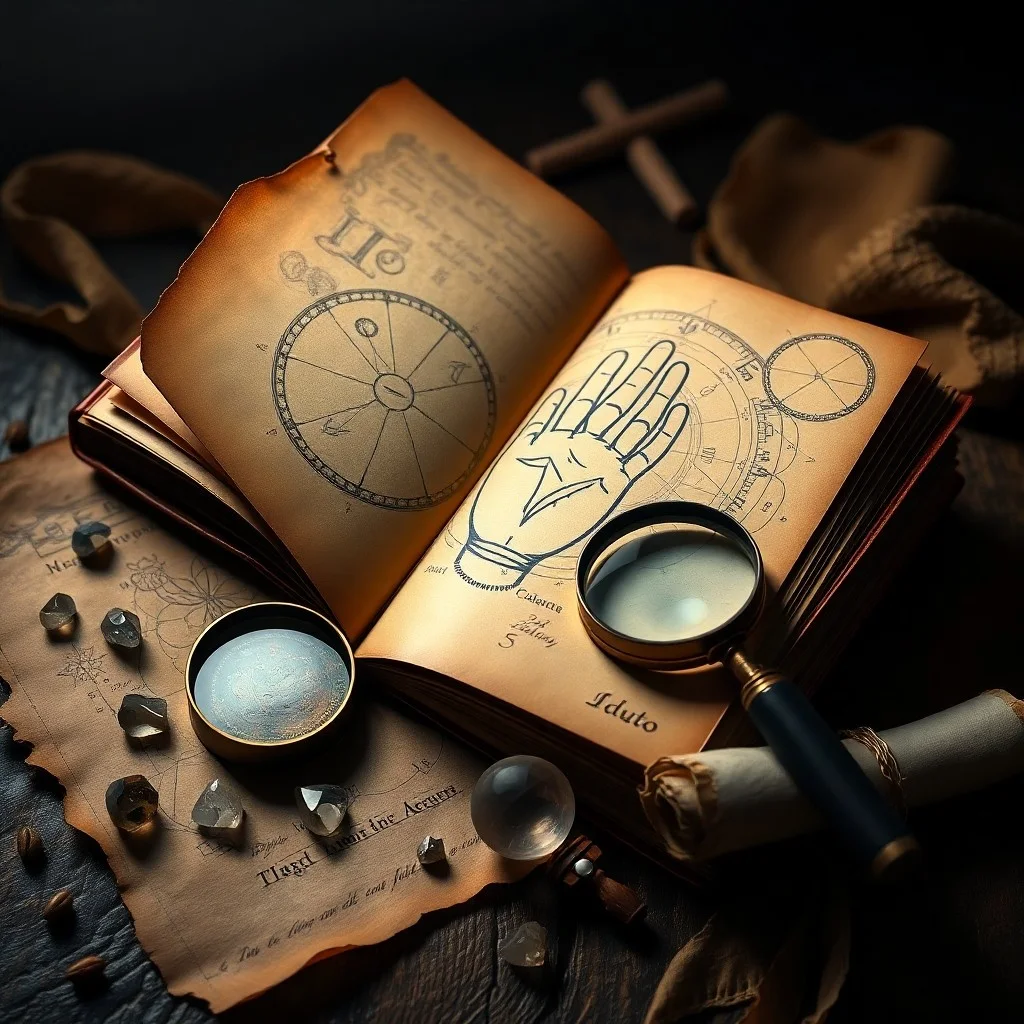
Explore the mystical art of Electional Astrology Timing Life Events Success Guide, where intricate lines and patterns on your hands reveal profound insights into your life's journey.
The Ancient Origins and Evolution of Palmistry
The practice of palmistry dates back thousands of years, with roots in ancient India, China, and Egypt. Early records suggest that it was a recognized art form in these civilizations, often intertwined with astrology, medicine, and spiritual practices. In India, it is known as "Samudrika Shastra," meaning the "knowledge of body features," and is deeply embedded in Vedic traditions. Ancient texts detail comprehensive systems for interpreting hand characteristics, linking them to planetary influences and karmic paths.
From its Eastern origins, palmistry spread to the West through trade routes and cultural exchange. Greek philosophers like Anaxagoras and Aristotle reportedly showed interest in chiromancy, with Aristotle even dedicating a chapter to it in his work "De Historia Animalium." During the Middle Ages, palmistry faced periods of suppression by the Church, being deemed a form of divination. However, it persisted in various forms, often practiced discreetly by scholars and mystics.
The Renaissance saw a resurgence of interest, with numerous treatises published on the subject. Modern palmistry, as we know it today, began to take shape in the 19th and 20th centuries, with figures like William John Warner (Cheiro) popularizing it through his books and readings. Today, it continues to be practiced worldwide, evolving from a strictly predictive art to a tool for self-understanding and psychological insight.
Decoding the Four Major Lines of the Palm
The palm features numerous lines, but four are considered the most significant, providing a foundational understanding of an individual's core characteristics and life trajectory. These are the Heart Line, Head Line, Life Line, and Fate Line. Each line offers a unique perspective on different aspects of one's existence, from emotional well-being to intellectual prowess and life's major events.
- The Heart Line (Linea Cordis): This horizontal line, located at the top of the palm, primarily reveals insights into emotional stability, romantic relationships, friendships, and overall emotional health. A long, clear, and unbroken Heart Line often indicates a loving and affectionate nature, while a short or chained line might suggest emotional restraint or past heartbreaks.
- The Head Line (Linea Cephalica): Running horizontally across the center of the palm, the Head Line is indicative of intellect, learning style, communication abilities, and decision-making processes. A straight, deep line suggests a practical and logical mind, whereas a curved or forked line can point to creativity, imagination, or adaptability in thought.
- The Life Line (Linea Vitae): Contrary to popular belief, the Life Line does not predict the length of one's life but rather indicates vitality, major life changes, physical health, and significant life events. It typically curves around the base of the thumb. A strong, well-defined line suggests robust health and a zest for life, while breaks or chains might signify periods of illness or significant transitions.
- The Fate Line (Linea Saturni): Also known as the Line of Destiny, this vertical line runs from the base of the palm towards the fingers. Not everyone has a prominent Fate Line, and its presence or absence, along with its characteristics, can reveal insights into career path, success, and external influences on one's life. A clear, strong Fate Line often indicates a sense of purpose and direction.
Exploring the Minor Lines and Their Significance
Beyond the major lines, several minor lines offer additional layers of detail to a palm reading. While not as universally prominent, their presence and characteristics can provide nuanced insights into specific areas of life. These lines often appear fainter and may change over time, reflecting evolving circumstances and personal growth. Understanding them adds depth to the overall interpretation of the hand.
- The Sun Line (Linea Solis): Also known as the Line of Apollo, this line runs parallel to the Fate Line and is associated with fame, success, creativity, and public recognition. A strong Sun Line indicates a life filled with accomplishment and artistic talent.
- The Mercury Line (Linea Hepatica): Often called the Health Line or Line of Intuition, it typically starts near the wrist and extends towards the little finger. It relates to health, communication skills, business acumen, and intuitive abilities.
- The Marriage Lines: These small horizontal lines are found on the side of the palm below the little finger. They are believed to indicate the number and nature of significant relationships or marriages in a person's life.
- The Travel Lines: Located at the base of the palm, these lines signify journeys, adventures, and the impact of travel on one's life. They can indicate both physical travel and significant life transitions.
- The Girdle of Venus: A semi-circle line found above the Heart Line, it is associated with emotional intensity, sensitivity, and artistic inclinations. Its presence can suggest a deep capacity for love and passion, but also emotional volatility.

Explore the historical artifacts and tools used in the ancient practice of Tarot Esoteric Geometry: Unlocking Universal Truths Sacred Shapes, reflecting centuries of wisdom.
The Significance of the Mounts of the Palm
The mounts are fleshy pads or raised areas on the palm, each named after a planet and associated with specific personality traits and energies. The prominence and characteristics of these mounts provide further depth to a palm reading, indicating the strength or weakness of the qualities they represent. A well-developed mount suggests a strong presence of its associated attributes, while a flat mount might indicate a lack thereof.
| Mount Name | Location | Associated Traits |
|---|---|---|
| Mount of Venus | Base of the thumb | Love, passion, sensuality, empathy, artistic appreciation. |
| Mount of Jupiter | Under the index finger | Ambition, leadership, pride, spirituality, honor. |
| Mount of Saturn | Under the middle finger | Responsibility, wisdom, prudence, solitude, destiny. |
| Mount of Apollo (Sun) | Under the ring finger | Creativity, success, fame, optimism, artistic talent. |
| Mount of Mercury | Under the little finger | Communication, business, intuition, wit, science. |
| Mounts of Mars (Upper & Lower) | Between Head & Heart lines (Upper); above Life Line (Lower) | Courage, aggression, resilience, self-control, physical energy. |
| Mount of Luna (Moon) | Opposite the Mount of Venus, below the Head Line | Imagination, intuition, creativity, dreams, psychic abilities. |
The interplay between these mounts and the lines traversing them creates a complex tapestry of information. For instance, a strong Mount of Jupiter combined with a clear Head Line might indicate a person with strong leadership qualities and intellectual ambition. Conversely, a flat Mount of Venus could suggest a less passionate or emotionally reserved individual. Interpreting these features requires careful observation and a holistic approach.
Hand Shapes and Their Elemental Significance
Beyond lines and mounts, the overall shape of the hand and the length of the fingers offer crucial insights into a person's fundamental nature. In palmistry, hands are often categorized into four elemental types: Earth, Air, Water, and Fire. Each type corresponds to distinct personality traits, strengths, and preferred ways of interacting with the world. This categorization provides a broad overview of an individual's temperament.
- Earth Hands: Characterized by square palms and short fingers. Individuals with Earth hands are typically practical, grounded, reliable, and hardworking. They value stability, routine, and tangible results. Their focus is often on the physical world and concrete achievements.
- Air Hands: Feature square or rectangular palms with long fingers. People with Air hands are intellectual, communicative, analytical, and curious. They thrive on mental stimulation, ideas, and social interaction. They can sometimes be detached or overthink situations.
- Water Hands: Distinguished by oval or rectangular palms with long, flexible fingers. Those with Water hands are emotional, intuitive, sensitive, and artistic. They are highly empathetic and driven by feelings, often possessing strong psychic abilities or a deep connection to the spiritual realm.
- Fire Hands: Identified by rectangular palms and short fingers. Individuals with Fire hands are energetic, passionate, enthusiastic, and action-oriented. They are natural leaders, often impulsive and adventurous, seeking excitement and new experiences.
Understanding your dominant hand shape can help you recognize your innate strengths and challenges. For example, an Earth hand might excel in practical professions, while a Water hand could find fulfillment in creative or healing arts. This elemental classification provides a foundational layer for more detailed palm interpretations.
The Language of Fingers: Shape, Length, and Meaning
Each finger on the hand, along with the thumb, contributes to the overall palmistry reading. Their length, shape, flexibility, and even the nails can provide additional clues about a person's character and potential. Just as the lines and mounts, fingers are associated with planetary influences, adding another dimension to the interpretation. The relative length of fingers, in particular, is a key indicator.

Visualize the unseen Tarot Esoteric Geometry: Unlocking Universal Truths Sacred Shapes and subtle patterns that palmistry seeks to interpret within the human hand.
- The Thumb: Represents willpower, logic, and self-control. A long, firm thumb indicates a strong will and logical mind, while a shorter, more flexible thumb might suggest adaptability and a more yielding nature. The segments of the thumb also offer insights into logic and will.
- Index Finger (Jupiter Finger): Associated with ambition, leadership, and ego. A long Jupiter finger suggests a desire for power and recognition, while a short one might indicate a lack of confidence or a preference for following rather than leading.
- Middle Finger (Saturn Finger): Represents responsibility, wisdom, and prudence. A well-proportioned Saturn finger points to a serious, thoughtful individual. An unusually long or short one can indicate an imbalance in these traits, such as excessive caution or recklessness.
- Ring Finger (Apollo/Sun Finger): Linked to creativity, artistic talent, and the desire for fame. A long Apollo finger often signifies a creative and expressive individual, sometimes with a penchant for risk-taking.
- Little Finger (Mercury Finger): Governs communication, business acumen, and intuition. A strong Mercury finger suggests excellent communication skills, persuasive abilities, and a sharp mind for business.
The overall impression of the fingers – whether they are knotty, smooth, pointed, or square – also contributes to the reading. Knotty fingers, for example, are often associated with analytical and philosophical minds, while smooth fingers might indicate a more intuitive and impulsive nature. Each detail builds upon the others to form a comprehensive profile.
Palmistry in the Modern World: Esotericism and Psychology
In contemporary society, palmistry occupies a unique space between ancient esoteric art and modern psychological insight. While its predictive aspects are often viewed with skepticism by the scientific community, many practitioners and enthusiasts find immense value in its ability to foster self-reflection and personal understanding. It's increasingly seen as a tool for personal growth rather than strict fortune-telling. The patterns on our hands are not static; they can subtly change over time, reflecting shifts in our personality, experiences, and decisions.
From a psychological perspective, the act of analyzing one's hands can be a powerful catalyst for introspection. It encourages individuals to consider their strengths, weaknesses, emotional patterns, and intellectual tendencies. The archetypal meanings associated with lines, mounts, and fingers can serve as prompts for self-analysis, helping people articulate their inner world. This makes palmistry a fascinating bridge between the mystical and the practical, offering a unique lens through which to view the human condition.
Moreover, the enduring appeal of palmistry lies in its universality. Hands are a fundamental part of human anatomy, and their intricate details offer a personalized canvas for interpretation. Whether you believe in its predictive power or simply appreciate its symbolic depth, exploring palmistry can be a journey of discovery, revealing aspects of yourself you might not have consciously recognized. It's a testament to humanity's continuous quest for meaning and self-knowledge, etched right into our very being.
As you delve deeper into the study of palmistry, remember that it is a guide, not a rigid decree. Your hands offer a map of your potential and tendencies, but your choices and actions ultimately shape your path. The true power of palmistry lies in its capacity to empower you with self-awareness, enabling you to navigate life with greater insight and intention. Embrace the journey of discovery that your hands invite you to embark upon, and uncover the unique story they tell about you.
Source: AI-assisted hybrid content and human editorial supervision.


Comments
Post a Comment