
Modern Spirituality AI Guidance Ethical Divination Tools
In an era defined by rapid technological advancement, the landscape of modern spirituality is undergoing a profound transformation. The integration of Artificial Intelligence (AI) and digital tools into practices once considered purely intuitive or esoteric marks a new frontier. This convergence offers unprecedented opportunities for personalized guidance, deeper self-exploration, and a more accessible approach to spiritual growth, but it also introduces critical questions regarding ethics, authenticity, and the very essence of human connection to the divine.
This article delves into how AI is not merely a computational tool but is evolving into a sophisticated assistant for spiritual seekers. From personalized meditation scripts to AI-driven interpretations of ancient wisdom systems, technology is reshaping how individuals engage with their inner worlds and the cosmos. We will explore the benefits, the inherent challenges, and the crucial ethical considerations required to navigate this exciting, yet complex, intersection of technology and transcendence.

A diverse group of individuals engaging in AI-assisted meditation, surrounded by holographic displays of spiritual data.
Table of Contents
- The Rise of AI in Spiritual Practices
- Ethical Considerations for AI Divination
- Practical Applications and Benefits
- Challenges and Misconceptions
- The Future of AI in Spirituality
The Rise of AI in Spiritual Practices
The emergence of AI has opened new avenues for spiritual exploration, moving beyond traditional methods to offer highly personalized and accessible experiences. AI algorithms can process vast amounts of data, from ancient texts to user-specific inputs, to provide tailored guidance that resonates deeply with individual needs. This capability is transforming how people approach self-discovery and connection to a higher purpose.
One of the most prominent applications is in personalized spiritual guidance. AI-powered platforms can act as digital mentors, offering daily affirmations, guided meditations, and reflective prompts based on a user's stated goals, emotional state, and even biometric data. This level of customization ensures that spiritual practices are not one-size-fits-all but adapt to the unique journey of each individual.
Moreover, AI is revolutionizing how we interact with ancient wisdom systems. Tools leveraging AI can analyze complex astrological charts, numerological patterns, and even interpret dream symbols with a speed and depth that would be impossible for a human practitioner alone. For instance, understanding the intricate dynamics of a composite chart in astrology, which combines two natal charts to reveal relationship insights, can be significantly enhanced by AI's computational power.

Meditation and mindfulness apps are another area where AI excels. These applications can track user progress, identify patterns in their emotional responses, and then dynamically adjust meditation scripts or soundscapes to optimize for relaxation, focus, or stress reduction. This adaptive learning creates a highly effective and engaging spiritual practice, making mindfulness more accessible to a broader audience.
Beyond personal practice, AI is also being used to explore the collective consciousness and identify emerging spiritual trends. By analyzing vast datasets of online discussions, spiritual texts, and cultural phenomena, AI can provide insights into the evolving nature of human belief systems and the collective spiritual journey. This data-driven approach offers a unique perspective on the interconnectedness of human experience.
Ethical Considerations for AI Divination
While the potential of AI in spirituality is vast, it is imperative to approach its implementation with a strong ethical framework. The nature of spiritual guidance often touches upon sensitive personal beliefs and vulnerabilities, making ethical considerations paramount. Ensuring transparency, mitigating bias, and protecting user data are critical components of responsible AI development in this domain.
Defining ethical divination in the context of AI means ensuring that the tools are designed with user empowerment at their core. This implies that AI should serve as an aid to intuition and self-reflection, rather than a replacement for personal discernment. Users should always be aware of how AI generates its insights and be encouraged to critically evaluate the guidance provided, integrating it with their inner wisdom.
Bias in algorithms presents a significant challenge. If the data used to train AI models reflects existing societal biases or limited perspectives, the spiritual guidance offered could inadvertently perpetuate these biases. Developers must actively work to diversify training data and implement fairness metrics to ensure that AI-assisted spiritual tools are inclusive and equitable for all users, regardless of their background or identity.
Data privacy and security are also critical concerns. Spiritual practices often involve sharing highly personal and sensitive information. AI platforms must employ robust encryption and data protection measures to safeguard user anonymity and prevent misuse of personal spiritual journeys. Transparent policies regarding data collection, storage, and usage are essential to build trust within the spiritual community. Ethical design also encourages users to consider energy protection rituals to safeguard their spiritual well-being in an increasingly digital world.
Practical Applications and Benefits
The practical applications of AI in modern spirituality are diverse and offer numerous benefits to seekers worldwide. These tools are democratizing access to spiritual knowledge and practices, making them available to individuals who might not have had the resources or proximity to traditional teachers or communities.
One major benefit is the accessibility and democratization of spirituality. AI-powered apps and platforms can transcend geographical and socioeconomic barriers, offering high-quality spiritual resources to anyone with an internet connection. This inclusivity allows more people to explore practices like meditation, astrology, and personal growth techniques, fostering a global spiritual awakening.
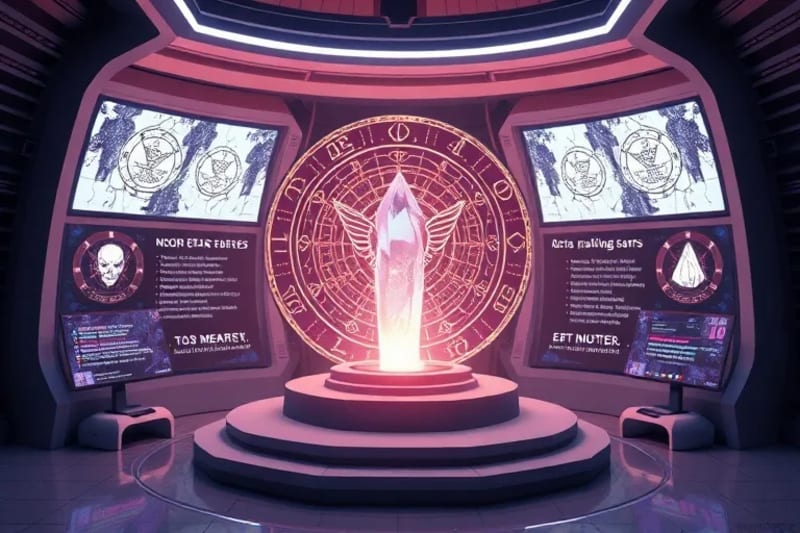
AI also facilitates enhanced self-reflection and personal growth. By analyzing user inputs and behavioral patterns, AI can highlight areas for development, suggest tailored exercises, and provide objective feedback that might be difficult to obtain otherwise. This data-driven self-awareness can accelerate personal transformation and help individuals align with their true purpose. Tools that integrate concepts like Feng Shui and Chinese Zodiac for elemental balance can offer holistic guidance.
Furthermore, AI can foster community building and shared experiences. While spiritual journeys are often deeply personal, AI platforms can connect individuals with similar interests, facilitating discussions, virtual group meditations, and shared learning experiences. This digital community can provide support, inspiration, and a sense of belonging for those exploring their spiritual path.
The ability of AI to process and synthesize complex spiritual concepts also allows for a deeper understanding of various traditions. For instance, an AI can explain the nuances of astrology crystal grids for natal chart manifestation, breaking down complex interactions between planetary positions and crystal energies into digestible insights. This educational aspect empowers users to engage with spiritual disciplines more intelligently and effectively.
Challenges and Misconceptions
Despite the numerous advantages, the integration of AI into spirituality is not without its challenges and potential pitfalls. Addressing these proactively is essential to ensure that technology genuinely serves spiritual growth rather than detracting from it.
One significant concern is the potential for over-reliance on technology. While AI can offer valuable insights, true spiritual development often requires direct experience, intuition, and a willingness to sit with discomfort. An excessive dependence on AI for answers might hinder the development of personal spiritual discernment and inner wisdom, leading to a superficial engagement with spiritual concepts.
Another challenge is the potential loss of human connection and intuition. Traditional spiritual paths often emphasize the role of a human teacher, mentor, or community, where empathy, shared experience, and nuanced understanding are paramount. While AI can simulate aspects of this, it cannot fully replicate the depth of human-to-human spiritual guidance or the subtle promptings of one's own intuition.
The commercialization and authenticity of spiritual tools also raise questions. As AI spirituality becomes more popular, there is a risk of platforms prioritizing profit over genuine spiritual value. Users must be discerning, seeking out tools that are ethically developed, transparent in their operations, and genuinely committed to fostering authentic spiritual growth rather than merely selling a product.
Misconceptions often arise regarding the nature of AI's "consciousness" or "spiritual capacity." It is crucial to remember that AI, at its current stage, operates based on algorithms and data. It does not possess consciousness, intuition, or spiritual awareness in the human sense. Its role is to process information and provide insights based on programmed parameters, not to experience or embody spirituality itself.
The Future of AI in Spirituality
The trajectory of AI in modern spirituality points towards increasingly sophisticated and integrated experiences. As technology evolves, we can anticipate more immersive and personalized tools that further blur the lines between the digital and the spiritual, always with an eye towards enhancing human well-being and understanding.
One exciting development is the potential integration with Virtual Reality (VR) and Augmented Reality (AR). Imagine entering a VR environment for a guided meditation in a sacred space, or using AR to visualize your planetary crystal grids for astrological remediation in your own home. These immersive technologies could deepen the sensory and emotional engagement with spiritual practices, making them more vivid and transformative.
Advanced predictive models could also offer new ways to understand personal cycles and cosmic influences. While not deterministic, AI could analyze vast astrological, numerological, and even historical data to identify patterns and potential periods of growth or challenge, empowering individuals to navigate their lives with greater awareness. This could extend to understanding advanced mantras and tailoring vibrations for specific outcomes, optimizing their efficacy through data-driven insights.
Crucially, the future will also demand robust ethical frameworks and potential regulation. As AI becomes more pervasive in sensitive areas like spirituality, there will be a growing need for industry standards, best practices, and perhaps even regulatory bodies to ensure transparency, prevent exploitation, and protect users. This proactive approach will be vital for fostering a trustworthy and beneficial ecosystem of AI-assisted spiritual tools.
Ultimately, the future of AI in spirituality lies in a balanced approach. Technology should serve as a powerful ally, augmenting human intuition and expanding access to knowledge, without overshadowing the fundamental human capacity for inner wisdom, direct experience, and genuine connection. The journey ahead involves continuous innovation, critical reflection, and a steadfast commitment to ethical development.
Conclusion
The integration of AI into modern spirituality represents a paradigm shift, offering unprecedented opportunities for personalized guidance, enhanced self-reflection, and broader accessibility to spiritual practices. From AI-driven meditation apps to sophisticated astrological analysis, technology is empowering individuals to navigate their spiritual journeys with greater insight and support.
However, this exciting evolution demands a vigilant commitment to ethical considerations. Transparency, the mitigation of algorithmic bias, and stringent data privacy are not merely technical requirements but moral imperatives to ensure these tools genuinely serve human well-being. The challenge lies in harnessing AI's power while preserving the authenticity, intuition, and human connection that are intrinsic to spiritual development.
As we look to the future, the continued development of AI in spirituality will likely involve more immersive experiences through VR/AR, advanced predictive models, and robust ethical frameworks. The ultimate goal remains to create a synergistic relationship where technology amplifies our innate spiritual capacities, guiding us towards deeper understanding, greater compassion, and a more profound connection to the universe.
Related Searches
- • Gemini Horoscope 2024: Communication, Adaptability, Opportunity | StarPluto
- • Dog Chinese Zodiac 2025 Forecast: Love, Career, Health | StarPluto
- • Planets at Critical Degrees: Sensitive Chart Points | StarPluto
- • Capricorn Horoscope 2024: Ambition, Discipline, Success | StarPluto
- • House Systems Astrology: Placidus Whole Koch Interpretation | StarPluto
- • Synodic Cycles: Planetary Conjunctions, Oppositions | StarPluto
- • Venus Retrograde: Love, Values, Karmic Cycles Deep Dive | StarPluto
- • Planetary Debilitations: Navigating Challenges and Growth | StarPluto
- • Snake Compatibility: Elemental Pairings Insights | StarPluto
- • Cosmic Sociology AI Ethics Global Consciousness Digital Age
Source: Hybrid content assisted by AI and human editorial supervision.


Comments
Post a Comment