
Mesoamerican Astrology: Cosmic Cycles, Celestial Mechanics
Beyond the familiar twelve signs of the Western zodiac, ancient Mesoamerican civilizations developed sophisticated astrological systems deeply intertwined with their cosmology, religion, and daily life. These complex frameworks, primarily from the Maya, Aztec, and Olmec cultures, offered profound insights into cosmic cycles and celestial mechanics, guiding everything from agricultural practices to political decisions and personal destinies. Their understanding of the cosmos was not merely observational but predictive, built upon centuries of meticulous astronomical record-keeping and mathematical precision.
Unlike Western astrology, which often focuses on individual personality traits based on birth charts, Mesoamerican astrology emphasized the cyclical nature of time and the influence of divine forces on collective and individual events. It was a holistic system where the movements of celestial bodies were seen as manifestations of divine will and cosmic order, dictating the ebb and flow of life on Earth. Understanding these cycles was paramount for maintaining harmony with the universe.
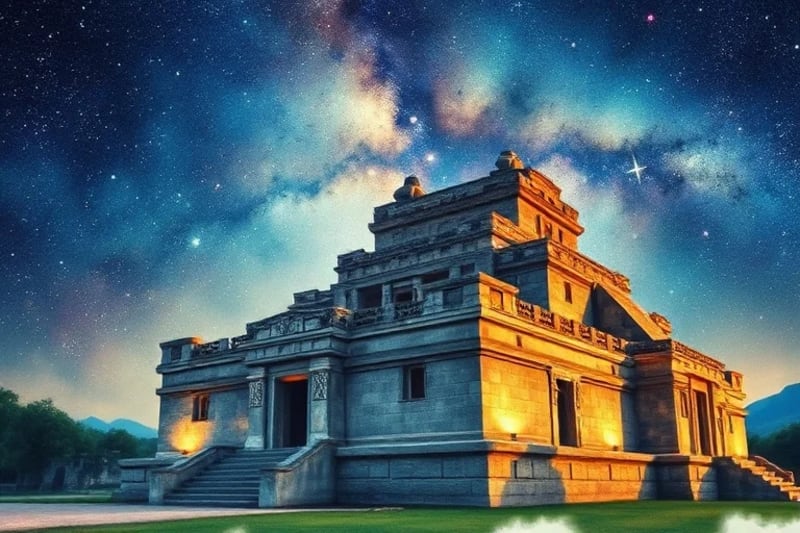 Visualizing the intricate celestial observations and architectural prowess of ancient Mesoamerican civilizations, pivotal to their astrological systems.
The Foundation of Mesoamerican Astrology: Calendar Systems
The cornerstone of Mesoamerican astrological thought lay in its highly advanced and interconnected calendar systems. These were not merely tools for tracking days but intricate mechanisms for mapping cosmic energies and predicting auspicious or inauspicious periods. The two most prominent calendars were the Tzolkin (or Sacred Round) and the Haab' (or Civil Calendar), which worked in conjunction to create the Calendar Round.
The Tzolkin, a 260-day cycle, combined 20 day-names with 13 numbers. Each day had a unique combination, and its specific energy was believed to influence events and individuals born on that day. This calendar was primarily used for divinatory purposes, determining the character of a person, the best time for rituals, or the outcome of significant undertakings. Its rhythm was deeply sacred and resonated with human gestation periods and agricultural cycles.
The Haab', a 365-day solar calendar, was more akin to our modern calendar, consisting of 18 months of 20 days each, plus a final period of 5 "unlucky" days known as the Wayeb'. This calendar tracked agricultural seasons, public ceremonies, and the passage of the solar year. While less directly divinatory than the Tzolkin, its cycles were crucial for understanding the broader environmental and societal rhythms.
The Calendar Round, a 52-year cycle, resulted from the interlocking of the Tzolkin and Haab'. A specific date would not repeat for 52 years, marking a significant period of cosmic alignment and renewal. At the end of each 52-year cycle, elaborate ceremonies were held to avert cosmic catastrophe and ensure the sun would rise again, symbolizing a profound connection between human action and celestial order.
Beyond these, the Maya also utilized the Long Count calendar, a linear count of days from a mythological starting point, allowing them to track vast spans of time. This system enabled them to record historical events and predict astronomical phenomena with remarkable precision over millennia, showcasing their advanced understanding of predicting life periods and cosmic patterns.
Celestial Mechanics and Astronomical Observations
Mesoamerican civilizations were exceptional astronomers, meticulously observing and recording the movements of celestial bodies. Their architectural marvels, such as El Caracol at Chichen Itza, served as sophisticated observatories, aligned to track solstices, equinoxes, and the extreme positions of Venus. These observations were not merely for scientific curiosity but formed the bedrock of their astrological interpretations.
The Sun was revered as a primary deity, governing life, warmth, and the agricultural cycle. Its daily journey and annual path were central to both the Haab' calendar and the broader cosmic understanding. The solstices and equinoxes were moments of profound spiritual significance, marking transitions in cosmic energy and influencing rituals and prophecies. For instance, the summer solstice often coincided with important agricultural ceremonies, reflecting the sun's life-giving power.
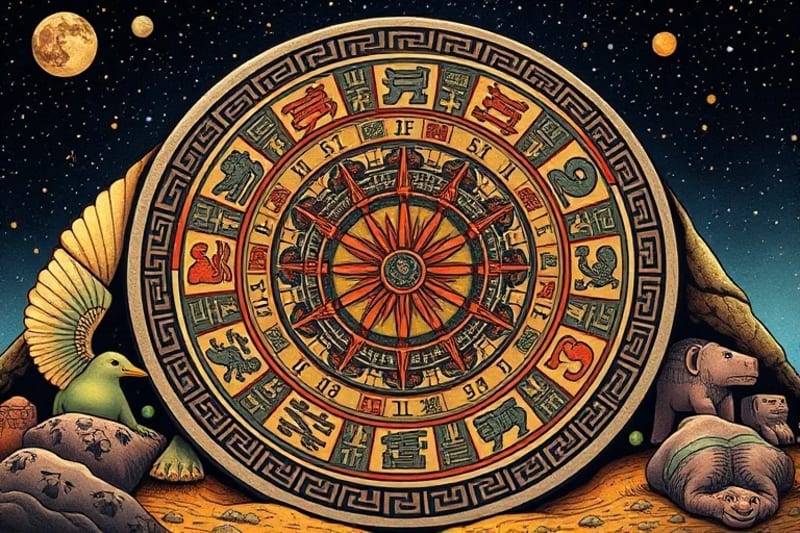 The intricate glyphs and cosmic symbols embedded within the Aztec calendar stone, reflecting a profound understanding of time and celestial influence.
The Moon also held immense importance, particularly for its influence on tides, agriculture, and feminine cycles. Its phases were carefully tracked, often correlating with specific rituals and agricultural activities. The Maya, in particular, developed highly accurate tables for predicting lunar eclipses, demonstrating an advanced grasp of lunar mechanics. This deep connection to lunar rhythms is echoed in modern concepts of aligning daily habits with moon phases.
Perhaps the most significant celestial body after the Sun and Moon was Venus. Known as the "Morning Star" and "Evening Star," its heliacal rise and set were meticulously charted. The Maya, for example, had a Venus cycle of 584 days, which they knew with astonishing accuracy. The movements of Venus were often associated with warfare, political events, and the rise and fall of leaders, making its predictions vital for statecraft.
Beyond these, other planets like Mars, Jupiter, and Saturn were also observed, though their roles in Mesoamerican astrology might have been less prominent than those of the Sun, Moon, and Venus. Comets and supernovae were often interpreted as omens, signaling significant changes or divine interventions. The ability to predict these celestial events was a source of immense power and legitimacy for the priestly class, who acted as intermediaries between the human and cosmic realms.
Cosmic Cycles and Their Influence
The concept of cyclical time was fundamental to Mesoamerican thought. They believed that history repeated itself in predictable patterns, and understanding these patterns allowed them to navigate the future. Each day, month, and year carried a unique energetic signature, influenced by the interplay of various calendar cycles and celestial positions. This deterministic view meant that events were often seen as preordained, though human actions could influence their severity or outcome.
For individuals, the day of birth within the Tzolkin calendar was particularly significant, imbuing a person with specific characteristics, strengths, and challenges. These "birth signs" were not merely personality indicators but also dictated a person's fate and potential life path. Priests and diviners would consult these calendars to advise on marriages, journeys, and even the naming of children, ensuring alignment with favorable cosmic energies.
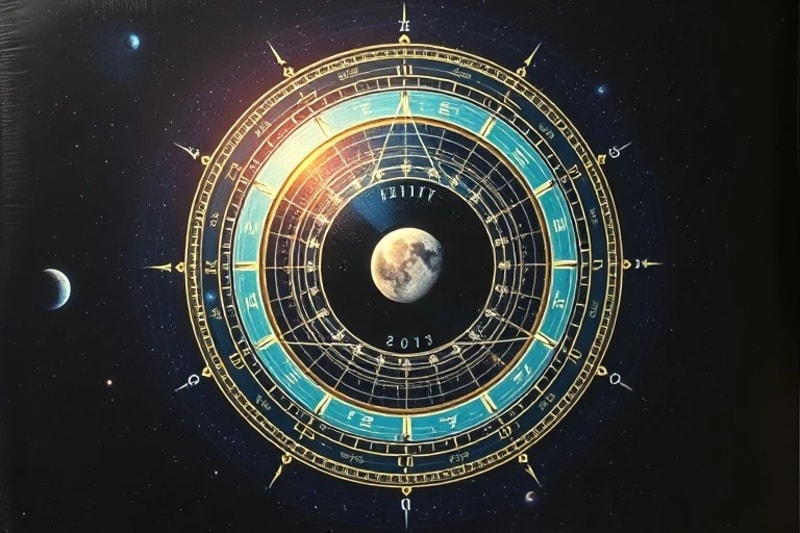 A 3D rendering illustrating the interconnectedness of planetary paths and the intricate calendar wheels, symbolizing the holistic nature of Mesoamerican cosmic understanding.
At a societal level, the cosmic cycles influenced agricultural planning, warfare, and the timing of religious festivals. Planting and harvesting were timed to coincide with auspicious celestial alignments, believed to ensure bountiful crops. Military campaigns were often launched or avoided based on astrological predictions, with Venus's movements being particularly influential in determining the success of battles. This profound integration of astrology into daily life highlights a world where the spiritual and the practical were inseparable.
The concept of "world ages" or "suns" was another crucial aspect of their cosmology, particularly for the Aztecs. They believed that the world had undergone several creations and destructions, each ruled by a different sun, culminating in the current Fifth Sun. The end of these cycles was often associated with cataclysmic events, reinforcing the idea of cosmic renewal and the cyclical nature of existence. This cyclical worldview provided a framework for understanding both individual destiny and the grand sweep of history.
Comparison with Western Astrology and Modern Relevance
While both Mesoamerican and Western astrology seek to understand the influence of celestial bodies, their methodologies and philosophical underpinnings differ significantly. Western astrology, rooted in Babylonian and Greek traditions, primarily uses the tropical zodiac, focusing on the Sun's apparent path through constellations and creating individual birth charts based on precise time and location of birth. It emphasizes personality, psychological tendencies, and potential life events.
Mesoamerican astrology, conversely, is deeply tied to its unique calendar systems and a more collective, cyclical understanding of time. It emphasizes the energies of specific days and larger cosmic cycles, often linking them to deities and broader societal patterns rather than detailed individual psychological profiles. The focus is less on "what kind of person are you" and more on "what is the cosmic energy of this day/period" and "how does your birth day align with these energies."
Despite these differences, both systems share a fundamental belief in the interconnectedness of the cosmos and human existence. The precision with which Mesoamerican astronomers tracked celestial movements rivals that of many Old World civilizations, demonstrating a universal human drive to understand our place in the universe. Modern interest in these ancient systems is growing, with researchers and enthusiasts exploring their complex calculations and profound philosophical insights.
The study of Mesoamerican astrology offers a unique lens through which to view human history, scientific achievement, and spiritual belief. It reminds us that there are diverse ways to interpret the heavens and that ancient wisdom often holds keys to understanding our world. As we continue to explore the digital age and its impact on ancient practices, the principles of Tarot Quantum Mechanics Intersecting Divination Reality might even find parallels in the systematic calculations of these ancient cultures.
The legacy of Mesoamerican astrology is a testament to the intellectual curiosity and spiritual depth of these ancient peoples. Their ability to integrate complex astronomical observations with a rich tapestry of mythology and daily life created a system that profoundly shaped their societies for millennia. It continues to inspire awe and provide valuable lessons about the cyclical nature of existence and our enduring connection to the cosmos.
Key Concepts and Their Meanings
To fully appreciate Mesoamerican astrology, understanding its core terminology and concepts is essential. The intricate interplay of these elements formed a comprehensive system for interpreting cosmic influences.
- Tzolkin (Sacred Round): A 260-day divinatory calendar combining 20 day-signs with 13 numbers. Each day had a unique energy and was used for personal destiny, ritual timing, and prophecy.
- Haab' (Civil Calendar): A 365-day solar calendar, comprising 18 months of 20 days plus a 5-day Wayeb' period. Used for agricultural cycles, civic events, and tracking the solar year.
- Calendar Round: The 52-year cycle formed by the interlocking of the Tzolkin and Haab', marking a significant period of cosmic alignment and renewal.
- Long Count: A linear calendar system used by the Maya to track vast periods of time from a mythological starting point, enabling precise historical and astronomical record-keeping.
- Day-Signs: The 20 distinct glyphs or names in the Tzolkin calendar, each representing specific energies, deities, and characteristics. Examples include Imix (Crocodile/Earth), Ik (Wind/Spirit), Akbal (Night/Darkness).
- Numbers (Tones): The 13 numerical coefficients in the Tzolkin, which combined with day-signs to create unique energetic signatures. Each number also carried its own meaning and influence.
- Venus Cycle: The highly accurate tracking of the planet Venus's 584-day synodic cycle, crucial for predicting warfare, political events, and other significant societal shifts.
- World Ages (Suns): The Aztec concept of cyclical creations and destructions of the world, each presided over by a different "sun," leading to the current Fifth Sun.
The Role of Priests and Scribes
In Mesoamerican societies, the interpretation and application of astrological knowledge were primarily the domain of a specialized class of priests and scribes. These individuals underwent rigorous training, mastering complex mathematical systems, astronomical observations, and esoteric knowledge passed down through generations. They were the custodians of sacred texts, including codices that contained detailed calendar calculations, astronomical tables, and divinatory guides.
Priests served as intermediaries between the human realm and the divine cosmos. They performed rituals, made prophecies, and advised rulers on critical decisions, from the timing of coronations to the declaration of war. Their ability to predict celestial events and interpret cosmic omens granted them immense authority and influence within their communities. Scribes meticulously recorded these observations and interpretations, ensuring the continuity of this vital knowledge.
The intricate nature of these systems required a dedicated intellectual elite. Their work was not just about predicting the future but about maintaining cosmic balance and ensuring the well-being of their people. They understood that human actions had ripple effects throughout the cosmos, and aligning with favorable energies was crucial for prosperity and survival. This deep respect for cosmic order shaped every aspect of Mesoamerican civilization.
The legacy of these ancient astrologers and astronomers continues to fascinate and inspire. Their profound understanding of celestial mechanics, coupled with a rich spiritual framework, offers a powerful reminder of humanity's enduring quest to comprehend the universe and its influence on our lives. Their insights into cosmic cycles and the interconnectedness of all things remain relevant, even in our modern, technologically advanced world.
The following table provides a concise comparison of the key features of the Tzolkin and Haab' calendars:
| Feature | Tzolkin (Sacred Round) | Haab' (Civil Calendar) |
|---|---|---|
| Cycle Length | 260 days | 365 days |
| Components | 20 day-signs x 13 numbers | 18 months of 20 days + 5 Wayeb' days |
| Primary Use | Divination, personal destiny, ritual timing | Agricultural cycles, civic events, solar year tracking |
| Repetition Cycle | Every 260 days | Every 365 days |
| Interlocks With | Haab' to form Calendar Round | Tzolkin to form Calendar Round |
| Cultural Significance | Sacred, spiritual, personal influence | Secular, practical, societal influence |
Frequently Asked Questions about Mesoamerican Astrology
Here are some common questions regarding the fascinating world of Mesoamerican astrology:
What is the main difference between Mesoamerican and Western astrology?
Mesoamerican astrology primarily focuses on the cyclical nature of time and the collective influence of cosmic energies based on intricate calendar systems like the Tzolkin and Haab'. Western astrology, conversely, emphasizes individual personality traits and psychological profiles derived from birth charts based on planetary positions within the tropical zodiac.
Which celestial bodies were most important in Mesoamerican astrology?
The Sun, Moon, and Venus were the most significant celestial bodies. The Sun governed life and agricultural cycles, the Moon influenced tides and feminine rhythms, and Venus was crucial for predicting warfare and political events. Other planets and phenomena like comets were also observed for omens.
Further Exploration of Cosmic Wisdom
The profound legacy of Mesoamerican astrology continues to offer fertile ground for study and contemplation. Its intricate systems of timekeeping and celestial observation reveal a deep reverence for the cosmos and a sophisticated understanding of its influence on human existence. Exploring these ancient traditions can broaden our perspective on astrology and the diverse ways humanity has sought to connect with the universe.
For those interested in delving deeper into astrological concepts, understanding your chart ruler can provide insights into your core identity, much like how Mesoamerican day-signs influenced personal destiny. The universal human desire to understand fate and purpose transcends cultural boundaries, manifesting in unique yet equally profound systems.
The study of ancient civilizations' astronomical knowledge, such as that of the Maya and Aztecs, is vital for understanding the origins of science and human intellectual development. Their precise calendars and observatories represent a pinnacle of pre-Columbian scientific achievement.
These systems were not merely superstitions; they were sophisticated tools for managing complex societies, scheduling agricultural activities, and even predicting political outcomes based on observed celestial patterns over centuries.
The enduring appeal of Mesoamerican astrology lies in its holistic approach, where every aspect of life was seen as interwoven with the cosmic dance. It provides a powerful counterpoint to more individualized astrological systems, reminding us of the collective rhythms that shape our world and the profound wisdom embedded in ancient observations.
Conclusion: A Legacy of Cosmic Insight
Mesoamerican astrology, with its intricate calendar systems, precise celestial mechanics, and profound cosmic cycles, represents a monumental achievement of ancient civilizations. It was a comprehensive worldview that integrated astronomy, religion, mathematics, and daily life into a seamless tapestry. The Maya, Aztec, and Olmec peoples did not just observe the stars; they lived by them, allowing the heavens to guide their societies and individual destinies.
The legacy of this cosmic insight continues to resonate, offering valuable lessons about the cyclical nature of time, the interconnectedness of all things, and the enduring human quest to understand our place in the grand design of the universe. Studying these ancient systems enriches our understanding of astrology as a global phenomenon and highlights the diverse paths humanity has taken to decipher the celestial messages above.
Related Searches
- Astrology for Creatives: Nurturing Your Artistic Spirit Through Your Chart | StarPluto
- Chrono-Astrology Ancestral Echoes Navigating Personal Time Cycles
- Chiron Astrology Healing Wounds: Birth Chart Guide | StarPluto
- Venus in Signs: Love Language & Aesthetic | StarPluto
- Jupiter in Signs: Luck and Expansion Explained | StarPluto
- Dream Incubation Numerology: Subconscious Solutions
- Trine Alliances Chinese Astrology: Beyond 12 Animals | StarPluto
- Manifestation Techniques: Create Reality with Intention | StarPluto
- Snake Rabbit Compatibility: Zodiac Analysis | StarPluto
- Five Elements Interaction Cycle Advanced Chinese Zodiac | StarPluto
- Cancer Zodiac Sign: Emotional Depth, Nurturing Instincts | StarPluto
Source: Hybrid content assisted by AI and human editorial supervision.


Comments
Post a Comment