
AI Astrological Forecasting: Collective Trends Big Data
The ancient practice of astrology, long rooted in observation and symbolic interpretation, is now entering an unprecedented era of transformation. The advent of Artificial Intelligence (AI) and the vast capabilities of Big Data are beginning to reshape how we understand and predict collective trends through the lens of planetary movements. This innovative convergence promises to unlock deeper insights into societal patterns, economic cycles, and cultural shifts, moving beyond individual horoscopes to a broader, more nuanced understanding of humanity's journey.
AI-powered astrological forecasting represents a paradigm shift, offering tools to process immense quantities of historical and real-time data that would be impossible for human analysts alone. By integrating complex algorithms with astronomical calculations and historical events, this new frontier in astrology aims to identify correlations and predictive models with a level of precision previously unattainable. It's an exciting prospect for those seeking to understand the intricate dance between cosmic influences and earthly phenomena.
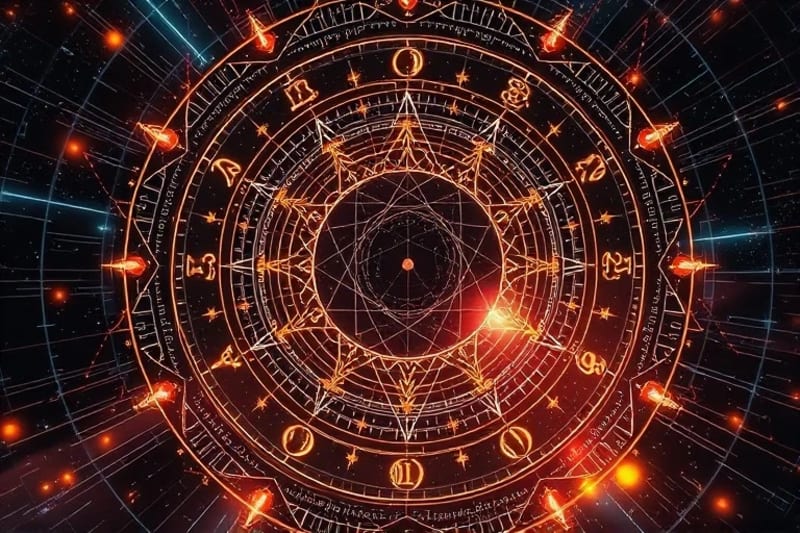
An ethereal representation of AI processing astrological data, revealing hidden cosmic connections and future trends.
This article explores the foundational concepts behind AI-powered astrological forecasting, delving into how artificial intelligence can analyze vast datasets, interpret complex transit patterns, and offer predictions for collective trends. We will examine the potential applications of this technology, alongside the ethical considerations that arise when blending ancient wisdom with cutting-edge computational power. Join us on a journey to discover how the stars, interpreted by machines, might illuminate our collective future.
Table of Contents
- The Convergence of Astrology and Artificial Intelligence
- Big Data in Astrological Analysis
- Transits and Collective Trends: An AI Perspective
- Applications and Ethical Considerations
- The Future of Astrological Prediction
The Convergence of Astrology and Artificial Intelligence
Astrology, in its essence, is a system of divination that correlates celestial events with earthly occurrences. For millennia, astrologers have meticulously observed planetary movements, recorded historical events, and developed intricate interpretive frameworks. However, the sheer volume and complexity of these correlations have always presented a significant challenge, limiting the scope and precision of human analysis.
Artificial Intelligence, particularly through machine learning and deep learning algorithms, offers a powerful solution to this challenge. AI systems can be trained on vast historical datasets, including astrological charts, significant global events, economic indicators, and even social media sentiment. This allows them to identify subtle patterns, correlations, and predictive indicators that might be imperceptible to the human eye.
The core idea is to move beyond anecdotal evidence and subjective interpretation towards a more data-driven approach. While the symbolic language of astrology remains vital, AI can help validate or refine these symbols by demonstrating their statistical relevance across historical contexts. This convergence doesn't seek to replace human intuition but to augment it with unparalleled analytical power, opening new avenues for astrological research and application.
Big Data in Astrological Analysis
Big Data refers to datasets so large and complex that traditional data processing applications are inadequate. In the context of astrology, this includes an enormous array of information. This data can encompass precise astronomical positions for centuries, historical records of political upheavals, economic booms and busts, technological innovations, and even cultural shifts like artistic movements or philosophical trends.
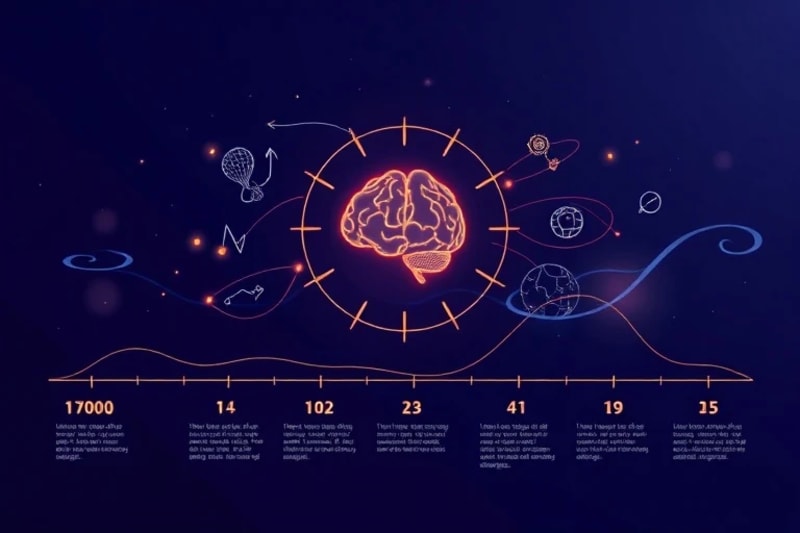
Visualizing the intricate correlation between historical events and astrological transits through big data analysis.
AI algorithms excel at finding hidden correlations within these massive datasets. For instance, an AI could analyze thousands of historical periods marked by specific planetary alignments (e.g., Uranus-Pluto conjunctions) and cross-reference them with socio-economic indicators, technological breakthroughs, or significant cultural paradigm shifts. This allows for the identification of consistent patterns that might indicate a statistically significant relationship between celestial mechanics and collective human experience.
The challenges, however, are substantial. Data quality, the sheer volume of information, and the need for robust computational infrastructure are all critical factors. Moreover, ensuring that the AI models are not simply finding spurious correlations but genuine, repeatable patterns requires careful validation and a deep understanding of both astrological principles and data science methodologies. The goal is to move beyond simple pattern recognition to predictive modeling that can forecast future collective trends with a degree of reliability.
Transits and Collective Trends: An AI Perspective
Astrological transits refer to the ongoing movements of planets in the sky relative to a specific point in time, such as the present moment or a historical event. These transits are believed to activate or influence natal chart placements, creating dynamic energies that manifest in individual and collective experiences. Traditionally, astrologers interpret these transits based on established planetary meanings and aspects.
With AI, the analysis of transits reaches a new level of sophistication. Instead of focusing on a few prominent transits, AI can simultaneously process hundreds or even thousands of planetary interactions over vast periods. It can identify complex, multi-layered transit patterns that correspond to specific collective phenomena, such as periods of rapid technological advancement, economic recessions, or shifts in global power dynamics. For example, AI could analyze the historical impact of ecological astrology cycles in relation to major environmental policy changes.
Consider the long-term transits of outer planets like Pluto, Uranus, and Neptune, which are associated with generational shifts and profound societal transformations. An AI system could analyze every Pluto transit through a specific sign over recorded history, correlating it with corresponding societal structures, power dynamics, and collective psychological states. This could reveal robust patterns linking specific cosmic configurations to predictable collective trends, offering new insights into the cyclical nature of history and human development.
Applications and Ethical Considerations
The potential applications of AI-powered astrological forecasting are diverse and far-reaching. In finance, it could help predict market volatility or long-term economic cycles, offering a novel layer of analysis for investors and astrology entrepreneurs. For policymakers, understanding potential periods of social unrest, innovation, or shifts in collective consciousness could inform strategic planning and resource allocation. Even in personal development, understanding broader collective energies could help individuals navigate their own paths more effectively, perhaps even integrating aspects of shadow work on a societal level.
A human figure contemplating a holographic astrological chart, symbolizing the blend of ancient wisdom and AI-driven insights.
However, this powerful technology also brings significant ethical considerations. One concern is the risk of determinism. If AI can predict collective trends with high accuracy, how might this impact human free will and agency? There's a fine line between informed foresight and fatalistic acceptance. Bias in data is another crucial issue; if the historical data used to train AI models contains inherent biases, the predictions could perpetuate or amplify those biases, leading to inaccurate or even harmful conclusions.
Privacy concerns also arise, especially if personal data were ever integrated into such systems for highly personalized collective forecasting. The role of human interpretation remains paramount. AI can identify patterns, but the nuanced understanding of their meaning, implications, and how to respond to them still requires human wisdom, ethics, and critical thinking. The technology should serve as a tool for deeper understanding, not as an oracle to be blindly followed.
The Future of Astrological Prediction
The future of astrological prediction, augmented by AI and Big Data, is likely to be characterized by increasing sophistication and integration. We can anticipate AI models becoming more adept at identifying subtle, multi-layered cosmic influences, moving beyond simple planetary aspects to incorporate more complex factors like fixed stars, asteroids, and even galactic center influences. This could lead to a more holistic and accurate predictive framework.
Furthermore, AI could facilitate the integration of astrological insights with other predictive models from fields like sociology, economics, and climatology. This interdisciplinary approach could yield a more comprehensive understanding of complex global phenomena. The development of user-friendly interfaces could also democratize access to these advanced forecasts, allowing a broader audience to benefit from these insights into collective trends.
Ultimately, the evolution of AI-powered astrological forecasting represents a fascinating frontier in humanity's quest for self-understanding and foresight. It offers the promise of bridging ancient wisdom with modern technology, providing a powerful lens through which to observe, interpret, and potentially navigate the intricate currents of our collective destiny. The journey ahead will undoubtedly involve continuous innovation, careful ethical consideration, and a collaborative spirit between astrologers, data scientists, and ethicists.
Here are some key benefits of integrating AI into astrological forecasting:
- Enhanced Pattern Recognition: AI can detect subtle, complex correlations in vast datasets that humans might miss.
- Increased Predictive Accuracy: By analyzing more variables and historical outcomes, AI can refine predictive models.
- Efficiency and Speed: Automating data processing and analysis saves time and resources.
- Objective Analysis: AI can reduce subjective biases inherent in human interpretation, offering a more neutral perspective.
- Interdisciplinary Integration: Facilitates combining astrological data with economic, social, and environmental data for holistic insights.
- Scalability: Capable of analyzing global trends and local impacts simultaneously.
Below is a comparison highlighting the differences between traditional astrological analysis and AI-powered forecasting:
| Feature | Traditional Astrological Analysis | AI-Powered Astrological Forecasting |
|---|---|---|
| Data Volume | Limited to human-manageable records and observations. | Vast datasets, including historical events, economic indicators, social trends. |
| Pattern Detection | Relies on established astrological rules and human intuition. | Machine learning algorithms identify complex, hidden correlations. |
| Speed of Analysis | Manual, time-consuming interpretation. | Rapid processing of large datasets, real-time analysis. |
| Objectivity/Subjectivity | Highly subjective, influenced by individual astrologer's experience. | More objective, data-driven patterns, though model bias is a factor. |
| Predictive Scope | Often focused on individual or smaller collective trends. | Capable of forecasting broad collective, societal, and global trends. |
| Methodology | Symbolic interpretation, qualitative analysis. | Statistical modeling, quantitative analysis, pattern recognition. |
Related Insights & Further Reading
- Synastry Chart Overlays: Advanced Interaspects for Relationship Dynamics
- Sacred Geometry: Platonic Solids in Meditation & Manifestation
- Lilith 10th House: Reclaiming Wild Feminine Public Life
- Ecological Astrology: Earth's Cycles, Environmental Impact
- Snake Monkey Compatibility: Chinese Zodiac Insights
- Aries Cardinal Energy: Assertiveness, Initiative in Birth Chart
- Shadow Work: Integrating Darker Aspects for Wholeness
- Astrology Entrepreneurs Business Success Innovation
- Chiron Astrology: Healing Soul Wounds
- Rooster Chinese Zodiac: Elemental Traits
- Spirit Guide Communication: Creative Channeling Methods
- Shadow Work Astrology: Integrating Unconscious Self for Wholeness
- Galactic Center Fixed Stars Esoteric Influences Soul Purpose Natal Charts
- Conscious Coupling: Law Attraction Soulmate Synastry Guide
- Planetary Dignities Medical Astrology: Diagnosing Constitutional Strengths
Source: Hybrid content assisted by AI and human editorial supervision.


Comments
Post a Comment