
Five Elements Interaction Cycle Advanced Chinese Zodiac | StarPluto
The Five Elements (Wu Xing) theory is a cornerstone of Chinese philosophy, medicine, and metaphysics, offering a profound framework for understanding the universe and its intricate dynamics. Far from being mere physical substances, these elements—Wood, Fire, Earth, Metal, and Water—represent fundamental energies and processes that govern all phenomena, from the cycles of nature to human physiology and personality traits. Their interactions are not static but dynamic, forming complex cycles of generation, control, over-action, and counter-action that are crucial for advanced Chinese Zodiac and Bazi (Four Pillars of Destiny) analysis.
Understanding these advanced interaction cycles moves beyond basic elemental associations, providing a nuanced lens through which to interpret an individual's energetic blueprint. This deeper comprehension allows practitioners to identify strengths, weaknesses, potential challenges, and harmonious pathways in life, offering a holistic perspective on destiny and well-being. This article will delve into the core principles of the Five Elements and explore their intricate interaction cycles, revealing how these dynamics shape the advanced interpretation of Chinese Zodiac and Bazi charts.
Table of Contents
- Introduction to the Five Elements
- The Constructive (Sheng) Cycle
- The Destructive (Ke) Cycle
- Advanced Cycles: Over-Acting (Cheng) and Counter-Acting (Wu)
- Five Elements in Chinese Zodiac and Bazi
- Practical Applications and Balancing Elements
- Conclusion
Introduction to the Five Elements
The Five Elements theory originated in ancient China, evolving from observations of natural phenomena and their cyclical transformations. Each element embodies specific qualities, directions, seasons, colors, emotions, and even organs in the human body, creating a comprehensive system of correspondences. These elements are not static categories but rather phases of energy or states of change, constantly interacting and influencing one another.
Understanding the individual characteristics of each element is foundational before delving into their complex interactions. Each element represents a unique energetic signature that contributes to the overall balance and flow of the universe. This holistic view is essential for interpreting the intricate patterns found in Chinese metaphysical practices like the Zodiac and Bazi.
A digital illustration showcasing the abstract and interconnected nature of the Tarot Quantum Mechanics Intersecting Divination Reality, highlighting their dynamic interaction cycles in Chinese metaphysics.
Here is a brief overview of the core characteristics of each element:
- Wood (木 - Mù): Represents growth, expansion, creativity, flexibility, and new beginnings. It is associated with spring, the color green, the liver and gallbladder, and emotions like anger or assertiveness.
- Fire (火 - Huǒ): Symbolizes passion, energy, transformation, joy, and rapid movement. It is linked to summer, the color red, the heart and small intestine, and emotions such as joy or excitement.
- Earth (土 - Tǔ): Embodies stability, nurturing, grounding, balance, and practicality. It is associated with late summer or transitional periods, the color yellow/brown, the spleen and stomach, and emotions like worry or empathy.
- Metal (金 - Jīn): Represents structure, discipline, clarity, refinement, and introspection. It is connected to autumn, the color white/silver, the lungs and large intestine, and emotions like grief or righteousness.
- Water (水 - Shuǐ): Signifies wisdom, adaptability, intuition, flow, and potential. It is associated with winter, the color black/blue, the kidneys and bladder, and emotions like fear or tranquility.
These elemental qualities are not isolated but are in constant flux, creating a vibrant and ever-changing cosmic dance. The interplay between them forms the basis of the interaction cycles, which dictate how energy flows and transforms within any system, including an individual's astrological chart. Mastering these interactions is key to advanced astrological interpretation.
The Constructive (Sheng) Cycle
The Constructive Cycle, also known as the Generating or Mother-Child Cycle (Sheng Cycle), describes a harmonious flow where each element nurtures and supports the next in a continuous sequence. This cycle represents growth, creation, and positive reinforcement, illustrating how one element gives rise to another. It is the foundation of balance and vitality in any system, including the human body and destiny charts.
In the context of Chinese Zodiac and Bazi, understanding the Sheng Cycle helps identify supportive relationships between elements present in a person's chart. For instance, if a person has a strong Wood element, and their chart also contains Fire, the Wood will naturally nourish the Fire, promoting growth and expression. This cycle is crucial for identifying beneficial influences and areas of natural strength.
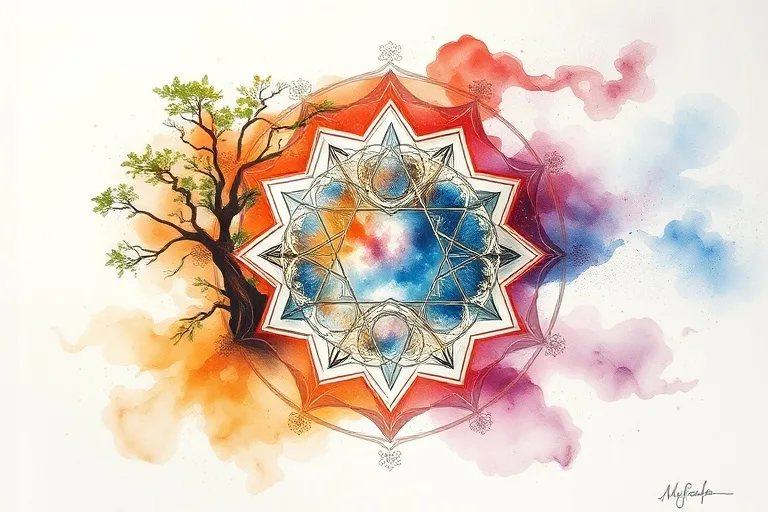
A watercolor illustrating the harmonious , where each element naturally supports and nourishes the next in a continuous flow of energy.
The sequence of the Constructive Cycle is as follows:
- Wood feeds Fire: Wood is fuel for fire; without wood, fire cannot burn.
- Fire creates Earth: Fire turns wood into ash, which enriches the earth.
- Earth bears Metal: Metal ores are extracted from the earth.
- Metal holds Water: Metal containers (like cups or pipes) can hold water; metal also condenses water.
- Water nourishes Wood: Water is essential for the growth of trees and plants.
This cycle is vital for maintaining equilibrium. When one element is weak, it can be strengthened by its "mother" element. Conversely, an overly strong "mother" can exhaust its "child" element. For example, too much Wood can lead to an uncontrolled Fire, or too much Fire can deplete the Earth. This dynamic interaction is why balance, not just presence, is paramount.
The Destructive (Ke) Cycle
The Destructive Cycle, also known as the Controlling or Grandparent-Grandchild Cycle (Ke Cycle), describes how each element controls or restrains another. This cycle is not inherently negative but represents a necessary mechanism for maintaining balance and preventing any single element from becoming excessively dominant. It ensures that no element grows unchecked, thus preserving harmony.
In Bazi, the Ke Cycle reveals potential conflicts, challenges, or areas where an element might be suppressed or over-controlled. For instance, if a person's chart has a strong Metal element controlling a weak Wood element, it might indicate issues related to growth or flexibility being stifled. This cycle helps identify areas requiring careful management or external support to mitigate imbalances.
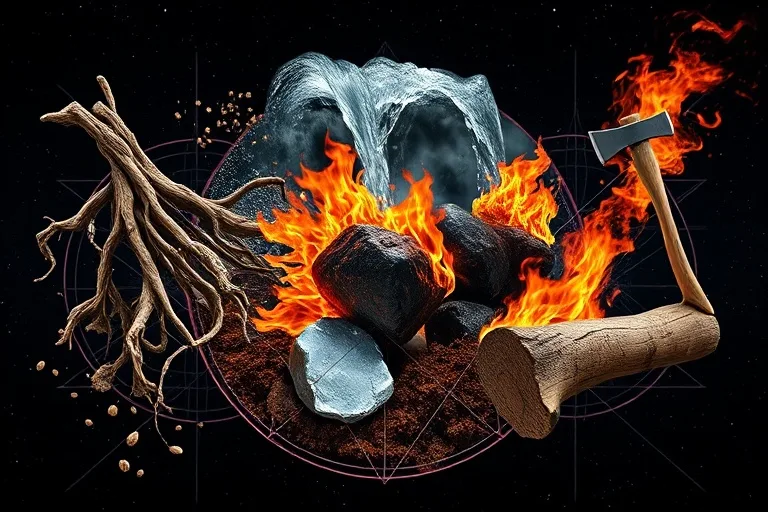
A conceptual art collage depicting the Mesoamerican Astrology AI Oracles Bridging Ancient Modern, illustrating how elements control each other to maintain equilibrium in Chinese metaphysics.
The sequence of the Destructive Cycle is as follows:
- Wood separates Earth: Tree roots break up and penetrate the soil.
- Earth absorbs Water: Earth can absorb and contain water, preventing floods.
- Water extinguishes Fire: Water can put out fire.
- Fire melts Metal: Intense fire can melt and reshape metal.
- Metal chops Wood: Metal tools (like axes) can cut down wood.
Just like the Sheng Cycle, the Ke Cycle highlights the importance of balance. An overly strong controlling element can severely weaken the controlled element, leading to detrimental effects. Conversely, a weak controlling element might fail to restrain an overly strong element, leading to imbalance. This interplay forms a complex web of relationships that Bazi analysts carefully decipher.
Advanced Cycles: Over-Acting (Cheng) and Counter-Acting (Wu)
Beyond the fundamental Sheng and Ke cycles, Chinese metaphysics recognizes more nuanced interactions: the Over-Acting (Cheng) Cycle and the Counter-Acting (Wu) Cycle. These advanced dynamics describe situations where the controlling relationships become imbalanced, leading to pathological or disruptive effects. They are crucial for a deep understanding of elemental disharmony.
The Cheng and Wu cycles provide critical insights into the severity and nature of imbalances in a Bazi chart, indicating areas of acute stress or chronic weakness. Identifying these patterns allows for targeted remedies and strategic adjustments to restore equilibrium, whether in health, relationships, or career. These cycles represent the complexities of real-world energetic interactions.
The Over-Acting (Cheng) Cycle
The Over-Acting (Cheng) Cycle occurs when an element in the Ke Cycle is excessively strong and over-controls its target, weakening it severely. It's an exaggerated form of control, turning beneficial restraint into harmful oppression. For example, if Metal is too strong, it can over-chop Wood to the point of destruction, rather than just pruning it for growth.
- Wood over-acts on Earth: Excessive Wood can deplete the nutrients in the soil, making it barren.
- Earth over-acts on Water: Too much Earth can completely block or absorb Water, leading to stagnation or dryness.
- Water over-acts on Fire: An overwhelming amount of Water can completely extinguish Fire, preventing its existence.
- Fire over-acts on Metal: Intense Fire can melt Metal into a formless liquid, destroying its structure.
- Metal over-acts on Wood: Overly strong Metal can chop Wood into tiny pieces, preventing its growth and vitality.
The Counter-Acting (Wu) Cycle
The Counter-Acting (Wu) Cycle occurs when the controlled element is exceptionally strong, or the controlling element is extremely weak, causing the controlled element to "rebel" and control its controller. This is an inverse or reverse control, where the natural order of the Ke Cycle is disrupted. For instance, if Water is too strong and Fire is too weak, the Water might "counter-act" and extinguish the Fire, instead of being controlled by it.
- Wood counter-acts on Metal: If Wood is too strong, it can resist being cut by Metal, or even break the Metal tool.
- Metal counter-acts on Fire: If Metal is too strong, it can resist being melted by Fire, or even cool down the Fire.
- Fire counter-acts on Water: If Fire is too strong, it can evaporate Water instead of being extinguished.
- Water counter-acts on Earth: If Water is too strong (like a flood), it can erode and wash away Earth.
- Earth counter-acts on Wood: If Earth is too strong and hard, Wood cannot penetrate it and grow.
These advanced cycles highlight the dynamic and context-dependent nature of elemental interactions. A strong element is not always beneficial, nor is a controlling relationship always detrimental. The key lies in the balance and the relative strengths of the interacting elements, which forms the basis of advanced Bazi analysis.
Five Elements in Chinese Zodiac and Bazi
The Five Elements theory is inextricably linked to the Chinese Zodiac and Bazi, providing the interpretive depth that goes beyond simple animal signs. Each of the twelve Zodiac animals is associated with a primary element, but more importantly, every year, month, day, and hour in a Bazi chart has its own elemental attribution. This creates a complex interplay of elements within an individual's birth chart.
In Bazi, a person's "Day Master" (the element of the day they were born) is central. The interactions of the other seven elements in the chart with the Day Master determine personality traits, relationships, career paths, health predispositions, and potential life events. The Sheng, Ke, Cheng, and Wu cycles are used to assess the strength and balance of the Day Master and the overall chart.
For example, if a Day Master is weak Wood, and the chart contains strong Metal (controlling Wood) and weak Water (nourishing Wood), the individual might experience challenges related to growth, assertiveness, and health issues associated with Wood (liver, gallbladder). A Bazi analyst would then look for periods (Luck Pillars) or external influences that bring in more Water to nourish Wood or weaken Metal to reduce its control.
The interaction cycles are not just about static relationships but also about the flow of time. Each year, month, and day brings its own elemental energy, which interacts with the natal chart. This dynamic analysis helps predict periods of good fortune, challenges, or significant life changes. The ability to forecast these interactions is what makes Bazi a powerful tool for self-understanding and strategic planning.
| Element | Associated Zodiac Animals (Primary) | Key Characteristics in Bazi |
|---|---|---|
| Wood | Tiger, Rabbit, Dragon (partially) | Creativity, benevolence, growth, assertiveness, sometimes stubbornness or anger. |
| Fire | Snake, Horse | Passion, enthusiasm, intelligence, impulsiveness, joy, sometimes aggression. |
| Earth | Ox, Dragon, Goat, Dog | Stability, loyalty, practicality, nurturing, sometimes worry or inflexibility. |
| Metal | Monkey, Rooster | Discipline, justice, integrity, precision, sometimes rigidity or melancholy. |
| Water | Rat, Pig | Wisdom, adaptability, intuition, flexibility, sometimes fear or indecisiveness. |
The Five Elements also interact with the Yin and Yang polarities, adding another layer of complexity. Each element can manifest as Yin or Yang, further refining its characteristics and interactions. For instance, Yin Wood might be a delicate flower, while Yang Wood is a towering tree, each interacting differently with other elements. This dualistic nature provides even more depth to Bazi readings.
Practical Applications and Balancing Elements
The advanced understanding of the Five Elements interaction cycles is not merely academic; it has profound practical applications in various aspects of life. From personal development and career choices to health and relationships, these principles offer guidance for achieving greater harmony and success. Balancing the elements in one's life is a continuous process of adjustment and awareness.
In Bazi, identifying a person's "favorable" and "unfavorable" elements is a primary goal. Favorable elements are those that strengthen the Day Master or bring balance to the chart, while unfavorable elements create imbalance or weaken the Day Master. Once identified, strategies can be employed to enhance favorable elements and mitigate the impact of unfavorable ones.
Practical applications include:
- Career Guidance: Matching career paths to dominant or favorable elements (e.g., Wood for creative roles, Metal for structured professions).
- Relationship Compatibility: Understanding how elemental interactions between two individuals can create harmony (Sheng) or conflict (Ke, Cheng, Wu).
- Health and Wellness: Using Traditional Chinese Medicine (TCM) principles, which are based on the Five Elements, to balance internal organ systems and prevent disease.
- Environmental Design (Feng Shui): Arranging living and working spaces to enhance beneficial elemental flows and mitigate negative ones.
- Personal Development: Cultivating traits associated with weak but favorable elements, or moderating traits of strong, unfavorable elements.
For example, if a Bazi chart indicates a weak Fire element and an over-acting Water element, a person might be advised to incorporate more red colors, engage in activities that stimulate joy and passion, or even live in a warmer climate to strengthen Fire. Conversely, if Earth is too strong and over-acts on Water, dietary changes to reduce "earthy" foods or activities that promote flow and flexibility might be recommended.
The goal is always to achieve a dynamic balance, not necessarily equal amounts of each element, but rather a harmonious flow where each element supports and controls the others appropriately. This constant adjustment reflects the ever-changing nature of life itself, allowing individuals to adapt and thrive amidst varying circumstances. Learn more about and its components.
Conclusion
The Five Elements Interaction Cycle, encompassing the Sheng, Ke, Cheng, and Wu dynamics, offers an incredibly rich and sophisticated framework for understanding the universe and individual destiny within Chinese metaphysics. Moving beyond superficial interpretations, these advanced cycles reveal the intricate dance of energies that shape our lives, providing profound insights into our strengths, challenges, and potential for growth.
By diligently studying these interactions, practitioners of Chinese Zodiac and Bazi can unlock deeper layers of meaning within a chart, offering personalized guidance for achieving balance, harmony, and fulfillment. The continuous interplay of these elemental forces reminds us that life is a dynamic process, and understanding its underlying rhythms is key to navigating its complexities with wisdom and grace. Embrace the wisdom of these ancient systems to illuminate your path.
Fuente: Contenido híbrido asistido por IAs y supervisión editorial humana.


Comments
Post a Comment