
Lunar Astrology Emotional Well-being Moon Phases Harmony
Lunar astrology offers a profound framework for understanding the intricate connection between celestial cycles and our inner emotional landscape. For millennia, cultures worldwide have observed the Moon's rhythmic dance across the sky, attributing its phases to various influences on tides, agriculture, and human behavior. This ancient wisdom suggests that our emotional well-being is deeply intertwined with the Moon's journey, providing a guide for self-awareness and personal harmony.
By tuning into the Moon's continuous cycle of waxing and waning, we can gain invaluable insights into our own fluctuating moods, energy levels, and subconscious patterns. This practice moves beyond simple horoscopes, delving into a more nuanced understanding of how cosmic energies manifest within our personal experience. Embracing lunar astrology can empower individuals to navigate their emotional lives with greater intention and grace, fostering a deeper connection to their authentic selves.
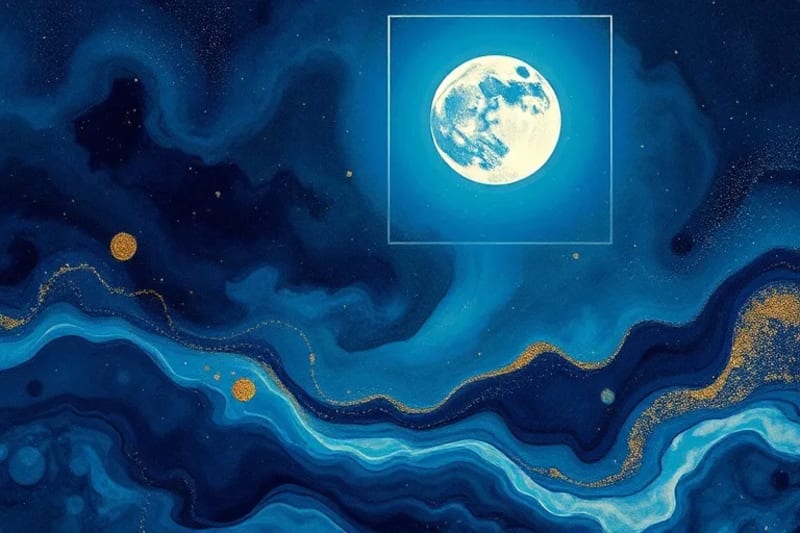
Precursors intelectuales, diagramas fundamentales y representaciones conceptuales que forjaron la visión de la astrología lunar sobre el bienestar emocional.
Fuente visual sujeta a disponibilidad del ecosistema: Wikimedia Commons bajo licencia CC BY-SA 4.0 o renderizado conceptual IA.Table of Contents
- The Moon's Ancient Influence on Human Emotion
- Understanding Lunar Phases and Their Astrological Significance
- The New Moon: Planting Seeds of Intention
- The Waxing Moon: Nurturing Growth and Development
- The Full Moon: Illumination, Release, and Emotional Peak
- The Waning Moon: Reflection, Letting Go, and Retreat
- Integrating Lunar Cycles for Emotional Harmony
- Practical Applications: Daily Lunar Living
- Beyond Phases: Other Lunar Aspects and Their Impact
- Scientific Perspectives and Modern Spirituality
The Moon's Ancient Influence on Human Emotion
Throughout history, the Moon has been revered as a powerful celestial body, often associated with the feminine, intuition, and the subconscious. Ancient civilizations observed its predictable cycles and linked them to various earthly phenomena, from the ebb and flow of tides to the growth patterns of plants. This deep connection fostered a belief that the Moon also held sway over human emotions and psychological states.
In many spiritual traditions, the Moon symbolizes the inner self, our hidden desires, fears, and instincts. Unlike the Sun, which represents our conscious ego and outward personality, the Moon speaks to our emotional core and the unconscious drives that shape our reactions and perceptions. Understanding this ancient reverence helps us appreciate the foundational role lunar astrology plays in exploring emotional well-being.
Understanding Lunar Phases and Their Astrological Significance
The Moon's journey around the Earth creates eight distinct phases, each carrying a unique energetic signature that can influence our emotional experience. These phases are not merely visual changes but represent a continuous energetic cycle of initiation, growth, culmination, and release. By aligning our activities and emotional focus with these phases, we can work in harmony with natural rhythms rather than against them.
Astrologically, each phase offers an opportunity for specific types of emotional work and personal development. Recognizing these patterns allows us to anticipate shifts in our energy and mood, providing a roadmap for emotional self-care. This awareness can be particularly useful when navigating complex emotional landscapes, much like understanding Shadow Work Astrology helps integrate unconscious aspects of the self.
The New Moon: Planting Seeds of Intention
The New Moon marks the beginning of a new lunar cycle, a time when the Moon is invisible from Earth. Energetically, this phase is associated with new beginnings, fresh starts, and the planting of intentions. It's a period of quiet introspection and setting the stage for what you wish to manifest in the coming weeks.
Emotionally, the New Moon encourages us to turn inward, reflect on our desires, and clarify our goals. It's an opportune moment to release old patterns and embrace new possibilities. Many find this a powerful time for meditation, journaling, and envisioning their future, laying the groundwork for emotional growth and personal projects.
The Waxing Moon: Nurturing Growth and Development
As the Moon gradually becomes more visible, moving from a thin crescent to a half-moon and then to a gibbous phase, we enter the Waxing Moon period. This phase is characterized by growth, development, and taking action towards the intentions set during the New Moon. It's a time to build momentum and nurture your aspirations.
Emotionally, the Waxing Moon brings an increase in energy, motivation, and a sense of forward movement. It's an excellent time for problem-solving, learning new skills, and actively pursuing your goals. This period supports efforts to strengthen emotional resilience and overcome obstacles, much like the focused energy described in Saturn Astrology, which emphasizes discipline and structure.
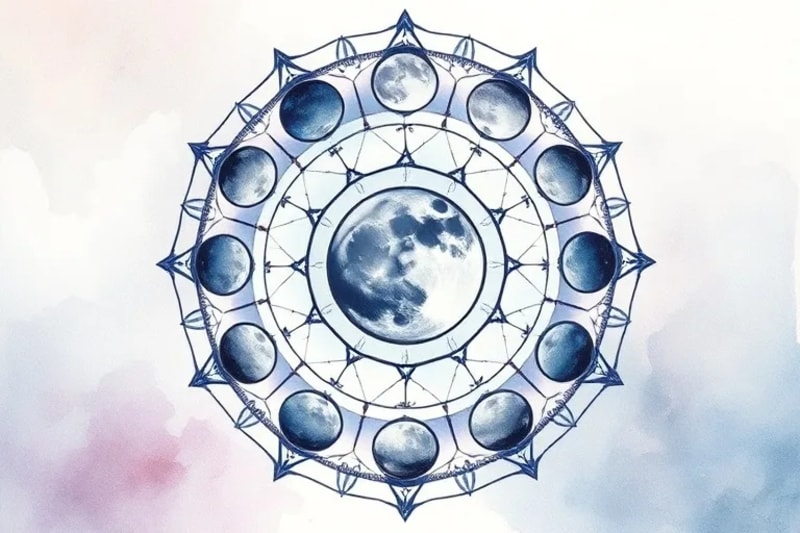
Visual representation of the Moon's cyclical influence on emotional states.
The Full Moon: Illumination, Release, and Emotional Peak
The Full Moon is a powerful and often intense phase, where the Moon is fully illuminated, reflecting the Sun's light in its entirety. This period brings culmination, revelation, and heightened emotional energy. It's a time when what was planted at the New Moon comes to fruition, and hidden truths may come to light.
Emotionally, the Full Moon can be a period of intense feelings, both positive and challenging. It's an ideal time for celebration, gratitude, and acknowledging achievements. However, it can also bring buried emotions to the surface, making it a potent time for release, forgiveness, and letting go of what no longer serves us. Many find rituals of release particularly effective during this phase.
The Waning Moon: Reflection, Letting Go, and Retreat
Following the Full Moon, the Moon begins to wane, gradually decreasing in visibility. This phase, moving from gibbous to half-moon and then to a thin crescent, is a time for reflection, introspection, and releasing what has been completed or is no longer needed. It's a period of gentle descent and preparation for the next New Moon.
Emotionally, the Waning Moon encourages us to slow down, review our progress, and practice self-care. It's an excellent time for decluttering, detoxing, and shedding emotional baggage. This phase supports introspection and processing experiences, allowing us to integrate lessons learned and prepare for a fresh cycle with renewed clarity and emotional lightness.
Integrating Lunar Cycles for Emotional Harmony
To find harmony through lunar cycles, the key is conscious awareness and intentional alignment. Instead of passively experiencing emotional shifts, we can actively engage with the Moon's energy to support our well-being. This involves observing your own emotional responses during each phase and adjusting your activities accordingly.
For example, during the New Moon, you might dedicate time to setting clear intentions and visualizing your desires. As the Moon waxes, focus on taking consistent steps towards those goals. The Full Moon is ideal for celebrating progress and releasing anything that hinders your path. During the Waning Moon, prioritize rest, reflection, and letting go. This cyclical approach helps create a rhythm of emotional management.
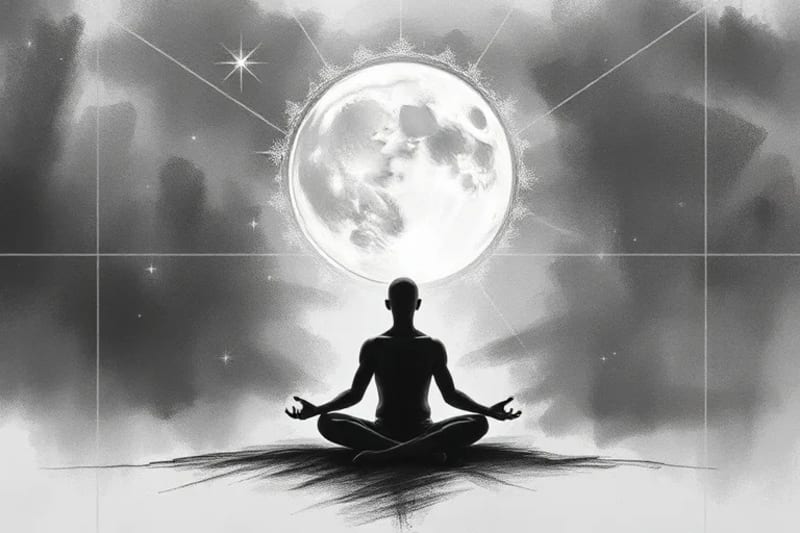
Conceptual artwork representing the quest for emotional harmony through lunar alignment.
Practical Applications: Daily Lunar Living
Integrating lunar astrology into daily life doesn't require complex rituals; simple practices can make a significant difference. Start by tracking the Moon's phases using an astrological calendar or app. Pay attention to how you feel physically and emotionally during each phase. Over time, you'll begin to notice your own unique patterns and sensitivities.
- New Moon: Journal your aspirations, create a vision board, or start a new healthy habit.
- Waxing Moon: Focus on learning, networking, and taking concrete steps towards your goals.
- Full Moon: Engage in gratitude practices, release ceremonies (e.g., writing down and burning what you want to let go of), or social gatherings.
- Waning Moon: Prioritize rest, declutter your physical space, or engage in quiet reflection and self-care.
These practices can complement other astrological insights, such as setting Daily Planetary Intentions, to create a holistic approach to personal growth and emotional regulation.
Beyond Phases: Other Lunar Aspects and Their Impact
While the Moon phases are the most recognized aspect of lunar astrology, other factors also contribute to its emotional influence. The Moon's sign (the zodiac sign it's currently transiting) profoundly impacts the collective emotional tone. For instance, the Moon in Cancer might bring heightened sensitivity and a desire for comfort, while the Moon in Aries could ignite passion and impulsivity.
Furthermore, the Moon's aspects to other planets in the sky can create specific emotional dynamics. A Moon-Pluto aspect might bring deep emotional transformations, while a Moon-Venus aspect could foster feelings of love and connection. Understanding these nuances provides a richer, more detailed picture of the Moon's emotional guidance, much like how Progressed Charts reveal the evolution of one's natal blueprint over time.
Even the Moon's position in your natal chart (your Moon sign and house placement) offers deep insights into your inherent emotional nature and needs. This personal blueprint reveals how you process emotions, what makes you feel secure, and your instinctive reactions to life's challenges. Consulting your natal chart can provide a personalized guide to your emotional well-being.
Scientific Perspectives and Modern Spirituality
While lunar astrology is rooted in ancient spiritual and philosophical traditions, modern science also acknowledges the Moon's tangible effects on Earth. The gravitational pull of the Moon directly influences ocean tides, and some research explores potential subtle effects on biological rhythms, although direct links to human emotions are still largely within the realm of subjective experience and anecdotal evidence.
However, the value of lunar astrology in modern spirituality lies not necessarily in its scientific validation, but in its capacity to provide a meaningful framework for self-reflection and intentional living. By observing the Moon's cycles, individuals can cultivate mindfulness, develop a deeper connection to natural rhythms, and create personal practices that support emotional balance. It offers a powerful metaphor for the ebb and flow of life and our internal states, encouraging a more harmonious existence.
Embracing lunar astrology can be a journey of self-discovery, allowing us to attune to our inner world and navigate our emotions with greater wisdom. By honoring the Moon's cycles, we tap into an ancient source of guidance that fosters emotional resilience and a profound sense of harmony within ourselves and with the cosmos.
Source: Hybrid content assisted by AI and human editorial supervision.


Comments
Post a Comment