
Tarot Reading Dream Interpretation Unlocking Subconscious
In the vast landscape of human consciousness, two ancient practices stand out as profound pathways to self-discovery and inner wisdom: Tarot reading and dream interpretation. Both offer unique lenses through which to explore the depths of the subconscious mind, revealing hidden truths, guiding personal growth, and illuminating the metaphysical symbolism that permeates our existence. While distinct in their methodologies, they share a common goal: to help individuals navigate their inner worlds and understand the subtle messages from their higher selves and the collective unconscious.
This comprehensive guide delves into the intricate mechanics of Tarot and dream analysis, exploring their historical roots, their underlying principles, and the powerful synergy they offer when used in conjunction. We will uncover how these tools, far from being mere superstitions, provide structured frameworks for intuition, introspection, and a deeper connection to the universal energies that shape our reality.
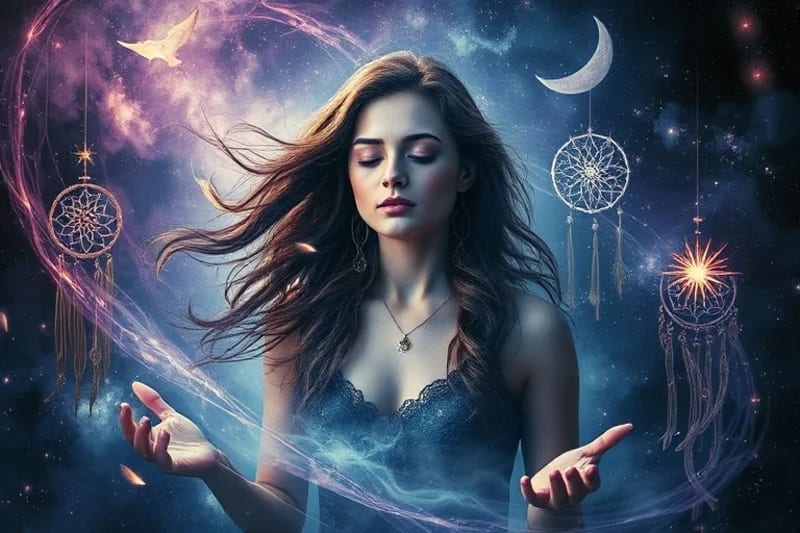 Conceptual representation of intuitive insight through symbolic tools and subconscious exploration.
Fuente visual sujeta a disponibilidad del ecosistema: Wikimedia Commons bajo licencia CC BY-SA 4.0 o renderizado conceptual IA.
Tarot Reading: Foundations and Practice
Tarot cards, a deck of 78 illustrated cards, have been used for centuries as a tool for divination, introspection, and spiritual guidance. Originating in 15th-century Italy, these cards quickly evolved from a parlor game to a powerful instrument for understanding the human condition and exploring potential future pathways. Each card is rich with symbolism, depicting archetypal figures, elements, and situations that mirror the journey of life.
The Tarot deck is traditionally divided into two main sections: the Major Arcana and the Minor Arcana. The 22 cards of the Major Arcana represent significant life lessons, karmic influences, and archetypal themes that shape our spiritual journey. These cards, such as The Fool, The Magician, The High Priestess, and The World, speak to universal experiences and profound shifts in consciousness.
The 56 cards of the Minor Arcana, on the other hand, reflect the day-to-day events, challenges, and opportunities we encounter. They are further divided into four suits—Wands, Cups, Swords, and Pentacles—each corresponding to different aspects of life and elemental energies:
- Wands (Fire): Represent passion, creativity, inspiration, and ambition. They deal with our drive, initial sparks, and spiritual energy.
- Cups (Water): Symbolize emotions, intuition, relationships, and creativity. They delve into our feelings, connections, and subconscious depths. This suit resonates strongly with themes explored in Chrono-Astrology Ancestral Echoes Navigating Personal Time Cycles.
- Swords (Air): Pertain to intellect, logic, challenges, and conflict. They represent our thoughts, communication, and the struggles we face.
- Pentacles (Earth): Relate to material possessions, finances, career, and the physical world. They focus on stability, abundance, and practical matters.
A Tarot reading typically involves a querent asking a question or seeking guidance, and the reader drawing a specific number of cards in a predetermined layout, or "spread." Each position in the spread corresponds to a different aspect of the query, such as past influences, present challenges, future possibilities, or internal blocks. The interpretation comes from synthesizing the individual meanings of the cards, their positions, and their interaction with each other, all filtered through the reader's intuition.
The power of Tarot lies not in predicting a fixed future, but in offering a mirror to the querent's current situation, revealing underlying dynamics, unconscious motivations, and potential paths forward. It empowers individuals to make informed decisions and take conscious action, rather than passively accepting fate. Ethical Tarot practice emphasizes free will and personal responsibility, providing insights without imposing outcomes.
Dream Interpretation: Unveiling Nighttime Messages
Dreams are the language of the subconscious, a nightly theater where our deepest fears, desires, memories, and unresolved issues play out in symbolic form. For millennia, cultures across the globe have revered dreams as messages from the divine, insights into the future, or reflections of the soul's journey. Modern psychology, particularly the work of Sigmund Freud and Carl Jung, brought scientific attention to the profound significance of dream analysis.
Freud viewed dreams as "the royal road to the unconscious," primarily as wish fulfillment and a means for repressed desires to manifest symbolically. Jung, however, expanded on this, proposing that dreams are not merely expressions of personal neuroses but also tap into the collective unconscious, a universal reservoir of human experience and archetypes. For Jung, dreams serve a compensatory function, aiming to restore psychological balance by bringing unconscious material into conscious awareness.
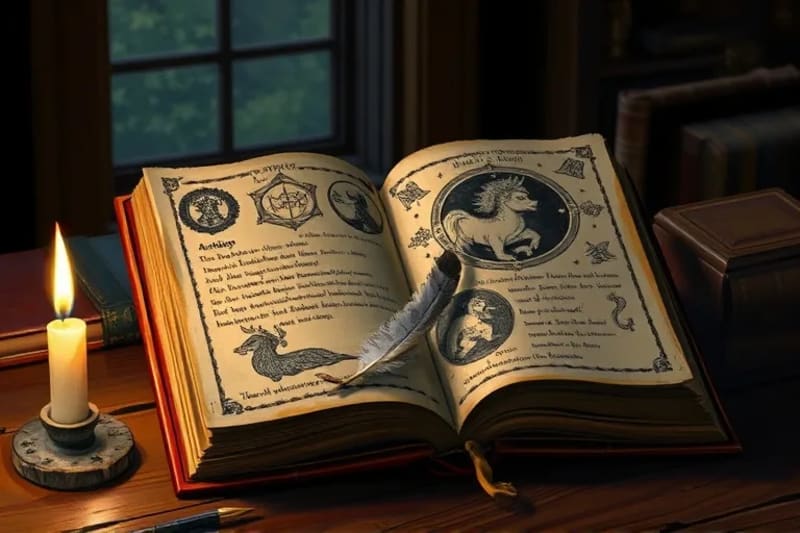 An open ancient text revealing the intricate tapestry of dream symbols and their layered meanings.
Interpreting dreams involves recognizing recurring themes, identifying personal and universal symbols, and understanding the emotional tone of the dream. Common dream symbols often carry widely accepted meanings, but it's crucial to consider the individual's personal associations and life context. For example, water might symbolize emotions, a house could represent the self, and animals often embody instinctual drives or specific personality traits.
Techniques for effective dream interpretation include:
- Dream Journaling: Keeping a journal by your bedside to record dreams immediately upon waking, capturing as many details as possible, including emotions, colors, and specific events.
- Symbol Association: For each significant symbol in the dream, ask yourself: "What does this mean to me personally?" and "What are its common cultural or archetypal meanings?"
- Emotional Resonance: Pay attention to the overall feeling of the dream. Was it joyful, anxious, confusing, or empowering? The emotion often reveals the core message.
- Connecting to Waking Life: Reflect on how the dream's themes or symbols relate to current situations, challenges, or thoughts in your waking life.
Dream interpretation offers profound benefits, including enhanced self-awareness, emotional processing, problem-solving insights, and a deeper understanding of one's psychological landscape. It can help in processing trauma, identifying unfulfilled desires, and even predicting potential health issues or significant life changes. For those interested in deeper spiritual insights, practices like Akashic Dreamwork can further unlock soul records and past life insights.
The Synergy Between Tarot and Dreams
While Tarot reading and dream interpretation are powerful on their own, their combined application creates a synergistic effect, offering a more comprehensive and nuanced understanding of the self and one's life path. Both systems operate on the principle of symbolism and intuition, providing a language to communicate with the subconscious and the collective unconscious.
The shared symbolic language is a key connector. The archetypes found in the Major Arcana of the Tarot often appear as figures or themes in dreams. For instance, encountering a wise old man in a dream might resonate with the Hermit card, suggesting a need for introspection and solitary wisdom. A dream of a significant journey or new beginning could align with The Fool, symbolizing a leap of faith into the unknown. Similarly, the challenges depicted in the Swords suit might manifest as conflicts or difficult decisions in dream narratives.
Using Tarot to explore dream themes can provide clarity when a dream feels particularly confusing or significant. If a dream leaves you with a strong emotional impression but no clear message, drawing a Tarot card (or a small spread) with the intention of understanding the dream's core message can be incredibly illuminating. The cards can offer a conscious framework to interpret the often-abstract imagery of dreams, helping to pinpoint the specific area of life the dream is addressing or the underlying psychological process at play.
Conversely, dreams can deepen one's understanding of Tarot readings. If a particular card in a reading feels enigmatic, paying attention to subsequent dreams might reveal imagery or scenarios that shed light on its meaning. Dreams can personalize the universal archetypes of the Tarot, making their messages more relevant and potent to the individual's current experiences. This interdisciplinary approach enhances both practices, creating a richer tapestry of self-knowledge.
Practical Application for Self-Growth
Integrating Tarot reading and dream interpretation into your daily life can be a powerful practice for continuous self-growth and spiritual development. Here are some practical steps to get started:
- Morning Ritual: Begin your day by recording any dreams in your journal. Then, draw a single Tarot card for the day, asking, "What energy or message do I need to be aware of today?" Reflect on how the card's symbolism might connect to your dream or your current waking life.
- Specific Inquiry: If you're facing a particular challenge or decision, you can use both tools. Before bed, set an intention to dream about the issue. Upon waking, record your dream. Then, perform a Tarot spread (e.g., a three-card spread for past, present, future) related to the same issue, using the dream's insights to inform your interpretation of the cards.
- Symbolic Cross-Referencing: When interpreting a dream, if a symbol is unclear, look for similar imagery or archetypes in your Tarot deck. What cards come to mind? How do their meanings enhance your understanding of the dream? Similarly, if a Tarot card's meaning feels abstract, meditate on it before sleep, inviting your subconscious to offer clarifying dream imagery.
- Meditation and Visualization: Use meditation to connect with the energies of a specific Tarot card or a powerful dream symbol. Visualize yourself interacting with these symbols, allowing your intuition to reveal deeper meanings. This practice can be particularly effective in conjunction with understanding broader life spheres, as discussed in Understanding the Twelve Houses: A Comprehensive Guide to Life's Spheres.
Consistency is key. The more you engage with these practices, the more fluent you will become in the language of your subconscious and the more profound your insights will be. Remember that both Tarot and dreams are personal tools; there is no single "right" interpretation, but rather a journey of discovery that is unique to you.
Metaphysical Symbolism and Archetypal Connections
At their core, Tarot reading and dream interpretation are deeply rooted in metaphysical symbolism and the concept of archetypes. Metaphysics explores the fundamental nature of reality, including the relationship between mind and matter, substance and attribute, potentiality and actuality. In this context, symbols are not merely representations but conduits to deeper truths and universal energies.
 A visual metaphor for the intricate connection between conscious thought, subconscious wisdom, and symbolic insight.
Carl Jung's theory of archetypes is particularly relevant here. Archetypes are universal, archaic patterns and images that derive from the collective unconscious and are the psychic counterpart of instinct. They are inherent patterns of human thought and behavior that manifest in myths, religions, art, and, crucially, in dreams and symbolic systems like the Tarot. The figures and scenarios on Tarot cards, such as The Emperor (authority), The Empress (nurturing), or The Devil (shadow aspects), are direct manifestations of these archetypes.
When we engage with Tarot or interpret dreams, we are tapping into this shared symbolic language, allowing the archetypes to speak to us. This process helps us to understand our personal experiences within a broader, universal context. It reveals that our individual struggles and triumphs are echoes of timeless human narratives, providing comfort, perspective, and a sense of connection to something larger than ourselves.
The metaphysical aspect also touches upon the idea of synchronicity—meaningful coincidences that appear to be causally unrelated but are deeply connected on a symbolic or psychological level. A Tarot reading might perfectly mirror a recent dream, or a dream might offer a solution to a problem posed in a reading. These synchronicities are often interpreted as signs from the universe, confirming that we are on the right path or highlighting an important message that demands our attention.
By consciously working with these symbolic systems, we not only gain insight into our personal lives but also cultivate a deeper appreciation for the interconnectedness of all things and the profound intelligence that underlies the fabric of reality. This journey into metaphysical symbolism is one of continuous revelation and spiritual awakening.
Conclusion: Embracing Inner Guidance
Tarot reading and dream interpretation are more than just esoteric practices; they are sophisticated tools for psychological insight, emotional healing, and spiritual growth. By providing a structured approach to understanding the subconscious mind and the rich tapestry of metaphysical symbolism, they empower individuals to navigate life's complexities with greater clarity and confidence. These practices encourage us to listen to our inner wisdom, to confront our shadow selves, and to embrace the archetypal journey of human existence.
Whether you are seeking guidance on a specific issue, striving for deeper self-awareness, or simply curious about the hidden dimensions of your mind, engaging with Tarot and dreams offers a transformative path. They remind us that the answers we seek often reside within, waiting to be unveiled through the symbolic language of our souls. Embrace these ancient arts, and unlock the profound wisdom that lies within your subconscious, guiding you towards a more informed and fulfilling life.
Explore Further Insights
Source: Hybrid content assisted by AI and human editorial supervision.


Comments
Post a Comment