
Sacred Geometry Feng Shui Chinese Zodiac Harmony Home
In the pursuit of optimal living, ancient wisdom traditions offer profound insights into harmonizing our environments. Sacred Geometry and Feng Shui, two distinct yet complementary disciplines, provide frameworks for understanding the energetic blueprint of space. When integrated with the nuanced energies of the Chinese Zodiac, these practices unlock a powerful methodology for creating living spaces that not only resonate with aesthetic appeal but also actively support personal well-being, prosperity, and spiritual growth.
This advanced guide delves into the intricate interplay of these systems, offering a technical perspective on how to meticulously align your environment with your individual energetic signature, as defined by your Chinese Zodiac animal and its elemental attributes. By understanding the foundational principles and applying precise techniques, individuals can transform their homes into sanctuaries that foster balance and amplify positive life forces.
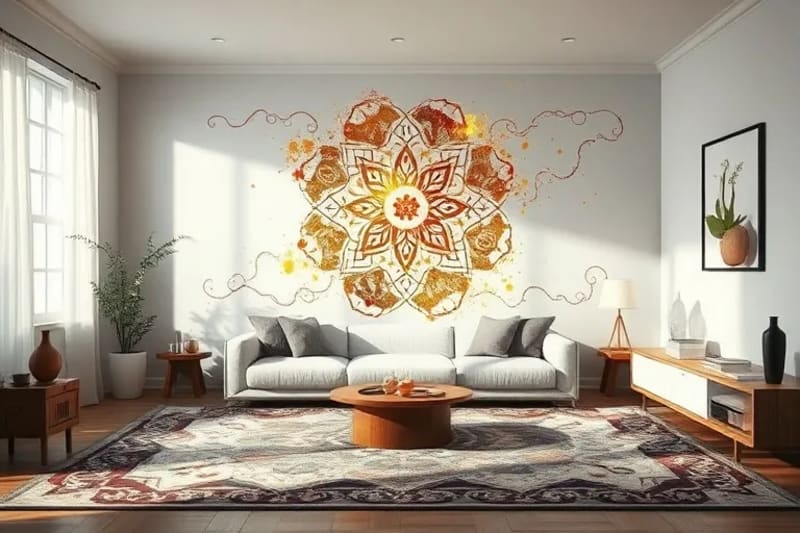
The intricate dance of geometric precision and zodiacal influence shapes a home's energetic flow.
Fuente visual sujeta a disponibilidad del ecosistema: Wikimedia Commons / CC BY-SA 4.0 o renderizado conceptual asistido por IA.The synergy between these ancient arts is not merely decorative; it is a sophisticated science of energy management. Sacred Geometry provides the universal templates for creation, while Feng Shui offers practical methods for directing and enhancing Chi (life force energy) within a given space. The Chinese Zodiac then personalizes this equation, tailoring environmental adjustments to the unique energetic requirements of each individual.
This holistic approach moves beyond superficial design, engaging with the subtle energetic currents that underpin our daily existence. The objective is to cultivate an environment that acts as a supportive matrix for personal evolution, aligning the microcosm of the home with the macrocosm of cosmic order.
The Foundational Principles: Sacred Geometry and Feng Shui
To effectively harmonize living spaces, a deep understanding of Sacred Geometry and Feng Shui is paramount. Sacred Geometry reveals the fundamental patterns and proportions that underlie all natural forms, from atomic structures to galaxies. These patterns, such as the Golden Ratio, the Fibonacci sequence, and Platonic Solids, are believed to carry inherent energetic qualities that promote balance and vitality.
- Golden Ratio (Phi, φ ≈ 1.618): This irrational number appears throughout nature and art, creating aesthetically pleasing and energetically balanced compositions. Incorporating objects or designs that adhere to this ratio can enhance harmony.
- Platonic Solids: These five three-dimensional shapes (Tetrahedron, Hexahedron/Cube, Octahedron, Dodecahedron, Icosahedron) are considered the building blocks of the universe, each associated with a specific element and energetic quality.
- Flower of Life: An ancient geometric pattern containing the blueprints of creation, symbolizing interconnectedness and the origin of all life. Its presence can promote unity and spiritual awareness.
Feng Shui, meaning "wind and water," is the ancient Chinese art and science of arranging living spaces to achieve harmony with the environment. Its core principles revolve around the flow of Chi, the balance of Yin and Yang, and the interaction of the Five Elements (Wood, Fire, Earth, Metal, Water). A well-executed Feng Shui arrangement ensures that beneficial Chi circulates freely, supporting health, wealth, and relationships.
The Bagua map, a key Feng Shui tool, divides a space into nine areas, each corresponding to a specific life aspiration (e.g., wealth, health, relationships). By understanding these areas and applying elemental remedies, one can optimize the energetic potential of each sector. The integration of these concepts is crucial for advanced practitioners seeking to create truly resonant environments. For a deeper dive into planetary influences, consider exploring Planetary Dignities in Medical Astrology, which can offer further insights into constitutional strengths.
Understanding Chinese Zodiac Energies in the Home
The Chinese Zodiac is a complex system that assigns one of twelve animal signs to each year in a repeating cycle. Beyond the animal, each year is also associated with one of the Five Elements (Wood, Fire, Earth, Metal, Water) and either Yin or Yang polarity, creating a sixty-year cycle. This combination profoundly influences an individual's personality, strengths, weaknesses, and energetic resonance.
When harmonizing a living space, it is essential to consider the primary element and polarity of the dominant occupants' Chinese Zodiac signs. For instance, a person born in a Wood Dragon year will have different energetic requirements than someone born in a Metal Rooster year. These individual energies dictate the most beneficial colors, materials, shapes, and orientations within their personal environment.
Visualizing the energetic blueprint of a home through the lens of zodiacal influences.
Each zodiac animal embodies specific characteristics and elemental affiliations. For example, the Rat (Water) thrives in environments that promote adaptability and intellectual stimulation, while the Tiger (Wood) benefits from spaces that encourage growth and assertiveness. Understanding these intrinsic qualities allows for a highly personalized approach to environmental design.
Furthermore, the interaction between different zodiac signs within a household must also be considered. A "Double Rat Compatibility," for instance, might require specific adjustments to ensure harmonious cohabitation, as explored in detailed analyses of same-sign Chinese Zodiac bonds. This level of detail ensures that the space supports all occupants equally.
Integrating Zodiac Elements with Sacred Geometry Layouts
The true mastery of this system lies in the seamless integration of zodiacal elements with Sacred Geometry principles. Each of the Five Elements has corresponding shapes, colors, and materials that resonate with its energy. By strategically incorporating these into the home's design, one can amplify beneficial Chi and mitigate discordant energies.
For example, individuals with a dominant Wood element (Tiger, Rabbit, Dragon) benefit from rectangular shapes, green and blue hues, and natural wood furnishings. These elements can be subtly introduced through furniture, artwork featuring the Golden Ratio, or even the architectural lines of a room that mimic geometric precision. Conversely, a Fire element (Snake, Horse) thrives with triangular shapes, red and orange colors, and vibrant, dynamic patterns.
| Chinese Zodiac Element | Associated Geometric Shapes | Optimal Colors | Harmonizing Materials |
|---|---|---|---|
| Wood (Tiger, Rabbit, Dragon) | Rectangular, Cylindrical, Tall & Slender | Greens, Blues | Wood, Plants, Natural Fibers |
| Fire (Snake, Horse) | Triangular, Pointed, Pyramidal | Reds, Oranges, Purples | Bright Lights, Candles, Leather |
| Earth (Ox, Dragon, Goat, Dog) | Square, Flat, Low & Solid | Yellows, Browns, Earth Tones | Ceramics, Stone, Clay, Heavy Fabrics |
| Metal (Monkey, Rooster) | Circular, Spherical, Arched | Whites, Grays, Silvers | Metals (Steel, Copper), Glass, Mirrors |
| Water (Rat, Pig) | Wavy, Irregular, Undulating | Blacks, Dark Blues | Water Features, Reflective Surfaces, Silk |
The application of Sacred Geometry patterns, such as the Seed of Life or Metatron's Cube, can be subtle yet powerful. These can be integrated into floor tiles, wallpaper designs, or even the arrangement of furniture to create an underlying energetic grid that supports the dominant elemental energies of the occupants. This meticulous layering of principles ensures a deeply harmonized environment.
Practical Feng Shui Applications for Zodiac Harmony
Beyond theoretical understanding, practical application of Feng Shui principles, tailored to Chinese Zodiac energies, is crucial. The Bagua map serves as the primary tool for identifying specific areas of the home that correspond to life aspirations. Each Bagua sector is associated with an element, color, and direction, which can then be cross-referenced with the occupant's zodiacal element.
For instance, if an individual with a strong Water element (Rat or Pig) wishes to enhance their career (North sector, Water element), they might introduce wavy patterns, dark blue accents, or a small water feature in that area. If their zodiac sign is the Dog, and they are seeking forecast insights, they might consult a Dog Chinese Zodiac 2025 Forecast for specific recommendations that can be integrated into their home's energy flow.
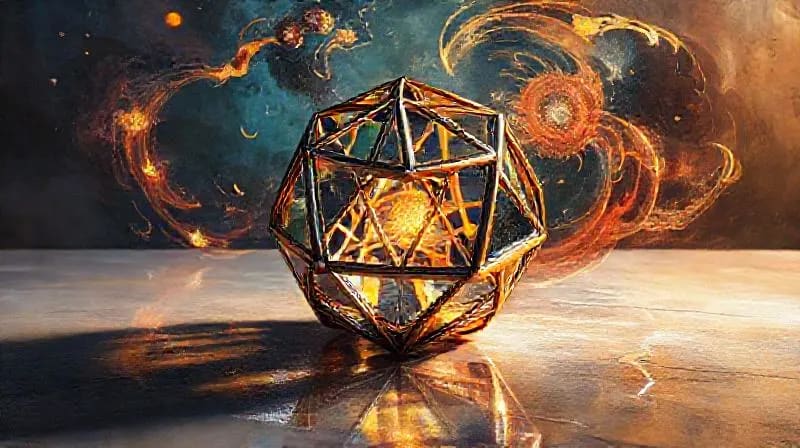
The precise forms of sacred geometry interacting with dynamic elemental energies.
Consider the placement of furniture and objects. Sharp angles (Fire element) should be softened or balanced with curves (Metal/Water elements) if they clash with the dominant zodiacal energy. Mirrors, which are powerful Feng Shui tools, should be strategically placed to reflect beneficial Chi and avoid reflecting negative energies or creating energetic imbalances. The careful selection of art, sculptures, and even everyday items can contribute significantly to the overall energetic harmony.
Furthermore, the concept of Celestial Mechanics and Sacred Geometry Life Synchronization offers a deeper layer of understanding, suggesting that our personal rhythms are intrinsically linked to cosmic patterns. By aligning our living spaces with these rhythms, we can achieve a more profound level of energetic synchronization.
Advanced Techniques: Planetary Influences and Personalization
For those seeking to elevate their environmental harmonization, incorporating advanced astrological concepts, such as natal chart analysis, can provide unparalleled precision. While the Chinese Zodiac offers a broad elemental framework, a Western natal chart reveals the precise planetary placements and aspects at the moment of birth, offering a more granular understanding of an individual's energetic blueprint. This can inform even more specific Feng Shui adjustments.
For example, if an individual has a prominent Mars (Fire) placement in their natal chart, regardless of their Chinese Zodiac animal, they might benefit from incorporating more Fire-elemental remedies in areas related to action and drive. Similarly, understanding Dwarf Planets and Asteroid Goddesses can add subtle yet powerful layers to natal chart analysis, providing insights into deeper psychological and archetypal influences that can be addressed through environmental design.
The ultimate goal is to create a living space that acts as a supportive and empowering extension of oneself. This requires not only adherence to ancient principles but also a keen sense of personal intuition and observation. How does the space feel? Does it promote relaxation, creativity, or productivity as intended? Continuous refinement based on personal experience is key to achieving true energetic mastery.
By combining the universal truths of Sacred Geometry, the practical wisdom of Feng Shui, and the personalized insights of the Chinese Zodiac (and potentially Western astrology), individuals can craft environments that are not just aesthetically pleasing but are also powerful catalysts for personal growth, health, and prosperity. This profound synergy transforms a mere house into a truly sacred and harmonized home.
The journey of harmonizing one's living space is an ongoing process of discovery and adjustment. As our own energies evolve, so too should our environments reflect these changes. This dynamic interplay ensures that our homes remain vibrant, supportive, and aligned with our highest potential.
In accordance with ancient principles and modern interpretations, the meticulous arrangement of space, guided by the wisdom of Sacred Geometry and the energetic flow of Feng Shui, provides a conduit for personal alignment. The integration of individual Chinese Zodiac energies further refines this process, ensuring a bespoke environment that fosters balance and well-being.
This holistic approach transcends mere aesthetics, delving into the subtle energetic currents that influence human experience, thereby transforming dwellings into dynamic sanctuaries.
The careful consideration of each element, from the grand architectural design to the smallest decorative detail, contributes to the overall energetic tapestry of a home. This sophisticated practice is not about rigid rules but about understanding the underlying principles of energy and applying them with wisdom and intention.
Ultimately, a home harmonized through Sacred Geometry, Feng Shui, and Chinese Zodiac principles becomes a powerful tool for self-realization and a constant source of positive energy, supporting every aspect of life's journey.
Explore Further: Related Insights
- Lilith in Astrology
- Zodiac Archetypes & Jungian Shadow
- Jupiter Saturn Cycles
- Scrying Techniques
- Planetary Crystal Therapy
- Ecopsychology & Planetary Wellness
- Lunar Mansions Astrology
- Karmic Astrology Nodal Returns
- Digital Marketing Strategies
- Cultural Impact of Video Games
- Water Ox Chinese Horoscope
- Manifest Zodiacal Archetype
- Horary Astrology Guide
- St. Benedict Medal
- Martyrdom Theology
Source: Hybrid content assisted by AI and human editorial supervision.


Comments
Post a Comment