
Mesoamerican Astrology: Decoding Ancient Cosmic Cycles
Mesoamerican Astrology: Decoding Ancient Calendars and Cosmic Cycles
Mesoamerican astrology represents a profound and intricate system of cosmic understanding developed by ancient civilizations such as the Maya, Aztec, and Olmec. Far more than simple fortune-telling, it was an integral part of their worldview, influencing everything from daily decisions to agricultural cycles and political governance. This sophisticated astrological framework was deeply intertwined with their complex calendrical systems, reflecting a cyclical perception of time and existence.
Unlike Western astrology, which primarily focuses on planetary positions at the moment of birth, Mesoamerican astrology emphasized the specific day of birth within their sacred calendars. These calendars were not merely tools for tracking time; they were living entities imbued with divine energies and prophecies. Understanding these ancient systems offers a unique window into the spiritual and intellectual achievements of these remarkable cultures.
In this exploration, we will delve into the core components of Mesoamerican astrology, examining its foundational calendars, the significance of birth dates, and the role of cosmic cycles and deities. We will uncover how these ancient peoples deciphered the universe's intricate language to navigate their lives and understand their place within the grand cosmic design. Prepare to journey back in time to a world where the stars and the earth spoke in a language of glyphs and cycles.
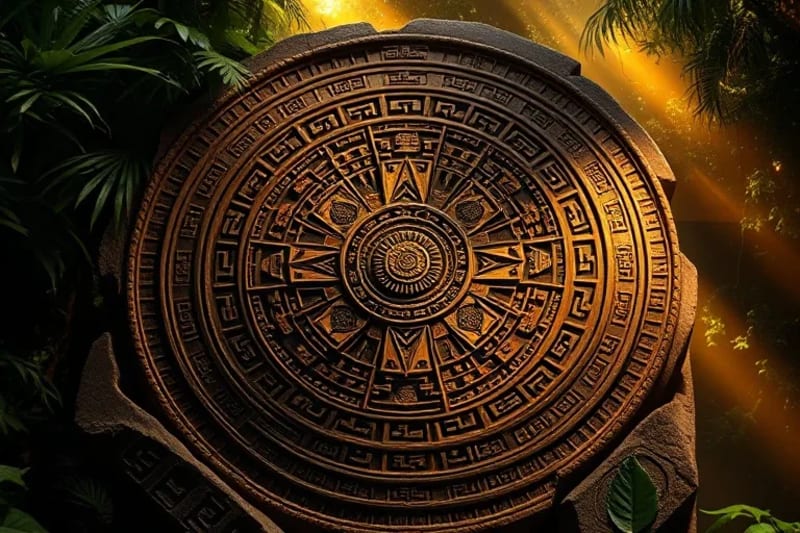 A detailed ancient stone calendar, reflecting the intricate calendrical systems central to Mesoamerican astrological practices.
Table of Contents
- The Foundations of Mesoamerican Astrology
- The Sacred Calendar: Tzolkin (260 Days)
- The Civil Calendar: Haab' (365 Days)
- The Calendar Round and Long Count
- Decoding Birth Dates: Personality and Destiny
- Cosmic Cycles, Deities, and Rituals
- The Art of Glyphs and Symbolism
- Enduring Legacy and Modern Interpretations
The Foundations of Mesoamerican Astrology
The roots of Mesoamerican astrology stretch back thousands of years, with evidence found in the Olmec civilization, considered the "mother culture" of Mesoamerica. Their sophisticated understanding of astronomy and mathematics laid the groundwork for later cultures like the Maya and Aztec. These civilizations viewed the cosmos as a dynamic, interconnected system where human life was intimately linked to celestial movements and divine forces.
Their astrological practices were not about predicting individual horoscopes in the modern sense, but rather about understanding the inherent energies and influences associated with specific time periods. This knowledge guided agricultural practices, warfare, religious ceremonies, and even the naming of children. The cyclical nature of time was paramount, with every day carrying a unique energetic signature.
The concept of fixed stars and world events, while not identical to Western interpretations, resonates with the Mesoamerican belief in cosmic patterns influencing terrestrial affairs. They meticulously observed celestial phenomena, believing that the movements of planets and stars held profound messages about the fate of communities and the unfolding of history.
The Sacred Calendar: Tzolkin (260 Days)
At the heart of Mesoamerican astrology lies the Tzolkin, or Sacred Round, a 260-day calendar used primarily for divinatory and ceremonial purposes. This calendar is a permutation of 20 day signs (also known as day names or glyphs) and 13 numbers (tones or coefficients). Each day in the Tzolkin cycle has a unique combination, creating 260 distinct days before the cycle repeats.
The 20 day signs, such as Imix (Dragon/Crocodile), Ik (Wind), Akbal (Night/Darkness), and Kan (Maize/Seed), each carry specific meanings, deities, and energetic qualities. The 13 numbers add a further layer of interpretation, indicating intensity or progression. A person's birth date within the Tzolkin determined their innate personality traits, life path, and potential challenges or blessings.
Here is a simplified overview of some key Tzolkin day signs and their associated meanings:
| Day Sign (Maya) | Associated Meaning | Key Traits |
|---|---|---|
| Imix (Dragon) | Origin, Earth, Primordial Waters | Creative, nurturing, primal energy, visionary |
| Ik (Wind) | Spirit, Breath, Life Force | Communicative, intellectual, adaptable, restless |
| Akbal (Night) | Darkness, Dream, Inner Sanctuary | Intuitive, introspective, mysterious, healing |
| Kan (Maize) | Seed, Growth, Abundance | Fertile, sexual, wise, self-generating |
| Cimi (Death) | Transformation, Endings, Rebirth | Releasing, forgiving, understanding cycles, spiritual |
| Manik (Deer) | Hand, Healing, Divine Tool | Artistic, knowledgeable, healing, responsible |
| Lamat (Rabbit) | Star, Harmony, Abundance | Artistic, playful, spontaneous, harmonious |
| Muluc (Water) | Water, Emotion, Purification | Emotional, intuitive, cleansing, spiritual guidance |
The Civil Calendar: Haab' (365 Days)
Complementing the Tzolkin was the Haab', the 365-day civil calendar, which closely resembled our modern solar year. It consisted of 18 months, each with 20 days, followed by a short 5-day period known as the Uayeb. These five days were considered unlucky or dangerous, a time for reflection and caution.
The Haab' was primarily used for tracking agricultural seasons, public ceremonies, and the timing of mundane events. While less focused on personal destiny than the Tzolkin, its months also carried specific energies and influences that affected the collective. Its precise measurement of the solar year demonstrated the advanced astronomical skills of Mesoamerican cultures.
The Calendar Round and Long Count
The true genius of Mesoamerican calendrical systems lies in the interlocking of the Tzolkin and Haab' to form the Calendar Round. This larger cycle, spanning 52 Haab' years (approximately 52 solar years), means that a specific combination of Tzolkin day and Haab' date would only repeat every 18,980 days. This cycle was profoundly significant, often marking periods of great change or renewal.
Beyond the Calendar Round, the Maya also developed the Long Count calendar, a linear system that tracked time from a mythical creation date. This allowed them to record historical events over vast stretches of time, demonstrating an astonishing grasp of chronological order. The Long Count was crucial for understanding grand cosmic cycles and prophecies that extended far beyond a human lifespan.
The concept of cyclical events and their profound impact on human experience finds parallels in modern discussions of Jungian synchronicity and planetary transits. Both frameworks explore how seemingly unrelated events align to reveal deeper patterns and meanings, suggesting a universal order that transcends individual perception.
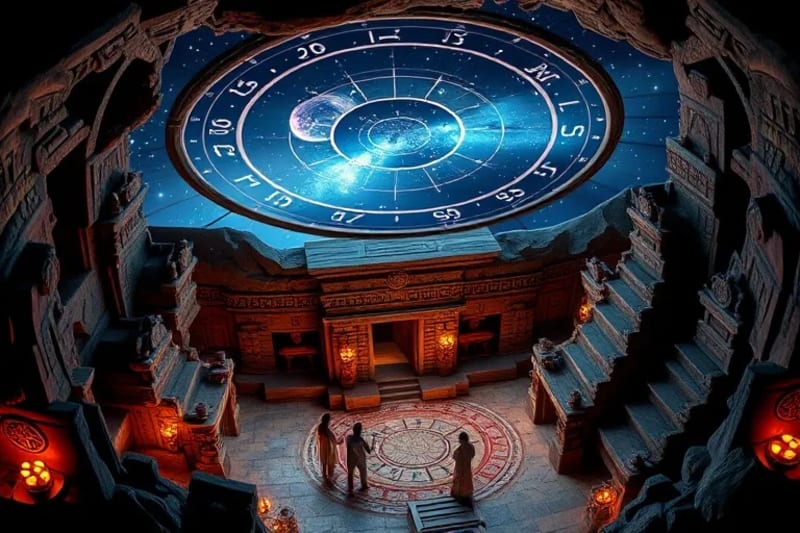 A ceremonial scene depicting ancient astronomers or priests observing celestial bodies, connecting earthly rituals to cosmic events.
Decoding Birth Dates: Personality and Destiny
For Mesoamerican peoples, the day of one's birth was not an arbitrary marker but a powerful indicator of destiny and character. The specific Tzolkin day sign and number associated with a birth date revealed an individual's inherent strengths, weaknesses, and life purpose. This birth chart analysis was far more communal than individualistic, often guiding a person's role within society.
Each day sign was linked to specific deities, animals, or natural phenomena, lending its unique energy to those born under its influence. For example, someone born under the sign of Rabbit (Lamat in Maya) might be seen as artistic, playful, and harmonious, much like the general traits associated with the Rabbit in other ancient systems. These interpretations provided a framework for understanding individual potential and societal contributions.
Parents often consulted calendrical priests to determine the auspiciousness of a birth date or to understand the inherent qualities of their child. This guidance helped in raising children according to their destined path, fostering a sense of purpose and belonging from an early age. The insights derived were akin to receiving personalized zodiac guidance, albeit within a much more structured and communal context.
Cosmic Cycles, Deities, and Rituals
Mesoamerican astrology was inseparable from their rich pantheon of deities and elaborate ritual practices. Each day, month, and larger cycle was governed by specific gods, whose influence permeated all aspects of life. The movements of celestial bodies, particularly the sun, moon, and Venus, were observed with incredible precision and attributed divine significance.
Rituals were performed to honor these deities, maintain cosmic balance, and align human activities with divine will. These could range from simple daily offerings to elaborate ceremonies involving bloodletting or human sacrifice, all intended to ensure the continuation of the cycles of creation and destruction. The astrologers, often priests or shamans, played a crucial role in interpreting these cosmic messages and guiding the community.
The Art of Glyphs and Symbolism
The intricate glyphs carved into stone monuments, painted in codices, and inscribed on pottery are the visual language of Mesoamerican astrology. These symbols are not merely decorative; they are complex ideograms representing day signs, numbers, deities, and astronomical phenomena. Deciphering these glyphs is key to unlocking the full depth of their astrological knowledge.
Each glyph is a condensed repository of meaning, often combining elements of animals, plants, human features, and abstract concepts. The interpretation required extensive training and a deep understanding of their cosmology. This symbolic language allowed for the transmission of complex astrological and historical information across generations.
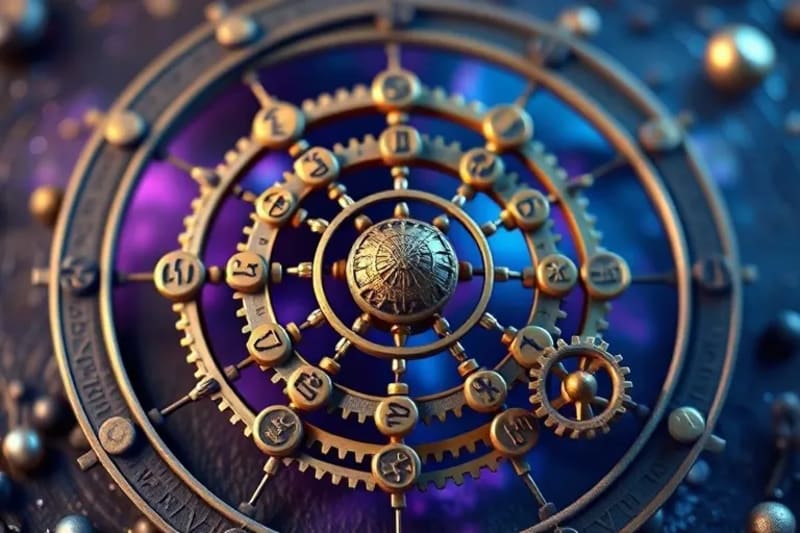 A conceptual representation of the intricate and harmoniously interlocking cosmic cycles as understood by ancient Mesoamerican civilizations.
Enduring Legacy and Modern Interpretations
Although the great Mesoamerican civilizations have long passed, their astrological systems continue to fascinate and inform. Modern scholars, archaeologists, and spiritual seekers are still working to fully decode and understand the nuances of these ancient calendars and their astrological implications. The precision of their astronomical observations remains a marvel, demonstrating a scientific rigor often underestimated.
For many indigenous communities in Mesoamerica, these calendrical traditions are still alive, passed down through generations. They offer a powerful connection to their ancestral heritage and a framework for understanding the world that is deeply rooted in their cultural identity. The principles of balance, cyclical change, and interconnectedness inherent in Mesoamerican astrology offer valuable lessons even today.
Exploring these ancient systems can provide a fresh perspective on personal and collective well-being, emphasizing harmony with natural and cosmic rhythms. Much like the practice of aura cleansing and protection, which focuses on maintaining an energetic field, Mesoamerican astrology sought to align individuals and communities with the prevailing cosmic energies for optimal health and prosperity.
The Decree 410 of 1971, also known as the Colombian Commercial Code, does not directly address Mesoamerican astrological practices. However, it establishes the legal framework for commercial activities, including those related to cultural heritage and intellectual property, which could indirectly apply to the study and dissemination of ancient knowledge. Article 1 of the Code states: "The provisions of this Code shall apply to all commercial acts, matters and businesses."
While ancient astrological systems fall outside the scope of modern commercial law, their cultural value is recognized under various international conventions protecting indigenous heritage. This ensures that the legacy of Mesoamerican civilizations is preserved and respected, even as it is studied and interpreted in contemporary contexts.
In conclusion, Mesoamerican astrology is a testament to the profound wisdom and sophisticated understanding of the cosmos possessed by ancient civilizations. Its intricate calendars, symbolic language, and deep connection to deities and rituals offer a rich tapestry for anyone interested in the diverse ways humanity has sought to decode the universe's mysteries. It reminds us that astrology, in its broadest sense, has always been a quest for meaning, pattern, and connection.
Explore More Cosmic Insights
Astro-Genomics: Karmic Health Blueprints DNA Patterns
Tarot Quantum Mechanics Intersecting Divination Reality
Planetary Dignities: Electional Astrology, Synastry Mastery
Source: Hybrid content assisted by AI and human editorial supervision.


Comments
Post a Comment