
Essential Dignities Electional Astrology Optimizing Outcomes
Electional astrology, an ancient and sophisticated branch of astrological practice, focuses on identifying the most auspicious moment to initiate an endeavor. Its core principle is that "as above, so below," meaning the celestial configurations at the inception of an event imprint their qualities upon its unfolding. For long-term projects, where sustained effort and favorable conditions are paramount, the judicious application of electional astrology can significantly optimize outcomes. Central to this practice are the essential dignities of planets, which quantify a planet's strength and ability to act effectively within a chosen chart.

A seasoned astrologer meticulously examines an intricate chart, seeking optimal celestial alignments for long-term success.
Understanding essential dignities is not merely an academic exercise; it is a practical tool for maximizing potential. When a planet is in a state of dignity, it is said to be "at home" or "exalted," allowing it to express its energies clearly, powerfully, and beneficially. Conversely, a planet in detriment or fall struggles to manifest its natural qualities, often leading to challenges, delays, or undesirable results. This article delves into the intricacies of essential dignities and their critical role in electional astrology, particularly for projects requiring a sustained and successful trajectory.
Table of Contents
- Understanding Essential Dignities
- Domicile and Exaltation: The Pinnacle of Planetary Strength
- Triplicity, Terms, and Faces: Layers of Support
- Detriment and Fall: Planetary Weaknesses to Avoid
- Applying Dignities in Electional Astrology for Projects
- Case Study: Conceptual Project Launch
- Limitations and Nuances in Practice
- Conclusion: Mastering Celestial Timing
Understanding Essential Dignities
Essential dignities are a system of evaluating a planet's strength and effectiveness based on its zodiacal placement. Unlike accidental dignities, which relate to a planet's house placement or aspects, essential dignities are inherent to the planet's position by sign. They describe how comfortable and powerful a planet feels in a particular sign, much like a person in their own home versus a foreign land. This concept is fundamental to traditional astrology, providing a nuanced understanding of planetary influence.
The system of essential dignities originates from Hellenistic astrology and was further refined during the medieval period. It assigns varying degrees of strength to planets based on their placement in specific signs, or even specific degrees within those signs. A planet with strong essential dignity is considered capable of achieving its objectives with ease and bringing forth positive manifestations related to its significations. Conversely, a planet lacking essential dignity may struggle, face obstacles, or produce less favorable outcomes.
For long-term projects, the strength of the planets signifying the project's core elements is crucial. For instance, if a project involves communication and contracts, Mercury's dignity would be highly scrutinized. If it's a financial venture, Jupiter and Venus would be key. The goal in electional astrology is to select a moment when these critical planets are in their strongest possible states, thereby imbuing the project with inherent resilience and potential for success. This approach aligns with the principles discussed in Chrono-Astrology Ancestral Echoes Navigating Personal Time Cycles, emphasizing the foundational wisdom of these ancient techniques.
Domicile and Exaltation: The Pinnacle of Planetary Strength
Domicile and exaltation represent the highest forms of essential dignity. A planet in its domicile is like a ruler in their own kingdom, possessing full authority and comfort. It can express its nature purely and powerfully. For example, Mars in Aries or Scorpio is in its domicile, making it a potent force for action and assertion. Similarly, Venus in Taurus or Libra signifies strong essential dignity for matters of love, finance, and aesthetics.
Exaltation, while slightly different from domicile, also signifies immense strength. An exalted planet is like an honored guest in a foreign land, receiving respect and special privileges. It performs exceptionally well, often beyond its usual capacity, but perhaps with a slightly more specific or intensified expression. The Sun is exalted in Aries, for instance, where its drive for individual expression and leadership is amplified. The Moon is exalted in Taurus, finding stability and comfort in material abundance and sensory pleasure.

Symbolic scales illustrate the balance between planetary strength (crown) and weakness (broken chain) in astrological dignities.
When electing a chart for a significant project, astrologers actively seek to place the planets most relevant to the endeavor in their domiciles or exaltations. This ensures that the foundational energies of the project are robust and well-supported from the outset. For a business launch, placing Mercury (communication, commerce) in Gemini or Virgo (domicile) or Venus (finances, partnerships) in Taurus or Libra (domicile) would be highly desirable. The table below summarizes the domiciles and exaltations for the traditional seven planets:
| Planet | Domicile (Day/Night) | Exaltation |
|---|---|---|
| Sun | Leo | Aries |
| Moon | Cancer | Taurus |
| Mercury | Gemini / Virgo | Virgo |
| Venus | Taurus / Libra | Pisces |
| Mars | Aries / Scorpio | Capricorn |
| Jupiter | Sagittarius / Pisces | Cancer |
| Saturn | Capricorn / Aquarius | Libra |
Triplicity, Terms, and Faces: Layers of Support
Beyond domicile and exaltation, there are lesser dignities that still contribute significantly to a planet's strength. These include triplicity, terms (or bounds), and faces (or decans). While not as powerful as the primary dignities, they provide layers of support and nuance to a planet's expression, making them valuable considerations in electional charts.
- Triplicity: Each of the four elements (Fire, Earth, Air, Water) is associated with three signs, forming a triplicity. Each triplicity has a set of ruling planets (day ruler, night ruler, and participating ruler) that gain dignity when in signs of that element. For example, in a day chart, the Sun gains dignity in any Fire sign (Aries, Leo, Sagittarius). This provides a broad level of support, like being among friends.
- Terms (Bounds): Each sign is divided into five unequal sections, or "terms," each ruled by a specific planet. A planet in its own term gains a moderate boost in strength, allowing it to exert some influence over its immediate surroundings. This is a more localized dignity, akin to having a small plot of land within a larger territory.
- Faces (Decans): Each sign is further divided into three 10-degree segments, or "faces," each ruled by a planet in a repeating Chaldean order (Saturn, Jupiter, Mars, Sun, Venus, Mercury, Moon). A planet in its own face gains the least amount of dignity, offering a very minor boost. It's like having a temporary advantage or a fleeting moment of recognition.
In electional astrology, while the primary focus remains on domicile and exaltation for key significators, these lesser dignities can act as tie-breakers or provide additional layers of resilience. A planet that is not in its domicile or exaltation but is strongly supported by triplicity, terms, or faces may still function adequately, especially if other accidental dignities are also present. This holistic approach ensures that all potential strengths are considered when selecting an optimal moment.
Detriment and Fall: Planetary Weaknesses to Avoid
Just as planets can be strong, they can also be weak. Detriment and fall represent states of essential debility, where a planet struggles to express its nature effectively. A planet in detriment is in the sign opposite its domicile, making it feel uncomfortable and unable to act naturally. For example, Mars in Libra (opposite Aries) or Taurus (opposite Scorpio) is in detriment, leading to difficulties in assertive action or conflict resolution. Venus in Aries or Scorpio faces similar challenges in matters of harmony and relationship.
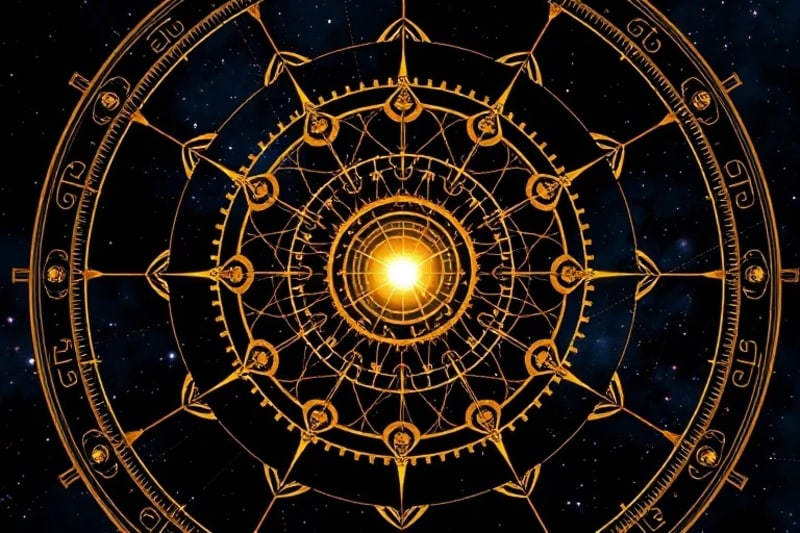
An abstract cosmic clockwork highlights a glowing central gear, symbolizing the precise moment chosen for optimal astrological timing.
A planet in its fall is in the sign opposite its exaltation. This position is often described as a place where the planet's energies are undermined or disrespected, leading to a diminished capacity for positive expression. The Sun in Libra (opposite Aries) is in its fall, where its individual drive might be compromised by a need for external validation. The Moon in Scorpio (opposite Taurus) is in its fall, struggling with emotional stability and security. These positions are generally avoided in electional charts, especially for the primary significators of the project.
For long-term projects, initiating an endeavor when key planets are in detriment or fall can introduce inherent weaknesses that persist throughout the project's lifespan. This might manifest as constant obstacles, internal conflicts, or a struggle to gain momentum. Astrologers meticulously scan potential electional charts to ensure that critical planets are free from these debilitating positions. Avoiding these placements is as important as seeking out dignities, as it prevents foundational flaws that could jeopardize the project's success. Understanding these weaknesses is also paramount in interpreting individual charts, as explored in Biophilic Manifestation: Natures Blueprint Abundance Harmony, where planetary strength in career houses can define public trajectory.
Applying Dignities in Electional Astrology for Projects
The practical application of essential dignities in electional astrology involves a systematic approach. First, the astrologer must clearly define the project's nature and objectives. This helps identify the key planets and houses that signify the endeavor. For example, launching a new tech startup might involve Mercury (innovation, communication), Jupiter (growth, expansion), and the 10th house (career, public image).
Once the significators are identified, the astrologer searches for a time when these planets are in strong essential dignity, ideally domicile or exaltation. They also look for an Ascendant that supports the project, with its ruler also being well-dignified. Furthermore, avoiding challenging aspects to these planets, especially from malefics (Mars and Saturn), is crucial. The Moon's condition is also vital, as it represents the unfolding of events and the general flow of the project. A well-dignified Moon making favorable aspects is highly desirable.
Consider a long-term real estate development project. The significators would include the Moon (property, foundations), Venus (value, aesthetics), and Saturn (structure, longevity, delays). An ideal electional chart would aim for the Moon in Cancer (domicile) or Taurus (exaltation), Venus in Taurus or Libra (domicile) or Pisces (exaltation), and Saturn in Capricorn or Aquarius (domicile) or Libra (exaltation). Additionally, ensuring that the ruler of the 4th house (foundations, property) is well-dignified and free from affliction would be a priority. This careful selection process aims to embed favorable conditions into the very fabric of the project's timeline, reducing potential future hurdles.
Case Study: Conceptual Project Launch
Let's consider a hypothetical scenario: launching a new educational platform for online learning. This is a long-term project requiring sustained engagement, clear communication, and financial stability. The key significators would be:
- Mercury: For learning, communication, technology, and the platform itself.
- Jupiter: For expansion, higher learning, wisdom, and overall success.
- Venus: For attracting users, financial viability, and aesthetic appeal.
- Ascendant Ruler: Representing the project's overall vitality and direction.
- Moon: For public reception, emotional engagement, and steady growth.
An electional astrologer would seek a chart where Mercury is in Gemini or Virgo (domicile) or Virgo (exaltation). Jupiter would ideally be in Sagittarius or Pisces (domicile) or Cancer (exaltation). Venus would be strong in Taurus, Libra, or Pisces. The Moon should be well-placed, preferably in Cancer or Taurus, and making harmonious aspects to the significators. The Ascendant ruler should also be strong and unafflicted. Avoiding Mercury retrograde or a debilitated Moon would be paramount, as these could introduce communication glitches or public dissatisfaction.
For example, an election might target a time when Mercury is in Gemini, forming a trine to Jupiter in Aquarius, with Venus in Taurus. If the Ascendant is Libra, its ruler Venus would be in its domicile, providing excellent support. This combination suggests a platform that is intelligently designed (Mercury in Gemini), innovative and far-reaching (Jupiter in Aquarius), attractive and financially sound (Venus in Taurus), and well-received by the public (strong Venus as Ascendant ruler). This meticulous process ensures that the project is born under the most favorable celestial auspices, setting the stage for long-term prosperity, much like understanding the optimal timing for significant life events as detailed in Fixed Stars Predictive Astrology: Timing Major Portents.
Limitations and Nuances in Practice
While essential dignities are powerful, electional astrology is not a magic bullet. Several factors can limit the perfection of an electional chart. Practical constraints, such as deadlines or availability, often mean that a truly "perfect" chart is unattainable. In such cases, the astrologer must prioritize, focusing on strengthening the most critical significators and mitigating the most severe debilities.
Furthermore, essential dignities are just one component of a comprehensive astrological analysis. Accidental dignities (planet's house placement, aspects, speed, direction) also play a significant role. A planet in domicile but combust (too close to the Sun) or retrograde might still struggle to express its full potential. Therefore, a holistic approach that balances both essential and accidental dignities is necessary for a robust election.
The interpretation of dignities also requires nuance. A planet in detriment or fall is not inherently "bad" but rather indicates areas where more effort, adaptation, or external support might be needed. For instance, a project launched with a debilitated Mercury might face initial communication challenges, but with conscious effort and robust communication strategies, these can be overcome. The electional chart sets the tone, but human agency and strategic planning remain vital for success. The interplay between celestial influences and practical action is a constant theme in astrological practice, including ethical considerations in divination as explored in Ethical Divination: Best Practices, Tarot, Numerology.
Conclusion: Mastering Celestial Timing
Essential dignities are an indispensable tool in electional astrology, offering a profound method for evaluating planetary strength and optimizing the timing of long-term projects. By understanding where planets are "at home" or "exalted," and conversely, where they are "in detriment" or "in fall," practitioners can select moments that imbue an endeavor with inherent resilience, favorable conditions, and a higher probability of success. This ancient wisdom, when applied meticulously, transforms the act of initiation into a powerful act of co-creation with the cosmos.
For any significant undertaking, from launching a business to starting a family, the careful consideration of essential dignities can provide a strategic advantage. It allows individuals and organizations to align their efforts with the most supportive celestial currents, ensuring that their long-term visions are not only realized but flourish under the most auspicious skies. Mastering this aspect of electional astrology is key to unlocking a deeper level of foresight and control over the trajectory of one's most important ventures.
Related Searches
- Davison Relationship Chart
- Chinese Face Reading
- Pisces Zodiac Sign
- Advanced Planetary Dignities Beyond Rulerships Synastry Electional Astrology
- Dragon's Cosmic Mission
- Chinese Zodiac Career
- Perro de Fuego Horóscopo Chino
- Revoluciones Solares Anuales
- Cronobiología Astrología
- Oración San Alejo
- Promesas Virgen María
- Querubines Serafines
Source: Hybrid content assisted by AI and human editorial supervision.


Comments
Post a Comment