
Monthly Horoscope Outlook: Navigating Cycles | StarPluto
The monthly horoscope outlook serves as a powerful tool for self-awareness and strategic planning, offering a celestial roadmap to navigate the ebb and flow of life. Far from being a mere prediction, it provides insights into the prevailing astrological energies, allowing individuals to align their actions with cosmic currents. Understanding these cycles can empower us to make more informed decisions, anticipate challenges, and capitalize on emerging opportunities.
In a world that often feels chaotic and unpredictable, a monthly astrological forecast offers a sense of rhythm and purpose. It highlights the areas of life that will be activated by planetary movements, from career advancements and financial shifts to relationship dynamics and personal growth. By tuning into these energies, we can foster a proactive approach to our existence, rather than simply reacting to circumstances.
- Self-Awareness: Gain deeper insights into personal strengths and weaknesses.
- Strategic Planning: Optimize timing for important decisions and initiatives.
- Opportunity Recognition: Identify favorable periods for growth and expansion.
- Challenge Mitigation: Prepare for potential obstacles and develop coping strategies.
- Emotional Harmony: Understand underlying emotional currents and manage them effectively.
This comprehensive guide aims to demystify the monthly horoscope, providing a foundational understanding of its components and practical advice for its application. Whether you are a seasoned astrology enthusiast or a curious newcomer, learning to interpret these celestial messages can significantly enhance your journey.
Table of Contents
- Understanding Monthly Horoscopes: More Than Just Sun Signs
- Key Astrological Components of a Monthly Outlook
- Planetary Transits and Their Impact on Your Month
- Major Lunations: New and Full Moons
- Retrograde Periods: Revisiting and Recalibrating
- Interpreting Your Monthly Forecast: A Practical Guide
- Optimizing Opportunities and Managing Challenges
- The Role of Elements and Modalities in Monthly Forecasts
- Common Misconceptions About Horoscopes
- Integrating Horoscope Insights into Daily Life
Understanding Monthly Horoscopes: More Than Just Sun Signs
Many people associate horoscopes solely with their Sun sign, which is the zodiac sign the Sun was in at the time of their birth. While the Sun sign provides a fundamental understanding of one's core personality and life purpose, a comprehensive monthly horoscope delves much deeper. It considers the positions and movements of all planets, the Moon, and other significant astrological points throughout the month.
A true monthly outlook analyzes how these celestial bodies interact with each other and, more importantly, how they interact with your unique birth chart. This complex interplay creates a dynamic energetic landscape that influences various aspects of your life. It's about understanding the specific energies available to you, rather than a generic prediction for millions of people.
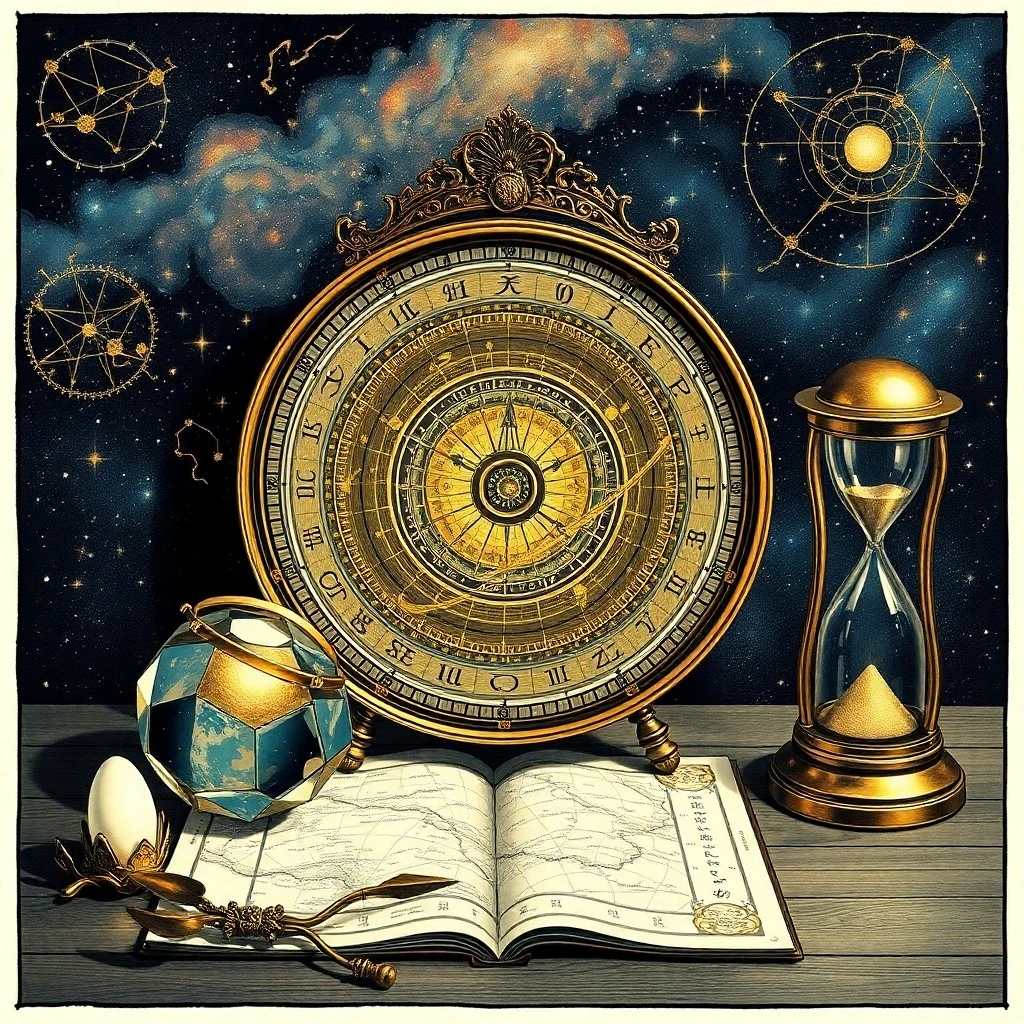
The intricate dance of planets and their symbols on a cosmic clock, illustrating the profound impact of astrological cycles on our lives.
The concept of a monthly horoscope is rooted in the belief that the universe operates on interconnected principles, where macrocosmic events (planetary movements) reflect microcosmic experiences (individual lives). This ancient wisdom tradition has been refined over millennia, offering a sophisticated framework for understanding human experience.
Key Astrological Components of a Monthly Outlook
To truly grasp a monthly horoscope, it's essential to be familiar with its core components. These include the planets, zodiac signs, houses, and aspects. Each plays a crucial role in shaping the energetic landscape of a given month.
- Planets: Represent different drives, functions, and psychological principles. For example, Mars governs action and desire, while Venus rules love and values.
- Zodiac Signs: Act as filters or costumes through which planetary energies express themselves. A planet in Aries will behave differently than the same planet in Libra.
- Houses: Divide the birth chart into 12 segments, each representing a specific area of life, such as career, relationships, family, or finances.
- Aspects: Are the angular relationships between planets, indicating how their energies interact—harmoniously, challenging, or dynamically.
A monthly horoscope tracks how the transiting planets (their current positions in the sky) move through the zodiac signs and houses, forming new aspects with each other and with the planets in your natal chart. This creates a unique energetic signature for each month, influencing collective and individual experiences.
Planetary Transits and Their Impact on Your Month
Planetary transits are the backbone of any monthly horoscope. These refer to the ongoing movements of planets across the zodiac. As planets move, they enter new signs and form aspects with other planets, both transiting and natal. Each transit brings a specific theme or energy to the forefront.
For instance, when the Sun transits through a particular house in your chart, that area of your life becomes a focal point for the month. If the Sun moves through your 10th house of career, you might experience increased visibility, professional opportunities, or a desire to focus on your public image. Similarly, a Venus transit through your 7th house of relationships could highlight themes of partnership, love, and social connections.
| Planet | Associated Themes | Monthly Impact |
|---|---|---|
| Sun | Core identity, vitality, focus, ego | Highlights specific life areas, brings vitality and self-expression. |
| Moon | Emotions, instincts, daily rhythms, subconscious | Influences daily moods, emotional responses, and short-term trends. |
| Mercury | Communication, intellect, travel, learning | Affects thinking, communication styles, and short trips. |
| Venus | Love, relationships, values, aesthetics, money | Influences romantic life, social interactions, finances, and self-worth. |
| Mars | Action, drive, passion, aggression, energy | Energizes specific areas, indicates where effort or conflict may arise. |
| Jupiter | Expansion, luck, wisdom, growth, philosophy | Brings opportunities for growth, learning, and good fortune in specific areas. |
| Saturn | Discipline, responsibility, structure, challenges, karma | Demands structure, discipline, and maturity; highlights areas for long-term effort. |
The outer planets (Uranus, Neptune, Pluto) move much slower and primarily influence generational trends or long-term personal transformations, though their aspects to personal planets can still create significant monthly shifts. Understanding these transits helps in preparing for the prevailing energies.
Major Lunations: New and Full Moons
The Moon's phases, particularly the New Moon and Full Moon, are critical markers in any monthly horoscope. These lunations act as energetic resets and culminations, setting the tone for cycles of initiation and completion.

An astrology journal and crystal ball, tools for deep reflection and understanding cosmic rhythms.
A New Moon signifies new beginnings, fresh starts, and planting seeds for future growth. It's an ideal time for setting intentions, initiating new projects, or embarking on a new phase of life. The sign in which the New Moon occurs will color the nature of these new beginnings. For example, a New Moon in Aries might inspire bold, independent actions, while a New Moon in Libra could focus on new partnerships or balancing relationships.
Conversely, a Full Moon represents a culmination, manifestation, or release. It brings things to light, often revealing the results of efforts initiated around the preceding New Moon. This is a powerful time for harvesting, celebrating achievements, or letting go of what no longer serves you. Full Moons can also be emotionally charged, bringing subconscious feelings to the surface for resolution.
Understanding the signs and houses where these lunations occur in your chart provides specific guidance on where these new beginnings or culminations will manifest in your life. For more detailed insights into lunar cycles, consider exploring resources on Mesoamerican Astrology AI Oracles Bridging Ancient Modern and their karmic implications.
Retrograde Periods: Revisiting and Recalibrating
Retrograde periods, particularly Mercury retrograde, often receive a bad rap, but they are essential components of astrological cycles. A planet is said to be in retrograde when it appears to move backward in its orbit from our perspective on Earth. Astrologically, this signifies a time for introspection, review, and recalibration rather than outward progression.
Mercury Retrograde: The most well-known retrograde, it occurs three to four times a year. It's associated with communication breakdowns, technological glitches, and travel delays. However, it's also an excellent time for reviewing plans, reconnecting with old contacts, and refining ideas. It encourages us to slow down and ensure clarity before moving forward.
- Review: Go over past projects, decisions, and relationships.
- Reassess: Evaluate current strategies and make necessary adjustments.
- Reflect: Engage in introspection and self-analysis.
- Recharge: Use the time to rest and conserve energy.
Other planets also go retrograde, each bringing its own unique themes for review. For example, Venus retrograde might prompt a reevaluation of relationships and values, while Mars retrograde could lead to a reassessment of desires and actions. These periods, though sometimes frustrating, offer invaluable opportunities for personal growth and course correction. For a deeper dive into planetary movements, consider learning more about retrograde planets.
Interpreting Your Monthly Forecast: A Practical Guide
Interpreting a monthly horoscope effectively requires more than just reading your Sun sign's general prediction. It involves understanding how the universal energies interact with your personal astrological blueprint. Here’s a step-by-step approach:
- Know Your Birth Chart: This is fundamental. Your rising sign (Ascendant), Moon sign, and the houses in your chart are crucial for personalized insights.
- Identify Key Transits: Look for major planetary shifts into new signs or houses, and significant aspects (conjunctions, oppositions, squares, trines, sextiles).
- Note Lunations: Pay attention to the New and Full Moons, their signs, and which houses they activate in your chart.
- Consider Retrogrades: Be aware of any planets going retrograde or direct, and how this might influence areas related to that planet's function.
- Synthesize Information: Don't just look at individual transits in isolation. See how they connect and form a larger narrative for the month.
A good monthly horoscope will often provide general themes for each zodiac sign, but the most accurate guidance comes from comparing these themes to your unique natal chart. For example, a general prediction for "career success" might be highly relevant if the transiting Jupiter is moving through your 10th house of career, but less so if it's in your 4th house of home and family.
Optimizing Opportunities and Managing Challenges
The true value of a monthly horoscope lies in its ability to help you optimize opportunities and effectively manage challenges. It's not about passively waiting for things to happen, but actively engaging with the energies at play.

Golden threads forming a complex path, representing the intricate journey of navigating life's opportunities with celestial guidance.
When favorable transits occur, such as Jupiter trine your natal Sun, these are excellent times to take calculated risks, launch new ventures, or expand your horizons. The horoscope can help you pinpoint these auspicious windows. Conversely, challenging transits, like a Saturn square your natal Mars, might indicate periods requiring patience, hard work, and careful planning to overcome obstacles.
By understanding these dynamics, you can consciously choose to lean into expansive energies when they are present and exercise caution or focus on internal work during more restrictive periods. This proactive approach transforms potential difficulties into learning experiences and maximizes periods of flow. For more on timing, check out electional astrology.
The Role of Elements and Modalities in Monthly Forecasts
Beyond individual planets and signs, the elements (Fire, Earth, Air, Water) and modalities (Cardinal, Fixed, Mutable) play a significant role in coloring the overall energy of a month. These broad categories help to understand the general mood and approach to life during a particular period.
- Elements:
- Fire (Aries, Leo, Sagittarius): Energy, passion, inspiration, action. A month dominated by Fire signs encourages enthusiasm and creativity.
- Earth (Taurus, Virgo, Capricorn): Practicality, stability, groundedness, material concerns. An Earth-heavy month favors tangible results and careful planning.
- Air (Gemini, Libra, Aquarius): Intellect, communication, social interaction, ideas. An Air-dominant month promotes mental activity and networking.
- Water (Cancer, Scorpio, Pisces): Emotion, intuition, empathy, spirituality. A Water-infused month emphasizes feelings and inner experiences.
- Modalities:
- Cardinal (Aries, Cancer, Libra, Capricorn): Initiation, leadership, starting new things. Cardinal energy pushes for action and new beginnings.
- Fixed (Taurus, Leo, Scorpio, Aquarius): Stability, perseverance, resistance to change. Fixed energy encourages maintaining, consolidating, and building.
- Mutable (Gemini, Virgo, Sagittarius, Pisces): Adaptability, flexibility, change, transition. Mutable energy promotes adjustment and fluidity.
By noting which elements and modalities are most activated by planetary transits in a given month, you can gain a broader understanding of the prevailing collective energy. For instance, a month with many planets in Cardinal Fire signs might be excellent for initiating bold, new projects, while a month with a strong Fixed Earth emphasis might be better for solidifying existing structures and focusing on practical matters.
Common Misconceptions About Horoscopes
Despite their popularity, horoscopes are often misunderstood. Addressing these common misconceptions is crucial for a more accurate and beneficial engagement with astrology.
- Fatalism: Many believe horoscopes dictate destiny, implying a lack of free will. Astrology, however, merely outlines energetic tendencies and potentials, not fixed outcomes. You always have the agency to choose how you respond to these energies.
- Generic Predictions: The "daily horoscope" found in newspapers often provides very generalized statements based solely on Sun signs. True astrological readings are deeply personal, considering the entire birth chart and current transits.
- Predicting Specific Events: While astrology can indicate periods favorable for certain types of events (e.g., relationship focus, career shifts), it rarely predicts exact occurrences like "you will meet a tall stranger on Tuesday." It's about themes and probabilities.
- Superstition vs. Symbolism: Some dismiss astrology as superstition. However, many practitioners view it as a symbolic language that helps understand psychological patterns and cosmic rhythms, rather than a literal cause-and-effect system.
Approaching horoscopes with an open mind and an understanding of their symbolic nature allows for a much richer and more empowering experience. It's a tool for self-reflection and guidance, not a crystal ball for definitive answers. Explore more about the basic definition of a horoscope to clarify its purpose.
Integrating Horoscope Insights into Daily Life
The ultimate goal of engaging with monthly horoscope outlooks is to integrate their insights into your daily life for enhanced well-being and personal effectiveness. This isn't about letting astrology make decisions for you, but rather using it as a guiding framework.
- Journaling: Keep a journal to track how monthly themes resonate with your experiences. This builds your personal understanding of astrological influences.
- Mindful Action: When a horoscope suggests a period for communication, consciously engage in clear and open dialogue. If it points to introspection, dedicate time for reflection.
- Flexibility: Use the insights to be adaptable. If a period is challenging, don't push against the current; instead, find creative ways to work with the energy.
- Set Intentions: Especially around New Moons, set specific intentions aligned with the prevailing astrological themes.
- Practice Self-Compassion: Understand that some months will naturally be more demanding than others. Use the horoscope to cultivate patience and self-care during tough transits.
By consistently applying these principles, you'll develop a deeper connection to the cosmic rhythms and a more nuanced understanding of your own journey. This practice transforms the horoscope from a passive reading into an active tool for personal empowerment and growth. For a deeper understanding of your personal chart, consider exploring the components of a birth chart.
Fuente: Contenido híbrido asistido por IAs y supervisión editorial humana.


Comments
Post a Comment