
Chinese Face Reading: Elemental Physiognomy Personality Insights
Chinese face reading, known as Mian Xiang (面相), is an ancient art and science that delves into the intricate relationship between facial features and an individual's personality, destiny, and health. Far more than mere fortune-telling, it is a sophisticated system of observation and interpretation rooted in millennia of Chinese philosophy, including the principles of Yin and Yang, the Five Elements (Wu Xing), and the flow of Qi (life energy).
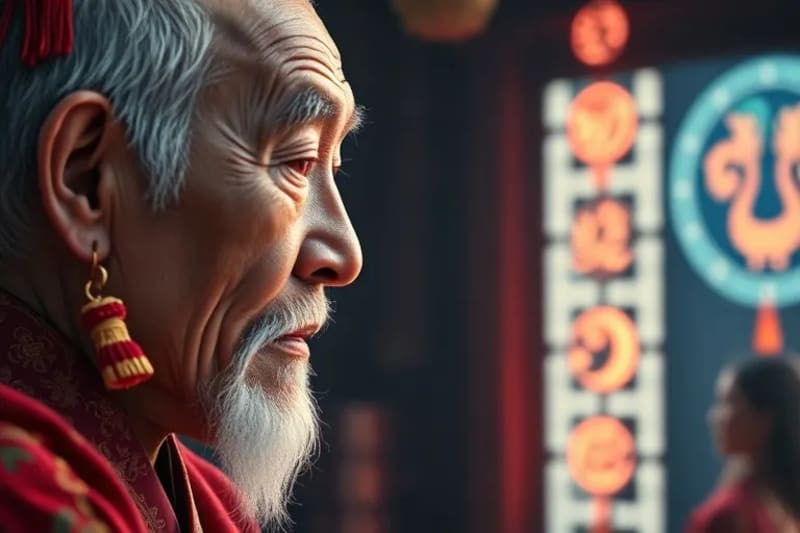
A master shares the ancient secrets of Chinese face reading, emphasizing the subtle nuances of human features.
This profound practice offers a unique lens through which to understand ourselves and others, providing insights into inherent strengths, potential challenges, and even life's trajectory. By meticulously analyzing the shape, size, proportion, and texture of various facial components, practitioners can uncover a wealth of information about a person's character, emotional landscape, and even their physical well-being.
In this comprehensive guide, we will explore the foundational principles of Chinese face reading, delve into the fascinating world of elemental physiognomy, and uncover how these ancient secrets can offer profound personality insights in the modern world.
Table of Contents
- Historical Foundations and Philosophical Roots
- Core Principles of Mian Xiang: Three Divisions and Five Officers
- Elemental Physiognomy: Understanding the Five Elemental Faces
- Feature-by-Feature Analysis: What Each Part of Your Face Reveals
- The Holistic Approach: Beyond Individual Features
- Modern Relevance and Ethical Considerations
- Conclusion: The Enduring Wisdom of Face Reading
Historical Foundations and Philosophical Roots
The origins of Chinese face reading can be traced back thousands of years, with some texts suggesting its practice during the Zhou Dynasty (1046–256 BC). It flourished during the Warring States period (475–221 BC), a time of great intellectual and philosophical development in China. Early practitioners, often scholars and physicians, observed patterns in facial features and correlated them with personality traits, health conditions, and life events.
Mian Xiang is deeply intertwined with core tenets of Chinese philosophy. The concept of Yin and Yang, the complementary opposing forces that govern the universe, is fundamental. Facial features are analyzed for their balance of Yin (softness, receptivity, dark) and Yang (sharpness, assertiveness, light). For instance, a prominent nose might be considered Yang, while soft, full lips could be Yin.
Equally crucial is the Theory of the Five Elements (Wu Xing): Wood, Fire, Earth, Metal, and Water. These elements are not just physical substances but represent fundamental qualities and phases of change in nature and human existence. Each element is associated with specific shapes, colors, emotions, and even facial types, forming the basis of elemental physiognomy. This interconnectedness suggests that the human face is a microcosm reflecting the macrocosm of the universe.
The flow of Qi (life force energy) through the body's meridians also plays a significant role. The condition of one's Qi is believed to be reflected in the complexion, brightness of the eyes, and overall vitality of the face. A clear, radiant complexion suggests healthy Qi, while dullness or discoloration might indicate imbalances.
Core Principles of Mian Xiang: Three Divisions and Five Officers
To interpret a face effectively, practitioners use several foundational frameworks. Two of the most important are the "Three Divisions" and the "Five Officers."
The Three Divisions (San Ting)
The face is vertically divided into three main sections, each representing a different phase of life and aspect of personality:
- Upper Division (Heaven): From the hairline to the eyebrows. This area relates to a person's early life (up to age 30), intellect, thinking ability, ancestral karma, and career prospects. A well-proportioned, smooth forehead indicates good fortune in early life and strong intellectual capacity.
- Middle Division (Man): From the eyebrows to the tip of the nose. This section covers middle age (ages 31-50) and reflects one's career, ambition, drive, emotional stability, and relationships with peers. A balanced middle division suggests a stable and successful mid-life.
- Lower Division (Earth): From the tip of the nose to the chin. This part corresponds to later life (after age 50), material wealth, practical abilities, family life, and resilience. A strong, well-defined lower division indicates a comfortable and stable old age.
Ideally, all three divisions should be roughly equal in length, indicating a balanced life journey. Disproportionate divisions can highlight areas of strength or potential challenge during different life stages.
The Five Officers (Wu Guan)
These are the five most prominent facial features, each offering specific insights into personality and destiny:
- Eyes (Supervisor): The "windows to the soul," revealing a person's spirit, vitality, intelligence, and emotional depth.
- Eyebrows (Guard): Reflect temperament, relationship with siblings, reputation, and courage.
- Nose (Controller): Represents wealth, self-esteem, career prospects, and health.
- Mouth (Receiver): Indicates communication style, sensuality, generosity, and fortune in later life.
- Ears (Collector): Pertain to longevity, wisdom, early upbringing, and financial luck.
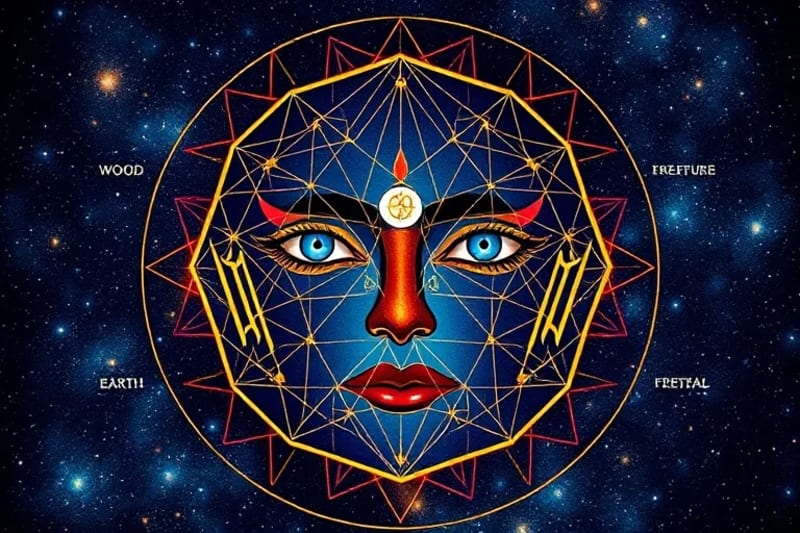
An illustrative guide to the "Five Officers," the essential facial features in Chinese physiognomy.
Elemental Physiognomy: Understanding the Five Elemental Faces
One of the most fascinating aspects of Chinese face reading is elemental physiognomy, where facial shapes and features are categorized according to the Five Elements. Identifying a person's dominant elemental face can provide a quick, yet profound, overview of their core personality traits, strengths, and potential challenges.
1. Wood Face
- Shape: Tall, lean, rectangular or oval, with a prominent forehead and long face.
- Features: Often has a high forehead, long eyebrows, clear eyes, and a straight nose.
- Personality: Creative, ambitious, idealistic, pioneering, and growth-oriented. They are natural leaders but can be inflexible or overly assertive.
- Strengths: Visionary, organized, determined.
- Challenges: Impatience, stubbornness, can be overly critical.
2. Fire Face
- Shape: Pointed, angular, often wider at the top (forehead) and narrower at the chin, with high cheekbones.
- Features: Sharp, bright eyes, often with a reddish complexion, prominent cheekbones, and an energetic expression.
- Personality: Passionate, dynamic, enthusiastic, charismatic, and quick-witted. They love attention and excitement but can be impulsive or restless.
- Strengths: Energetic, inspiring, innovative.
- Challenges: Impulsivity, short temper, can burn out quickly.
3. Earth Face
- Shape: Square, broad, strong jawline, full cheeks, and a generally solid, grounded appearance.
- Features: Broad forehead, strong nose, full lips, and a steady gaze.
- Personality: Stable, practical, reliable, nurturing, and patient. They are excellent problem-solvers and caregivers but can be resistant to change or overly cautious.
- Strengths: Dependable, loyal, grounded.
- Challenges: Stubbornness, slowness to adapt, can be overly materialistic.
4. Metal Face
- Shape: Oval or round with delicate features, often with fair skin and a refined appearance.
- Features: Clear, precise eyes, well-defined nose, thin lips, and a generally neat, orderly look.
- Personality: Organized, disciplined, precise, analytical, and principled. They value order and justice but can be rigid, overly critical, or emotionally reserved.
- Strengths: Meticulous, fair, efficient.
- Challenges: Perfectionism, aloofness, can be overly critical of self and others.
5. Water Face
- Shape: Round, soft, full, with a generally fluid and adaptable appearance.
- Features: Large, expressive eyes, full lips, often a rounded nose, and a generally gentle expression.
- Personality: Adaptable, intuitive, compassionate, empathetic, and resourceful. They are excellent communicators and can easily flow with changes but can be indecisive or prone to emotional extremes.
- Strengths: Flexible, intuitive, empathetic.
- Challenges: Indecisiveness, emotional volatility, can be prone to fear.
Feature-by-Feature Analysis: What Each Part of Your Face Reveals
Beyond the elemental types, a detailed examination of individual features provides specific insights:
Forehead (Intellect, Early Life, Career)
- High, Broad, Smooth: Indicates intelligence, good memory, clear thinking, and early career success.
- Receding: Suggests creativity and independence, but potentially a slower start in career.
- Lines: Few, fine lines are good. Deep, crisscrossing lines can indicate worry or early hardships.
Eyebrows (Temperament, Sibling Relationships, Reputation)
- Thick, Long, Well-Defined: Indicates strong personality, courage, good relationships with siblings, and a good reputation.
- Thin, Sparse: Suggests a more delicate nature, potential for indecisiveness, or challenges in sibling relationships.
- Arched: Artistic, sensitive, and diplomatic.
- Straight: Practical, direct, and logical.
Eyes (Spirit, Vitality, Personality)
The eyes are considered the most important feature, revealing the true spirit.
- Bright, Clear, Sparkling: High vitality, intelligence, optimism, and good fortune.
- Large, Expressive: Emotional, creative, and open.
- Small, Deep-Set: Observant, analytical, cautious, and sometimes secretive.
- Long, Narrow (Phoenix Eyes): Highly intelligent, refined, and often successful.
Nose (Wealth, Self-Esteem, Health)
- Straight, Well-Proportioned, Fleshy Tip: Good wealth prospects, strong self-esteem, and good health.
- Aquiline (Hooked): Strong ambition, business acumen, but can be perceived as aggressive.
- Small, Flat: More reserved, may struggle with self-confidence or financial independence.
- Bridge: A strong, straight bridge indicates resilience and a stable career.
Cheekbones (Power, Authority, Social Influence)
- High, Prominent: Indicates leadership qualities, ambition, and influence.
- Low, Flat: Suggests a more supportive role, less assertive.
- Balanced with Nose: Harmony between personal power and wealth.
Mouth (Communication, Sensuality, Fortune)
- Well-Defined, Full Lips, Upward Corners: Generous, optimistic, good communication skills, and good fortune.
- Thin Lips: Precise, reserved, can be critical.
- Large Mouth: Energetic, outspoken, ambitious.
- Small Mouth: More introverted, cautious, private.
Ears (Longevity, Wisdom, Early Upbringing)
- Large, Fleshy Lobes: Longevity, wisdom, good fortune, and a comfortable early life.
- Close to Head: Good listener, obedient.
- Protruding: Independent, rebellious, original thinker.
- High-Set: Intelligent, quick learner.
Chin and Jaw (Willpower, Later Life, Resilience)
- Strong, Rounded, Fleshy Chin: Strong willpower, resilience, good fortune in old age, and a stable family life.
- Pointed Chin: Sensitive, artistic, but can be lonely in old age.
- Receding Chin: Lacks willpower, can be indecisive.
- Strong Jawline: Determined, persistent, good stamina.
The face as a dynamic interplay of elemental forces, reflecting personality and destiny.
The Holistic Approach: Beyond Individual Features
While analyzing individual features is crucial, true mastery of Mian Xiang lies in its holistic interpretation. No single feature tells the whole story; rather, it's the interplay, balance, and harmony among all facial components that reveal the most profound insights. A practitioner considers the overall impression of the face, including:
- Balance and Proportion: As mentioned with the Three Divisions, an overall balanced face suggests a more harmonious life.
- Symmetry: While no face is perfectly symmetrical, a reasonable degree of symmetry often indicates inner balance and stability. Significant asymmetry can point to internal conflicts or imbalances.
- Complexion and Color: The clarity, radiance, and color of the skin are vital indicators of health, emotional state, and Qi flow. A clear, bright complexion is generally auspicious, while dullness, excessive redness, or paleness can indicate specific issues.
- Facial Lines and Markings: Lines that appear with age can indicate life experiences, wisdom, or stress. Certain moles or markings are also interpreted based on their location and appearance.
- Overall Expression: The habitual expression of a person's face—whether generally serene, tense, joyful, or worried—provides a snapshot of their inner world.
The goal is to see the face as a complete landscape, where each hill, valley, and river contributes to the overall narrative of a person's life journey and inner essence. A strong nose might indicate wealth, but if the eyes are dull, the person might lack the vitality to enjoy it. It is always about the synthesis of information.
Modern Relevance and Ethical Considerations
In today's fast-paced world, the ancient art of Chinese face reading might seem like a relic of the past, but its relevance is perhaps greater than ever. It offers a powerful tool for:
- Self-Understanding: Gaining insight into one's inherent strengths, weaknesses, and personality traits can foster self-acceptance and guide personal development.
- Interpersonal Relationships: Understanding the elemental types or key features of others can improve communication, empathy, and reduce misunderstandings in personal and professional relationships.
- Career Guidance: Identifying one's natural inclinations and talents through face reading can help in making more fulfilling career choices.
- Health Awareness: Certain facial indicators can point towards potential health predispositions, encouraging proactive wellness approaches.
However, it is crucial to approach Mian Xiang with an ethical and respectful mindset. It is not a tool for judgment, stereotyping, or fortune-telling in a deterministic sense. Instead, it should be viewed as a guide for self-discovery and understanding potential. The face changes over time due to life experiences, emotions, and health, reflecting our journey. It emphasizes that destiny is not fixed but influenced by our choices and actions.
Practitioners must always maintain cultural sensitivity and avoid making definitive, unchangeable pronouncements. The goal is to empower individuals with knowledge, not to label or limit them.
Conclusion: The Enduring Wisdom of Face Reading
Chinese face reading is a testament to humanity's enduring quest for self-knowledge and understanding of the universe. Rooted in profound philosophical traditions, it offers a rich, nuanced system for interpreting the subtle messages etched upon our faces. From the broad strokes of elemental physiognomy to the fine details of individual features, Mian Xiang provides a fascinating roadmap to personality, potential, and destiny.
By learning to "read" faces, we not only gain deeper insights into ourselves and those around us but also connect with an ancient wisdom that reminds us of the intricate beauty and interconnectedness of all life. It is an art that invites observation, reflection, and a deeper appreciation for the unique canvas that is the human face.
Fuente: Contenido híbrido asistido por IAs y supervisión editorial humana.


Comments
Post a Comment