
NLP Manifestation: Rewiring Mind Abundance Success
In the quest for a more fulfilling and prosperous life, many individuals seek methods to unlock their full potential. Neurolinguistic Programming (NLP) stands out as a powerful methodology designed to understand and modify the patterns of thinking, language, and behavior that shape our reality. This discipline offers practical tools to rewire the mind, transforming limiting beliefs into empowering ones, and ultimately paving the way for abundance in all its forms.
NLP is more than just a set of techniques; it is a comprehensive model for understanding how humans process information, communicate, and create their experiences. By delving into the intricate connections between our neurological processes, language patterns, and behavioral strategies, NLP provides a roadmap for personal transformation. When applied to manifestation, it becomes a potent force for aligning our inner world with our desired external reality, fostering a mindset geared towards attracting success and prosperity.

Unlock your potential by understanding how Neurolinguistic Programming helps in rewiring the mind for abundance and success.
This article will explore the foundational principles of NLP and how they can be specifically leveraged for manifestation. We will uncover how to identify and transform subconscious barriers, harness the power of language, and implement practical NLP techniques to cultivate a mindset of abundance. Whether you are new to NLP or looking to deepen your understanding, this guide will provide actionable insights to help you rewire your mind for the life you truly desire.
Table of Contents
- Understanding Neurolinguistic Programming (NLP)
- The Core Principles of NLP for Manifestation
- Rewiring Limiting Beliefs: The NLP Approach
- Language of Abundance: How NLP Transforms Communication
- Key NLP Techniques for Manifesting Desires
- Integrating NLP into Your Daily Manifestation Practice
- Scientific Perspectives and Ethical Considerations in NLP
Understanding Neurolinguistic Programming (NLP)
Neurolinguistic Programming (NLP) emerged in the 1970s from the collaborative work of Richard Bandler and John Grinder. They studied highly successful therapists like Virginia Satir, Fritz Perls, and Milton Erickson to identify patterns of excellence in communication and behavior. The core idea was that if these patterns could be identified, they could be modeled and taught to others, allowing anyone to achieve similar results.
The term "Neurolinguistic Programming" itself breaks down into three key components. "Neuro" refers to the nervous system, encompassing how we perceive the world through our five senses and process information internally. This includes our thoughts, emotions, and physiological responses, which form the basis of our subjective experience.
"Linguistic" relates to how we use language, both spoken and unspoken, to make sense of our experiences and communicate them to others. Our internal dialogue, the words we choose, and our body language all play a crucial role in shaping our reality and influencing our interactions. The precision and structure of language are central to NLP's ability to create change.
Finally, "Programming" highlights the idea that our thoughts, feelings, and behaviors are not random but are organized into patterns or programs. Just as a computer runs on software, our minds operate on learned strategies and habits. NLP provides the tools to identify these programs, deconstruct ineffective ones, and install more empowering and resourceful patterns, much like updating software for optimal performance.
In essence, NLP is the study of subjective experience and how we can consciously influence it to achieve desired outcomes. It operates on the premise that everyone has the resources they need to succeed, and often, the only thing holding them back is their internal programming. By understanding and modifying these programs, individuals can unlock profound changes in their lives, making it a powerful ally for manifestation practices.
The Core Principles of NLP for Manifestation
Several foundational principles underpin NLP and make it exceptionally effective for manifestation. These core tenets provide a framework for understanding how our internal world creates our external reality, offering leverage points for conscious change.
- The Map Is Not the Territory: This principle emphasizes that our perception of reality is not reality itself. Each person creates a unique internal "map" of the world based on their experiences, beliefs, and sensory filters. For manifestation, understanding that our map might contain limiting beliefs or inaccurate representations allows us to consciously update it to better serve our goals.
- People Respond to Their Map of Reality: Since we operate based on our internal maps, changing our map can change our responses and actions. If your map tells you abundance is scarce, your actions will reflect that. NLP helps to revise this map to one where abundance is plentiful and accessible.
- There Is No Failure, Only Feedback: This reframes setbacks as opportunities for learning and adjustment, rather than definitive failures. In manifestation, this mindset encourages persistence and flexibility, allowing you to refine your approach until you achieve your desired outcome.
- Every Behavior Has a Positive Intention: Even seemingly negative behaviors often stem from an underlying positive intention, such as self-protection or comfort. Identifying this intention allows for finding healthier ways to meet that need, rather than simply suppressing the behavior. This is crucial for understanding resistance to manifestation.
- The Meaning of Your Communication Is the Response You Get: This places responsibility for effective communication on the sender. If you're not getting the results you want, it's an indication to adjust your communication style, both internally and externally. This applies directly to how we communicate our desires to the universe and ourselves.
These principles guide the application of NLP techniques, helping individuals to understand the dynamics of their own minds and how they inadvertently create their current circumstances. By embracing these ideas, the path to conscious manifestation becomes clearer and more actionable. For those interested in deeper self-exploration and understanding how past experiences shape present realities, examining concepts like Akashic Records and soul blueprints can provide further context on the origins of our internal maps.
Rewiring Limiting Beliefs: The NLP Approach
Limiting beliefs are often the most significant roadblocks to manifestation. These are deeply ingrained convictions about ourselves, others, or the world that restrict our potential and prevent us from achieving our goals. Common limiting beliefs include "I'm not good enough," "Money is hard to come by," or "I don't deserve success." NLP offers powerful methods to identify, challenge, and transform these beliefs.
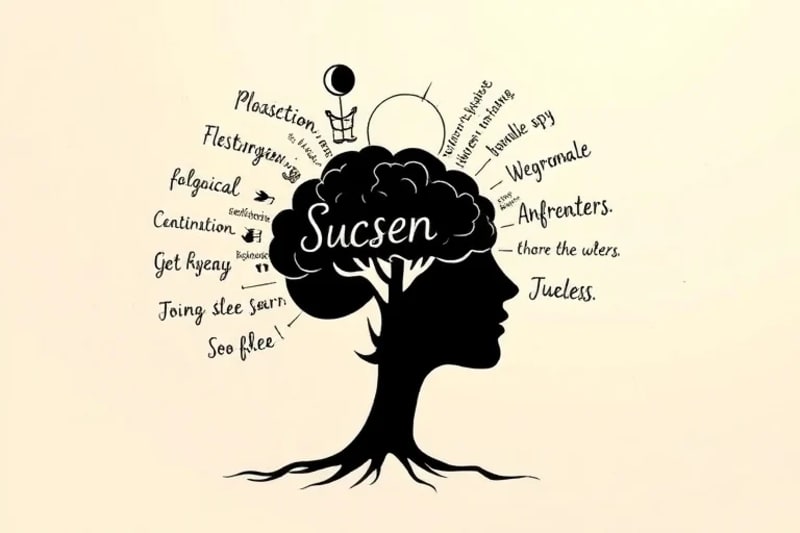
Harness the transformative power of language and thought patterns to manifest your desires.
The first step in rewiring limiting beliefs is awareness. NLP techniques help individuals uncover these often subconscious patterns. Once identified, the process involves understanding their origin and the impact they have on one's life. Many beliefs are formed in childhood or through significant life events, and they operate automatically, influencing decisions and perceptions without conscious input. This is where understanding the deeper, often unconscious, influences on our belief systems becomes critical, much like exploring karmic astrology and unconscious patterns.
NLP provides several techniques for belief change, such as the "Reframe" and "Change Personal History." Reframing involves looking at a situation or belief from a different perspective, thereby changing its meaning. For example, a "failure" can be reframed as a "learning experience." Change Personal History allows individuals to revisit past events that formed a limiting belief and reinterpret them with new resources and understanding, effectively neutralizing their negative impact.
Another powerful technique is "Swish Pattern," which involves rapidly replacing an unwanted thought or image with a desired one. This reprograms the neurological pathways associated with the limiting belief, creating a new, more empowering response. By consistently applying these methods, individuals can systematically dismantle old, unhelpful beliefs and install new, supportive ones that align with their manifestation goals. This active process of belief liberation is also a core tenet in practices like Chaos Magic, which focuses on radical manifestation through belief manipulation.
Language of Abundance: How NLP Transforms Communication
Language is not merely a tool for communication; it is a fundamental architect of our reality. The words we use, both internally and externally, profoundly influence our thoughts, feelings, and actions. NLP places significant emphasis on the precision and power of language, offering tools to transform our communication into a force for abundance.
One key aspect is understanding the "Meta Model" of language. This NLP tool helps to identify how we delete, distort, and generalize information in our communication. By asking specific questions, we can recover missing information, challenge distorted meanings, and break down over-generalizations. For manifestation, this means getting crystal clear about what we truly desire, removing ambiguity that can hinder the manifestation process.
For example, if someone says, "I can't achieve my financial goals," the Meta Model would prompt questions like: "Can't according to whom?" "What specifically stops you?" "How do you know you can't?" These questions challenge the underlying assumptions and reveal the limitations embedded in the language, opening pathways for new possibilities.
Another vital concept is the use of positive language. Our subconscious mind processes language literally and does not easily process negatives. Saying "I don't want to be poor" can be interpreted by the subconscious as focusing on "poor." Instead, NLP encourages framing desires in positive terms: "I want to be financially prosperous." This directs the mind towards the desired outcome, rather than the unwanted one.
Furthermore, NLP teaches us to use language that creates a sense of possibility and empowerment. Replacing "I should" with "I choose to," or "I have to" with "I get to," shifts our perception from obligation to agency. By consciously choosing words that reflect abundance, capability, and gratitude, we begin to reprogram our internal dialogue and align our communication with our manifestation intentions, reinforcing the principles of aligning energy with desires through effective manifestation techniques.
Key NLP Techniques for Manifesting Desires
NLP offers a rich toolkit of techniques that can be directly applied to enhance manifestation efforts. These methods help to create a powerful internal state, clarify goals, and remove internal resistance.
- Well-Formed Outcomes: This is a crucial first step in any manifestation process. NLP teaches how to define goals in a way that makes them achievable. An outcome must be:
- Stated in positive terms (what you want, not what you don't want).
- Initiated and maintained by you (within your control).
- Specific and measurable (clear criteria for success).
- Ecologically sound (beneficial to you and others).
- Sensory-based (what you will see, hear, and feel when achieved).
- Anchoring: This technique involves associating a specific physical touch, word, or image with a resourceful state (e.g., confidence, motivation, joy). By consciously creating an anchor, you can later trigger that resourceful state whenever needed, helping you stay aligned with your desires even when challenges arise.
- Visualization and Submodalities: While visualization is common in manifestation, NLP enhances it through the concept of submodalities. These are the finer details of our internal representations (e.g., the brightness, size, location, color, and movement of an image; the volume, tone, and tempo of sounds; the intensity and location of feelings). By consciously adjusting these submodalities, you can make your desired future feel more real and compelling, increasing its magnetic pull.
- Modeling: If someone else has achieved what you desire, NLP suggests modeling their strategies. This involves identifying the specific beliefs, thought patterns, language, and behaviors they use. By adopting these successful strategies, you can accelerate your own path to manifestation.
These techniques, when practiced consistently, create a powerful synergy that can dramatically improve your ability to manifest your desires. They move beyond mere positive thinking by providing structured ways to engage and reprogram your subconscious mind.
Integrating NLP into Your Daily Manifestation Practice
To truly harness the power of NLP for manifestation, it's essential to integrate its principles and techniques into your daily life. This isn't about adding more tasks to your schedule but rather about consciously shifting your approach to thoughts, language, and actions.

Experience the freedom and prosperity that comes from unlocking your mind's potential for abundance.
Start by cultivating awareness of your internal dialogue. Pay attention to the words you use when talking to yourself about your goals, abilities, and worth. Are they empowering or limiting? Consciously reframe any negative self-talk into positive, constructive affirmations. For instance, if you catch yourself thinking, "I'm not good at this," immediately rephrase it to, "I am learning and improving every day."
Regularly practice visualization using NLP's submodality distinctions. Instead of just vaguely imagining your desired outcome, make it vivid. What colors are present? How bright is it? Is it moving? What sounds do you hear? What feelings does it evoke? Engage all your senses to make the experience as real as possible, creating a powerful neurological blueprint for your future.
Incorporate anchoring into your routine. Identify moments when you feel particularly resourceful—confident, joyful, or determined. At the peak of that feeling, create a subtle physical anchor, such as pressing your thumb and forefinger together. Use this anchor later when you need to access that state, perhaps before an important meeting or when you feel doubt creeping in. Consistency is key; the more you fire the anchor with the resourceful state, the stronger the association becomes.
Finally, commit to continuous learning and self-reflection. NLP is a journey of self-discovery and refinement. Regularly review your goals using the Well-Formed Outcomes criteria, and be open to adjusting your strategies based on the feedback you receive from the world. By consistently applying these practices, you will gradually rewire your mind, making abundance a natural and inevitable part of your experience.
Scientific Perspectives and Ethical Considerations in NLP
While NLP has gained widespread popularity in personal development and coaching, its scientific validation remains a subject of ongoing debate. Critics often point to a lack of rigorous empirical studies supporting some of its more expansive claims, particularly regarding its efficacy as a therapeutic intervention for specific conditions. Many early studies were criticized for methodological flaws, leading to skepticism within mainstream psychology.
However, elements of NLP align with established psychological principles. For instance, the emphasis on cognitive reframing resonates with cognitive-behavioral therapy (CBT), which has strong empirical support. Visualization techniques are also widely used in sports psychology and performance enhancement. The focus on language and its impact on thought patterns is consistent with linguistic relativity hypotheses, suggesting that language influences perception and cognition.
From a scientific perspective, NLP can be viewed as a collection of techniques that, when applied effectively, can facilitate self-awareness, goal setting, and behavioral change. Its strength often lies in its practical, results-oriented approach, which many individuals find empowering. The effectiveness can often be attributed to principles of self-efficacy, placebo effect, and focused goal pursuit, rather than unique neurological reprogramming mechanisms as sometimes implied.
Ethical considerations are also paramount in the practice of NLP. As with any powerful tool for influence and change, it can be misused. Practitioners have a responsibility to operate with integrity, respect client autonomy, and ensure that interventions are for the client's highest good. This includes avoiding manipulative tactics, setting realistic expectations, and recognizing the limits of their expertise.
When using NLP for manifestation, it's crucial to maintain a balanced perspective. While it offers potent tools for personal transformation, it should not be seen as a magical solution that bypasses effort or external realities. Instead, it serves as a powerful framework to optimize one's internal state, align actions with intentions, and enhance personal effectiveness in pursuing desired outcomes, always within an ethical and responsible context.
Source: Hybrid content assisted by AI and human editorial supervision.


Comments
Post a Comment