
Biometric Divination Biofeedback Intuition Self-Discovery
Biometric Divination: The Intersection of Biofeedback, Intuition, and Self-Discovery
In an era where technology increasingly intertwines with every aspect of human experience, the ancient art of divination is finding new frontiers. Biometric divination emerges as a fascinating and innovative approach, bridging the gap between cutting-edge scientific measurement and profound spiritual insight. This practice explores how our physiological responses—often subconscious—can offer a unique lens into our inner states, intuitive faculties, and pathways to self-discovery.
By leveraging biofeedback technologies, individuals can gain objective data about their body's reactions to thoughts, emotions, and external stimuli, thereby enhancing their understanding of intuitive nudges and energetic shifts. This article delves into the core principles, methodologies, and transformative potential of biometric divination, offering a comprehensive guide to this evolving field.
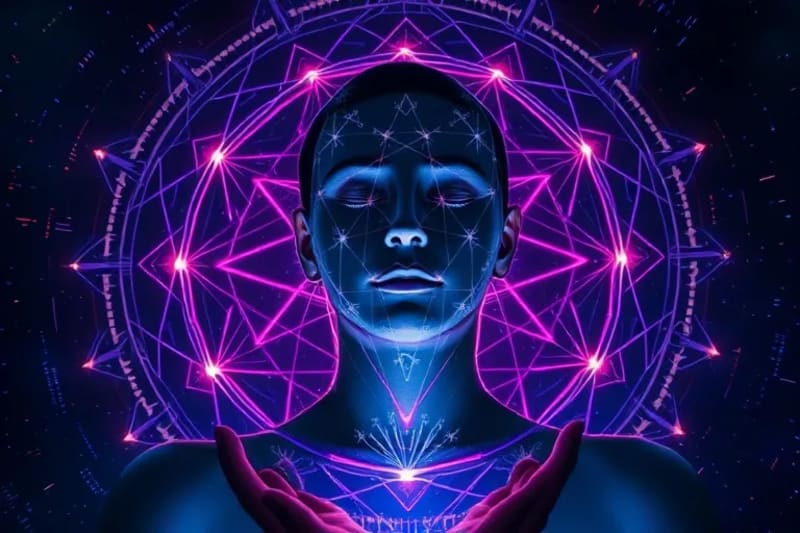 A visual representation of biometric data enhancing meditative and intuitive practices.
Fuente visual sujeta a disponibilidad del ecosistema: Wikimedia Commons bajo licencia CC BY-SA 4.0 o renderizado conceptual IA.
Table of Contents
- Understanding Biometric Divination
- The Role of Biofeedback in Intuitive Practices
- Intuition as a Data Point: Bridging Science and Spirituality
- Tools and Techniques in Biometric Divination
- The Journey of Self-Discovery through Biometric Data
- Ethical Considerations and Future Prospects
Understanding Biometric Divination
Biometric divination can be defined as the practice of using physiological data—such as heart rate variability (HRV), galvanic skin response (GSR), brainwave patterns (EEG), and eye-tracking—to gain insights into one's subconscious mind, emotional states, and intuitive processes. Unlike traditional divination methods that rely on external tools like tarot cards or astrological charts, biometric divination turns inward, using the body itself as the primary oracle.
The core premise is that our bodies constantly react to our internal and external environments, often before our conscious minds register these changes. These subtle physiological shifts can be measured and interpreted, providing objective feedback that can then be correlated with subjective intuitive experiences. This creates a feedback loop, allowing individuals to train their awareness and better understand their own energetic blueprint.
This approach offers a scientific veneer to spiritual exploration, appealing to those who seek empirical validation for their intuitive experiences. It doesn't replace traditional spiritual practices but rather augments them, offering a complementary pathway to self-awareness. By understanding how our physical body responds, we can better discern genuine intuitive guidance from mere wishful thinking or anxiety.
The Role of Biofeedback in Intuitive Practices
Biofeedback is a technique used to train individuals to control their physiological responses, such as brainwaves, breathing, muscle activity, heart function, and skin temperature. In biometric divination, biofeedback acts as a mirror, reflecting internal states that are often imperceptible to the conscious mind. For instance, changes in heart rate variability can indicate stress or relaxation, which might correlate with the clarity or distortion of intuitive messages.
When engaging in intuitive practices, such as meditation or visualization, biofeedback devices can provide real-time data on the body's response. This immediate feedback allows individuals to identify specific physiological patterns associated with heightened intuitive states. For example, a sudden increase in alpha brainwaves might coincide with a clear intuitive insight, helping the practitioner to consciously replicate the conditions conducive to such experiences.
 Symbolic representation of physiological data merging with intuitive wisdom.
The integration of biofeedback into intuitive practices offers a tangible way to measure and train one's sensitivity to subtle energies and inner guidance. It transforms the often-abstract concept of intuition into something that can be observed and refined. This scientific grounding can be particularly empowering for those who are new to spiritual exploration or who desire a more structured approach to developing their intuitive abilities. It can also complement practices like connecting with spirit guides by providing objective data on physiological alignment during these sessions.
Intuition as a Data Point: Bridging Science and Spirituality
The concept of intuition has long been relegated to the realms of mysticism or psychology, often lacking concrete, measurable parameters. Biometric divination proposes a radical shift: treating intuition not just as a feeling, but as a form of physiological data. When we experience a "gut feeling" or a sudden flash of insight, our bodies often register subtle changes—a dip in heart rate, a change in skin conductance, or a specific brainwave pattern.
By meticulously recording and analyzing these physiological markers in conjunction with intuitive experiences, practitioners can begin to map their unique intuitive signatures. This process allows for a more objective validation of intuitive hits, separating genuine insights from cognitive biases or emotional noise. It helps individuals build confidence in their inner wisdom by providing empirical evidence of its physical manifestation.
This bridge between science and spirituality is crucial for modern seekers. It offers a framework where intuitive knowledge can be understood not as supernatural, but as a sophisticated form of biological information processing. This perspective can help demystify intuition, making it more accessible and actionable for personal growth and decision-making. For example, understanding these subtle physiological shifts can be as insightful as a numerology and name analysis in revealing deeper aspects of self.
Tools and Techniques in Biometric Divination
A variety of tools and techniques are employed in biometric divination, ranging from readily available consumer devices to more specialized clinical equipment. The goal is always to monitor and interpret physiological signals that correlate with inner states and intuitive processes.
- Heart Rate Variability (HRV) Monitors: These devices measure the variation in time between heartbeats, which is an excellent indicator of nervous system activity. A balanced HRV often correlates with a state of coherence, optimal for intuitive reception.
- Galvanic Skin Response (GSR) Sensors: Also known as electrodermal activity, GSR measures changes in the electrical conductivity of the skin, influenced by sweat gland activity. This is a sensitive indicator of emotional arousal and stress, which can signal subconscious reactions to stimuli.
- Electroencephalography (EEG) Devices: EEG measures brainwave activity (alpha, beta, theta, delta waves). Specific brainwave states, particularly alpha and theta, are often associated with deep relaxation, creativity, and intuitive insights.
- Eye-Tracking Technology: While less common, eye-tracking can reveal subconscious attention patterns and emotional responses to visual information, potentially indicating areas of intuitive resonance or aversion.
- Biofeedback Software and Apps: Many platforms integrate data from these sensors, providing visual or auditory feedback that helps users train their physiological responses.
 An abstract representation of the intricate connection between biological data and intuitive wisdom.
Practitioners typically combine these tools with traditional meditative or contemplative practices. For instance, during a decision-making process, one might observe their HRV or GSR while contemplating different options, noting which choice elicits a more coherent or relaxed physiological response. This objective data can then inform their intuitive choice. The conscious effort to manage these responses can be seen as a form of cognitive biohacking, optimizing the mind-body connection for enhanced performance and insight.
The Journey of Self-Discovery through Biometric Data
At its heart, biometric divination is a powerful tool for self-discovery. By externalizing internal physiological states, individuals gain a deeper understanding of their own unique mind-body connection. This process can unveil hidden patterns, subconscious biases, and untapped intuitive potential. The objective feedback provided by biometric devices allows for a non-judgmental exploration of one's inner landscape.
Through consistent practice, individuals can learn to:
- Identify intuitive signals: Recognize the specific physiological sensations that accompany genuine intuitive insights.
- Manage emotional responses: Learn to regulate stress and anxiety, creating a clearer channel for intuition.
- Enhance self-awareness: Gain insights into how thoughts and emotions manifest physically, leading to greater emotional intelligence.
- Optimize decision-making: Use objective biometric data to complement subjective intuitive feelings, leading to more aligned choices.
- Deepen meditative states: Utilize real-time feedback to achieve profound states of relaxation and expanded consciousness.
This journey is not merely about predicting the future, but about understanding the present moment and one's place within it. It's about cultivating a profound relationship with one's own body and mind, recognizing them as integral components of a holistic self. Just as critical degrees in a birth chart can highlight karmic hotspots, biometric data can illuminate personal energetic patterns.
Ethical Considerations and Future Prospects
As with any emerging field that blends technology with personal insights, biometric divination presents several ethical considerations. Privacy of physiological data is paramount, as this information is deeply personal and could be misused if not handled securely. Practitioners must ensure transparency in data collection and usage, and individuals should be fully informed about how their biometric data is stored and interpreted.
Furthermore, it is crucial to avoid over-reliance on technology, ensuring that the human element of intuition and personal interpretation remains central. Biometric devices are tools to enhance, not replace, inner wisdom. The interpretation of data should always be approached with discernment and an understanding of individual variability.
Looking ahead, the future of biometric divination is promising. Advancements in wearable technology, artificial intelligence, and machine learning could lead to more sophisticated and personalized insights. Imagine AI algorithms that learn your unique intuitive patterns and provide tailored biofeedback exercises to optimize your spiritual development. This field has the potential to revolutionize how we understand and cultivate our innate intuitive abilities, ushering in a new era of scientifically-informed self-discovery.
The convergence of biofeedback, intuition, and self-discovery through biometric divination offers a compelling path for modern spiritual seekers. It provides a tangible, data-driven approach to understanding the subtle whispers of our inner wisdom, empowering us to navigate life with greater clarity, confidence, and self-awareness. As technology continues to evolve, so too will our capacity to explore the profound connections between our physical selves and our spiritual essence.
Explore Further: Related Insights
- Pig Zodiac Advanced Insights
- Career Success Feng Shui
- Tao Animal Sign Harmony
- Asteroid Goddesses in Birth Chart
- Electional Astrology Timing
- Locational Astrology Power Spots
- Fire Snake Horoscope Traits
- Crystal Grids for Manifestation
- Rooster Chinese Zodiac Traits
- Astro-Geology Planetary Influences
- Planetary Magic Celestial Energies
- Uranus Astrology Innovation
- Economía Naranja Industrias Creativas
- Propiedad Intelectual Digital
- Eclipses Solares Nuevos Comienzos
- Direcciones Simbólicas Técnicas
- Cristaloterapia Arquetípica
- Santo Rosario Misterios Gloriosos
- Misterios Luminosos Rosario
- Promesas Marianas Testimonios
Source: Hybrid content assisted by AI and human editorial supervision.


Comments
Post a Comment