
Esoteric Symbolism Modern Art Media Unveiling Meanings
Modern art and media, from blockbuster films to avant-garde paintings, often contain layers of meaning that extend beyond their surface narratives. Beneath the visible aesthetics, a rich tapestry of esoteric symbolism frequently lies hidden, waiting to be discovered by the discerning eye. This hidden language, rooted in ancient traditions and mystical philosophies, adds depth, intrigue, and a profound sense of connection to universal truths within contemporary creative expressions.
Understanding these symbols can transform a casual viewing or reading experience into a journey of discovery, revealing the artist's deeper intentions and the timeless wisdom they seek to convey. This exploration delves into how esoteric symbolism, encompassing everything from alchemy and astrology to sacred geometry and numerology, permeates various forms of modern art and media, offering a unique lens through which to interpret our cultural landscape.
Introduction to Esoteric Symbolism
Esoteric symbolism refers to the use of signs, images, and narratives that carry hidden or specialized meanings, often understood only by those initiated into a particular tradition or possessing specific knowledge. Unlike exoteric symbols, which are openly accessible and widely understood, esoteric symbols are designed to conceal deeper truths from the uninitiated while revealing them to those who seek them out.
These symbols are not mere decorative elements; they are potent carriers of ancient wisdom, philosophical concepts, and spiritual insights. Their presence in modern art and media serves multiple purposes, from adding layers of intellectual engagement to subtly influencing the audience's subconscious perception of the work.
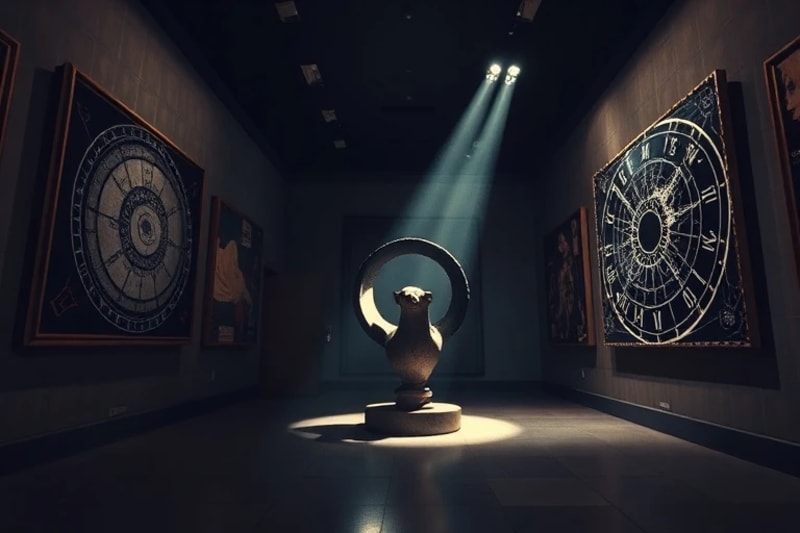
The fusion of ancient esoteric symbols and contemporary artistic forms creates profound and mysterious visual narratives.
The appeal of esoteric symbolism lies in its ability to evoke mystery, invite contemplation, and suggest a reality beyond the mundane. Artists and creators often employ these symbols to imbue their work with a sense of the sacred, the mystical, or the archetypal, connecting their audiences to a lineage of thought that spans millennia.
This introduction sets the stage for a comprehensive exploration of how these powerful symbols manifest across various creative disciplines, demonstrating their enduring relevance in our seemingly secular modern world.
Historical Roots and Enduring Appeal
The practice of encoding esoteric knowledge in symbols dates back to antiquity, finding expression in ancient Egyptian hieroglyphs, Gnostic texts, Hermetic philosophy, and alchemical treatises. Secret societies, mystery schools, and philosophical movements throughout history have utilized symbols as a means of preserving and transmitting their teachings.
From the Rosicrucians and Freemasons to the Kabbalists and medieval alchemists, these traditions developed intricate symbolic systems that communicated complex ideas without explicit articulation. The Renaissance saw a resurgence of interest in Hermeticism and Neoplatonism, influencing artists like Leonardo da Vinci and Botticelli, who subtly incorporated esoteric elements into their masterpieces.
The enduring appeal of esoteric symbolism stems from several factors. Firstly, it taps into the human fascination with the unknown and the desire for deeper meaning. Secondly, it provides a framework for exploring universal archetypes and psychological truths, as famously articulated by Carl Jung.
Finally, in an increasingly complex and often fragmented world, these symbols offer a sense of continuity and connection to ancient wisdom, suggesting that there are timeless patterns and principles underlying existence. Modern creators often draw upon this rich history to add layers of intellectual and spiritual resonance to their work, inviting audiences to engage on a more profound level.
Key Esoteric Traditions and Their Symbols
A multitude of esoteric traditions contribute to the symbolic language found in modern art and media. Each tradition offers a unique set of symbols and philosophical underpinnings that artists can draw upon.
Understanding these core traditions is crucial for deciphering the hidden meanings within contemporary works. Here are some of the most influential:
- Alchemy: Often depicted through symbols of chemical processes (e.g., distillation, calcination), metals (gold, silver, lead), and mythical creatures (ouroboros, phoenix). Alchemy represents not just the transmutation of base metals into gold, but also spiritual transformation and enlightenment.
- Astrology: Utilizes planetary symbols (☉ for Sun, ☽ for Moon, ☿ for Mercury), zodiac signs (♈ for Aries, ♉ for Taurus), and aspects. These symbols convey personality traits, cosmic influences, and destiny.
- Kabbalah: Features the Tree of Life (Sephiroth), Hebrew letters, and numerical values. It represents the mystical structure of the universe and the path to divine understanding.
- Numerology: Assigns symbolic meaning to numbers. Certain numbers (e.g., 3 for trinity, 7 for spirituality, 13 for transformation) appear repeatedly in narratives or visual compositions.
- Sacred Geometry: Involves patterns and shapes considered divine or fundamental to the universe, such as the Flower of Life, the Vesica Piscis, the golden ratio, and spirals. These symbols often represent cosmic order and interconnectedness.
- Tarot: A deck of 78 cards, each with rich archetypal imagery representing different aspects of the human experience, psychological states, and spiritual journeys. The Major Arcana, in particular, are potent symbolic narratives.
- Hermeticism: Based on the writings attributed to Hermes Trismegistus, emphasizing principles like "as above, so below" (the Emerald Tablet). Its symbols often relate to unity, duality, and cosmic correspondence.
Artists often blend symbols from multiple traditions, creating complex and multi-layered works that invite deep analysis and personal interpretation. This interweaving of ancient wisdom allows for a broader exploration of themes such as creation, destruction, rebirth, and the human condition.
Esoteric Symbolism in Visual Arts
Visual arts, including painting, sculpture, and digital art, are fertile ground for esoteric symbolism. Artists throughout history have used visual cues to convey hidden messages, often to circumvent censorship or to communicate directly with an informed audience.
In modern times, this practice continues, with contemporary artists drawing inspiration from historical esoteric movements. For instance, the use of sacred geometry in abstract art can evoke a sense of cosmic harmony or spiritual order, even if the viewer is unaware of the specific geometric principles involved.
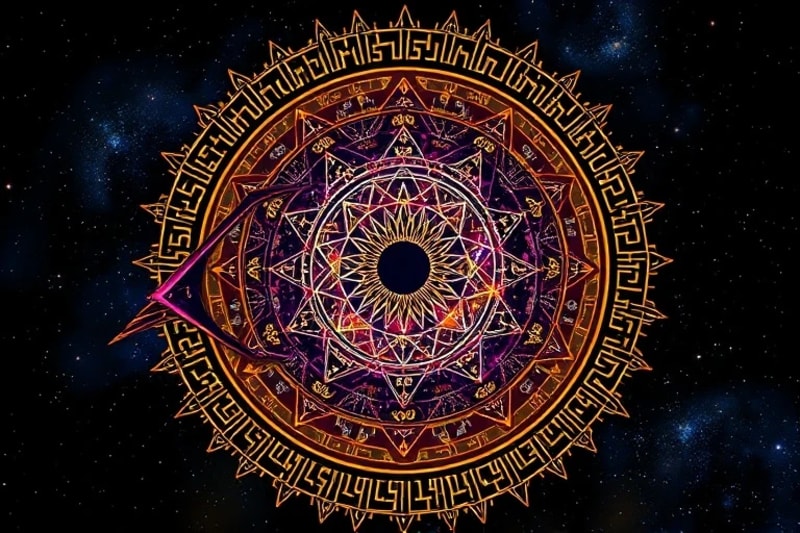
Digital artists often blend ancient symbols with futuristic aesthetics, creating new forms of mystical expression.
Surrealist painters, such as Salvador Dalí and René Magritte, often incorporated dream logic and archetypal imagery that resonated with alchemical and psychoanalytic concepts. Their works frequently present a distorted reality that hints at deeper psychological or spiritual states, inviting viewers to look beyond the literal.
Even in contemporary street art or graphic design, symbols like the all-seeing eye, the ouroboros, or specific planetary glyphs can be found, often repurposed to comment on societal structures, power dynamics, or personal transformation. These visual motifs act as silent communicators, bridging the gap between the conscious and subconscious mind.
Unveiling Hidden Meanings in Literature
Literature has long been a vessel for esoteric ideas, with authors using symbolism to enrich their narratives and challenge readers to seek deeper interpretations. From ancient myths to modern novels, hidden meanings are woven into character arcs, plot devices, and descriptive language.
Authors like Umberto Eco in Foucault's Pendulum or Dan Brown in The Da Vinci Code overtly explore esoteric themes, making them central to their mysteries. However, more subtle forms of symbolism are prevalent in many literary works.
For instance, the journey of a protagonist might mirror the alchemical process of transformation, moving through stages of purification, dissolution, and rebirth. Numbers recurring in a story could hold numerological significance, hinting at the author's underlying philosophical framework.
Poetry, with its condensed language and evocative imagery, is particularly adept at conveying esoteric concepts. Poets often use metaphors and allegories that, when unpacked, reveal connections to mystical traditions or universal archetypes, inviting readers into a more contemplative engagement with the text.
Cinematic Esotericism: Film and Television
The visual and narrative power of film and television makes them ideal mediums for conveying esoteric symbolism. Directors and screenwriters often embed subtle clues and references that enrich the viewing experience for those attuned to them.
Films like Stanley Kubrick's 2001: A Space Odyssey are renowned for their use of profound symbolism, touching upon themes of evolution, consciousness, and transcendence that resonate with esoteric philosophy. The monolith itself can be seen as a symbol of hidden knowledge or a catalyst for transformation.

Books often serve as symbolic gateways to ancient wisdom and esoteric understanding in art.
The Wachowskis' The Matrix trilogy is another prime example, heavily drawing on Gnostic and philosophical concepts, presenting a world where reality is an illusion and true knowledge is hidden. The characters' names, the color palettes, and the narrative structure all contribute to its layered symbolic meaning.
Even in more mainstream productions, astrological alignments, numerological patterns, or archetypal character journeys can be found. These elements often serve to deepen the psychological impact of the story, allowing audiences to connect with universal narratives of struggle, growth, and destiny.
Mystical Melodies: Music and Esoteric Themes
Music, with its abstract nature, is uniquely positioned to convey esoteric concepts through rhythm, harmony, and lyrical content. From classical compositions to modern rock and electronic music, artists have explored mystical themes and incorporated symbolic elements.
Classical composers like Mozart and Beethoven were involved in Freemasonry, and their works sometimes contain numerical patterns or symbolic structures related to their esoteric beliefs. The structure of a symphony, for instance, might mirror alchemical processes or the stages of spiritual initiation.
In contemporary music, album art, music videos, and lyrics often feature overt or subtle esoteric symbolism. Artists may use astrological signs, alchemical diagrams, or references to Kabbalistic concepts to express personal transformation, cosmic connection, or social commentary.
The use of specific musical scales, frequencies, or even the incorporation of sacred chants can also evoke a sense of the mystical. Music's ability to bypass the rational mind and speak directly to the emotions makes it a powerful medium for transmitting esoteric ideas on a visceral level.
Digital Divination: Esotericism in Video Games
Video games, as interactive narrative experiences, offer a unique platform for integrating esoteric symbolism. Game developers can weave complex layers of meaning into their worlds, characters, and storylines, creating immersive experiences that resonate with ancient wisdom.
Many games feature intricate lore systems that draw heavily from mythological, alchemical, or astrological sources. The progression of a character through a game might symbolize a spiritual journey or an alchemical transformation, with each level or quest representing a stage of initiation.
Visual design in games often incorporates sacred geometry, runic symbols, or sigils that have specific esoteric meanings. These symbols can be part of environmental storytelling, puzzle design, or even character abilities, adding depth for players who recognize their significance.
For example, games like Final Fantasy series or Persona series often feature explicit references to Tarot archetypes, astrological alignments, or Gnostic philosophy, shaping the narrative and character development. This integration allows players to engage with profound concepts in an entertaining and interactive manner.
The Allure of the Hidden: Why Artists Use Esoteric Symbols
The reasons why artists choose to incorporate esoteric symbolism into their work are multifaceted. Beyond adding intellectual intrigue, these symbols serve several key purposes that enhance the artistic expression and audience engagement.
Firstly, esoteric symbols provide a rich vocabulary for exploring universal themes that transcend cultural and temporal boundaries. Concepts like creation, destruction, rebirth, duality, and unity are fundamental to human experience and are often best expressed through symbolic language.
Secondly, the use of hidden meanings allows artists to communicate on multiple levels. While a casual observer might appreciate the aesthetic qualities of a piece, a more informed audience can uncover deeper philosophical or spiritual messages, creating a more profound and personalized connection.
Thirdly, esoteric symbolism can imbue a work with a sense of mystery and power. By hinting at knowledge that is not immediately accessible, artists can evoke curiosity and encourage viewers or readers to delve deeper into the work's underlying layers, fostering a more active and engaged interpretation.
Finally, for many artists, the exploration of esoteric traditions is a personal spiritual or philosophical journey. Incorporating these symbols becomes an authentic expression of their own beliefs and a way to share their insights into the nature of reality and consciousness.
Interpreting Esoteric Symbolism: A Guide
Deciphering esoteric symbolism requires a combination of knowledge, intuition, and an open mind. It's not always about finding a single, definitive meaning, but rather exploring the layers of potential interpretations.
Here are some guidelines for approaching the interpretation of esoteric symbols in modern art and media:
- Research the Artist/Creator: Understanding the background, beliefs, and influences of the creator can provide significant clues. Do they have known interests in specific mystical traditions?
- Context is Key: Analyze the context in which the symbol appears. How does it relate to the overall narrative, visual style, or thematic content of the work? A symbol's meaning can shift depending on its surroundings.
- Cross-Reference Traditions: Many symbols have roots in multiple esoteric traditions. Consult resources on alchemy, astrology, Kabbalah, numerology, and sacred geometry to understand their historical and philosophical associations.
- Look for Patterns and Repetitions: The recurrence of specific symbols, numbers, or colors often indicates their significance. Pay attention to how these elements are arranged and their relationship to one another.
- Consider Archetypal Meanings: Even without specific esoteric knowledge, many symbols tap into universal archetypes that resonate with the collective unconscious. Reflect on the emotional and psychological impact of the symbol.
- Embrace Ambiguity: Esoteric symbols are often designed to be multi-layered and open to interpretation. There may not be one "correct" answer, and the process of contemplation itself is part of the meaning.
By adopting this investigative approach, audiences can unlock a deeper appreciation for the artistry and intellectual richness embedded within contemporary creative works. This journey of discovery transforms passive consumption into active engagement, revealing the hidden dialogues between ancient wisdom and modern expression.
Conclusion: The Ever-Present Mystery
Esoteric symbolism continues to thrive in modern art and media, demonstrating its enduring power to captivate, challenge, and enlighten audiences. From the subtle geometric patterns in architecture to the complex narratives of video games, these hidden meanings invite us to look beyond the surface and engage with deeper truths.
The integration of ancient mystical traditions into contemporary creative works serves as a bridge between the past and the present, reminding us that the human quest for meaning and connection to the divine is a timeless endeavor. As our world becomes increasingly complex, the allure of these hidden languages only grows stronger, offering pathways to understanding ourselves and the universe around us.
By developing an awareness of esoteric symbolism, we not only enhance our appreciation for art and media but also open ourselves to new perspectives on reality. The journey of unveiling these hidden meanings is an ongoing one, promising endless discovery and a richer, more profound engagement with the creative expressions of our time.
Source: Hybrid content assisted by AI and human editorial supervision.


Comments
Post a Comment