
Jungian Archetypes Natal Chart Integration
The journey of self-discovery is a profound and often complex endeavor, leading individuals to explore various frameworks that offer insights into their inner workings. Among the most potent tools for understanding the human psyche are Carl Jung's theory of archetypes and the ancient practice of astrological natal chart analysis. While originating from different disciplines, these two systems converge powerfully when integrated, providing a comprehensive roadmap for psychological growth and self-realization, particularly through the transformative process of shadow work.
Jungian archetypes represent universal, archaic patterns and images that derive from the collective unconscious, influencing our thoughts, emotions, and behaviors. Simultaneously, the natal chart, a snapshot of the heavens at the moment of our birth, serves as a unique cosmic blueprint detailing our inherent potentials, challenges, and life path. This article delves into how these two powerful systems can be interwoven to illuminate our deepest psychological patterns, facilitate shadow integration, and ultimately guide us towards a more authentic and realized self.

A cosmic tapestry illustrating the intricate connection between universal archetypes and individual astrological patterns.
The synergy between Jungian psychology and astrology offers a holistic perspective on personal development. By identifying archetypal energies within the natal chart, individuals can gain clarity on their core motivations, unconscious drives, and the challenges they are destined to face. This integrated approach not only provides intellectual understanding but also serves as a practical guide for navigating life's complexities and fostering profound inner healing.
Understanding the interplay of these forces is crucial for anyone committed to deep personal growth. It moves beyond superficial self-help, offering a structured and deeply insightful method for confronting the less desirable aspects of the self – the shadow – and transforming them into sources of strength and wisdom. This integration is not merely an academic exercise but a dynamic process that unlocks greater self-awareness and empowers individuals to live more authentically.
Jungian Archetypes: Universal Patterns of the Psyche
Carl Jung, a pioneering Swiss psychiatrist, introduced the concept of archetypes as fundamental, primordial images and patterns residing in the collective unconscious. These are not inherited ideas but rather inherited predispositions to respond to the world in certain ways. They manifest in myths, dreams, religions, and personal experiences across all cultures and times.
Key archetypes frequently discussed include the Persona, the Shadow, the Anima/Animus, and the Self. Each plays a crucial role in the individual's psychological development and self-perception. Understanding these archetypes is the first step towards integrating them into a coherent sense of self.
- The Persona: This is the mask we wear in public, the social identity we present to the world. It is essential for social interaction but can become problematic if we over-identify with it, losing touch with our true self.
- The Shadow: Comprising all the aspects of ourselves that we deem unacceptable or undesirable, the Shadow is often repressed and hidden from conscious awareness. It contains both our darker impulses and unacknowledged positive traits.
- The Anima/Animus: These represent the unconscious feminine qualities in men (Anima) and masculine qualities in women (Animus). Their integration is vital for psychological balance and healthy relationships.
- The Self: The central archetype, representing the totality of the psyche, conscious and unconscious. It strives for wholeness and integration, guiding the process of individuation—the journey towards becoming a unified, unique individual.
Jung emphasized that these archetypes are not static but dynamic forces that interact within the psyche. Their influence can be observed in our life choices, relationships, and the recurring themes in our personal narratives. Recognizing these universal patterns within our individual experience provides a powerful lens for self-analysis.
The Natal Chart: Your Cosmic Psychological Blueprint
Astrology posits that the positions of planets, signs, and houses at the exact moment and location of our birth form a unique celestial map—the natal chart. This map is believed to symbolize our innate personality traits, talents, challenges, and life purpose. Each component of the natal chart corresponds to specific psychological functions and life areas.
- Planets: Represent fundamental drives and psychological functions (e.g., Sun for ego/identity, Moon for emotions/needs, Mars for drive/action, Venus for values/relationships).
- Zodiac Signs: Describe the "how" or the manner in which planetary energies are expressed (e.g., Mars in Aries acts impulsively, Mars in Libra acts diplomatically).
- Houses: Indicate the "where" or the specific life areas where these energies manifest (e.g., 1st House for self-image, 7th House for partnerships, 10th House for career).
- Aspects: The angular relationships between planets, revealing the dynamic interplay and integration (or tension) between different psychological functions.
The natal chart is not a deterministic fate but rather a map of potential. It highlights areas of natural strength, inherent vulnerabilities, and the lessons we are here to learn. By understanding our chart, we gain a deeper appreciation for our unique psychological makeup and the energetic currents that shape our experience.
For instance, a prominent Saturn in a natal chart might indicate a strong archetypal 'Wise Old Man' or 'Father' figure, suggesting themes of discipline, structure, and authority. Conversely, challenging aspects to Saturn could point to an unintegrated 'Tyrant' or 'Inner Critic' archetype, requiring conscious work to transform these energies.
Mapping Archetypes onto the Natal Chart
The true power of this integrated approach lies in seeing the natal chart as a symbolic representation of our personal archetypal landscape. Each planet, sign, house, and aspect can be correlated with specific archetypal energies, providing a rich tapestry of psychological insights. This mapping allows for a more nuanced understanding of our inner world.
Consider the following correlations:
| Astrological Element | Associated Archetype(s) | Significance |
|---|---|---|
| Sun & Leo | Hero, King/Queen, Creator, Innocent | Core identity, ego, life force, self-expression, desire for recognition. |
| Moon & Cancer | Mother, Child, Nurturer, Caregiver | Emotional needs, security, unconscious habits, inner child, sense of belonging. |
| Mars & Aries | Warrior, Pioneer, Destroyer, Rebel | Drive, assertion, courage, aggression, initiation, physical energy. |
| Venus & Libra/Taurus | Lover, Artist, Harmonizer, Seductress/Seducer | Values, relationships, aesthetics, pleasure, attraction, diplomacy. |
| Mercury & Gemini/Virgo | Messenger, Trickster, Analyst, Sage | Communication, intellect, learning, adaptability, logic, perception. |
| Jupiter & Sagittarius | Explorer, Guru, Benefactor, Seeker | Expansion, growth, philosophy, wisdom, optimism, luck, higher learning. |
| Saturn & Capricorn | Father, Wise Old Man, Taskmaster, Architect | Structure, discipline, responsibility, boundaries, limitations, authority. |
| Uranus & Aquarius | Rebel, Innovator, Revolutionary, Awakener | Originality, freedom, change, disruption, invention, humanitarianism. |
| Neptune & Pisces | Mystic, Dreamer, Victim, Savior | Spirituality, intuition, illusion, compassion, escapism, artistic inspiration. |
| Pluto & Scorpio | Transformer, Destroyer, Phoenix, Underworld Guide | Power, transformation, regeneration, death and rebirth, hidden depths, intensity. |
| Chiron | Wounded Healer | Core wound, healing potential, empathy gained through suffering. |
| Lunar Nodes | Pathfinder, Karmic Guide | Soul's evolutionary path, past life patterns (South Node), future direction (North Node). |
Beyond individual planetary placements, the overall chart patterns, such as stelliums (clusters of planets), grand trines, or T-squares, can also highlight dominant archetypal themes. For example, a strong emphasis on the 12th house or challenging aspects to outer planets like Pluto often points to significant shadow material that needs to be brought into conscious awareness.
Understanding the Shadow in Astrological Context
Jung's concept of the Shadow is particularly relevant when analyzing the natal chart. The Shadow encompasses all the parts of ourselves that we have disowned or repressed because they were deemed unacceptable by our families, society, or even our own ego. These can be negative traits like anger, jealousy, or selfishness, but also positive qualities like creativity, power, or joy that we fear to express.

An oil painting depicting the introspective journey into the subconscious, confronting hidden aspects of the self.
In astrology, the Shadow can manifest in several ways:
- Difficult Aspects: Squares, oppositions, and quincunxes between planets often highlight areas of inner conflict and unintegrated energies. These aspects can represent archetypal tensions that, when unaddressed, project onto others or create internal turmoil. For example, a Mars-Saturn square might indicate a repressed warrior archetype, leading to passive-aggression or self-sabotage.
- Pluto and the Eighth House: Pluto, the planet of transformation, death, and rebirth, is deeply connected to the Shadow. Its placement by sign and house, along with any aspects it makes, reveals where we hold deep-seated power issues, fears, and repressed desires. The Eighth House, ruled by Scorpio and Pluto, is also a domain of hidden resources, psychological depths, and collective unconscious material.
- Intercepted Signs: When a sign is "intercepted" within a house (meaning its entire span is contained within a house and does not appear on a cusp), the energies of that sign and any planets within it can be difficult to access or express consciously. This can represent a hidden or repressed archetypal pattern.
- The Twelfth House: Traditionally associated with self-undoing, hidden enemies, and the unconscious, the Twelfth House can also reveal aspects of the Shadow. Planets placed here often represent energies that operate below conscious awareness, sometimes leading to self-defeating patterns until they are brought to light.
- Unintegrated Archetypes: Any archetypal energy represented in the chart that is not consciously acknowledged or healthily expressed can become part of the Shadow. For instance, a strong 'Lover' archetype (Venus) that is repressed due to past trauma might manifest as a shadow 'Seductress/Seducer' in unhealthy ways.
Recognizing these astrological indicators is the first crucial step in beginning shadow work. It provides specific points of focus for introspection and psychological exploration, moving beyond vague feelings of unease to pinpoint the roots of our inner conflicts.
The Process of Astrological Shadow Work
Shadow work is not about eliminating the darker aspects of ourselves but about acknowledging, understanding, and integrating them. It's a courageous journey that leads to greater self-acceptance and psychological wholeness. When combined with natal chart analysis, this process becomes highly targeted and effective.
Here are key steps in performing astrological shadow work:
- Identify Shadow Indicators in Your Chart: Start by pinpointing the astrological placements mentioned above: challenging aspects, Pluto's house and aspects, intercepted signs, and any planets in the 12th House. Research the archetypal energies associated with these placements.
- Observe Projections: The Shadow is often projected onto others. Notice what traits or behaviors in others trigger strong reactions (anger, disgust, admiration). These often reflect unacknowledged aspects of your own Shadow. For example, if you constantly criticize others for being lazy, you might have a repressed 'Sloth' archetype in your own Shadow.
- Engage with Dreams and Active Imagination: Jung believed dreams are the royal road to the unconscious. Pay attention to recurring symbols, figures, or themes in your dreams. Use active imagination to dialogue with these figures, asking what they represent and what they need. This can bring archetypal energies into conscious awareness.
- Journaling and Self-Reflection: Dedicate time to journaling about your triggers, fears, desires, and the parts of yourself you hide. Explore how these relate to your specific astrological placements. For example, if your Pluto is in the 7th House (relationships), journal about power dynamics, control, and transformation in your partnerships.
- Confront and Acknowledge: This is the most challenging step. It involves consciously admitting to yourself that these "undesirable" traits or repressed potentials exist within you. This is not about condoning harmful behavior but about recognizing the underlying energy.
- Integrate and Reclaim: Once acknowledged, the goal is to integrate these Shadow aspects. This means finding healthy, constructive ways to express the energy. For example, if you've repressed your 'Warrior' archetype (Mars), you might channel that energy into assertive communication, setting boundaries, or pursuing challenging goals, rather than allowing it to erupt in uncontrolled anger.
The process is iterative and requires patience and self-compassion. It's a lifelong journey, not a one-time fix. Each layer of the Shadow integrated brings a deeper sense of authenticity and power. Sound Alchemy: Cellular Regeneration, Manifestation Frequencies can be particularly potent, as these periods often bring unconscious material to the surface for review.
Integration and the Path to Self-Realization
The ultimate goal of integrating Jungian archetypes and astrological insights, particularly through shadow work, is individuation and self-realization. Individuation, in Jungian terms, is the process by which an individual becomes a whole, indivisible being, distinct from the collective and unified within themselves. It's the journey of becoming who you truly are, beyond societal expectations and unconscious conditioning.
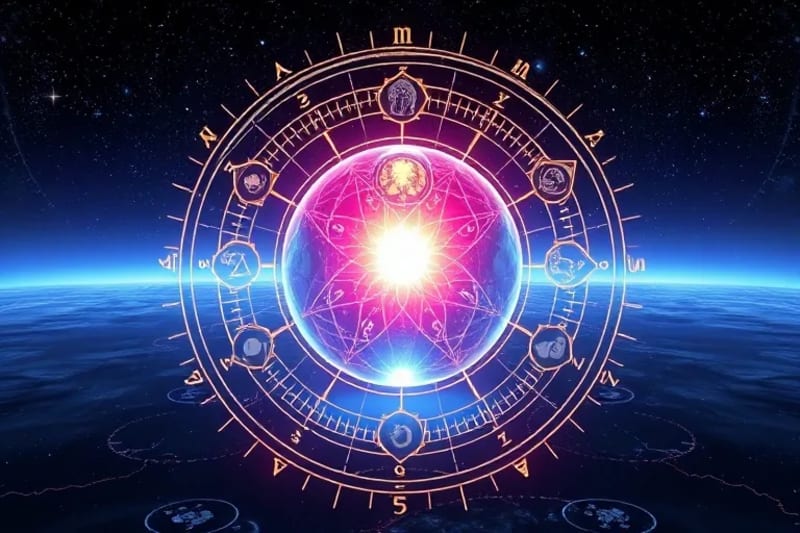
A futuristic 3D render symbolizing the harmonious integration of the Self with the intricate patterns of the cosmic blueprint.
When we integrate our Shadow, we reclaim immense psychological energy that was previously tied up in repression and defense mechanisms. This reclaimed energy becomes available for creative expression, personal growth, and conscious decision-making. The integrated Self is not perfect but whole, embracing both light and dark aspects.
From an astrological perspective, self-realization means living in alignment with your natal chart's highest potential. It involves consciously working with your planetary energies, transforming challenging aspects into strengths, and expressing your unique archetypal patterns in constructive ways. For example, someone with a strong 'Rebel' archetype (Uranus) might channel this into advocating for social justice rather than engaging in disruptive behavior for its own sake.
The process of integration leads to several profound outcomes:
- Increased Authenticity: Living in greater alignment with your true self, free from the constraints of the Persona or the dictates of the unintegrated Shadow.
- Enhanced Resilience: A deeper understanding of your psychological landscape equips you to navigate life's challenges with greater strength and adaptability.
- Improved Relationships: By integrating your own Shadow, you are less likely to project it onto others, leading to more conscious, honest, and fulfilling relationships.
- Greater Creativity and Vitality: Reclaiming repressed energies unlocks new sources of inspiration and life force, fueling creative pursuits and a more vibrant existence.
- Sense of Purpose: Aligning with your natal chart's evolutionary path and consciously integrating your archetypal energies often brings a clearer sense of life purpose and direction.
The journey of self-realization is a continuous unfolding, a dynamic interplay between our conscious efforts and the unconscious forces at play. Astrology provides the map, and Jungian psychology offers the compass for this transformative voyage. Cosmic Sociology AI Ethics Global Consciousness Digital Age can further deepen this understanding.
Benefits and Challenges of This Integrated Approach
The integration of Jungian archetypes and natal chart analysis offers a wealth of benefits for personal growth, but it also comes with its own set of challenges. It's important to approach this work with both enthusiasm and a realistic understanding of its demands.
Key Benefits:
- Holistic Understanding: Provides a comprehensive view of the psyche, blending ancient wisdom with modern psychological insights.
- Personalized Roadmap: The natal chart offers a unique, individualized guide for where to focus shadow work and archetypal integration.
- Deeper Self-Awareness: Uncovers unconscious motivations and patterns, leading to profound insights into one's behavior and choices.
- Empowerment: Transforms perceived weaknesses (e.g., difficult aspects) into sources of strength and conscious choice.
- Spiritual Growth: Connects personal development with universal cosmic patterns, fostering a sense of interconnectedness and purpose.
- Improved Decision-Making: With greater self-knowledge, decisions are made from a place of authenticity rather than unconscious compulsion.
Potential Challenges:
- Emotional Intensity: Shadow work can be emotionally demanding, bringing up painful memories or uncomfortable truths.
- Resistance: The ego often resists confronting the Shadow, as it threatens established self-perceptions.
- Complexity: Both Jungian psychology and astrology are complex fields. Integrating them requires dedication to learning and consistent practice.
- Misinterpretation: Without careful study or guidance, there's a risk of misinterpreting astrological placements or archetypal manifestations.
- Overwhelm: The sheer volume of information from a natal chart and archetypal analysis can be overwhelming initially.
- Need for Guidance: Many find it beneficial to work with a qualified Jungian analyst or an astrologer specializing in psychological astrology to navigate this deep work effectively.
Despite the challenges, the rewards of this integrated approach are immense. It offers a path to profound transformation, moving beyond superficial understanding to a deep, embodied sense of self-realization. The journey is one of courage, introspection, and ultimately, liberation. Understanding zodiac archetypes in modern spirituality can provide additional context for this journey.
Conclusion: Embracing Wholeness Through Cosmic Wisdom
The integration of Jungian archetypes and natal chart analysis provides a powerful, multi-dimensional framework for understanding the self and embarking on the path of individuation. By recognizing the universal patterns of the psyche as reflected in our unique cosmic blueprint, we gain unparalleled insight into our inherent strengths, vulnerabilities, and the unconscious forces that shape our lives.
Shadow work, guided by astrological insights, becomes a precise and potent tool for reclaiming disowned aspects of the self, transforming internal conflicts into sources of wisdom and vitality. This journey is not merely about fixing what is "wrong" but about embracing the totality of who we are, both light and shadow, conscious and unconscious.
Ultimately, this integrated approach empowers individuals to move towards self-realization—a state of psychological wholeness and authentic living. It is an ongoing process of self-discovery, growth, and conscious evolution, inviting us to become the most complete and integrated versions of ourselves, aligned with both our inner truth and our cosmic design.
Fuente: Contenido híbrido asistido por IAs y supervisión editorial humana.


Comments
Post a Comment