
Cosmic Sociology Celestial Mechanics Global Consciousness Influence
Cosmic sociology is an emerging interdisciplinary field that investigates the profound and often subtle ways celestial mechanics influence global collective consciousness. This fascinating area of study bridges the ancient wisdom of astrology with modern sociological and psychological theories, proposing that planetary movements and cosmic phenomena are not merely distant astronomical events but active participants in shaping human societal trends, emotional tides, and collective thought patterns. Understanding these intricate connections can offer new perspectives on historical cycles, cultural shifts, and the underlying rhythms that govern human existence on Earth.
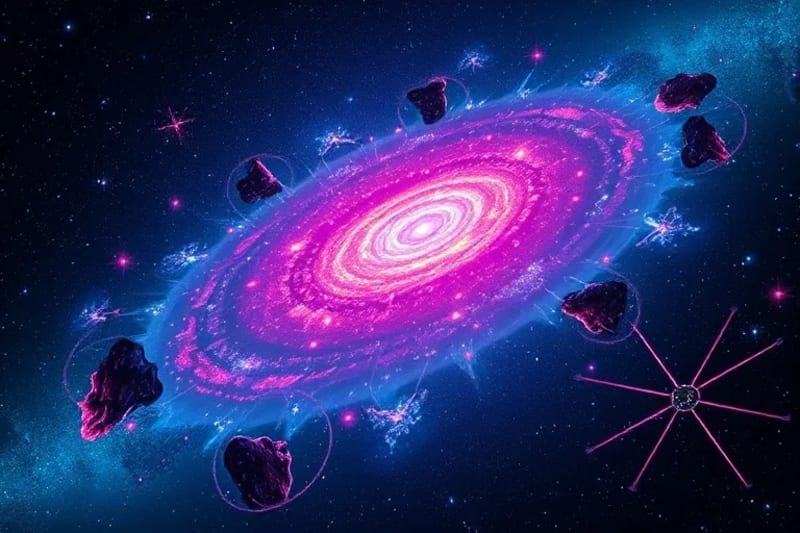
The intricate dance of celestial bodies and its profound impact on the collective human psyche.
At its core, cosmic sociology posits that human beings, as integral parts of the cosmos, are inherently connected to the larger celestial environment. This connection is not always direct or immediately observable, but rather operates through energetic, gravitational, and subtle electromagnetic fields that permeate the solar system. These fields, modulated by the positions and movements of planets, moons, and stars, are believed to resonate with and influence the collective unconscious, leading to observable patterns in human behavior and societal development. This perspective invites us to look beyond purely terrestrial explanations for global phenomena and consider the broader cosmic context.
Table of Contents
- Foundational Principles of Cosmic Sociology
- Celestial Mechanics and Human Rhythms
- Planetary Cycles and Societal Trends
- Collective Consciousness and Cosmic Resonance
- Implications for Understanding Humanity
- Future Directions and Research
Foundational Principles of Cosmic Sociology
The foundational principles of cosmic sociology draw from various disciplines, including astrophysics, quantum physics, Jungian psychology, and ancient astrological traditions. One key concept is the idea of universal interconnectedness, suggesting that everything in the universe is part of a single, dynamic system. From this viewpoint, the Earth and its inhabitants are not isolated entities but are constantly interacting with and being influenced by the larger cosmos. This interaction is often described in terms of subtle energy exchanges rather than direct physical force.
Another core principle involves the concept of resonance. Just as a tuning fork can cause another to vibrate at the same frequency, celestial bodies are thought to emit energetic frequencies that can resonate with and influence biological and psychological systems on Earth. These resonances are not always about direct causation but rather about creating an environment or predisposition for certain collective experiences or behaviors. For instance, specific planetary alignments might create a collective energetic field conducive to innovation or, conversely, to conflict.
- Universal Interconnectedness: All elements of the cosmos are part of a unified system.
- Energetic Resonance: Celestial bodies emit frequencies that influence terrestrial systems.
- Subtle Influences: Effects are often indirect, operating through energetic fields rather than gross physical forces.
- Cyclical Patterns: Planetary movements create predictable cycles that correlate with human societal patterns.
- Collective Unconscious: Cosmic energies interact with the shared reservoir of human experience and archetypes.
Celestial Mechanics and Human Rhythms
Celestial mechanics, the study of the motions of celestial bodies, provides the framework for understanding these cosmic influences. The precise orbits, conjunctions, oppositions, and other aspects between planets create a constantly shifting energetic landscape. These celestial rhythms are believed to synchronize with and amplify various human biological and psychological rhythms. For example, the lunar cycle has long been associated with tidal patterns, plant growth, and even human emotional states, demonstrating a clear link between celestial mechanics and earthly phenomena.
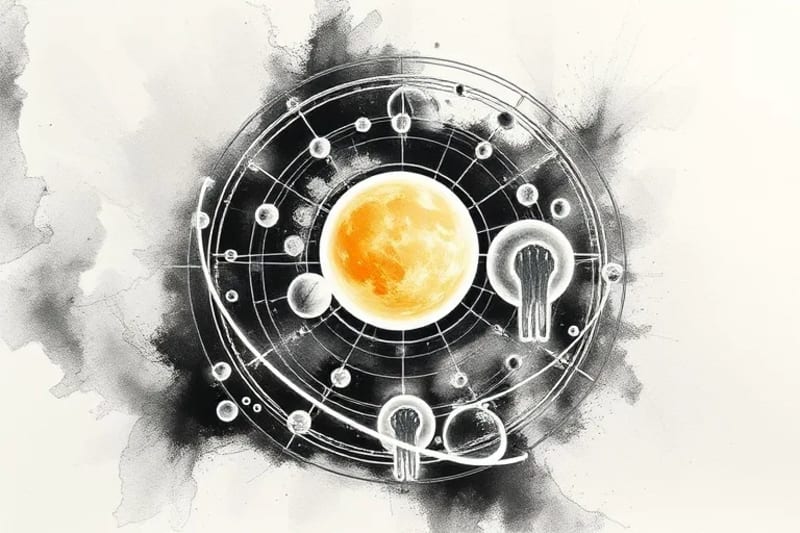
Stylized depiction of planetary movements subtly influencing human collective patterns.
Beyond the moon, the movements of other planets are also considered significant. The faster-moving inner planets like Mercury, Venus, and Mars are often linked to more immediate, daily, or monthly fluctuations in collective mood, communication styles, and energy levels. For those interested in personal forecasts, understanding these daily influences can be quite insightful, much like exploring a Monthly Horoscope: Your Forecast for Love, Career & Wellness. These planetary transits can create a general atmospheric pressure that subtly guides collective thought and action.
The slower-moving outer planets, such as Jupiter, Saturn, Uranus, Neptune, and Pluto, are associated with longer-term societal trends, generational shifts, and profound cultural transformations. Their cycles can span decades or even centuries, correlating with major historical events, technological revolutions, and paradigm shifts in human consciousness. For instance, the cycles of Uranus are often linked to periods of innovation, rebellion, and sudden change, reflecting its astrological symbolism. This can be further explored in studies like Uranus Astrology Innovation Rebellion: Chart Awakening.
Planetary Cycles and Societal Trends
Observing the correlations between planetary cycles and societal trends reveals intriguing patterns. Historians and astrologers have long noted how certain planetary configurations coincide with periods of war, peace, economic boom, or recession. While correlation does not imply causation, the consistency of these patterns suggests more than mere coincidence. For example, periods of significant social upheaval and technological advancement often align with specific aspects involving Uranus and Pluto, planets associated with revolution and deep transformation.
Consider the Saturn-Pluto conjunction, a cycle that occurs approximately every 33-38 years. Historically, these conjunctions have often coincided with major global realignments, the collapse of old structures, and the emergence of new power dynamics. These are times when collective consciousness is pushed to confront deep-seated issues, leading to significant societal restructuring. Similarly, the conjunctions of Jupiter and Saturn, known as the "Great Conjunctions," occurring every 20 years, have been linked to shifts in prevailing ideologies, political systems, and cultural narratives.
Beyond the major planets, the influence of fixed stars and other celestial phenomena is also considered. Certain Fixed Stars Conjunctions: Esoteric Destiny Points are believed to imbue specific periods with unique qualities, influencing collective destiny and the unfolding of historical events. These subtle, yet powerful, cosmic markers add another layer of complexity to the study of cosmic sociology, suggesting a multi-faceted cosmic orchestration of human affairs.
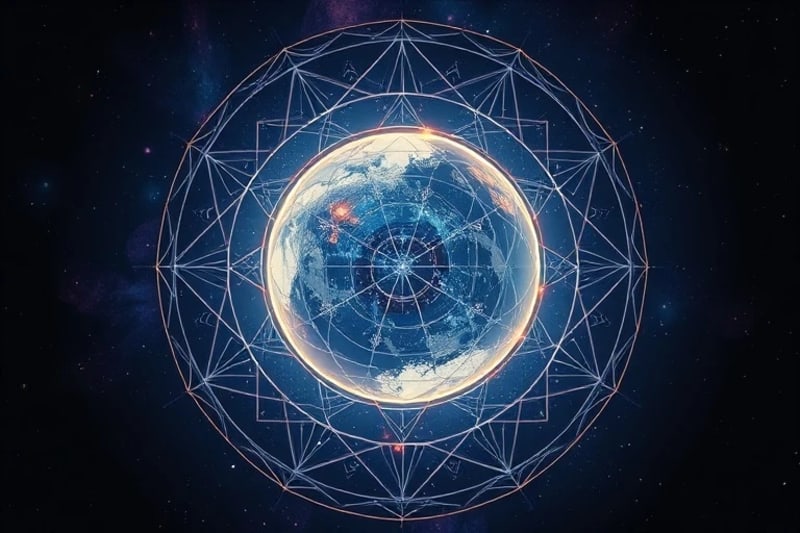
An abstract representation of collective human thought resonating with celestial rhythms.
Collective Consciousness and Cosmic Resonance
The concept of collective consciousness, popularized by Carl Jung, refers to the shared beliefs, ideas, and moral attitudes that operate as a unifying force within society. Cosmic sociology proposes that this collective consciousness is not static but dynamically influenced by cosmic energies. Planetary alignments and transits can act as cosmic triggers, activating certain archetypal patterns within the collective unconscious, leading to widespread shifts in mood, perception, and behavior.
When a significant celestial event occurs, such as a powerful eclipse or a rare planetary alignment, it is theorized to create a ripple effect through the collective psyche. This can manifest as sudden shifts in public opinion, widespread emotional responses, or a collective urge towards certain actions or innovations. These cosmic omens are often interpreted as signs or signals from the universe, guiding humanity's evolutionary path. Understanding these Cosmic Omens: Interpreting Synchronicities, Esoteric Symbols Horoscope can provide deeper insights into the subtle forces at play.
The mechanism through which this influence occurs is still largely theoretical, often involving concepts from quantum physics such as entanglement and non-local correlations. It is suggested that the human brain and nervous system may act as receivers for these subtle cosmic frequencies, translating them into collective thoughts, feelings, and impulses. This perspective moves beyond a purely materialistic view of reality, embracing a more holistic and interconnected understanding of existence.
Implications for Understanding Humanity
The implications of cosmic sociology are far-reaching. If celestial mechanics indeed play a significant role in shaping global collective consciousness, it offers a new lens through which to interpret history, predict future trends, and understand the deeper motivations behind human actions. It suggests that many societal phenomena, often attributed solely to socio-economic or political factors, may have underlying cosmic drivers. This does not diminish human agency but rather places it within a grander cosmic dance.
For individuals, recognizing these cosmic influences can foster a greater sense of connection to the universe and a deeper understanding of personal and collective experiences. It encourages a more cyclical view of time and events, where challenges and opportunities are seen as part of larger cosmic rhythms. For policymakers and leaders, an awareness of cosmic sociology could potentially inform strategies for navigating periods of collective unrest or fostering periods of innovation and cooperation, by aligning with prevailing cosmic energies rather than resisting them.
This field also challenges conventional scientific paradigms, urging a more open-minded approach to phenomena that do not fit neatly into existing frameworks. It encourages interdisciplinary collaboration between scientists, philosophers, and spiritual practitioners to explore the mysteries of consciousness and the universe in a more integrated manner.
Future Directions and Research
As a nascent field, cosmic sociology has vast potential for future research. This includes rigorous statistical analysis of historical data against astronomical charts, qualitative studies on collective psychological responses during significant celestial events, and theoretical advancements in understanding the mechanisms of cosmic-terrestrial energy transfer. Developing more sophisticated models that integrate astrological principles with complex systems theory could yield groundbreaking insights.
Further exploration into the subtle energetic fields, such as Schumann resonances and geomagnetic activity, and their correlation with planetary positions and human collective behavior, could provide empirical evidence for some of cosmic sociology's claims. The advancement of technology, particularly in data analysis and sensor technology, may enable researchers to detect and measure these subtle influences more effectively than ever before. The ultimate goal is to move beyond mere correlation and establish a more robust understanding of the underlying causal pathways, or at least the co-creative dynamics, between the cosmos and human society.
The journey into cosmic sociology is one of discovery, inviting humanity to look both inward and outward to comprehend its place in the grand tapestry of the universe. By embracing this holistic perspective, we may unlock deeper understandings of ourselves, our societies, and our shared cosmic destiny.
Source: Hybrid content assisted by AI and human editorial supervision.


Comments
Post a Comment