
Mesoamerican Astrology Ancient Calendars Decoding Cosmic Cycles
In an era increasingly focused on personal growth and understanding, ancient wisdom traditions offer profound insights. Mesoamerican astrology, rooted in the sophisticated calendrical systems of civilizations like the Maya, Aztec, and Olmec, provides a unique lens through which to view our lives. Far from being mere fortune-telling, these systems represent a deep understanding of cosmic cycles, human nature, and the interconnectedness of all existence. This guide explores the core principles of Mesoamerican astrology and how its ancient calendars can illuminate paths to modern self-discovery.
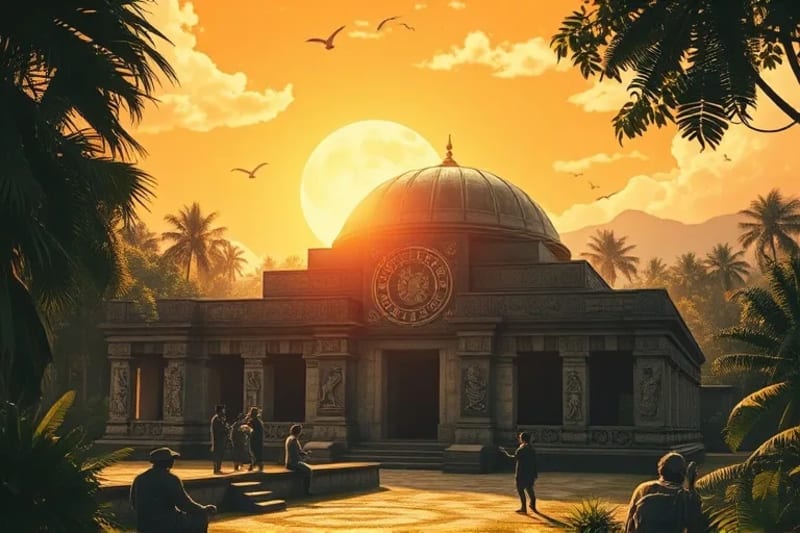
Ancient Mesoamerican observatories served as crucial centers for understanding celestial mechanics and integrating cosmic rhythms into daily life.
Unlike Western astrology, which primarily focuses on planetary positions at the moment of birth, Mesoamerican astrology emphasizes the energy of the day of birth within a complex web of cyclical calendars. These calendars were not just tools for timekeeping; they were sacred maps of destiny, agricultural cycles, and spiritual guidance. By understanding these ancient frameworks, we can tap into a rich heritage of knowledge that offers a holistic perspective on our individual journeys and our place within the larger cosmic dance.
Table of Contents
- The Heart of Mesoamerican Calendars: A Tapestry of Time
- Key Components of Mesoamerican Astrology: Decoding Your Day Sign
- The Mesoamerican Cosmovision: Cyclical Time and Interconnectedness
- Decoding Your Cosmic Blueprint: Practical Application
- Modern Self-Discovery Through Ancient Wisdom
- Ethical Engagement and Respect for Indigenous Traditions
The Heart of Mesoamerican Calendars: A Tapestry of Time
Mesoamerican civilizations developed several interconnected calendars, each serving distinct purposes and offering different layers of insight. The two most prominent are the Tzolkin (or Tonalpohualli for the Aztecs) and the Haab' (or Xiuhpohualli).
The Tzolkin (Sacred Calendar)
The Tzolkin is a 260-day sacred count, formed by the permutation of 20 day-signs (also known as glyphs or Nawales) and 13 numbers (tones). This cycle is deeply spiritual and is believed to mirror the human gestation period, symbolizing creation and rebirth. Each day within the Tzolkin carries a unique energetic signature, influencing personality, destiny, and the potential for events.
- 20 Day-Signs: Each sign represents a specific archetype, animal, natural element, or cosmic force, imbuing the day with particular qualities. Examples include Imix (Crocodile/World Tree), Ik' (Wind/Breath), Ak'bal (Night/Darkness), K'an (Maize/Seed), Chicchan (Serpent), Cimi (Death/Transformation), Manik' (Deer/Hand), Lamat (Rabbit/Venus), Muluc (Water/Offering), Oc (Dog/Guide), Chuen (Monkey/Artisan), Eb (Grass/Path), Ben (Reed/Skywalker), Ix (Jaguar/Magician), Men (Eagle/Visionary), Cib (Owl/Warrior), Caban (Earth/Movement), Etz'nab (Flint/Mirror), Cauac (Storm/Rain), and Ahau (Lord/Sun).
- 13 Numbers (Tones): These numbers modify the energy of the day-sign, acting as a dynamic force. They represent stages of creation, intention, and manifestation, ranging from unity (1) to completion (13).
The Haab' (Civil Calendar)
The Haab' is a 365-day solar calendar, closely tracking the Earth's orbit around the sun. It comprises 18 months of 20 days each, followed by a short 5-day period known as the Uayeb (or Nemontemi). The Uayeb days were considered a time of transition, often associated with introspection, caution, and spiritual vulnerability. The Haab' primarily governed agricultural cycles, seasonal rituals, and civil administration.
The Calendar Round
The Tzolkin and Haab' cycles intermesh to form the Calendar Round, a 52-year cycle. This period was immensely significant, as it marked a complete return to the starting position of both calendars. The end of a Calendar Round was often celebrated with elaborate ceremonies, symbolizing renewal and the continuation of time. Understanding where one is within this larger cycle can offer insights into phases of life and collective experiences.
The Long Count Calendar
For tracking vast periods of time, the Maya developed the Long Count calendar, a linear count of days from a mythical starting point. This calendar is famous for its "end date" in 2012, which was widely misinterpreted as the end of the world. In reality, it signified the completion of a grand cycle (a Baktun) and the beginning of a new one, reflecting the cyclical nature of Mesoamerican thought rather than an apocalyptic prediction.
Key Components of Mesoamerican Astrology: Decoding Your Day Sign
At the core of Mesoamerican astrological interpretation is the energy of your birth day within the Tzolkin. This combination of day-sign and number reveals your innate personality, life path, challenges, and spiritual gifts.
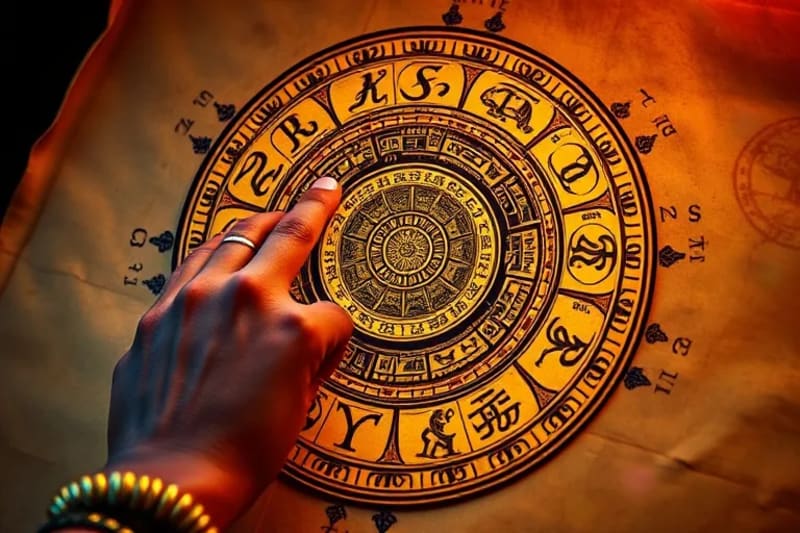
The intricate glyphs of Mesoamerican calendars are not just symbols but powerful representations of cosmic energies and archetypes.
The Influence of Day-Signs (Nawales)
Your birth Nawal is your spiritual guardian and reflects your core essence. For example:
- Imix (Crocodile): Represents creation, primordial energy, the Earth's foundation. Individuals born under Imix are often creative, nurturing, and deeply connected to their roots.
- Ik' (Wind): Symbolizes communication, intellect, breath, and spirit. Those with Ik' as their Nawal tend to be articulate, adaptable, and free-spirited.
- K'an (Maize/Seed): Embodies growth, abundance, fertility, and potential. K'an individuals are often resilient, patient, and focused on nurturing projects or ideas to fruition.
- Ix (Jaguar): Represents magic, shamanism, intuition, and the mysteries of the night. Ix people are often powerful, intuitive, and possess a strong connection to the spiritual realm.
Each Nawal has associated strengths, challenges, and specific life lessons. Understanding your birth Nawal can provide clarity on your innate talents and areas for growth. This deep dive into personal energies can be as insightful as exploring Lunar Nodes Aspects: Karmic Connections in Birth Chart in other astrological systems.
The Power of Numbers (Tones)
The number accompanying your day-sign adds another layer of meaning, indicating how the energy of the Nawal will manifest. The 13 tones describe a journey of creation and action:
- Tone 1 (Unity): Initiating, focused, direct.
- Tone 6 (Rhythmic): Organizing, balancing, equalizing.
- Tone 13 (Cosmic): Transcending, enduring, presence.
For example, someone born under 1 Ik' might be a powerful initiator of ideas and communication, while someone born under 6 Ik' might be skilled at organizing and balancing different perspectives. The combination creates a unique energetic blueprint.
The Mesoamerican Cosmovision: Cyclical Time and Interconnectedness
Beyond individual interpretations, Mesoamerican astrology is embedded in a profound cosmovision that views time as cyclical, not linear. Events repeat, lessons recur, and everything is interconnected. This perspective encourages a holistic view of life, where humans are not separate from nature or the cosmos but are integral parts of a vast, living system.
- Duality: A fundamental concept, recognizing the interplay of opposing forces (light/dark, life/death, male/female) as essential for balance and creation.
- Sacred Geography: The landscape itself was seen as sacred, mirroring cosmic structures and influencing human destiny.
- Ancestral Wisdom: A deep respect for ancestors and the continuous flow of knowledge and energy through generations.
This understanding of interconnectedness resonates with principles found in Sacred Geometry Daily Life: Manifesting Harmony, where patterns and forms are seen as expressions of universal order.
Decoding Your Cosmic Blueprint: Practical Application
To begin your journey into Mesoamerican astrology, the first step is to identify your birth day-sign and number. This requires converting your Gregorian birth date into its corresponding Tzolkin date. Several online calculators and resources can assist with this conversion.
Steps to Self-Discovery:
- Find Your Birth Nawal: Use a reliable Tzolkin converter to determine your day-sign and tone.
- Research Your Nawal: Explore the characteristics, mythology, associated animals, and elemental connections of your specific day-sign and number.
- Reflect and Observe: Consider how these traits manifest in your life. Do you recognize the strengths? Are there challenges that resonate with your Nawal's shadow aspects?
- Track Daily Energies: Pay attention to the daily Tzolkin energies. How do they influence your mood, productivity, and interactions? This practice can enhance your awareness of cosmic rhythms.
Modern Self-Discovery Through Ancient Wisdom
Integrating Mesoamerican astrological principles into modern life can offer profound benefits for self-discovery and personal well-being.
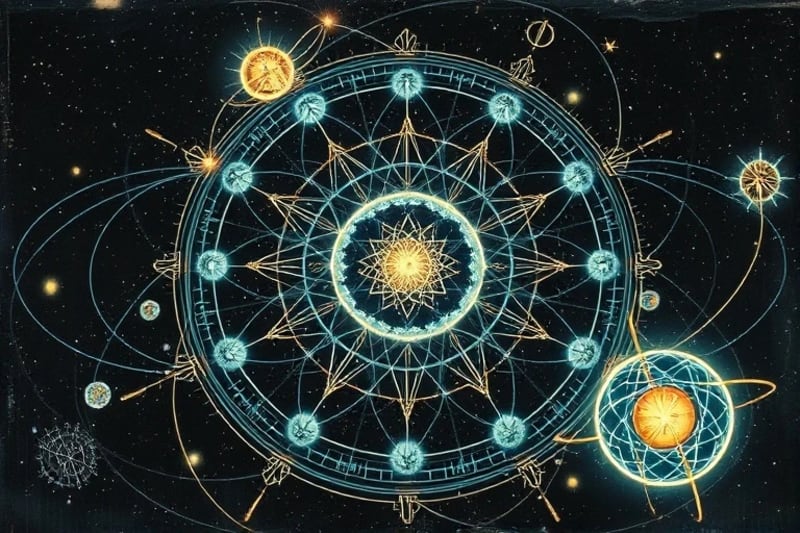
Understanding the cyclical nature of cosmic energy helps us align with universal rhythms for greater harmony.
- Understanding Personal Cycles: By recognizing the cyclical nature of time, we can better navigate periods of growth, rest, challenge, and transformation, reducing resistance to natural life phases.
- Enhanced Self-Awareness: Identifying with your birth Nawal can validate your inherent traits and provide a framework for understanding your strengths and areas needing development.
- Connection to Nature: The emphasis on natural elements, animals, and agricultural cycles fosters a deeper connection to the Earth and its rhythms, promoting ecological awareness.
- Spiritual Guidance: The calendars serve as a spiritual compass, offering insights into optimal times for specific activities, ceremonies, or introspection. This can complement practices like Aura Cleansing: Techniques for Energy Purification & Protection by aligning personal energy with cosmic flows.
- Decision Making: Knowing the energetic quality of a particular day can inform decisions, helping to align actions with cosmic support.
This ancient wisdom encourages a mindful approach to life, fostering a sense of purpose and belonging within the grand tapestry of existence. It provides a unique framework for personal development, allowing individuals to consciously engage with their destiny rather than passively experiencing it. Embracing these cycles can be a powerful tool for subconscious re-patterning, similar to concepts explored in Quantum Manifestation Psychology: Subconscious Abundance Re-patterning.
Ethical Engagement and Respect for Indigenous Traditions
When exploring Mesoamerican astrology, it is crucial to approach it with respect, humility, and an understanding of its origins. This is not merely a system for personal gain but a sacred tradition deeply embedded in indigenous cultures. Ethical engagement involves:
- Acknowledging Origins: Recognizing that these systems are living traditions for many indigenous communities.
- Avoiding Appropriation: Engaging with the wisdom without stripping it of its cultural context or claiming it as one's own without proper understanding and respect.
- Seeking Authentic Sources: Learning from resources that are either directly from indigenous teachers or are thoroughly researched and respectful of cultural integrity.
- Supporting Indigenous Communities: Where possible, support the communities that are the custodians of this knowledge.
By approaching Mesoamerican astrology with an open heart and a respectful mind, we can truly benefit from its profound wisdom while honoring its heritage.
Mesoamerican astrology offers a rich, complex, and deeply spiritual path to self-discovery. By delving into the intricate workings of ancient calendars like the Tzolkin and Haab', we can uncover layers of meaning about our true selves, our purpose, and our connection to the cosmos. This ancient wisdom, with its emphasis on cyclical time and interconnectedness, provides a powerful framework for navigating the modern world with greater awareness, intention, and harmony. Embracing these cosmic cycles can transform our understanding of destiny and empower us to live more aligned and fulfilling lives.
Source: Hybrid content assisted by AI and human editorial supervision.


Comments
Post a Comment