
Sacred Movement Esoteric Breathwork: Activating Pranic Energy
In an increasingly complex world, the pursuit of holistic wellness has led many to explore ancient practices that address not just the physical body, but also the mind and spirit. Among these, sacred movement and esoteric breathwork stand out as powerful disciplines designed to activate and harmonize pranic energy. This article delves into these transformative practices, offering an introductory guide to understanding their principles and benefits for overall well-being.
Holistic wellness recognizes the interconnectedness of all aspects of our existence, advocating for approaches that nurture every dimension of the self. Sacred movement and esoteric breathwork are integral components of this philosophy, providing pathways to deeper self-awareness and vitality. They offer practical methods to tap into the subtle life force that animates all living things, often referred to as prana.

A serene figure engages in sacred movement, channeling vital energy amidst a mystical dawn.
Table of Contents
- Understanding Pranic Energy: The Life Force
- The Essence of Sacred Movement
- Exploring Esoteric Breathwork Techniques
- The Synergy of Movement, Breath, and Prana Activation
- Benefits for Holistic Wellness
- Integrating Practices into Daily Life
- Frequently Asked Questions about Pranic Energy
Understanding Pranic Energy: The Life Force
Prana, a Sanskrit word meaning "life force" or "vital energy," is a fundamental concept in many Eastern spiritual traditions, including Hinduism, Buddhism, and Jainism. It is considered the universal energy that flows through all creation, sustaining life and consciousness. In the human body, prana is believed to circulate through a network of subtle channels known as nadis, and to be concentrated in energy centers called chakras.
The quality and flow of prana within an individual are thought to directly influence their physical health, mental clarity, emotional stability, and spiritual development. When prana flows freely and harmoniously, a person experiences vitality, well-being, and inner peace. Conversely, blockages or imbalances in pranic flow can lead to various physical ailments, emotional disturbances, and mental stagnation.
Ancient texts describe prana as having different manifestations, such as prana vayu (inward and upward moving energy, associated with respiration) and apana vayu (downward and outward moving energy, associated with elimination). Understanding these distinctions helps practitioners tailor their movements and breathwork to specific energetic effects. The concept of prana is not merely metaphorical; it represents a tangible, albeit subtle, energy that can be consciously directed and cultivated.
The Essence of Sacred Movement
Sacred movement encompasses a wide array of practices that use physical postures, gestures, and sequences to connect with deeper spiritual dimensions. These movements are often slow, intentional, and performed with a meditative awareness, transforming ordinary exercise into a spiritual discipline. Historical roots can be traced back to ancient rituals, dances, and martial arts from diverse cultures across the globe.
Practices like Yoga, Tai Chi, Qigong, and Sufi whirling dervishes are prime examples of sacred movement. They are not merely physical exercises but embody philosophical principles and spiritual intentions. Each movement is designed to cultivate specific energetic qualities, release tension, and foster a profound connection between the body, mind, and spirit. For instance, the flowing forms of Tai Chi are believed to harmonize the body's internal energy, known as Qi (a concept closely related to prana).
The benefits of engaging in sacred movement extend far beyond physical flexibility and strength. Participants often report enhanced mental clarity, reduced stress, improved emotional regulation, and a heightened sense of spiritual connection. These practices encourage mindfulness, allowing individuals to become more present and attuned to their inner experiences. Such disciplines can also influence our inner planetary cycles, connecting to personal growth and relationships, much like understanding Synodic Cycles Inner Planets in astrology.
Exploring Esoteric Breathwork Techniques
Esoteric breathwork refers to specialized breathing techniques that go beyond normal respiration, consciously manipulating the breath to influence physical, mental, and spiritual states. Unlike everyday breathing, which is largely unconscious, esoteric breathwork involves focused attention and specific patterns to achieve desired energetic and psychological outcomes. These practices are often rooted in ancient yogic traditions, where breath (pranayama) is seen as the primary vehicle for controlling prana.
Various breathwork modalities exist, each with unique patterns and intentions. Some techniques, like alternate nostril breathing (Nadi Shodhana), aim to balance the left and right hemispheres of the brain and purify energy channels. Others, such as Kapalabhati (skull shining breath), are designed to energize the body and clear the mind. More intense forms, like Holotropic Breathwork or Rebirthing, can induce altered states of consciousness, facilitating emotional release and profound insights.
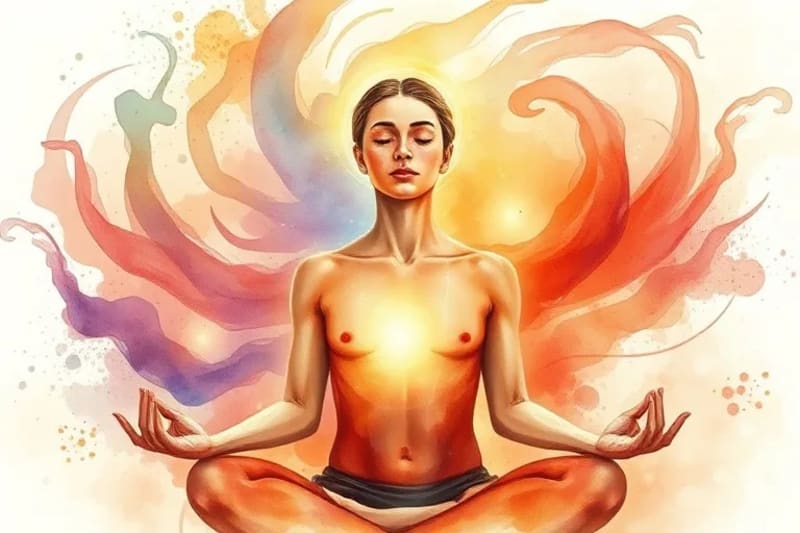
A meditative practice illustrates the intricate esoteric breathwork patterns and their impact on energy flow.
The power of breathwork lies in its direct access to the autonomic nervous system, which controls involuntary bodily functions. By consciously regulating breath, individuals can shift from a sympathetic (fight-or-flight) state to a parasympathetic (rest-and-digest) state, promoting relaxation and healing. This control over the breath allows for a deeper exploration of one's inner landscape, often revealing hidden emotional patterns and facilitating their release. Just as understanding our Pluto in Signs can reveal generational transformation, breathwork unlocks deep personal shifts.
The Synergy of Movement, Breath, and Prana Activation
The true potency of these practices emerges when sacred movement and esoteric breathwork are combined. Movement without conscious breath can be merely exercise, and breathwork without bodily awareness can lack grounding. Together, they create a dynamic synergy that optimizes the activation and circulation of pranic energy throughout the body.
In practices like Vinyasa Yoga, for example, each movement is synchronized with an inhale or an exhale, creating a continuous flow that builds internal heat and energy. This conscious coordination deepens the meditative aspect of the practice, making it a moving meditation. The breath guides the movement, and the movement facilitates the breath, leading to a profound state of presence and energetic activation.
This integrated approach helps to clear energetic blockages, purify the nadis, and stimulate the chakras. As prana flows more freely, individuals may experience increased sensations of warmth, tingling, or subtle vibrations within their bodies. This enhanced energetic awareness is a hallmark of deeper spiritual practice and contributes significantly to overall vitality and well-being. It is a journey of self-discovery, akin to deciphering one's Chart Ruler Analysis to understand life's guiding planet.
Benefits for Holistic Wellness
The consistent practice of sacred movement and esoteric breathwork offers a multitude of benefits across all dimensions of holistic wellness:
- Physical Health: Improved flexibility, strength, balance, and coordination. Enhanced circulation, detoxification, and immune function. Relief from chronic pain and tension.
- Mental Clarity: Reduced mental chatter, enhanced focus, and improved cognitive function. Greater ability to concentrate and make decisions.
- Emotional Balance: Release of stored emotional trauma and stress. Cultivation of inner peace, joy, and emotional resilience. Better management of anxiety and depression.
- Spiritual Growth: Deepened connection to one's inner self and the universal life force. Enhanced intuition, spiritual insight, and a sense of purpose. Expansion of consciousness.
- Stress Reduction: Activation of the parasympathetic nervous system, leading to profound relaxation and reduced physiological responses to stress.
These practices are not merely about feeling good; they are about cultivating a sustainable state of vibrant health and inner harmony. By regularly engaging with sacred movement and breathwork, individuals can build a robust energetic foundation that supports them through life's challenges and opportunities.

An abstract visual depicts the harmonious activation of the body's subtle energy system, central to holistic wellness.
Integrating Practices into Daily Life
Incorporating sacred movement and esoteric breathwork into a daily routine does not require hours of dedicated practice. Even short, consistent sessions can yield significant benefits. Starting with simple breathing exercises for 5-10 minutes each morning or evening can set a positive energetic tone for the day or aid in relaxation before sleep.
For movement, gentle stretching, mindful walking, or a short yoga sequence can be highly effective. The key is to approach these practices with intention and awareness, focusing on the sensations in the body and the rhythm of the breath. Finding a qualified teacher or guide can be invaluable, especially when exploring more advanced breathwork techniques, to ensure safety and proper execution.
Consistency is more important than intensity. Regular engagement fosters a deeper connection to one's inner wisdom and facilitates the continuous flow of pranic energy. Over time, these practices become an intuitive part of one's life, leading to sustained holistic wellness. This journey of self-discovery and energetic alignment can even resonate with ancient wisdom traditions, much like exploring Mesoamerican Astrology and its calendars.
Consider exploring various forms of sacred movement and breathwork to find what resonates most with your personal journey. Whether it's the meditative flow of Tai Chi, the invigorating sequences of Ashtanga Yoga, or the profound release offered by specific breathwork sessions, there is a path for everyone. The journey of activating pranic energy is deeply personal and endlessly rewarding.
Comparison of Key Practices
To further illustrate the diversity within sacred movement and esoteric breathwork, here is a comparative overview of some popular practices:
| Practice | Type | Primary Focus | Key Benefits |
|---|---|---|---|
| Hatha Yoga | Sacred Movement | Physical postures (asanas), breath control (pranayama), meditation. | Flexibility, strength, stress reduction, mental clarity, spiritual connection. |
| Tai Chi | Sacred Movement | Slow, flowing movements, deep breathing, mindfulness. | Balance, coordination, circulation, stress relief, Qi cultivation. |
| Qigong | Sacred Movement | Gentle movements, breath regulation, meditation. | Energy cultivation, healing, stress reduction, longevity. |
| Pranayama | Esoteric Breathwork | Specific breathing techniques (e.g., Nadi Shodhana, Bhastrika). | Energetic balance, mental focus, detoxification, emotional regulation. |
| Holotropic Breathwork | Esoteric Breathwork | Accelerated breathing, evocative music, facilitated sessions. | Emotional release, psychological insight, spiritual experiences, trauma integration. |
| Wim Hof Method | Esoteric Breathwork | Controlled hyperventilation, breath retention, cold exposure. | Immune system boost, stress reduction, increased energy, pain management. |
Frequently Asked Questions about Pranic Energy
Here are answers to some common questions regarding pranic energy and its activation:
What is the difference between prana and breath?
While deeply interconnected, prana is the subtle life force energy itself, whereas breath (respiration) is the physical mechanism through which prana is absorbed and circulated. Breath is a vehicle for prana, but prana exists independently of the physical act of breathing.
Can anyone activate their pranic energy?
Yes, everyone possesses pranic energy. The practices of sacred movement and esoteric breathwork are designed to help individuals consciously activate, balance, and direct this energy. With consistent practice, anyone can learn to enhance their pranic flow and experience its benefits.
Are these practices safe for everyone?
Most sacred movement practices like gentle yoga or Tai Chi are generally safe for a wide range of individuals. However, some advanced or intense breathwork techniques may not be suitable for pregnant women, individuals with certain heart conditions, or those with severe mental health issues. It is always advisable to consult a healthcare professional and practice under the guidance of a qualified instructor, especially when starting new or intense practices.
How quickly can one expect to see results?
The experience of results varies greatly among individuals. Some may feel immediate shifts in energy or mood after a single session, while others may require consistent practice over weeks or months to notice significant changes. The journey is cumulative, with benefits deepening over time as one becomes more attuned to their subtle energy system.
Is spiritual belief necessary to benefit from these practices?
While many of these practices originate from spiritual traditions, a specific spiritual belief system is not required to experience their physical and mental benefits. The techniques themselves can improve well-being regardless of one's personal beliefs. However, an open mind and a willingness to explore subtle energies can enhance the depth of the experience.
In conclusion, sacred movement and esoteric breathwork offer profound pathways to activating pranic energy and achieving holistic wellness. By integrating these ancient wisdom traditions into modern life, individuals can unlock their innate capacity for vitality, mental clarity, emotional balance, and spiritual growth. Embracing these practices is an invitation to embark on a transformative journey of self-discovery and energetic harmony.
Explore Further: Related Insights
Source: Hybrid content assisted by AI and human editorial supervision.


Comments
Post a Comment