
Lunar Mansions Predictive Astrology Timing Life Events
Lunar Mansions: Advanced Wisdom for Predictive Astrology and Timing Life Events
The practice of astrology extends far beyond the familiar twelve zodiac signs, delving into more intricate systems that offer profound insights into human experience and cosmic timing. Among the most sophisticated of these systems are the Lunar Mansions, ancient divisions of the Moon's path through the zodiac. These mansions, known by various names across different cultures—Nakshatras in Vedic astrology, Manazil al-Qamar in Arabic tradition, and Hsiu in Chinese astrology—provide a granular level of detail for predictive work and electional astrology, allowing practitioners to pinpoint auspicious moments for actions and understand the subtle energetic currents influencing events.
This advanced wisdom offers a powerful lens through which to view planetary transits, personal predispositions, and the unfolding of destiny. By understanding the specific qualities and influences of each lunar mansion, astrologers can unlock deeper layers of meaning within a natal chart and make more precise forecasts. This exploration will delve into the historical context, core principles, and practical applications of Lunar Mansions, particularly their role in predictive astrology and the nuanced timing of life's most significant events.
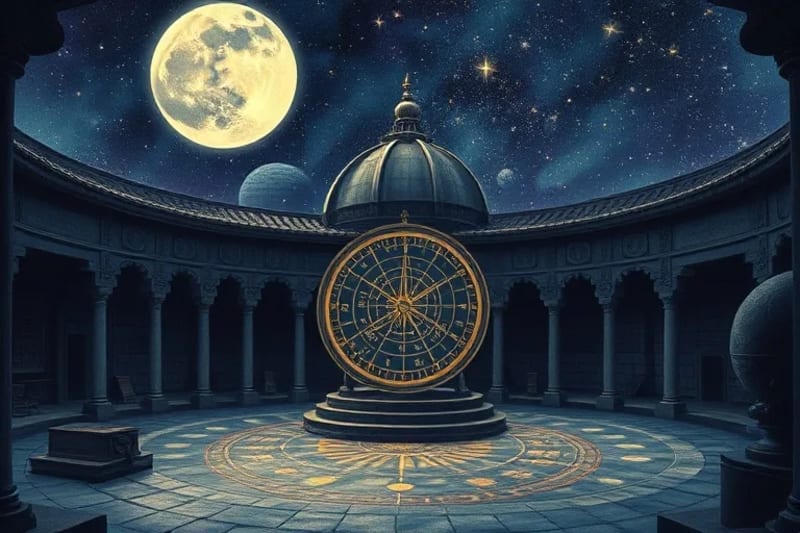
Precursors intellectuales, diagramas fundamentales y representaciones conceptuales que forjaron la visión de la sabiduría astrológica sobre las mansiones lunares.
Fuente visual sujeta a disponibilidad del ecosistema: Wikimedia Commons bajo licencia CC BY-SA 4.0 o renderizado conceptual IA.The Moon, as the fastest-moving celestial body, traverses the entire zodiac in approximately 27.3 days, spending roughly one day in each of the 27 or 28 lunar mansions. This constant movement makes the Moon a crucial indicator of daily energies, emotional states, and the immediate unfolding of events. While the Sun defines our core identity, the Moon governs our inner world, habits, and reactions, making its position within these mansions particularly potent for understanding subtle influences.
The concept of dividing the ecliptic into smaller segments is rooted in ancient observations of the Moon's daily position against the backdrop of fixed stars. These divisions predate the solar zodiac in many cultures, highlighting the Moon's primary role in early astrological and calendrical systems. The precision offered by Lunar Mansions allows for a more refined understanding of astrological timing, moving beyond broad planetary aspects to specific energetic windows.
Table of Contents
- Understanding Lunar Mansions: Historical Context and Divisions
- The 28 Nakshatras (Vedic Lunar Mansions): Core Principles
- Mansions in Western and Arabic Astrology: Al-Manazil and Beyond
- Predictive Applications: Timing Life Events with Precision
- Integrating Lunar Mansions with Planetary Transits
- Advanced Interpretations and Modern Relevance
Understanding Lunar Mansions: Historical Context and Divisions
Lunar Mansions represent a system of celestial measurement that predates and often complements the tropical zodiac used in Western astrology. While the tropical zodiac divides the year based on the Sun's apparent path relative to the equinoxes and solstices, lunar mansions are typically sidereal, meaning they are fixed relative to the stars. This distinction is crucial for understanding their application, as it grounds their influence in the unchanging backdrop of the cosmos.
Historically, these divisions served practical purposes, such as agriculture, navigation, and religious observances. In India, the Nakshatras were integral to the Vedic calendar and rituals, each associated with specific deities, symbols, and qualities. Similarly, Arabic astrologers developed the Manazil al-Qamar, which were used for electional astrology, talismans, and divinatory practices. Chinese astrology also features a system of 28 Xiu (mansions), which played a vital role in their astronomical and astrological traditions.
The number of mansions varies slightly between systems, primarily due to different starting points and methods of division. The most common number is 27, each spanning 13 degrees and 20 minutes of the zodiac, which sums up to 360 degrees. Some systems, particularly the Chinese and some Arabic traditions, use 28 mansions, often adding an intercalary mansion to account for the Moon's exact synodic period or for specific observational reasons. This slight variation underscores the diverse cultural approaches to observing and interpreting the celestial sphere.
| System | Number of Mansions | Primary Focus | Key Characteristics |
|---|---|---|---|
| Vedic (Nakshatras) | 27 (sometimes 28 with Abhijit) | Natal chart analysis, Muhurta (electional timing), Dasha periods | Associated deities, symbols, animal totems, Gunas (qualities), Yonis (sexual compatibility) |
| Arabic (Manazil al-Qamar) | 28 | Magic, talismans, electional astrology, weather prediction | Specific magical operations, planetary associations, elemental qualities |
| Chinese (Xiu) | 28 | Astronomy, calendar, Feng Shui, military strategy | Associated with four celestial animals (Azure Dragon, Vermilion Bird, White Tiger, Black Tortoise), star groups |
The 28 Nakshatras (Vedic Lunar Mansions): Core Principles
In Vedic astrology, the Nakshatras are arguably the most detailed and influential system of lunar mansions. Each Nakshatra carries a unique energetic signature, governed by a specific deity, a planetary ruler, an animal symbol, and a set of characteristics that describe its nature. These qualities influence everything from personality traits and relationship dynamics to health predispositions and life path trajectories. The Nakshatra in which the Moon is placed at the time of birth is particularly significant, revealing deep insights into an individual's emotional core and subconscious patterns.
The 27 Nakshatras are further divided into four padas (quarters), each spanning 3 degrees and 20 minutes, allowing for even finer distinctions. This intricate layering provides a rich tapestry for astrological interpretation, far surpassing the generalities of the solar signs. For instance, two individuals born under the same solar sign might have vastly different emotional temperaments and life experiences if their Moon falls into different Nakshatras.
- Ashwini (0° - 13°20' Aries): Ruled by Ketu, deity Ashwini Kumaras (divine healers). Symbolizes initiation, healing, speed, and pioneering spirit.
- Bharani (13°20' - 26°40' Aries): Ruled by Venus, deity Yama (god of death and dharma). Represents carrying burdens, transformation, creativity, and the birthing process.
- Rohini (10° - 23°20' Taurus): Ruled by Moon, deity Brahma (creator god). Associated with growth, fertility, beauty, and material abundance.
- Punarvasu (20° Gemini - 3°20' Cancer): Ruled by Jupiter, deity Aditi (mother of gods). Signifies renewal, return, nurturing, and generosity.
- Magha (0° - 13°20' Leo): Ruled by Ketu, deity Pitris (ancestors). Represents royalty, leadership, heritage, and connection to ancestral lineage.
- Vishakha (20° Libra - 3°20' Scorpio): Ruled by Jupiter, deity Indragni (Indra and Agni). Symbolizes purpose, determination, ambition, and the ability to achieve goals.
Understanding the planetary ruler of each Nakshatra also adds another layer of interpretation. For example, a planet placed in a Nakshatra ruled by Venus will express its energies with a Venusian flavor, emphasizing themes of relationship, beauty, and comfort. This interplay between the planet, the Nakshatra, and its ruling deity creates a complex yet highly descriptive astrological language.
Mansions in Western and Arabic Astrology: Al-Manazil and Beyond
While the Vedic system is perhaps the most widely recognized for its detailed Nakshatras, the concept of lunar mansions was also prominent in Western esoteric traditions and particularly in Arabic astrology. The Arabic system, known as Manazil al-Qamar, consists of 28 mansions, each associated with specific magical properties, talismans, and electional uses. These mansions were often employed to determine the most favorable time for rituals, spellcasting, or the creation of astrological amulets.
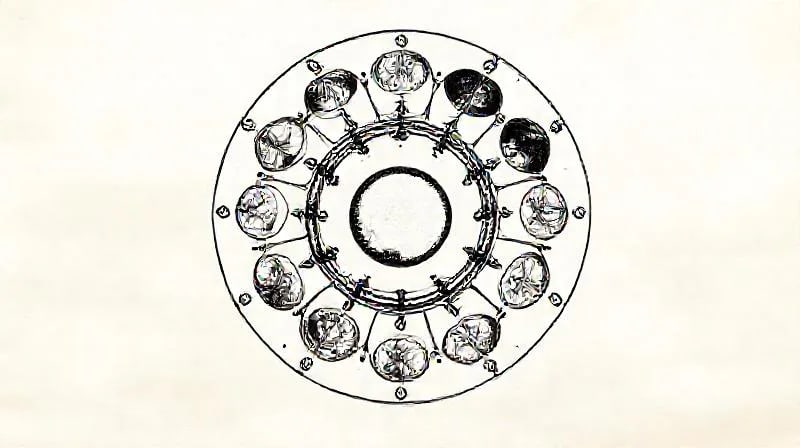
A visual representation of the intricate divisions of the zodiac, highlighting the unique symbolism embedded within each lunar mansion.
The Arabic mansions often carry a more direct magical or practical connotation compared to the more spiritual and psychological focus of the Nakshatras. For instance, one mansion might be auspicious for travel, another for starting a new business, and yet another for reconciliation. This practical application made them invaluable for medieval astrologers and magicians seeking to harness celestial energies for specific outcomes. Their influence can still be found in various grimoires and texts on astrological magic.
In Western astrology, while not as systematically integrated as in Vedic or Arabic traditions, the concept of lunar stations or "houses of the Moon" has appeared in various forms. Medieval and Renaissance astrologers sometimes referred to specific degrees of the zodiac as having particular significations, often drawing from Arabic sources. However, the comprehensive framework of 27 or 28 distinct divisions with their own complex symbology did not become as central to mainstream Western astrological practice as the solar signs and houses.
Predictive Applications: Timing Life Events with Precision
The true power of Lunar Mansions shines in their application to predictive astrology and electional timing. By observing the Moon's daily transit through these mansions, astrologers can identify optimal periods for initiating projects, making important decisions, or even performing specific rituals. Each mansion has an inherent nature—some are considered fierce, others soft, some fixed, others movable—which dictates the type of activities that will flourish or flounder during its influence.
For example, starting a new venture or signing a contract during a "fierce" Nakshatra might lead to conflict or aggressive competition, while doing so under a "soft" Nakshatra could foster cooperation and gentle growth. This level of precision is invaluable for those seeking to align their actions with cosmic rhythms. When considering significant annual forecasts, understanding the Moon's position in a particular mansion at the time of your Solar Return Chart can provide crucial insights into the emotional tone and key themes of the year ahead.
Beyond daily timing, Lunar Mansions are also used in natal chart analysis to predict major life events. The Dasha system in Vedic astrology, for instance, is entirely based on the Moon's Nakshatra at birth, providing a chronological map of planetary periods that will unfold throughout an individual's life. These periods indicate when certain themes, challenges, or opportunities are most likely to manifest, offering a powerful predictive framework.
When aiming for specific outcomes, such as career advancement or personal growth, aligning your intentions with the energies of the current lunar mansion can significantly enhance your efforts. This practice goes hand-in-hand with the principles of Astrology Manifestation, where planetary transits are leveraged to set and achieve goals. The detailed insights from Lunar Mansions provide an additional layer of precision, allowing for more targeted and effective manifestation practices.
Integrating Lunar Mansions with Planetary Transits
For an advanced astrologer, integrating the wisdom of Lunar Mansions with traditional planetary transits offers a holistic and highly nuanced perspective. While major planetary transits (e.g., Jupiter through a sign, Saturn over a natal planet) provide the broader themes and long-term developments, the Moon's transit through the Nakshatras acts as a daily pulse, indicating the immediate emotional climate and the specific energetic flavor of ongoing events.
Consider, for example, a significant transit like Mercury Retrograde. While we generally understand this period to be challenging for communication and technology, the specific Nakshatra the Moon is in on any given day during this phase can reveal *how* those challenges might manifest. A Mercury Retrograde occurring while the Moon is in a Nakshatra associated with sharp intellect might bring about frustrating debates, whereas one in a Nakshatra of nurturing could lead to misunderstandings within family matters. This granular detail helps in navigating communication and shadow work more effectively.
Furthermore, when a slower-moving planet like Saturn or Jupiter transits through a particular Nakshatra, its influence is amplified and colored by the specific attributes of that mansion. This provides a more precise understanding of how the planet's energy will unfold over several months or even years. For instance, Saturn transiting through a Nakshatra associated with healing and transformation could signify a period of deep, challenging, but ultimately restorative work in those areas.
An abstract depiction of the celestial mechanics that govern the precise timing and unfolding of events within the cosmic tapestry.
This integration is particularly valuable in Mundane Astrology, which studies global trends and collective events. By observing the Moon's passage through specific Nakshatras in relation to major planetary conjunctions or ingresses, astrologers can gain a more refined understanding of the nature and timing of significant world events, from political shifts to natural disasters. It offers a powerful tool for discerning the subtle undercurrents that shape collective human experience.
Advanced Interpretations and Modern Relevance
Beyond predictive timing, Lunar Mansions offer profound insights into psychological and spiritual development. Each Nakshatra, with its associated deity and symbolism, represents a specific archetypal energy that can be explored for self-understanding and personal growth. For instance, understanding one's natal Moon Nakshatra can illuminate core emotional needs, subconscious motivations, and inherent talents or challenges. This deep dive into the lunar realm can be particularly insightful for those engaged in integrating natal chart archetypes and Jungian shadow work.
Modern astrologers are increasingly recognizing the value of these ancient systems. The detailed information provided by Lunar Mansions can be used to refine compatibility analysis (synastry), identify specific career paths, and even understand health predispositions. For example, certain Nakshatras are linked to specific body parts or vulnerabilities, offering a holistic perspective on well-being.
The revival of interest in traditional and esoteric astrology has brought Lunar Mansions back into prominence. Their ability to offer highly specific and actionable insights makes them an indispensable tool for anyone seeking a deeper, more nuanced understanding of astrology. Whether used for precise timing, natal chart interpretation, or spiritual exploration, the wisdom of the Lunar Mansions continues to offer profound guidance in navigating the complexities of life.
In conclusion, Lunar Mansions are not merely archaic curiosities but sophisticated astrological instruments that provide unparalleled depth and precision. By integrating their ancient wisdom with contemporary astrological techniques, practitioners can unlock a richer understanding of cosmic influences, enhance their predictive capabilities, and empower individuals to align their lives more harmoniously with the rhythms of the universe.
Note: The study of Lunar Mansions requires dedication and a thorough understanding of their intricate symbolism and calculations. Consulting with an experienced astrologer specializing in these systems is recommended for personalized interpretations and advanced applications.
This article provides a general overview and introduction to the profound wisdom embedded within the Lunar Mansions across various astrological traditions.
Explore More Astrological Insights
- Bio-Resonance Therapy Birth Chart Alignment Holistic Wellness
- Lucid Dreaming: Control Your Dream World
- Metal Rat: Traits, Destiny, Chinese Zodiac
- Planetary Dignities Synastry: Relationship Dynamics Power
- Sigil Magic: Crafting Symbols for Manifestation
- Astro-Linguistics Sigil Magic Natal Chart Mantras
- Moon's Nodes Aspects: Karmic Connections in Synastry
- Michael Jackson Vocal Influence R&B Melisma Techniques
- Puntos Medios Astrología: Conexiones Ocultas Carta Natal
- Eclipses Temporada: Energía, Impacto Colectivo y Transformación
- Sinastría Astrológica Compatibilidad: Guía Cartas Natales
Source: Hybrid content assisted by AI and human editorial supervision.


Comments
Post a Comment