
Mesoamerican Astrology Decoding Ancient Calendars
Mesoamerican astrology represents a profound and intricate system of cosmic understanding developed by ancient civilizations like the Maya and Aztecs. Far more than simple horoscopes, these systems were deeply woven into the fabric of daily life, governance, agriculture, and spiritual practice. They offered a sophisticated framework for understanding time, destiny, and the interconnectedness of all things, reflecting a worldview where celestial movements directly influenced earthly events and human lives.
Unlike Western astrology, which primarily focuses on planetary positions within zodiacal constellations, Mesoamerican systems centered on complex calendar cycles. These calendars were not merely tools for tracking days but were living entities imbued with spiritual significance, guiding rituals, predicting auspicious times for various activities, and revealing individual destinies. Decoding these ancient celestial calendars provides a unique window into the minds of these advanced societies and their deep reverence for the cosmos.
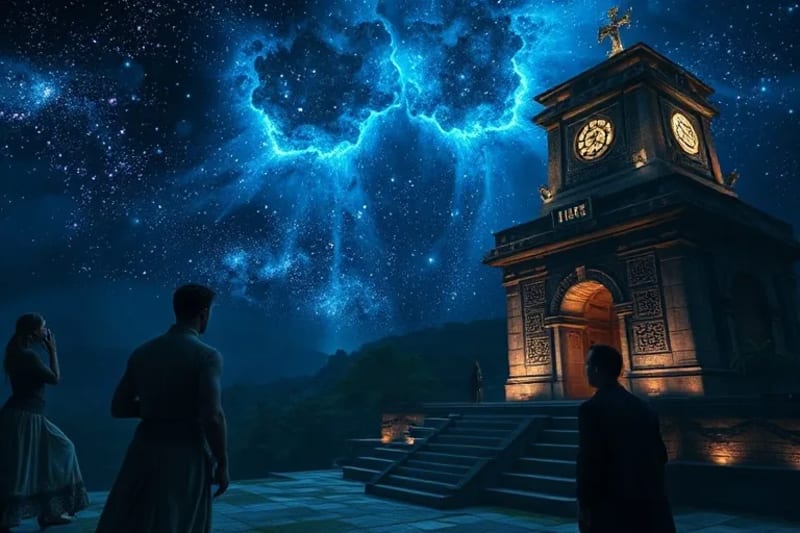
Ancient Mayan priests engaging in celestial observation from a temple, surrounded by intricate carvings of cosmic maps, highlighting their advanced astronomical knowledge.
Table of Contents
- The Foundations of Mesoamerican Astrology
- The Mayan Calendar System: Tzolkin and Haab'
- The Aztec Calendar: Xiuhpohualli and Tonalpohualli
- Spiritual Significance and Daily Life
- Decoding Your Mesoamerican Birth Sign
- Legacy and Modern Interpretations
- Frequently Asked Questions
The Foundations of Mesoamerican Astrology
The astrological systems of Mesoamerica were built upon a profound understanding of astronomical cycles, meticulous observation of celestial bodies, and a cyclical view of time. Unlike the linear perception of time common in many modern cultures, ancient Mesoamericans viewed time as a series of repeating cycles, each carrying its own unique energies and influences. This cyclical worldview is fundamental to understanding their calendars and their astrological implications.
Central to both Mayan and Aztec traditions were two primary interlocking calendars: a sacred ritual calendar of 260 days and a civil solar calendar of 365 days. The interaction of these two cycles formed a 52-year "Calendar Round," a significant period marking major life events and societal shifts. Beyond these, the Maya developed the Long Count calendar, a linear count of days from a mythical starting point, used for historical record-keeping and predicting grand cosmic epochs.
These calendars were not merely tools for timekeeping; they were sacred texts, guides for divination, and blueprints for understanding personal destiny and collective fate. Each day within these cycles carried a specific energy, influenced by its numerical coefficient and its associated day-sign. Priests and calendar specialists, known as day-keepers, were responsible for interpreting these cosmic messages, guiding rulers and common people alike in making crucial decisions.
The Mayan Calendar System: Tzolkin and Haab'
The Mayan calendar system is perhaps the most famous and complex of the Mesoamerican traditions. It consists of several interconnected cycles, with the Tzolkin and the Haab' being the most prominent for daily life and astrological interpretation. The Tzolkin, or "Sacred Round," is a 260-day cycle that combines 20 day-signs with 13 numbers (1-13). Each day has a unique combination, such as "1 Imix" or "7 Akbal," repeating every 260 days. This cycle is believed to represent the human gestation period and is deeply tied to spiritual growth and personal destiny.
The 20 day-signs, each with its own symbolic meaning and associated deity, represent fundamental energies and archetypes. For instance, Imix (Dragon/Crocodile) signifies creation and primordial energy, while Ik' (Wind/Spirit) represents breath, life, and communication. The number accompanying the day-sign modifies its energy, adding intensity or nuance. Understanding one's Tzolkin birth sign provides insight into innate personality traits, life purpose, and potential challenges, much like a Western zodiac sign.
Complementing the Tzolkin is the Haab', the 365-day civil calendar. This solar calendar consists of 18 months of 20 days each, plus a 5-day period at the end known as the Wayeb'. The Wayeb' was considered a time of heightened spiritual activity, often associated with danger or introspection. While the Haab' primarily tracked agricultural cycles and seasonal changes, its interaction with the Tzolkin created the 52-year Calendar Round, where specific Tzolkin-Haab' combinations would not repeat for 18,980 days. This grand cycle was crucial for long-term planning and understanding generational influences.
The Aztec Calendar: Xiuhpohualli and Tonalpohualli
The Aztec calendar system, while distinct in its nomenclature and specific deities, shared a fundamental structural similarity with the Mayan system. It also operated with two primary interlocking cycles: the Tonalpohualli and the Xiuhpohualli. The Tonalpohualli, meaning "count of days," was the sacred 260-day ritual calendar, directly analogous to the Mayan Tzolkin. It combined 20 day-signs with 13 numbers, creating unique day names like "1 Crocodile" or "7 House."
Each of the 20 day-signs in the Tonalpohualli had its own symbolic meaning, often tied to natural phenomena, animals, or sacred concepts. For example, Cipactli (Crocodile) symbolized earth and creation, while Calli (House) represented home, stability, and lineage. These day-signs, combined with their numerical coefficients, were used for divination, determining the fate of newborns, and scheduling religious ceremonies. The influence of these day-signs on an individual's personality and life path was a central aspect of Aztec astrology.
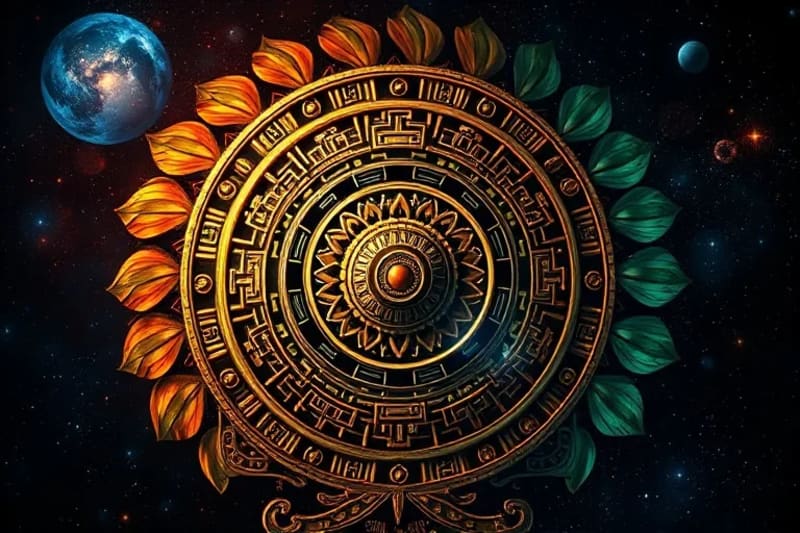
A detailed illustration of the Aztec Sun Stone, showcasing its intricate glyphs and symbolic representations of cosmic cycles and deities.
The Xiuhpohualli, or "year count," was the Aztec 365-day solar calendar, analogous to the Mayan Haab'. It comprised 18 months of 20 days each, plus a 5-day "empty" period called Nemontemi at the end of the year. Similar to the Wayeb', the Nemontemi was considered an inauspicious time, a period of uncertainty and caution. The Xiuhpohualli governed agricultural cycles, public festivals, and the timing of state affairs. The most iconic representation of the Aztec calendar is the Sun Stone (Piedra del Sol), which intricately depicts the various cycles and cosmological beliefs of the Aztec people, serving as both a calendar and a monument to their understanding of the cosmos.
Spiritual Significance and Daily Life
The influence of Mesoamerican astrology extended far beyond personal horoscopes; it permeated every aspect of life. For these cultures, the cosmos was a living entity, and the calendars were the language through which its will was communicated. Priests and astrologers held immense power, as they were the interpreters of these divine messages. They advised rulers on the timing of wars, coronations, and alliances, ensuring that actions were aligned with auspicious cosmic energies. For instance, a day associated with the Jaguar might be favorable for warfare, while a day linked to Maize would be ideal for planting.
In personal life, the day of one's birth determined their "nahual" (in Maya) or "tonal" (in Aztec), a spiritual companion or essence that defined their character and destiny. This birth sign provided a roadmap for an individual's life path, highlighting strengths, weaknesses, and potential challenges. Parents would consult day-keepers to understand their child's innate tendencies and to choose an appropriate name. Rituals and offerings were often performed according to the specific energies of the day, seeking to harmonize with cosmic forces or mitigate negative influences.
The cyclical nature of time also meant that past events could influence present and future ones, creating a profound sense of continuity and interconnectedness. This belief system encouraged a deep respect for the natural world and the celestial realm, seeing them as inseparable parts of a grand cosmic design. Understanding these cycles was not just about prediction but about living in harmony with the universe, a concept that resonates with modern principles of manifesting reality through alignment.
Decoding Your Mesoamerican Birth Sign
To discover your Mesoamerican birth sign, one typically needs to convert their Gregorian birth date into the corresponding Tzolkin (Mayan) or Tonalpohualli (Aztec) date. Several online converters and resources are available today that can perform this calculation. Once you have your day-sign and its associated number, you can then delve into its specific meanings and interpretations. Each of the 20 day-signs carries a rich tapestry of symbolism, often linked to deities, animals, elements, and concepts.
For example, if your birth sign is "8 Monkey" (Chuen in Maya, Ozomahtli in Aztec), you might be seen as creative, artistic, playful, and intelligent, with a strong connection to performance and innovation. The number 8 would amplify these qualities, suggesting a balanced and harmonious expression of these traits. Conversely, a sign like "4 Death" (Cimi in Maya, Miquiztli in Aztec) doesn't necessarily signify literal death but rather transformation, cycles of ending and beginning, and a deep understanding of life's mysteries.
Exploring your Mesoamerican birth sign can offer a unique perspective on your personality and life path, complementing insights gained from Western astrology or other spiritual systems. It encourages a deeper connection to ancient wisdom and a recognition of the cyclical nature of existence. This journey of self-discovery can be a powerful tool for evolutionary growth, helping individuals understand their innate gifts and challenges.
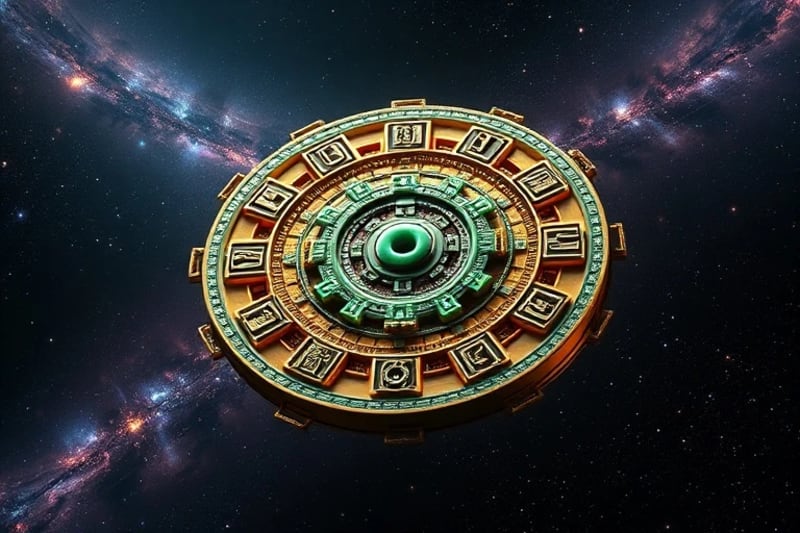
A conceptual 3D render illustrating the intricate interlocking gears of the Mayan Long Count calendar, floating in a cosmic void, symbolizing the cyclical nature of time.
Legacy and Modern Interpretations
The legacy of Mesoamerican astrology continues to resonate today, both within indigenous communities and among those seeking alternative spiritual perspectives. While the infamous "2012 prophecy" often misconstrued the end of a Mayan Long Count cycle as a cataclysmic event, it was, in fact, understood by the Maya as a period of significant transformation and renewal. This highlights the importance of understanding these systems within their original cultural and philosophical contexts, rather than through modern interpretations that may strip away their true meaning.
Modern scholars, astrologers, and spiritual seekers are increasingly exploring the depths of these ancient calendars for insights into personal development, collective consciousness, and our relationship with the cosmos. The emphasis on cycles, interconnectedness, and the spiritual significance of time offers a powerful antidote to a linear, materialistic worldview. It encourages a more holistic approach to life, where understanding our place in the grand cosmic dance is paramount.
The intricate precision and profound wisdom embedded in Mayan and Aztec celestial calendars stand as a testament to the intellectual and spiritual achievements of these ancient civilizations. They remind us that there are many ways to perceive and interact with the universe, and that the stars have always held secrets waiting to be decoded. For those interested in the deeper connections between celestial mechanics and earthly existence, exploring these ancient systems offers a rich and rewarding journey, much like understanding one's soul's sacred geography.
Frequently Asked Questions
- Q: What are the main calendars in Mesoamerican astrology?
A: The primary calendars are the Mayan Tzolkin (260 days) and Haab' (365 days), and the Aztec Tonalpohualli (260 days) and Xiuhpohualli (365 days). These interlock to form larger cycles. - Q: How did ancient Mesoamericans use these calendars?
A: They used them for agricultural planning, scheduling religious ceremonies, divination, determining personal destinies, guiding societal events, and understanding auspicious times for various activities like warfare or construction. - Q: Is Mesoamerican astrology similar to Western astrology?
A: While both systems interpret celestial influences on human life, Mesoamerican astrology primarily focuses on complex calendar cycles and day-signs, whereas Western astrology emphasizes planetary positions within zodiacal constellations. - Q: What is the significance of the 52-year Calendar Round?
A: The 52-year Calendar Round is formed by the interlocking of the 260-day ritual calendar and the 365-day solar calendar. It was a significant period marking generational cycles, major life transitions, and societal shifts, as specific day combinations would only repeat after 52 years.
Explore More Cosmic Wisdom
Source: Hybrid content assisted by AI and human editorial supervision.


Comments
Post a Comment