
AI Dream Interpretation: Decoding Symbols with Algorithmic Insights
Dreams have captivated humanity for millennia, serving as a mysterious canvas for our subconscious thoughts, fears, and aspirations. From ancient civilizations seeking divine messages to modern psychology exploring the depths of the psyche, the quest to understand these nocturnal narratives remains a profound human endeavor. Traditionally, dream interpretation has relied on subjective analysis, often guided by cultural symbols, personal experiences, or established psychological frameworks.
However, the advent of artificial intelligence (AI) is ushering in a revolutionary era for this ancient practice. AI-powered dream interpretation leverages advanced algorithms and machine learning to decode the intricate tapestry of dream symbols, offering insights that were once beyond the reach of human analysis alone. This innovative approach promises to transform how we perceive and utilize our dreamscapes, moving towards a more data-driven and personalized understanding.
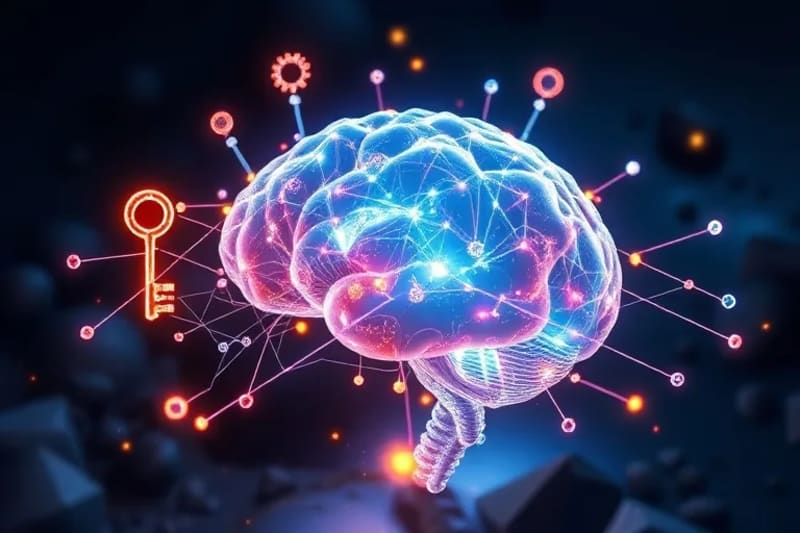
Intricate network of data streams and abstract dream symbols, representing AI processing subconscious imagery.
The core of AI dream interpretation lies in its ability to process vast amounts of data, identify patterns, and draw connections that might be imperceptible to the human mind. By analyzing countless dream reports, symbolic dictionaries, psychological theories, and even personal user data (with consent), AI can construct a more comprehensive and nuanced interpretation. This diversification of interpretive methods opens new avenues for understanding the complex interplay between our waking lives and our nocturnal experiences.
Table of Contents
- The Foundation of Dream Analysis: Why We Dream
- How AI Deciphers the Language of Dreams
- Algorithmic Insights: Benefits of AI in Interpretation
- Challenges and Ethical Considerations
- Personalization and the Future of Dream Exploration
- Integrating Ancient Wisdom with Modern AI
- The Transformative Impact on Self-Understanding
The Foundation of Dream Analysis: Why We Dream
Before delving into AI's role, it's crucial to understand the fundamental theories behind why humans dream. While no single theory fully explains this phenomenon, several prominent perspectives offer valuable insights. Sigmund Freud, the father of psychoanalysis, viewed dreams as "the royal road to the unconscious," believing they revealed repressed desires and unresolved conflicts through symbolic representations.
Carl Jung, a contemporary of Freud, expanded on this, introducing the concept of the collective unconscious and archetypes. Jungian dream analysis often focuses on universal symbols and mythological patterns that resonate across cultures, suggesting a deeper, shared human experience. These Hermetic principles and esoteric traditions often find echoes in the symbolic language of dreams.
Neuroscientific perspectives, on the other hand, propose that dreams are a byproduct of brain activity during sleep, particularly during REM (Rapid Eye Movement) sleep. Theories like the Activation-Synthesis Hypothesis suggest that dreams are the brain's attempt to make sense of random neural firings, weaving them into a coherent narrative. Other theories propose that dreams play a role in memory consolidation, emotional regulation, and problem-solving.
Regardless of the specific theory, dreams are widely acknowledged as a significant aspect of human cognition and emotional processing. They provide a unique window into our inner world, offering clues about our psychological state, anxieties, and untapped potential. The challenge has always been how to objectively and consistently interpret these often-bizarre and fragmented narratives.
How AI Deciphers the Language of Dreams
AI's approach to dream interpretation is fundamentally data-driven. It begins by ingesting vast datasets of dream reports, symbolic dictionaries, psychological texts, and user-provided context. Natural Language Processing (NLP) is a key component, allowing AI to understand and process human language, identifying keywords, themes, and emotional tones within dream narratives. This is akin to how AI might analyze complex texts to find patterns, similar to the intricate Sabian Symbols used in astrology.
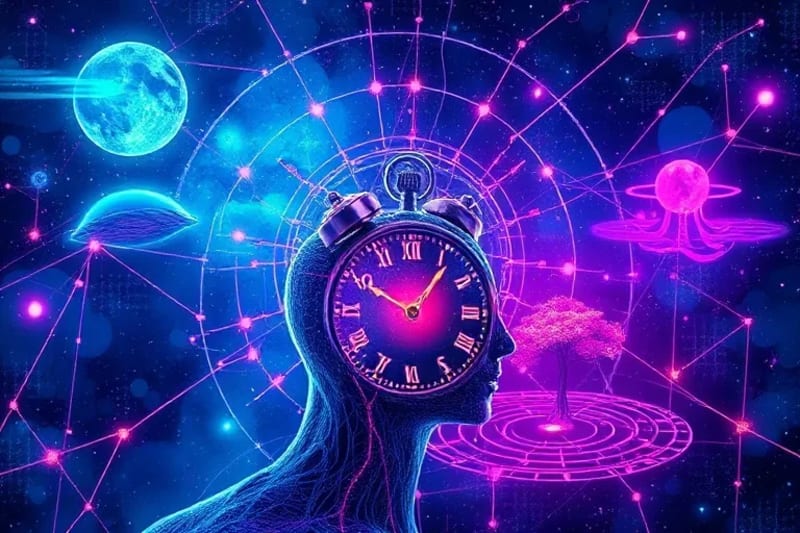
Intricate digital painting of a neural network over surreal dream archetypes, representing algorithmic processing.
Machine learning algorithms then come into play, identifying recurring patterns and correlations between dream elements and their potential meanings. For instance, if a particular symbol (e.g., "falling") frequently appears in dreams reported by individuals experiencing anxiety, the AI can learn to associate "falling" with feelings of insecurity or loss of control. This process is iterative, meaning the AI continuously refines its understanding as it encounters more data.
Beyond simple symbol-meaning mapping, advanced AI models can analyze the narrative structure of a dream, the emotional trajectory, and the relationships between different elements. They can consider the context provided by the dreamer, such as recent life events, personal struggles, or aspirations, to offer a more personalized interpretation. This goes beyond generic dream dictionaries, moving towards a bespoke understanding of each individual's subconscious.
Furthermore, AI can integrate insights from various psychological schools of thought, cross-referencing Freudian concepts with Jungian archetypes, or cognitive behavioral approaches. This multi-faceted analysis allows for a richer, more comprehensive interpretation, drawing on the strengths of different theoretical frameworks. The ability to process and synthesize such diverse information is a significant advantage of AI over human interpreters, who may be limited by their specific training or biases.
Algorithmic Insights: Benefits of AI in Interpretation
The application of AI to dream interpretation offers several compelling benefits. Firstly, it introduces a level of objectivity and consistency often lacking in human interpretation. While human therapists bring empathy and intuition, they can also be influenced by personal biases or limited by their individual knowledge base. AI, on the other hand, applies its learned rules and patterns consistently, reducing variability.
Secondly, AI can process an unprecedented volume of information. It can analyze millions of dream reports, symbolic references, and psychological studies in moments, far exceeding the capacity of any human researcher. This allows for the identification of subtle patterns and correlations that might otherwise go unnoticed, potentially leading to new discoveries about the nature of dreams and the human psyche.
- Enhanced Personalization: By learning from an individual's past dream reports, life events, and emotional states, AI can provide increasingly accurate and relevant interpretations tailored to their unique psychological landscape.
- Accessibility: AI-powered tools can make dream interpretation more accessible to a wider audience, offering insights without the need for expensive or time-consuming consultations with human experts.
- Cross-Cultural Analysis: AI can be trained on dream data from diverse cultures, enabling it to identify both universal archetypes and culture-specific symbols, fostering a more global understanding of dreams.
- Real-time Feedback: Some AI systems could potentially offer real-time or near real-time analysis, allowing individuals to gain immediate insights into their dreams shortly after waking.
The ability of AI to draw connections between seemingly disparate elements, much like the concept of quantum entanglement synchronicity, opens up new frontiers for understanding the non-local and interconnected aspects of our subconscious. This could lead to a more holistic understanding of our inner world.
Challenges and Ethical Considerations
Despite its potential, AI-powered dream interpretation faces significant challenges and raises important ethical questions. The inherently subjective and nuanced nature of dreams makes them particularly difficult for algorithms to fully grasp. Human emotions, cultural context, and individual life experiences contribute layers of meaning that AI may struggle to fully comprehend, especially without direct interaction.
One of the primary concerns is data privacy and security. Dream reports often contain highly personal and sensitive information. Ensuring that this data is collected, stored, and processed securely, with explicit user consent, is paramount. Misuse or breaches of such intimate data could have severe consequences for individuals.
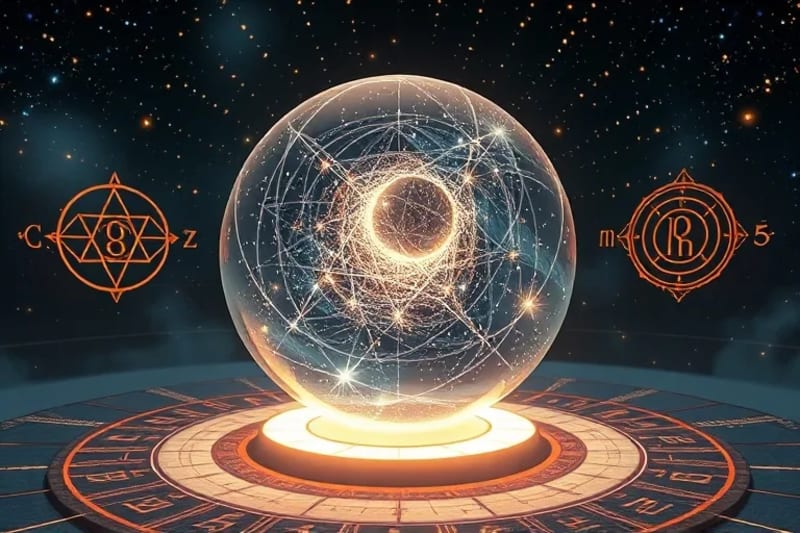
Conceptual 3D render of a crystal sphere filled with swirling data and geometric shapes, surrounded by holographic symbols.
Another challenge is the potential for algorithmic bias. If the training data for AI models primarily reflects certain cultural perspectives or psychological theories, the interpretations it provides may be skewed. This could lead to misinterpretations or a lack of understanding for individuals from different backgrounds or with unique psychological profiles. Ensuring diverse and representative datasets is crucial to mitigate this risk.
Furthermore, the absence of human empathy and intuition is a critical limitation. A human therapist can pick up on subtle cues, emotional inflections, and non-verbal communication that an AI cannot. The therapeutic relationship itself often plays a vital role in the healing and self-discovery process, which AI cannot replicate. AI should therefore be seen as a tool to augment, rather than replace, human expertise in complex psychological contexts.
Personalization and the Future of Dream Exploration
The true power of AI in dream interpretation lies in its potential for extreme personalization. Imagine an AI that not only knows general symbolic meanings but also understands your personal history, your unique associations with certain objects or people, and your current emotional state. This level of personalized insight could unlock profound self-understanding.
Future AI systems could integrate data from wearable devices (e.g., sleep trackers, heart rate monitors) to correlate physiological states with dream content. This could provide a more holistic picture, linking physical well-being to subconscious activity. For example, an AI might detect patterns between stress levels during the day and specific dream themes at night, offering actionable advice for managing stress.
Moreover, AI could facilitate dream journaling and analysis over long periods, identifying evolving patterns and recurring motifs that signify deeper psychological processes or personal growth. This longitudinal analysis could reveal trends in an individual's subconscious mind that would be difficult to track manually, providing a dynamic map of their inner world. This contrasts with more static interpretative models, like the differences between Vedic and Western astrology, showing AI's adaptability.
Integrating Ancient Wisdom with Modern AI
One of the most exciting prospects for AI dream interpretation is its capacity to bridge the gap between ancient wisdom and modern technology. Historically, cultures worldwide have developed rich traditions of dream analysis, often rooted in spiritual, mythological, or folk beliefs. These traditions, while sometimes dismissed by purely scientific approaches, contain valuable insights into the human condition and symbolic language.
AI can be trained on these diverse bodies of knowledge, from ancient Egyptian dream books to indigenous spiritual interpretations, alongside contemporary psychological theories. By synthesizing these varied perspectives, AI can offer a more comprehensive and culturally sensitive interpretation. It can highlight how universal archetypes manifest differently across cultures, or how specific cultural symbols carry unique meanings.
This integration is not about validating or invalidating any particular belief system but rather about enriching the interpretive process. AI can act as a vast library and cross-referencing engine, allowing users to explore their dreams through multiple lenses. For instance, an AI might offer a Jungian interpretation, followed by a Freudian one, and then a culturally specific interpretation based on the user's background, fostering a deeper, more holistic understanding.
The Transformative Impact on Self-Understanding
Ultimately, the goal of AI-powered dream interpretation is to empower individuals with greater self-understanding. By providing clearer, more accessible insights into their subconscious, AI can help people identify underlying anxieties, process unresolved emotions, and recognize their innate strengths and desires. This enhanced self-awareness can lead to significant personal growth and improved mental well-being.
For those struggling with recurring nightmares or anxiety-inducing dreams, AI could help identify triggers and suggest strategies for coping or even transforming these experiences. For creative individuals, AI might uncover novel symbolic connections that inspire new artistic endeavors. The potential applications are vast, extending into therapy, personal development, and creative exploration.
As AI technology continues to evolve, its capacity to understand and interpret the complex world of dreams will undoubtedly grow. While it may never fully replicate the nuance of human intuition or the depth of a therapeutic relationship, AI offers a powerful new tool in our ancient quest to decode the mysteries of the mind. It promises to make dream interpretation more scientific, more personalized, and more accessible, ultimately enriching our journey of self-discovery.
The future of dream interpretation is likely a hybrid model, where AI provides the analytical power and vast data processing capabilities, while human experts offer the empathy, contextual understanding, and therapeutic guidance necessary for profound personal insight. This synergy could unlock unprecedented levels of understanding, transforming our relationship with our dreams and, by extension, with ourselves.
Related Searches
- Pet Astrology: Unlocking Your Companion's Cosmic Blueprint
- Rat-Rabbit Compatibility: A Comprehensive Chinese Zodiac Guide
- Davison Relationship Chart: Soul of Partnership Explored
- Astro-Archeology Unearthing Celestial Ancient Civilizations Narratives
- Dog Chinese Zodiac Meaning: Traits & Compatibility
- Ancient Egyptian Star Lore: Unveiling Pharaohs' Cosmic Beliefs
- Monkey Personalities: Chinese Zodiac Traits in Action
- Libra Horoscope 2024: Balance, Relationships, Growth
- Chrono-Astrology Ancestral Echoes Navigating Personal Time Cycles
- Earth Dragon Chinese Zodiac: Stability, Ambition, Practicality
- Lunar Mansions Predictive Astrology Timing Life Events
Source: Hybrid content assisted by AI and human editorial supervision.


Comments
Post a Comment