
Vedic Western Astrology Differences: Key Insights Explained | StarPluto
Astrology, the ancient practice of interpreting celestial influences on human affairs, manifests in diverse forms across cultures and historical periods. Among the most prominent systems are Vedic Astrology, also known as Jyotish, originating from ancient India, and Western Astrology, which has roots in Hellenistic traditions. While both aim to provide insights into personality, destiny, and life events, their underlying principles, methodologies, and philosophical frameworks present significant differences.
Introduction to Astrological Systems
Astrology offers a profound lens through which to understand human existence, connecting individual lives to the grand cosmic dance of planets and stars. While both Vedic and Western astrology share the fundamental premise that celestial bodies influence earthly events, their distinct historical developments have led to unique methodologies and interpretations.
Western astrology, prevalent in Europe and the Americas, largely focuses on psychological insights and personality traits, often emphasizing self-discovery and potential. Vedic astrology, deeply rooted in Hindu philosophy, extends its scope to include karmic patterns, spiritual evolution, and highly precise predictive techniques, often incorporating remedial measures.
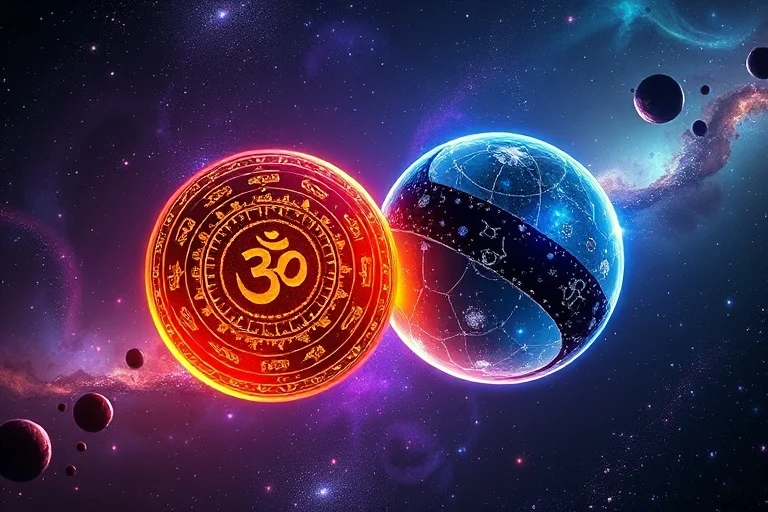
A visual representation of the distinct yet interconnected cosmic frameworks of Vedic and Western astrology.
The Fundamental Zodiac Difference: Sidereal vs. Tropical
The most significant and foundational difference between Vedic and Western astrology lies in their choice of zodiac. Western astrology uses the Tarot Quantum Mechanics Intersecting Divination Reality, which is based on the seasons and the Earth's relationship to the Sun. The vernal equinox (around March 21st) marks 0 degrees Aries, and the zodiac signs are fixed relative to this point, aligning with the seasons.
Vedic astrology, conversely, employs the Tarot Quantum Mechanics Intersecting Divination Reality, which is fixed to the actual constellations in the sky. Due to a phenomenon called the precession of the equinoxes, the tropical zodiac gradually drifts away from the sidereal zodiac over time. This difference, known as the Ayanamsha, currently amounts to approximately 24 degrees.
This means that if you are a Leo in Western astrology, you are likely a Cancer in Vedic astrology. This shift profoundly impacts the placement of planets in signs and houses, leading to entirely different chart interpretations. The sidereal approach aligns with the observable positions of stars, while the tropical system aligns with seasonal cycles, each offering a distinct perspective on cosmic influence.
| Feature | Western (Tropical) Astrology | Vedic (Sidereal) Astrology |
|---|---|---|
| Zodiac Basis | Based on seasons and Earth's relationship to the Sun (vernal equinox). | Based on fixed constellations in the sky. |
| Starting Point | 0 degrees Aries at the vernal equinox. | 0 degrees Aries aligned with the fixed star Revati (or other specific points depending on Ayanamsha). |
| Precession Effect | Ignores the precession of the equinoxes. | Accounts for the precession of the equinoxes (Ayanamsha). |
| Current Shift | No shift from seasonal alignment. | Approximately 24 degrees difference from tropical zodiac. |
| Focus | Primarily psychological and personality-oriented. | Karmic, spiritual, and predictive. |
Planetary Rulerships and Dignities
Both systems utilize the same seven classical planets (Sun, Moon, Mercury, Venus, Mars, Jupiter, Saturn) and incorporate the outer planets (Uranus, Neptune, Pluto) in Western astrology. However, their interpretations of planetary rulerships and dignities can vary. Western astrology assigns rulerships based on the tropical zodiac, with each sign having a ruling planet. For instance, Mars rules Aries and Scorpio.
Vedic astrology also has planetary rulerships, but they are often more nuanced and tied to specific constellations (Nakshatras) within each sign. Furthermore, Vedic astrology places significant emphasis on the strength and condition of a planet (its dignity) through concepts like exaltation, debilitation, and yogas (planetary combinations). The Moon's Nodes, Rahu (North Node) and Ketu (South Node), are given immense importance in Vedic astrology as karmic indicators, often treated as shadow planets with profound influence.
Ancient astrological texts, representing the deep historical roots of both Vedic and Western traditions.
The outer planets (Uranus, Neptune, Pluto) are relatively new additions to Western astrology, discovered with the advent of telescopes. While some modern Vedic astrologers may consider their influence, traditional Jyotish primarily relies on the seven classical planets and the lunar nodes. This distinction highlights the different evolutionary paths and philosophical priorities of each system.
The concept of planetary strength and weakness is critical in Vedic analysis, influencing a planet's capacity to deliver its results. A well-placed and strong planet can bring great fortune, while a debilitated one may indicate challenges. These intricate calculations form the backbone of a Vedic astrologer's assessment.
House Systems and Interpretations
Both Vedic and Western astrology divide the birth chart into twelve houses, each representing different areas of life such as career, relationships, family, and wealth. However, the calculation and interpretation of these houses differ. Western astrology commonly uses various house systems like Placidus, Koch, or Equal House, where house cusps (the beginning of a house) can fall within a sign.
Vedic astrology predominantly uses the Tarot Quantum Mechanics Intersecting Divination Reality (or sometimes Lagna Bhava), where each sign corresponds exactly to a house. For example, if your Ascendant (Lagna) is in Aries, then Aries becomes your first house, Taurus your second, Gemini your third, and so on, regardless of where the house cusps might fall in other systems. This creates a clear and consistent framework for interpretation.
The interpretation of houses also carries different emphasis. While Western astrology might focus on the psychological expression of a planet in a house, Vedic astrology often looks at the concrete results and karmic implications associated with that house. For example, the 7th house in Western astrology might signify partnership dynamics, while in Vedic astrology, it could strongly indicate the nature of one's spouse and marital happiness.
Predictive Techniques: Dashas vs. Transits/Progressions
When it comes to forecasting future events, both systems employ predictive techniques, but their primary methods diverge significantly. Western astrology heavily relies on Chrono-Astrology Ancestral Echoes Navigating Personal Time Cycles. Transits involve observing the current positions of planets in the sky and how they aspect the planets in a natal chart. Progressions involve moving the natal chart forward in time to symbolize psychological and developmental shifts.
Vedic astrology's most renowned predictive tool is the Tarot Quantum Mechanics Intersecting Divination Reality, particularly the Vimshottari Dasha. This system divides a person's life into major planetary periods (Mahadashas) and sub-periods (Antardashas), each ruled by a specific planet. During a planet's Dasha, its influence is considered paramount, shaping the events and experiences of that period with remarkable precision. This cyclical approach provides a detailed chronological roadmap of a person's life.
While Vedic astrology also uses transits (Gochar) and other predictive charts (like Divisional Charts or Vargas), the Dasha system is its unique and powerful contribution to predictive astrology. It offers a framework for understanding when certain karmic seeds are likely to fructify, providing a structured timeline for life's unfolding events.
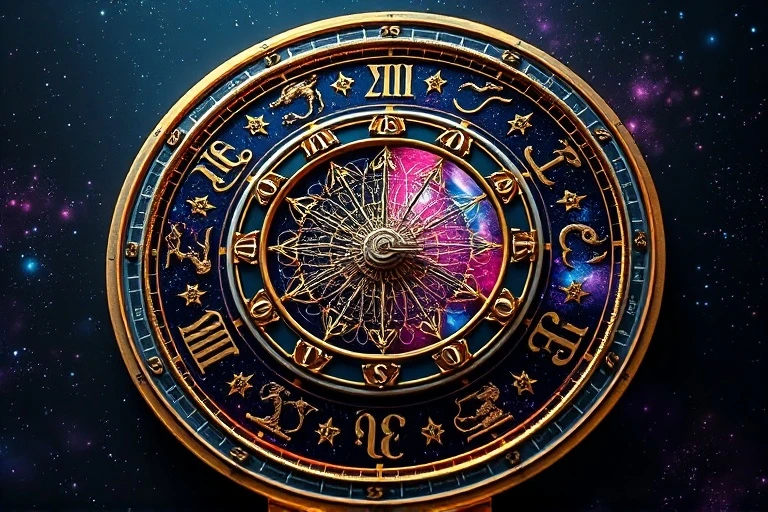
A symbolic representation of the distinct time-keeping and cyclical approaches in astrological systems.
Karmic Focus and Remedies in Vedic Astrology
A core tenet of Vedic astrology is its deep connection to the concept of Mesoamerican Astrology AI Oracles Bridging Ancient Modern. A birth chart (Kundali) in Jyotish is seen as a blueprint of one's past karma, indicating both strengths and challenges brought into the current life. The positions of planets and houses reveal the nature of these karmic patterns and their potential manifestation.
Furthermore, Vedic astrology offers a unique dimension: Karmic Synastry Deep Dive Soul Contracts Relationships (Upayas). These are prescribed actions or practices intended to mitigate negative planetary influences or enhance positive ones. Remedies can include wearing specific gemstones, performing pujas (rituals), chanting mantras, observing fasts, donating to charity, or making lifestyle adjustments. The philosophy behind remedies is not to change destiny, but to refine one's karma and align with cosmic energies more harmoniously.
Western astrology, while acknowledging personal growth and transformation, generally does not prescribe such specific remedial measures in the same way. Its focus is more on understanding psychological drives and making conscious choices to navigate challenges. The emphasis on karma and remedies gives Vedic astrology a distinct spiritual and practical dimension.
Philosophical Underpinnings and Purpose
The philosophical foundations of Vedic and Western astrology also contribute to their differences. Western astrology evolved from Hellenistic and Mesopotamian traditions, influenced by Greek philosophy and later by the psychological theories of figures like Jung. It often seeks to understand the individual's inner world, motivations, and potential for self-actualization. Its purpose is largely to foster self-awareness and personal development.
Vedic astrology, or Jyotish, is an integral part of the Vedas, ancient Hindu scriptures. It is considered a "Vedanga," a limb of the Vedas, and is deeply intertwined with concepts like Dharma (righteous conduct), Karma (action and consequence), and Moksha (liberation). Its ultimate purpose is often seen as guiding individuals towards spiritual growth, understanding their life's purpose, and navigating their karmic journey. It provides a framework for understanding the divine order and one's place within it.
This deeper spiritual context means that Vedic astrology often offers a more fatalistic yet empowering perspective. While it acknowledges predetermined karmic patterns, it also provides tools (remedies) for conscious engagement with these patterns, promoting spiritual evolution rather than mere psychological adjustment.
Shared Foundations and Common Ground
Despite their significant differences, it is crucial to acknowledge the common ground shared by Vedic and Western astrology. Both systems utilize a 360-degree circle divided into twelve signs and twelve houses. They both interpret the influence of planets, signs, and houses on an individual's life.
Both traditions aim to provide guidance, self-understanding, and a framework for interpreting life's challenges and opportunities. They both require precise birth data (date, time, and place) to cast an accurate chart. Moreover, the fundamental archetypes associated with each planet and sign often resonate across both systems, albeit with different nuances.
For instance, Mars is associated with energy and action in both, and Venus with love and relationships. The Sun represents the self and vitality, and the Moon represents emotions and the mind. These universal themes of human experience are explored through the symbolic language of the cosmos in both Vedic and Western astrology, offering different pathways to similar insights.
Navigating Both Systems: Which One to Choose?
For an individual new to astrology, the choice between Vedic and Western systems can be perplexing. Many people initially resonate with their Western tropical sign due to its widespread popularity. However, upon exploring their Vedic sidereal chart, they may find a deeper or different resonance, especially if their Sun sign shifts.
There is no single "correct" system; rather, they offer complementary perspectives. Western astrology can be excellent for psychological self-analysis and understanding one's personality traits and motivations. Vedic astrology excels in predictive accuracy, karmic insights, and providing spiritual guidance and remedial measures.
Many serious students and practitioners of astrology choose to study both, integrating insights from each to form a more holistic understanding. The key is to approach both with an open mind, recognizing their unique strengths and contributions to the vast tapestry of astrological knowledge.
Conclusion: A Holistic View of Cosmic Influence
Vedic and Western astrology, while distinct in their foundations and methodologies, both serve as powerful tools for self-discovery and understanding our place in the universe. The sidereal zodiac of Jyotish, with its emphasis on fixed stars and karmic cycles, offers a profound spiritual and predictive framework. The tropical zodiac of Western astrology, aligned with seasonal energies, provides rich psychological insights into personality and potential.
Understanding these key differences allows for a more informed appreciation of each system's strengths. Whether you are drawn to the karmic depths of Vedic astrology or the psychological nuances of Western astrology, both offer invaluable pathways to connect with the cosmic rhythms that shape our lives. Ultimately, the journey through either system can lead to greater self-awareness and a deeper connection to the universal energies that surround us.
Source: Contenido híbrido asistido por IAs y supervisión editorial humana.


Comments
Post a Comment