
Hellenistic Western Astrology Bridging Predictive Techniques
Hellenistic Western Astrology Bridging Predictive Techniques
Astrology, the ancient practice of interpreting celestial influences on terrestrial events and human lives, has evolved through various traditions across millennia. Among the most influential are Hellenistic Astrology, which flourished in the Greco-Roman world, and modern Western Tropical Astrology, a direct descendant that has significantly diverged over time. While both systems share fundamental principles, their methodologies, philosophical underpinnings, and predictive techniques present unique perspectives. This article explores how these two powerful astrological frameworks can be harmonized to create a more comprehensive and nuanced approach to understanding life's patterns and future potentials.
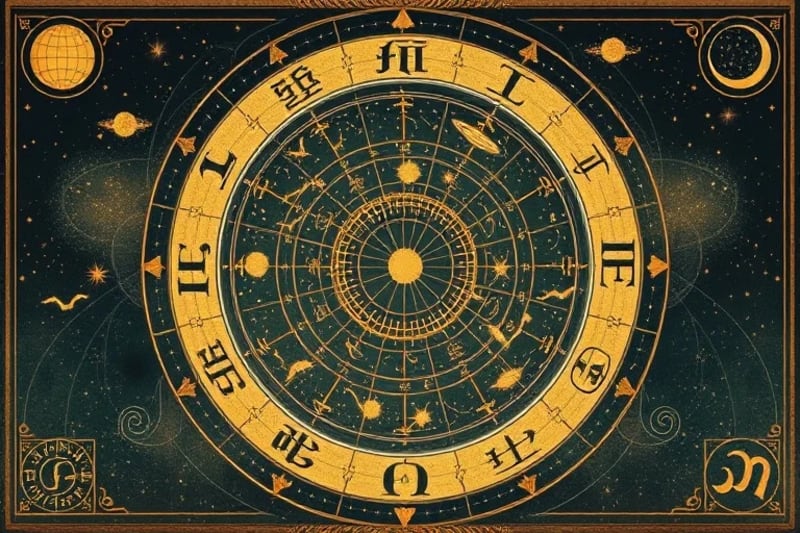 A cosmic tapestry blending ancient celestial cartography with contemporary astrological glyphs, symbolizing the integration of Hellenistic and Western traditions.
The journey from the Hellenistic period to contemporary Western astrology is marked by both continuity and profound shifts. Understanding these historical developments is crucial for any astrologer seeking to bridge the gap and leverage the strengths of each system. By examining their core tenets, we can appreciate the rich tapestry of astrological thought and unlock new dimensions of insight.
Table of Contents
- The Foundations of Hellenistic Astrology
- Understanding Western Tropical Astrology
- Key Distinctions and Overlaps
- Towards a Holistic Astrological Approach
- Integrated Predictive Techniques
- Benefits of Astrological Integration
- Challenges and Ethical Considerations
- Conclusion: The Future of Unified Astrology
The Foundations of Hellenistic Astrology
Hellenistic Astrology emerged around the 1st century BCE in the Hellenistic world, encompassing parts of the Mediterranean, Middle East, and Egypt. It synthesized Babylonian astronomical observations with Egyptian decanic systems and Greek philosophical concepts, particularly Stoicism. This period saw the codification of many techniques still recognizable today, albeit often in altered forms. Key texts like those by Vettius Valens, Dorotheus of Sidon, and Ptolemy laid the groundwork for astrological practice for over a thousand years.
A cornerstone of Hellenistic practice is the emphasis on whole sign houses, where each zodiac sign fully occupies a house, beginning with the Ascendant's sign as the 1st house. This contrasts sharply with later quadrant house systems. Additionally, Hellenistic astrology heavily relied on essential dignities, planetary joys, sect, and specific timing techniques such as profections, primary directions, and annual returns. These methods were designed to provide precise insights into an individual's fate and life events.
The philosophical underpinnings of Hellenistic astrology often leaned towards a more deterministic view, influenced by Stoic philosophy. While not entirely fatalistic, it suggested that certain life events were fated, and astrology could reveal these preordained paths. The role of the astrologer was to interpret these cosmic blueprints, offering guidance on how to best navigate the inevitable. This perspective offers a profound contrast to modern approaches that often emphasize free will and psychological development.
Understanding Western Tropical Astrology
Modern Western Tropical Astrology, as practiced today, largely evolved from the Hellenistic tradition but underwent significant transformations, particularly during the Renaissance and the 20th century. It primarily uses the tropical zodiac, which is based on the seasons and the vernal equinox, rather than the sidereal zodiac tied to fixed stars. This system places a strong emphasis on psychological interpretation, personal growth, and understanding an individual's potential rather than fixed fate.
Key elements of Western astrology include the use of quadrant house systems (e.g., Placidus, Koch), complex aspects between planets, and the incorporation of outer planets (Uranus, Neptune, Pluto) discovered after the Hellenistic era. The focus shifted from predicting concrete events to analyzing personality traits, psychological motivations, and developmental stages. For instance, understanding retrograde planets in a natal chart often delves into internal processing and re-evaluation rather than external setbacks.
The rise of humanistic and psychological astrology in the mid-20th century further cemented this shift, emphasizing astrology as a tool for self-awareness and personal empowerment. Astrologers like Dane Rudhyar and Liz Greene pioneered approaches that integrated Jungian psychology, viewing the birth chart as a map of the psyche. This perspective offers individuals agency and encourages conscious participation in their life's journey, a departure from the more deterministic views of antiquity.
Key Distinctions and Overlaps
While both systems are rooted in the same celestial observations, their interpretative frameworks diverge significantly. Understanding these differences is the first step towards effective integration. Here's a comparison of some core elements:
| Feature | Hellenistic Astrology | Western Tropical Astrology |
|---|---|---|
| House System | Predominantly Whole Sign Houses | Quadrant systems (Placidus, Koch, etc.) |
| Planets Used | Traditional seven planets (Sun, Moon, Mercury, Venus, Mars, Jupiter, Saturn) | Traditional planets plus outer planets (Uranus, Neptune, Pluto) |
| Emphasis | Fated events, material conditions, specific timing | Psychological traits, personal growth, potential, free will |
| Timing Techniques | Profections, Primary Directions, Annual Returns, Zodiacal Releasing | Transits, Progressions, Solar Arc Directions |
| Dignities | Essential Dignities (rulership, exaltation, triplicity, term, face), Sect, Planetary Joys | Rulership, Exaltation (less emphasis on minor dignities) |
Despite these differences, both systems ultimately aim to provide insight into the human condition. They share the fundamental understanding of planetary archetypes, zodiacal symbolism, and the significance of astrological houses as areas of life. The planets, signs, and houses retain their core meanings, offering a common language upon which to build an integrated practice. For instance, Saturn in the houses still signifies areas of life where one encounters challenges, responsibility, and ultimately, mastery, regardless of the specific house system used.
Towards a Holistic Astrological Approach
Bridging Hellenistic and Western astrology involves more than just picking techniques from each. It requires a philosophical shift towards a holistic perspective that values both the fated elements of life and the capacity for personal growth. This approach acknowledges that while certain circumstances may be predestined, our response and internal development are within our sphere of influence. It aims to create a richer, more layered interpretation of the birth chart and its unfolding over time.
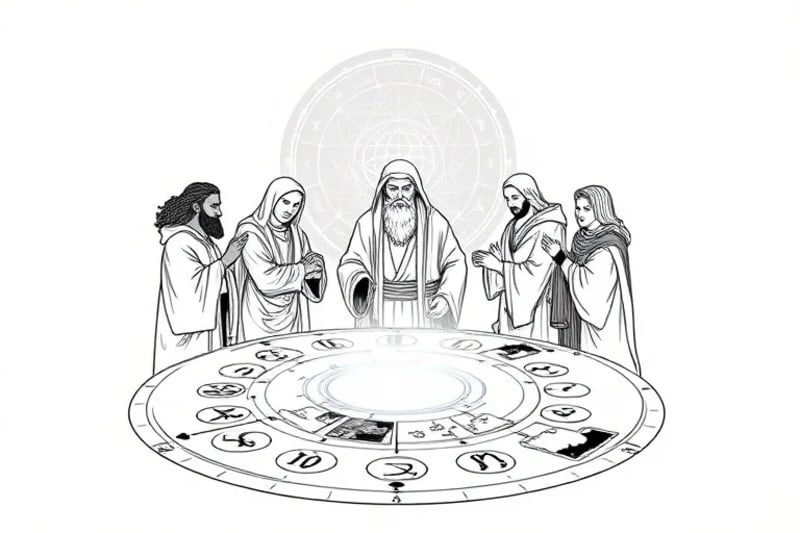 A diverse assembly of astrologers from different eras, collaboratively examining celestial charts in a scholarly environment, symbolizing the integration of varied astrological perspectives.
One effective way to begin this integration is by using whole sign houses for foundational analysis, as they provide a clear and consistent framework for understanding planetary placements and rulerships. Then, quadrant house systems can be overlaid to add psychological nuance and detail regarding the angles (Ascendant, Descendant, Midheaven, Imum Coeli). This dual house system approach allows for both a broad understanding of life areas and a more personal, subjective experience of those areas.
Another crucial step is re-engaging with Hellenistic concepts like sect and planetary joys. Sect refers to whether the birth occurs during the day or night, influencing the strength and expression of planets. Planetary joys describe certain houses where planets are said to be particularly comfortable and effective. Incorporating these concepts adds depth to planetary interpretations, revealing subtle layers of planetary condition that Western astrology often overlooks.
Integrated Predictive Techniques
The true power of a holistic approach lies in combining the predictive techniques of both traditions. Hellenistic timing methods are renowned for their ability to pinpoint specific periods of activity, while Western transits and progressions offer insights into psychological development and unfolding themes.
- Profections: An annual timing technique where the Ascendant and other houses "profess" to the next sign/house each year. This highlights the themes and planetary ruler for that specific year, offering a clear focus for annual predictions. When combined with modern transits, profections can indicate *when* a transit is most likely to be felt or manifest.
- Primary Directions: A highly precise, ancient timing method that measures the movement of zodiacal points and planets by degree. While complex, it can indicate major life events with remarkable accuracy. Integrating these with psychological progressions can show *what* internal shifts correspond to significant external events.
- Zodiacal Releasing: A sophisticated Hellenistic technique that divides life into periods ruled by specific planets and signs. It reveals periods of intense activity or quietude, particularly concerning career, relationships, and health. This can provide a macro-level roadmap, while transits and secondary progressions fill in the micro-level details.
- Transits and Progressions: Modern Western astrology's workhorses for prediction. Transits show current planetary positions relative to the natal chart, indicating external influences. Progressions show the chart's symbolic evolution, reflecting internal growth. When combined with Hellenistic timing, they offer a powerful dual perspective: the "what" and "when" from Hellenistic methods, and the "how" and "why" from Western techniques.
For example, a profection to the 7th house (relationships) in a given year, ruled by Venus, might indicate a significant relationship focus. If, during that same year, there's a powerful modern transit of Jupiter to natal Venus, the combined interpretation would suggest a period of significant, expansive, and potentially fortunate developments in relationships. This layered approach provides both concrete timing and psychological depth, offering a truly comprehensive predictive framework.
Benefits of Astrological Integration
Adopting a holistic approach to Hellenistic and Western astrology offers numerous benefits for both practitioners and clients. It enriches the interpretative process, providing a more robust and nuanced understanding of the birth chart and life's trajectory.
- Enhanced Accuracy: By combining precise timing techniques with psychological insights, astrologers can offer more accurate predictions regarding both external events and internal development.
- Deeper Understanding: The integration allows for a multi-layered interpretation, moving beyond superficial readings to explore the intricate interplay between fate, free will, and personal evolution.
- Broader Perspective: Practitioners gain access to a wider array of tools and concepts, enabling them to address a broader range of client questions and concerns, from material circumstances to spiritual growth.
- Historical Context: Understanding the historical evolution of astrology provides a richer context for current practices, fostering a deeper appreciation for the tradition's intellectual heritage.
- Personal Empowerment: By revealing both fated periods and opportunities for conscious choice, this approach empowers individuals to navigate life's challenges with greater awareness and agency.
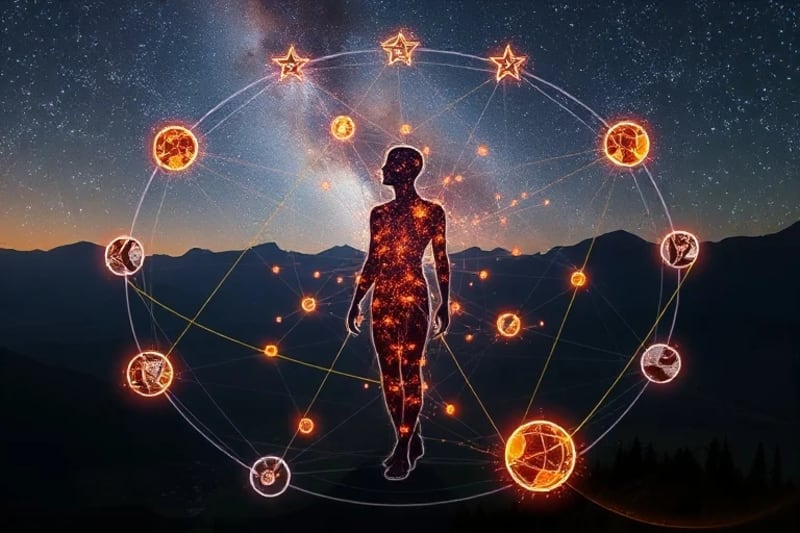 An abstract visual depicting the intricate web of cosmic energies, illustrating how planetary rhythms and influences shape individual destinies and collective consciousness.
Challenges and Ethical Considerations
While the integration of Hellenistic and Western astrology offers immense potential, it is not without its challenges. The sheer volume of techniques and philosophical differences can be daunting for students and practitioners. It requires dedication to study, practice, and a willingness to reconcile seemingly contradictory ideas.
Ethically, astrologers must navigate the balance between deterministic and free-will interpretations. Presenting fated events without empowering the client to respond constructively can be disempowering. Conversely, overemphasizing free will might diminish the profound insights offered by ancient predictive methods. The goal is to provide a framework that acknowledges both the cosmic blueprint and the individual's capacity for conscious engagement with their destiny. This approach aligns with the understanding of Lunar Nodes aspects as karmic connections, highlighting both past influences and future directions for growth.
Conclusion: The Future of Unified Astrology
The resurgence of interest in Hellenistic astrology in recent decades has opened exciting avenues for a more integrated astrological practice. By carefully studying and applying the techniques and philosophies of both Hellenistic and Western traditions, astrologers can move beyond the limitations of a single system. This holistic approach offers a richer, more accurate, and ultimately more empowering understanding of the intricate dance between the cosmos and human life. It invites us to view astrology not as a static set of rules, but as a dynamic and evolving discipline capable of profound insight and guidance in an ever-changing world.
The future of astrology lies in this synthesis, honoring the wisdom of the past while embracing the psychological depth of the present. By bridging these powerful traditions, we unlock a more complete picture of human potential and destiny, providing invaluable tools for self-discovery and navigating the complexities of existence.
Explore Further Insights:
Source: Hybrid content assisted by AI and human editorial supervision.


Comments
Post a Comment