
Lunar Mansions: Global Predictions in Mundane Astrology | StarPluto
Lunar Mansions, also known as Nakshatras in Vedic astrology or Manazil al-Qamar in Arabic traditions, represent ancient divisions of the ecliptic, the apparent path of the Sun across the celestial sphere. These divisions are primarily based on the Moon's daily journey through the zodiac, offering a more granular and nuanced perspective on celestial influences than the twelve zodiac signs alone. While often associated with personal astrology, their application in mundane astrology provides a powerful framework for understanding and predicting global events, collective moods, and geopolitical shifts.
Mundane astrology, by definition, focuses on the astrology of nations, cities, and the world at large. It examines the birth charts of countries, the timing of significant political events, and the broader cycles that affect humanity. Integrating Lunar Mansions into this practice allows astrologers to pinpoint specific periods and energies with remarkable precision, revealing underlying currents that drive major historical and societal developments. This approach moves beyond broad planetary transits to explore the subtle yet profound impact of the Moon's daily passage through these ancient celestial waypoints.
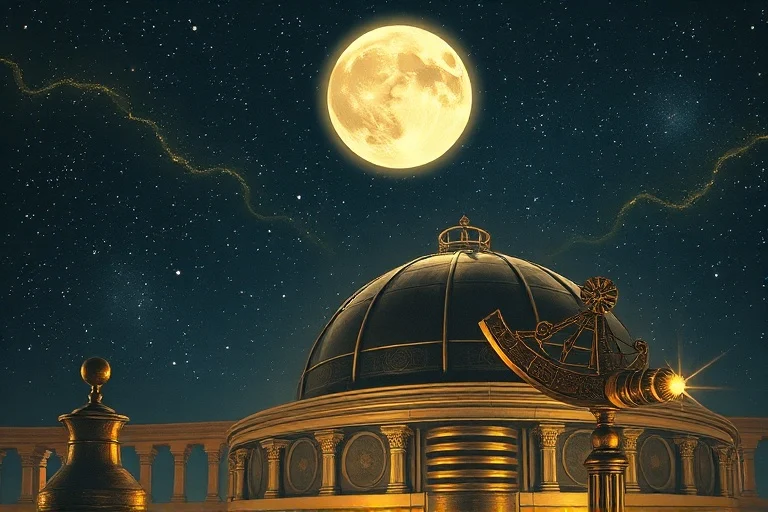
A depiction of an ancient observatory, highlighting the meticulous observation of lunar cycles and celestial mechanics for predictive purposes.
The concept of Lunar Mansions dates back thousands of years, with systems developed independently in various cultures, including India, China, and the Middle East. Each system divides the zodiac into a specific number of segments, typically 27 or 28, corresponding to the approximate number of days it takes for the Moon to complete its orbit around Earth. These divisions are not fixed in relation to the tropical zodiac (which is based on the seasons) but rather to the sidereal zodiac (which is based on fixed stars), making them particularly useful for observing long-term celestial patterns and their terrestrial correlations.
Understanding Lunar Mansions in mundane astrology requires a shift in perspective from individual fate to collective destiny. It involves analyzing how the Moon's placement within these mansions, alongside other planetary configurations, influences national affairs, economic trends, natural disasters, and social movements. This intricate interplay of celestial energies provides a rich tapestry for interpreting the ebb and flow of global events, offering insights into periods of peace, conflict, prosperity, or upheaval.
Table of Contents
- Historical Roots and Cultural Variations
- What Exactly Are Lunar Mansions?
- Mundane Astrology: A Broad Overview
- Application of Lunar Mansions in Mundane Astrology
- Key Lunar Mansions and Their Mundane Impact
- Interpreting Lunar Mansion Predictions
- Limitations and Ethical Considerations
- Conclusion: The Enduring Relevance
Historical Roots and Cultural Variations
The concept of dividing the Moon's path into distinct segments is ancient and global. In India, the 27 Nakshatras (sometimes 28, including Abhijit) form the backbone of Vedic astrology, each associated with specific deities, symbols, and qualities. These divisions are approximately 13 degrees and 20 minutes each, covering the entire 360-degree zodiac. Their influence is deeply woven into the fabric of personal and predictive astrology, guiding everything from auspicious timings for ceremonies to understanding individual psychological traits.
Similarly, Arabic and Persian astrologers developed the 28 Manazil al-Qamar, or "stations of the Moon," which also have unique characteristics and applications. These mansions were crucial for navigation, agriculture, and predicting weather patterns, reflecting a practical application of celestial knowledge. Chinese astrology also features a system of 28 Lunar Mansions (Xiù), each linked to constellations and mythological animals, used for calendrical purposes and forecasting national fortunes. The common thread across these diverse cultures is the recognition of the Moon's profound and immediate influence on earthly affairs.
The persistence of these systems across different civilizations underscores their perceived efficacy and importance. While the specific interpretations and associated mythologies vary, the fundamental principle remains: the Moon's position within these segments offers a detailed energetic blueprint for understanding unfolding events. For mundane astrologers, this historical lineage provides a rich repository of knowledge to draw upon when analyzing current global dynamics.
What Exactly Are Lunar Mansions?
Lunar Mansions are essentially smaller divisions of the zodiac than the familiar 12 signs. Imagine the zodiac as a large clock face. While the signs mark 12 hours, the Lunar Mansions mark 27 or 28 "minutes," each with its own distinct flavor and influence. The Moon spends approximately one day in each mansion as it completes its monthly cycle. This daily movement makes the Lunar Mansions particularly potent for short-term predictions and understanding the immediate energetic climate.
Each mansion is associated with a specific constellation or star group, giving it a unique energetic signature. These signatures can describe a wide range of qualities, from themes of aggression and conflict to peace and prosperity, from innovation and discovery to stagnation and decay. When the Moon, or other planets, transit these mansions, they activate these energies, bringing their themes to the forefront of collective experience. The specific characteristics of each mansion are derived from ancient observations and mythological associations, which have been refined over centuries of astrological practice.
In mundane astrology, the interpretation of these mansions extends beyond personal traits to encompass national characteristics, international relations, economic cycles, and even natural phenomena. For instance, a mansion associated with conflict might indicate periods of heightened tension or warfare when activated by significant celestial events. Conversely, a mansion linked to growth and abundance could signal periods of economic boom or agricultural success. The precision offered by these smaller divisions allows for a highly detailed analysis of world affairs.
Mundane Astrology: A Broad Overview
Mundane astrology is the branch of astrology dedicated to forecasting events that affect groups of people, nations, and the world. It operates on the principle that celestial patterns mirror terrestrial events on a grand scale. Instead of individual birth charts, mundane astrology examines the charts of nations (often based on their founding dates), significant political events (like elections or declarations of war), and ingresses of planets into cardinal signs.
Key areas of focus in mundane astrology include:
- Political Landscape: Predicting changes in leadership, government policies, and international relations.
- Economic Trends: Forecasting periods of recession, growth, market fluctuations, and resource availability.
- Social Movements: Identifying times of social unrest, revolution, cultural shifts, and public sentiment.
- Natural Phenomena: Predicting weather patterns, earthquakes, volcanic activity, and other environmental events.
- Public Health: Analyzing patterns related to epidemics, health crises, and medical advancements.
The tools of mundane astrology include planetary cycles, eclipses, ingresses (when planets enter new signs), and lunations (New and Full Moons). By layering the insights from Lunar Mansions onto these broader astrological events, astrologers can gain a more precise understanding of how these energies will manifest globally. For example, a significant planetary ingress combined with the Moon's placement in a particular mansion can amplify or modify the expected outcomes, providing a richer predictive narrative.
An abstract representation of the Moon's phases, symbolizing its subtle yet pervasive influence on global energetic patterns and collective consciousness.
Application of Lunar Mansions in Mundane Astrology
The integration of Lunar Mansions into mundane astrology significantly enhances predictive accuracy and depth. Here are several ways they are applied:
- Lunations and Eclipses: The mansion in which a New Moon, Full Moon, or eclipse occurs is paramount. The themes of that mansion will be strongly activated for the subsequent lunar cycle or for a more extended period in the case of eclipses. For instance, an eclipse in a mansion associated with conflict could signal a period of international tension or internal strife for nations whose charts are affected.
- Planetary Transits: When major planets (Jupiter, Saturn, Uranus, Neptune, Pluto) transit through a specific Lunar Mansion, their energies combine with the mansion's inherent qualities. A malefic planet (like Saturn or Mars) in a challenging mansion can indicate periods of hardship, restriction, or aggression on a global scale. Conversely, benefic planets (like Jupiter or Venus) in favorable mansions can bring periods of growth, diplomacy, or cultural flourishing.
- Ingress Charts: Mundane astrologers often cast charts for the moment the Sun enters the cardinal signs (Aries, Cancer, Libra, Capricorn), which mark the solstices and equinoxes. The Moon's position in a Lunar Mansion within these ingress charts can provide crucial insights into the prevailing global mood and specific events for the quarter ahead.
- National Charts: Analyzing the Lunar Mansions occupied by key planets or angles in a nation's birth chart can reveal deep-seated characteristics, strengths, and vulnerabilities. Transits to these natal mansion placements can trigger significant national events, such as elections, economic shifts, or periods of national crisis or triumph.
- Horary Mundane Astrology: For specific questions about world events (e.g., "Will there be peace in region X?"), horary astrology can be used. The Moon's mansion at the time the question is asked, along with its applying aspects within that mansion, can offer direct answers.
The detailed nature of Lunar Mansions allows for a granular analysis that complements the broader strokes of planetary aspects and sign placements. This layered approach provides a comprehensive predictive framework for understanding the complex dynamics of global affairs.
Key Lunar Mansions and Their Mundane Impact
While there are 27 or 28 Lunar Mansions, each carries unique themes that can manifest on a global scale when activated. Here are a few examples, drawing from various traditions, to illustrate their mundane significance:
| Lunar Mansion (Example) | Associated Themes (Mundane) | Potential Global Manifestations |
|---|---|---|
| Ashwini (Vedic) | Initiation, healing, rapid movement, pioneering, innovation. | Breakthroughs in medicine or technology, new political initiatives, sudden starts to conflicts or peace talks, rapid economic shifts. |
| Bharani (Vedic) | Transformation, birth/death cycles, holding, nurturing, intensity, purification. | Significant demographic changes, major political transitions, intense natural disasters, periods of deep societal introspection or crisis. |
| Al-Thurayya (Arabic) | Abundance, prosperity, agriculture, trade, growth. | Favorable periods for harvests, economic expansion, flourishing trade agreements, general prosperity, cultural development. |
| Al-Jabhah (Arabic) | Leadership, authority, justice, confrontation, power struggles. | Changes in leadership, legal reforms, international disputes, challenges to authority, periods of political instability or consolidation. |
| Punarvasu (Vedic) | Renewal, return, journey, shelter, spiritual growth, restoration. | Periods of recovery after crisis, refugee movements, diplomatic efforts for peace, renewed focus on environmental issues, spiritual awakenings. |
| Magha (Vedic) | Ancestry, heritage, royalty, power, tradition, status. | Emphasis on national identity, issues related to historical legacies, rise or fall of powerful figures, preservation of cultural heritage. |
| Jiao (Chinese) | Spring, growth, new beginnings, legal matters, disputes. | New policies, legal reforms, border disputes, agricultural growth, periods of revitalized national energy. |
| Wei (Chinese) | Danger, defense, military, fortifications, protection. | Increased military spending, national security concerns, defensive alliances, periods of heightened conflict or threat. |
This table provides a glimpse into the rich symbolism of Lunar Mansions. When combined with the specific planetary energies and aspects at play, these mansions offer a highly detailed lens through which to view global events. For example, a Mars transit through a mansion like Wei (associated with defense) could indicate increased military activity or border tensions, especially if Mars is also making challenging aspects to other planets in mundane charts.
A complex 3D render depicting interconnected gears and celestial bodies, illustrating the intricate relationship between cosmic cycles and global events.
Interpreting Lunar Mansion Predictions
Interpreting Lunar Mansion predictions in mundane astrology requires a synthetic approach, combining the mansion's inherent meaning with other astrological factors. It's rarely about a single indicator but rather a confluence of energies. Here are key steps for interpretation:
- Identify the Primary Event: Is it a New Moon, Full Moon, eclipse, or a major planetary ingress? This sets the general tone and duration of the influence.
- Locate the Lunar Mansion: Determine which Lunar Mansion the Moon (or other significant planet) occupies at the time of the event. Understand its core themes and associations.
- Analyze Planetary Aspects: What planets are aspecting the Moon or the ruling planet of the mansion? Harmonious aspects (trines, sextiles) can soften challenging mansion energies or enhance positive ones. Challenging aspects (squares, oppositions) can exacerbate difficulties or create obstacles.
- Consider the Zodiac Sign: The overarching zodiac sign in which the mansion falls also adds a layer of interpretation. For example, a mansion associated with conflict might manifest differently if it falls in aggressive Aries versus diplomatic Libra.
- Relate to National Charts: Compare the current celestial event's mansion placement to the natal charts of specific nations. If the event activates a sensitive point in a country's chart, that nation is more likely to experience the mansion's themes.
- Historical Context: Look for historical precedents. How have similar celestial configurations involving these mansions manifested in the past? This can offer valuable clues about potential future outcomes.
A crucial aspect of this interpretation is understanding the concept of Tarot Quantum Mechanics Intersecting Divination Reality and how they interact with the specific energies of each mansion. For example, Jupiter transiting through a mansion associated with innovation might indicate a period of significant scientific or technological advancement globally, while Saturn in a mansion linked to authority could signal governmental restructuring or challenges to established power structures. This multi-layered analysis allows for a comprehensive and nuanced understanding of global trends.
Limitations and Ethical Considerations
While Lunar Mansions offer profound insights, it is crucial to approach mundane astrological predictions with a clear understanding of their limitations and ethical responsibilities. Astrology is a tool for understanding patterns and potentials, not a deterministic prophecy. The future is dynamic, influenced by collective human choice and unforeseen variables.
- Non-Determinism: Astrological predictions indicate tendencies and probabilities, not absolute certainties. Human free will and collective action always play a role in how celestial energies manifest.
- Complexity: Mundane astrology involves a vast number of variables, including multiple planetary cycles, national charts, and various astrological systems. Oversimplification can lead to inaccurate or misleading conclusions.
- Ethical Responsibility: Astrologers must exercise caution and responsibility when making public predictions, especially concerning sensitive topics like conflict, natural disasters, or economic downturns. Sensationalism or fear-mongering is strictly prohibited. The goal is to inform and prepare, not to alarm.
- Cultural Nuance: Interpretations of Lunar Mansions can vary significantly between different cultural traditions. A responsible approach acknowledges these differences and avoids imposing one system's interpretations universally without proper context.
Mundane astrology, particularly with the added depth of Lunar Mansions, serves as a valuable tool for pattern recognition and understanding the energetic undercurrents of global events. It allows us to anticipate potential challenges and opportunities, fostering a more informed and proactive approach to world affairs rather than simply reacting to them. For those interested in deeper predictive techniques, exploring mundane astrology predicting global events can provide further context.
Conclusion: The Enduring Relevance
Lunar Mansions offer a sophisticated and ancient lens through which to view the intricate dance between celestial mechanics and global predictions in mundane astrology. By dividing the Moon's path into smaller, energetically distinct segments, these systems provide a level of detail that complements and enriches broader astrological analyses. From forecasting political shifts and economic trends to anticipating social movements and natural phenomena, the application of Lunar Mansions allows for a more nuanced understanding of the forces shaping our world.
The historical consistency across diverse cultures, from the Nakshatras of India to the Manazil al-Qamar of the Middle East and the Xiù of China, speaks to the enduring power and perceived accuracy of these lunar divisions. As we navigate an increasingly complex global landscape, the insights derived from Lunar Mansions can serve as a valuable guide, helping us to identify periods of challenge and opportunity, and to approach the future with greater awareness and preparedness. This ancient wisdom, when applied with modern rigor and ethical consideration, continues to illuminate the profound connections between the cosmos and our collective human experience.
Source: Hybrid content assisted by AIs and human editorial supervision.


Comments
Post a Comment