
Mundane Astrology: Predicting Global Events with Planetary Cycles | StarPluto
Mundane astrology, a specialized and often complex branch of astrological study, focuses on forecasting global events, political developments, economic trends, and societal shifts by analyzing the movements and configurations of celestial bodies. Unlike natal astrology, which centers on the individual's birth chart, mundane astrology casts charts for nations, cities, and significant global events, seeking to understand the collective human experience through the lens of cosmic rhythms. This ancient practice, with roots stretching back to Mesopotamian civilizations, provides a unique framework for interpreting the ebb and flow of historical cycles and predicting future trajectories on a grand scale.
The core premise of mundane astrology is that the macrocosm (the universe) mirrors the microcosm (humanity and its affairs). Major planetary alignments, ingresses of planets into new signs, eclipses, and the grand cycles of outer planets are considered powerful indicators of significant changes in the world. By meticulously tracking these celestial phenomena, astrologers aim to discern patterns and correlations with historical events, thereby gaining insights into potential future developments. This discipline demands a deep understanding of astrological principles, historical context, and geopolitical awareness, making it one of the most challenging yet rewarding areas of astrological research.
Table of Contents
- Introduction to Mundane Astrology
- Historical Roots and Evolution
- Key Techniques in Mundane Astrology
- Planetary Significations in Global Events
- Houses in Mundane Charts
- Major Planetary Cycles and Their Impact
- Eclipses, Ingreses, and Comets
- National Charts and Relocation Astrology
- Limitations and Ethical Considerations
- Conclusion: Decoding Cosmic Rhythms
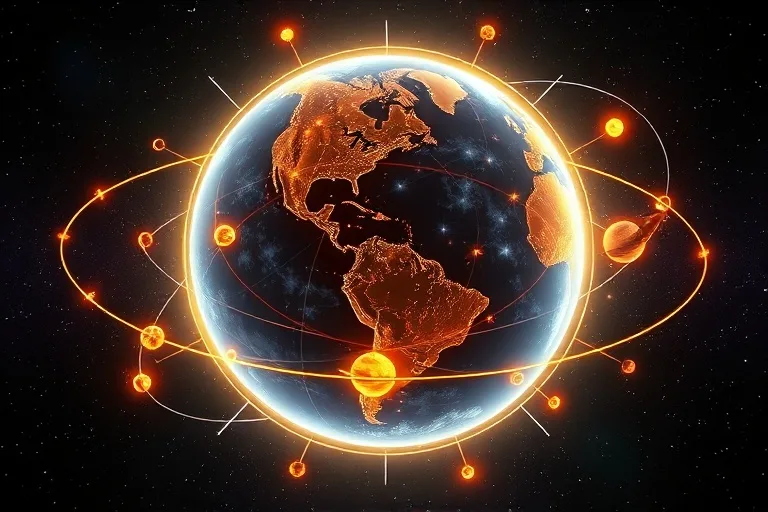
Mundane astrology explores the intricate dance of celestial bodies to predict and understand global events and societal changes.
Introduction to Mundane Astrology
Mundane astrology, from the Latin "mundus" meaning "world," is the study of how celestial phenomena correlate with events on Earth affecting nations, large groups of people, and the planet itself. It encompasses a vast array of topics, from political leadership and economic cycles to natural disasters and social movements. This field operates on the principle that the same astrological forces that influence an individual's life also manifest on a collective level, albeit with different scales and interpretations.
The practice involves constructing astrological charts for specific moments in time that are significant to a nation or a global phenomenon. These can include the moment a country declares independence, a treaty is signed, a major leader is inaugurated, or even the precise time of an eclipse or a significant planetary conjunction. The interpretation of these charts then provides insights into the character, destiny, and challenges faced by the entity or event in question.
Historical Roots and Evolution
The origins of mundane astrology can be traced back to ancient Mesopotamia, particularly Babylonian and Assyrian civilizations, where celestial observations were meticulously recorded to predict famines, floods, and the fate of kings and empires. Their cuneiform tablets reveal sophisticated systems for interpreting omens derived from planetary positions and eclipses, directly linking cosmic events to terrestrial affairs. This tradition was further developed by the Egyptians, who incorporated astrological principles into their agricultural and political calendars.
Greek and Roman astrologers, such as Ptolemy in his influential work "Tetrabiblos," systematized mundane astrology, laying much of the groundwork for later Western traditions. They expanded on the concept of "Great Conjunctions" (especially Jupiter-Saturn cycles) as markers of significant historical epochs. During the Middle Ages and the Renaissance, mundane astrology continued to thrive, with prominent figures like Nostradamus and William Lilly applying these techniques to predict wars, plagues, and the rise and fall of monarchies. The Age of Enlightenment saw a decline in its academic acceptance, but the practice persisted in various forms, experiencing a resurgence in the 20th and 21st centuries, particularly with the advent of accessible astronomical data and computing power.
Key Techniques in Mundane Astrology
Mundane astrology employs several core techniques to analyze and forecast global events. These methods often involve casting and interpreting various types of charts, each offering a unique perspective on collective dynamics. Understanding these techniques is crucial for anyone seeking to delve into the predictive power of this astrological branch.
- Ingress Charts: These charts are cast for the precise moment the Sun enters a cardinal sign (Aries, Cancer, Libra, Capricorn), marking the beginning of a new season. The Aries ingress (vernal equinox) is particularly significant, often considered indicative of the year's general trends for the entire world or specific regions.
- Conjunction Charts: Charts erected for the exact moment two or more planets align in conjunction are highly potent. The conjunctions of outer planets, especially Jupiter and Saturn (Great Conjunctions), and Saturn and Pluto, are considered harbingers of major historical shifts, economic restructuring, and political realignments.
- Eclipse Charts: Solar and lunar eclipses are powerful indicators of change and disruption. A chart cast for the exact moment of an eclipse, particularly when it falls on sensitive points in a nation's chart or a significant global chart, can signal periods of crisis, revelation, or significant turning points.
- Lunation Charts: New Moon and Full Moon charts, especially when they occur in conjunction with other significant planetary aspects or fixed stars, can offer insights into shorter-term trends, public sentiment, and the unfolding of events over the lunar cycle.
- National Charts: These are birth charts for countries, typically cast for the moment of their independence, the signing of their constitution, or the establishment of their government. They provide a foundational blueprint for understanding a nation's character, strengths, weaknesses, and destiny.
- Horary and Electional Astrology: While primarily used for individual questions and timing, these techniques can also be adapted for mundane purposes, such as choosing auspicious times for treaties or analyzing the outcome of specific political queries.
Planetary Significations in Global Events
Each planet holds specific significations that, when interpreted in a mundane context, relate to different aspects of global affairs. Understanding these roles is fundamental to deciphering the messages within mundane charts. The influence of these celestial bodies extends to political leaders, economic systems, social structures, and even natural phenomena.
| Planet | Mundane Significances |
|---|---|
| Sun | The head of state, national identity, government, national prestige, public health. |
| Moon | The general public, popular opinion, women, food supply, public welfare, natural disasters (especially floods). |
| Mercury | Communication, media, trade, transportation, education, commerce, public discourse. |
| Venus | Arts, culture, diplomacy, peace, treaties, public entertainment, women's rights, luxury goods. |
| Mars | Military, war, conflict, crime, accidents, industry, labor, direct action, national defense. |
| Jupiter | Law, religion, justice, prosperity, foreign relations, banking, higher education, expansion, optimism. |
| Saturn | Structure, government, authority, limitations, austerity, debt, agriculture, elderly, discipline, hardship. |
| Uranus | Revolution, innovation, sudden change, technology, rebellion, freedom, disruption, social upheaval. |
| Neptune | Spirituality, idealism, deception, confusion, pandemics, oil, drugs, dissolving boundaries, mass movements. |
| Pluto | Transformation, power, death, rebirth, deep societal shifts, hidden forces, nuclear power, extremism, collective trauma. |
Houses in Mundane Charts
Just as in natal astrology, the twelve houses in a mundane chart represent different areas of life, but their interpretations are scaled up to a national or global level. The house placement of planets and cusps provides critical context for mundane predictions.

Historical instruments like telescopes and globes symbolize humanity's enduring quest to understand cosmic influences on Earth.
- First House (Ascendant): Represents the general condition of the nation, its people, and its self-image. Also signifies public health and national vitality.
- Second House: National wealth, economy, financial stability, resources, trade balance, and national income.
- Third House: Communication, media, transportation, education, neighboring countries, and domestic travel.
- Fourth House (IC): Land, agriculture, domestic affairs, opposition parties, the general populace, and the end of matters.
- Fifth House: Public entertainment, arts, birth rate, children, speculation, stock market, and national pleasure.
- Sixth House: Public health, labor force, military (rank and file), public servants, disease, and the working class.
- Seventh House (Descendant): Foreign relations, treaties, alliances, wars, open enemies, and international disputes.
- Eighth House: National debt, death rate, taxes, public funds, foreign aid, and hidden enemies.
- Ninth House: Law, religion, higher education, foreign trade, long-distance travel, and international justice.
- Tenth House (MC): The government, ruling party, head of state, national reputation, and public image.
- Eleventh House: Parliament, legislative bodies, allies, national goals, and public assemblies.
- Twelfth House: Hospitals, prisons, secret societies, espionage, hidden problems, and national suffering.
The interplay between planets and houses, along with the signs they occupy, forms the intricate tapestry of mundane interpretation. For instance, Mars in the 7th house of a national chart might indicate periods of international conflict or disputes with allies, while Jupiter in the 2nd house could signify economic expansion or increased national wealth.
Major Planetary Cycles and Their Impact
The grand cycles of the outer planets are particularly significant in mundane astrology, as their slow movements mark long-term trends and generational shifts. These cycles often correlate with major historical epochs and profound societal transformations. Analyzing these cycles provides a macro-perspective on global evolution.
- Jupiter-Saturn Conjunction (Approx. 20 years): Known as the "Great Conjunction," this cycle often marks shifts in political and economic power, the rise and fall of ideologies, and the emergence of new social structures. Historically, these conjunctions have coincided with significant changes in world leadership and economic systems.
- Saturn-Uranus Cycle (Approx. 45 years): This cycle signifies tension between tradition (Saturn) and innovation (Uranus). It often correlates with periods of social reform, technological breakthroughs, and challenges to established authority. Revolutions and significant societal restructuring can occur during key phases of this cycle.
- Saturn-Neptune Cycle (Approx. 36 years): This cycle often relates to the dissolution of old structures (Saturn) and the emergence of new spiritual or ideological movements (Neptune). It can also coincide with periods of mass confusion, disillusionment, or the rise of collectivist ideals.
- Saturn-Pluto Cycle (Approx. 33-38 years): A powerful and often intense cycle, this conjunction signifies deep structural transformation, the breakdown of old power dynamics, and intense periods of crisis and rebirth. It has been historically linked to major wars, economic depressions, and profound geopolitical realignments.
- Uranus-Neptune Cycle (Approx. 171 years): This very long cycle marks profound shifts in collective consciousness, artistic movements, and spiritual paradigms. Its conjunctions can herald new eras of idealism, technological dreams, or widespread social awakening.
- Uranus-Pluto Cycle (Approx. 110-140 years): This is perhaps the most transformative of the outer planet cycles, associated with radical societal upheaval, revolutionary changes in power structures, and deep-seated generational shifts. The 1960s, for example, were marked by a Uranus-Pluto conjunction, leading to widespread social and political revolution.
- Neptune-Pluto Cycle (Approx. 492 years): The longest and most profound of the cycles, this conjunction marks epochal changes in human civilization, often related to the deepest spiritual and collective evolutionary processes. Its influence is felt over centuries, shaping the very fabric of human existence.
Eclipses, Ingreses, and Comets
Beyond the slow-moving outer planet cycles, more frequent celestial events like eclipses and planetary ingresses play a crucial role in mundane forecasting. These events act as triggers, activating the potentials indicated by the larger cycles and national charts.
Eclipses, both solar and lunar, are considered highly significant. A solar eclipse often signals new beginnings or the obscuring of leadership, while a lunar eclipse can represent revelations, emotional climaxes, or a shift in public sentiment. The specific zodiac sign and house where an eclipse occurs, along with its aspects to planets in a national chart, determine the nature and area of impact. For instance, an eclipse in a nation's 10th house could indicate a crisis or change in leadership.

Abstract art can convey the profound and often unseen cosmic energies that influence our world.
Planetary Ingreses, particularly the Sun's entry into the cardinal signs, are used to cast charts for specific regions or the entire world for the upcoming quarter. The Aries ingress chart is often seen as the most important, setting the tone for the entire year. The planets' positions and aspects in these ingress charts are then interpreted to predict political climates, economic conditions, and social trends for the period.
While less common in modern mundane astrology, comets and novae were historically viewed as powerful omens of major events, often associated with the fall of empires, plagues, or significant natural disasters. Their rare and dramatic appearance in the sky made them potent symbols of impending change or divine intervention. Modern astrology might interpret such phenomena as indicators of highly unusual or disruptive events, though their precise astrological mechanism is less defined than that of planets.
National Charts and Relocation Astrology
A cornerstone of mundane astrology is the concept of a national chart, which is essentially the "birth chart" of a country. These charts are typically cast for the moment a nation declares independence, its constitution is ratified, or its government is officially established. The accuracy of these charts is paramount, as a slight variation in time or location can significantly alter the interpretation.
For example, the United States is often analyzed using its Declaration of Independence chart (July 4, 1776, Philadelphia, PA), while France might be studied through its various Republic charts. These charts provide a baseline for understanding a nation's inherent character, its strengths, weaknesses, and its destiny. Astrologers then use transits, progressions, and solar arc directions to these national charts to predict periods of prosperity, conflict, social change, or economic challenge.
Relocation astrology, while often applied to individuals, also has a mundane counterpart. By re-casting a national chart for a different geographical location, astrologers can analyze how a nation's energy might manifest or be perceived in another part of the world. This can be particularly useful for understanding international relations, diplomatic challenges, or the impact of a nation's policies on other regions. It helps to visualize how a country's astrological blueprint interacts with different geographical "energies," offering insights into its global footprint.
Limitations and Ethical Considerations
Despite its potential for profound insights, mundane astrology, like all predictive arts, comes with inherent limitations and ethical responsibilities. The complexity of global events means that astrological indicators are rarely singular or straightforward. Multiple planetary influences often converge, creating a nuanced and sometimes contradictory picture.
One significant challenge is the precise timing of events. While astrology can indicate periods of heightened potential for certain types of events, pinpointing the exact date and nature of an occurrence remains difficult. The free will and collective actions of humanity also play a role, interacting with and potentially modifying astrological influences. Furthermore, the interpretation of mundane charts requires extensive historical knowledge and an avoidance of confirmation bias, ensuring that predictions are based on sound astrological principles rather than preconceived notions.
Ethically, mundane astrologers must exercise caution in their pronouncements, especially concerning sensitive topics like war, economic collapse, or natural disasters. Predictions should be framed as potentials and probabilities, not certainties, and delivered with a sense of responsibility. The goal is to provide insight and understanding, not to incite fear or despair. It is crucial to maintain a neutral, scientific, and respectful tone, focusing on educational and informative aspects rather than sensationalism or unverified claims, especially when dealing with topics that could impact public sentiment or policy.
Conclusion: Decoding Cosmic Rhythms
Mundane astrology offers a compelling framework for understanding the intricate relationship between celestial cycles and terrestrial events. From ancient Babylonian omens to modern interpretations of planetary conjunctions, this discipline has consistently sought to decode the cosmic rhythms that shape our collective destiny. By analyzing ingress charts, planetary cycles, and national horoscopes, astrologers can gain valuable perspectives on political shifts, economic trends, and societal transformations.
While the complexities of global affairs and the inherent limitations of any predictive art necessitate a cautious and responsible approach, mundane astrology remains a powerful tool for pattern recognition and long-term forecasting. It encourages a deeper appreciation for the interconnectedness of all things, reminding us that humanity's journey is inextricably linked to the grand dance of the cosmos. As we navigate an increasingly complex world, the insights offered by mundane astrology can serve as a guide, helping us to anticipate challenges, understand historical precedents, and perhaps even shape a more harmonious future.
Fuente: Contenido híbrido asistido por IAs y supervisión editorial humana.


Comments
Post a Comment