
Cosmic Sociology: Celestial Mechanics, Global Consciousness, Collective Trends
Cosmic Sociology emerges as an interdisciplinary field dedicated to exploring the profound, albeit often subtle, connections between celestial mechanics and the intricate tapestry of human society. This discipline posits that the movements and alignments of planets, stars, and other cosmic bodies exert a discernible influence on global consciousness, collective trends, and even individual behavioral patterns. Far from mere superstition, Cosmic Sociology seeks to establish a scientific framework for understanding these relationships, drawing upon principles from astrophysics, psychology, anthropology, and the burgeoning field of consciousness studies.
The core premise is that the universe is an interconnected system, where energetic shifts at the macrocosmic level can resonate with and impact the microcosm of human experience. This perspective challenges conventional sociological models by introducing a cosmic dimension, suggesting that societal evolution and historical events may not solely be products of terrestrial forces but also reflect deeper, universal rhythms. By analyzing long-term planetary cycles and their correlations with major cultural, political, and technological shifts, researchers in Cosmic Sociology aim to uncover hidden patterns and predictive insights into humanity's collective journey.
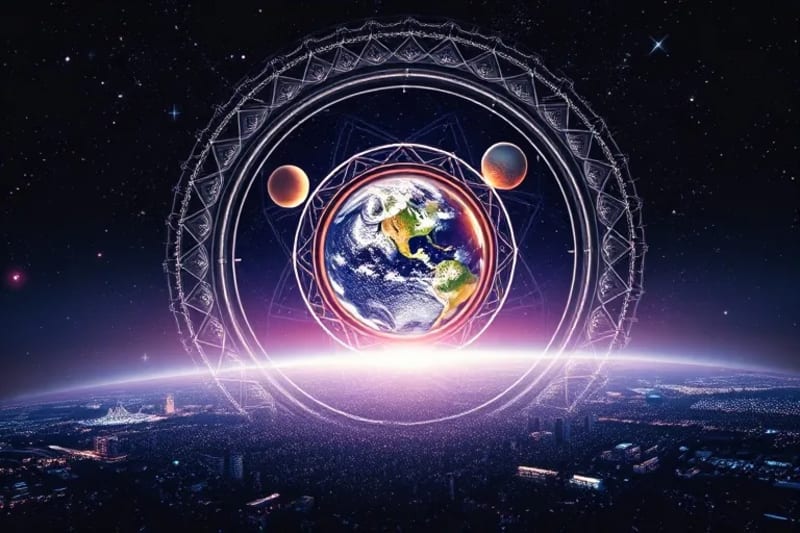 Precursors intellectuales, diagramas fundamentales y representaciones conceptuales que forjaron la visión de Cosmic Sociology sobre la influencia celestial.
Fuente visual sujeta a disponibilidad del ecosistema: Wikimedia Commons bajo licencia CC BY-SA 4.0 o renderizado conceptual IA.
Table of Contents
- Historical Perspectives on Celestial Influence
- Key Principles of Celestial Mechanics in Sociology
- Planetary Cycles and Global Events
- Astrological Archetypes and Collective Behavior
- The Role of Consciousness in Cosmic Sociology
- Future Directions and Research
Historical Perspectives on Celestial Influence
The notion that celestial bodies affect human affairs is not new; it has roots in ancient civilizations across the globe. From the sophisticated astronomical observations of the Maya and Egyptians to the intricate astrological systems of Mesopotamia and India, cultures have long sought to understand the cosmic order and its implications for life on Earth. These early inquiries, though often intertwined with spiritual and mythological narratives, laid the groundwork for what we now term Cosmic Sociology.
In ancient Egypt, the flooding of the Nile, crucial for agriculture, was closely tied to the heliacal rising of Sirius, demonstrating a practical understanding of celestial cycles impacting earthly life. Similarly, the Chinese zodiac and its accompanying astrological interpretations have for millennia provided a framework for understanding individual personalities and societal dynamics based on birth year and planetary positions. These historical perspectives highlight a persistent human endeavor to connect the microcosm with the macrocosm, recognizing an inherent rhythm that transcends immediate terrestrial observation.
Even in the Western world, astrology was considered a legitimate field of study alongside astronomy until the Enlightenment, with figures like Johannes Kepler incorporating astrological insights into his groundbreaking work on planetary motion. While modern science largely dismissed these connections for centuries, a renewed interest in interdisciplinary approaches and complex systems theory is prompting a re-evaluation of these ancient wisdom traditions through a contemporary lens.
Key Principles of Celestial Mechanics in Sociology
At the heart of Cosmic Sociology lies the study of celestial mechanics, which describes the motion of celestial bodies under the influence of gravity. While direct gravitational effects of distant planets on human behavior are negligible, the theory proposes a more subtle, energetic influence. This influence is often conceptualized as resonant frequencies or energetic fields that interact with the Earth's geomagnetic field and, by extension, human bio-energetic systems.
Key principles include:
- Planetary Alignments: Specific geometric configurations of planets (conjunctions, oppositions, squares, trines) are believed to create unique energetic signatures that can trigger shifts in collective mood or societal events.
- Orbital Cycles: The varying speeds and distances of planets as they orbit the Sun create cycles of influence, with longer cycles (e.g., Pluto's 248-year orbit) correlating with profound, generational transformations.
- Solar Activity: Solar flares and coronal mass ejections, which are influenced by planetary positions, are known to impact Earth's magnetosphere and can correlate with spikes in human emotional states and social unrest.
- Lunar Phases: The Moon's phases, particularly new and full moons, are widely recognized for their impact on biological rhythms and have been anecdotally linked to changes in human behavior and collective energy. For deeper insights into these lunar influences, consider exploring Monthly Horoscope Insights: New Moon Full Moon Energies.
These principles suggest a complex interplay where cosmic forces act as catalysts, amplifying or mitigating existing terrestrial conditions. The challenge for Cosmic Sociology is to move beyond correlation and establish causal links, perhaps through advanced statistical modeling and quantum physics, which explores non-local connections and subtle energy fields.
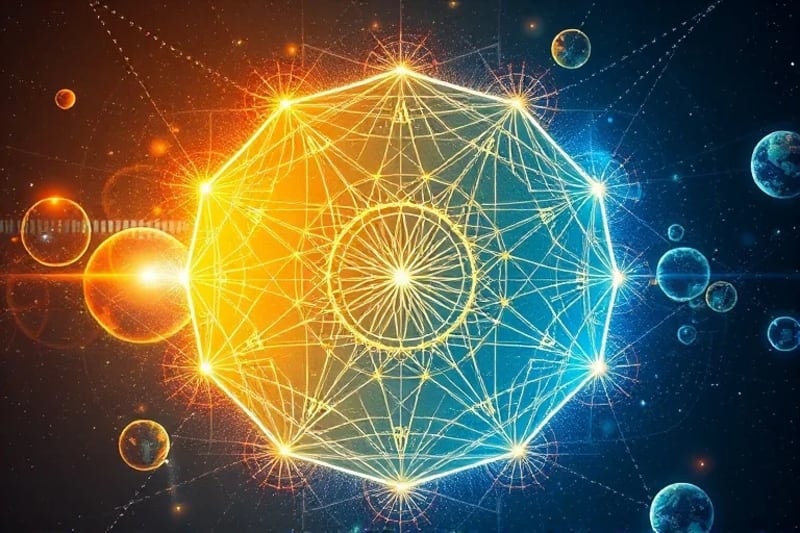 An abstract visualization of global consciousness as a network of interconnected thoughts and energies.
Planetary Cycles and Global Events
One of the most compelling areas of study in Cosmic Sociology involves correlating major planetary cycles with significant global events. For instance, the approximately 84-year cycle of Uranus, associated with innovation, rebellion, and sudden change, often coincides with periods of technological revolution or widespread social upheaval. The 29.5-year cycle of Saturn, linked to structure, limitation, and responsibility, can correspond to times of economic restructuring or the establishment of new societal norms.
Consider the conjunctions of outer planets like Uranus, Neptune, and Pluto, which occur over very long periods. The Uranus-Pluto conjunctions, for example, have historically aligned with periods of intense societal transformation and paradigm shifts, such as the 1960s cultural revolution. These long-term cycles suggest a cosmic blueprint that guides the evolution of global consciousness, pushing humanity towards collective growth and transformation. Understanding these cycles can offer a unique perspective on historical patterns and potential future trajectories, providing a framework for Financial Astrology: Market Trends, Wealth Potential Guide.
Researchers are meticulously cataloging historical events and overlaying them with precise astrological data to identify statistically significant correlations. While correlation does not equal causation, the consistency of these patterns across different eras and cultures warrants further investigation. This approach moves beyond anecdotal evidence, seeking empirical data to support the hypothesis of cosmic influence on collective human experience.
Astrological Archetypes and Collective Behavior
Beyond specific planetary movements, Cosmic Sociology also delves into the concept of astrological archetypes, which represent universal patterns of energy and behavior associated with planets and zodiac signs. These archetypes are not seen as deterministic forces but rather as energetic templates that shape collective consciousness and influence prevailing societal narratives. For example, the archetype of Mars might manifest as periods of increased aggression or pioneering spirit, while Venus could correlate with trends in art, diplomacy, or social harmony.
When a particular planet is emphasized in the collective astrological chart (e.g., through a series of significant aspects or transits), its associated archetype is believed to become more prominent in the global psyche. This can lead to collective shifts in values, priorities, and behaviors. For instance, a strong emphasis on Uranus might foster a collective drive towards independence and technological advancement, while a dominant Neptune could inspire spiritual awakenings or, conversely, periods of confusion and illusion.
The study of these archetypes provides a rich symbolic language for understanding the underlying currents that drive collective human action. It allows for a deeper interpretation of societal trends, offering insights into why certain themes emerge and dominate public discourse at specific times. This symbolic understanding can also be integrated with practices like Planetary Crystal Elixirs: Astrological Balance, Gem-Infused Water, which aim to harmonize individual energy with cosmic rhythms.
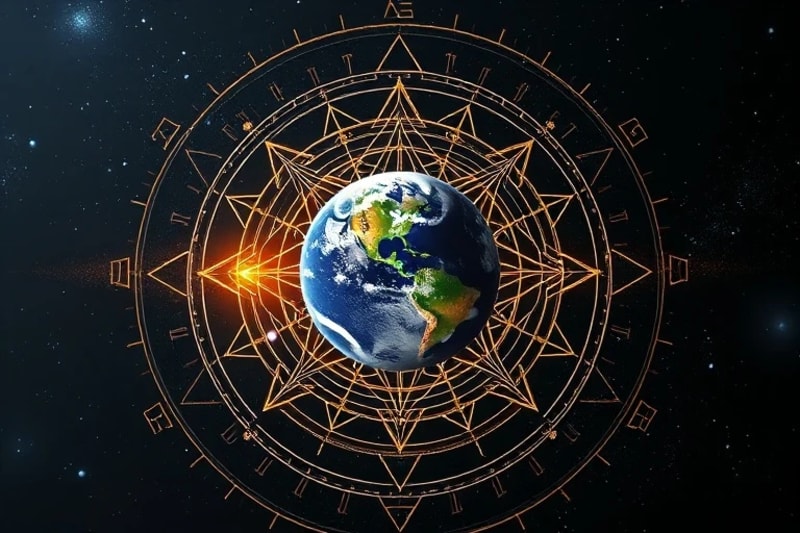 A detailed 3D rendering showcasing the intricate dance of celestial bodies and their subtle energetic connections to Earth.
The Role of Consciousness in Cosmic Sociology
A critical component of Cosmic Sociology is the concept of consciousness itself, both individual and collective. It is posited that celestial influences do not act upon humanity as passive recipients, but rather interact with an active, evolving global consciousness. This consciousness is not merely the sum of individual minds but an emergent property of interconnected human experience, capable of both receiving and transmitting energetic information.
The field draws parallels with quantum physics, where observation can influence reality, suggesting that collective human intention and awareness might play a role in how cosmic energies are manifested on Earth. This perspective opens up fascinating avenues for understanding how humanity's collective spiritual and psychological state might modulate the impact of celestial mechanics. For example, periods of heightened collective empathy or fear could resonate differently with planetary alignments, leading to varied outcomes.
Exploring the nature of collective consciousness also involves delving into concepts like the Akashic Records: Soul's Past, Present, Future, which some traditions describe as a cosmic repository of all thoughts, events, and experiences. If such a collective memory exists, its interaction with celestial mechanics could provide a deeper understanding of karmic patterns and evolutionary trajectories for humanity as a whole. This holistic view emphasizes the dynamic interplay between cosmic forces and the evolving human spirit.
Future Directions and Research
The future of Cosmic Sociology lies in rigorous interdisciplinary research, combining advanced data analytics with insights from quantum physics, neuroscience, and traditional wisdom systems. Researchers are exploring methodologies to quantify subtle energy fields, measure shifts in collective consciousness, and develop more sophisticated models for correlating celestial events with sociological data. The goal is to move beyond qualitative observations to establish a robust, evidence-based understanding of cosmic influences.
Potential areas of research include:
- Big Data Analysis: Utilizing artificial intelligence and machine learning to analyze vast datasets of historical events, economic indicators, and social media trends against planetary positions and cycles.
- Biophysical Studies: Investigating the impact of geomagnetic fluctuations (influenced by solar and planetary activity) on human brainwave patterns, heart rate variability, and collective psychological states.
- Consciousness Measurement: Developing innovative techniques to measure and quantify aspects of collective consciousness, potentially through global coherence initiatives or advanced psychometric tools.
- Theoretical Physics Integration: Exploring how theories of quantum entanglement, non-local causality, and universal energy fields can provide a theoretical framework for the subtle influences proposed by Cosmic Sociology.
By embracing a holistic and scientific approach, Cosmic Sociology aims to bridge the gap between ancient wisdom and modern science, offering a more complete picture of humanity's place within the cosmos. This evolving field holds the promise of not only predicting future trends but also fostering a deeper understanding of our collective purpose and potential as inhabitants of an interconnected universe.
Related Searches
Explore more topics related to cosmic influences and societal dynamics:
- Planetary Crystal Elixirs: Astrological Balance, Gem-Infused Water
- Akashic Records: Soul's Past, Present, Future
- Feng Shui Planetary Wellness: Home Cosmic Harmony
- Monthly Horoscope Insights: New Moon Full Moon Energies
- Conscious Activism Spiritual Practice: Global Change
- Financial Astrology: Market Trends, Wealth Potential Guide
- Egyptian Astrology: Deciphering Decans, Planetary Deities
- Uranus Sign: Innovation, Rebellion, Change Explained
- Biophilic Manifestation Harmonizing Intentions Nature's Blueprint
- Fixed Stars Karmic Rectification Natal Chart Healing
Source: Hybrid content assisted by AI and human editorial supervision.


Comments
Post a Comment