
Chinese Zodiac Leadership Archetypes Corporate Dynamics Wisdom
In the intricate tapestry of corporate leadership, understanding diverse personalities and motivations is paramount. While modern psychology offers numerous frameworks, ancient wisdom traditions often provide profound, time-tested insights. The Chinese Zodiac, with its twelve animal archetypes and the Five Elements, presents a unique lens through which to examine leadership styles, team dynamics, and strategic decision-making. This system, deeply rooted in observation of nature and human behavior, offers a rich vocabulary for identifying strengths, potential challenges, and pathways to more effective leadership.

Exploring the diverse leadership archetypes of the Chinese Zodiac in a contemporary corporate setting.
Far from being mere superstition, the Chinese Zodiac is a complex system of personality analysis that combines an animal's inherent traits with the modifying influences of the Five Elements: Wood, Fire, Earth, Metal, and Water. Each animal year carries a distinct energy, shaping individuals born within that cycle. When applied to leadership, these archetypes can illuminate how different individuals approach challenges, motivate teams, and navigate the complex landscape of organizational life. By recognizing these patterns, leaders can cultivate greater self-awareness, foster more cohesive teams, and develop strategies that resonate with diverse personalities.
Table of Contents
- Understanding the Chinese Zodiac and Five Elements
- Leadership Archetypes by Zodiac Animal
- Elemental Influence on Leadership Styles
- Navigating Corporate Dynamics with Zodiac Wisdom
- Practical Application for Leaders and Teams
- Conclusion: Harmonizing Ancient Wisdom with Modern Leadership
Understanding the Chinese Zodiac and Five Elements
The Chinese Zodiac operates on a 12-year cycle, with each year represented by a specific animal. These animals are not just symbols; they embody distinct personality traits, strengths, and weaknesses. The legend of the Great Race explains the order of the animals, each arriving with their unique characteristics that have since been associated with human personalities. Beyond the animal signs, the Five Elements add another layer of complexity and nuance, creating 60 distinct combinations over a full cycle (12 animals x 5 elements).
The Five Elements – Wood, Fire, Earth, Metal, and Water – are fundamental forces in Chinese philosophy, representing different phases of energy, characteristics, and interactions within the natural world. Each element is associated with specific qualities that profoundly influence the basic traits of the zodiac animals. For instance, a Wood Dragon will exhibit different leadership qualities than a Metal Dragon, even though both share the core Dragon essence. This elemental interplay creates a rich spectrum of leadership archetypes, moving beyond simplistic categorizations.
- Wood: Growth, creativity, collaboration, vision, flexibility.
- Fire: Passion, dynamism, inspiration, innovation, assertiveness.
- Earth: Stability, practicality, nurturing, reliability, groundedness.
- Metal: Structure, discipline, precision, integrity, determination.
- Water: Adaptability, intuition, flow, communication, diplomacy.
Understanding these foundational components is crucial for applying Chinese Zodiac wisdom to leadership. It allows for a more nuanced appreciation of individual strengths and how they might manifest in a corporate environment. This ancient framework can also be complemented by other traditional Chinese practices, such as Chinese Face Reading, which offers further insights into personality and destiny through physical features.
Leadership Archetypes by Zodiac Animal
Each of the twelve zodiac animals embodies a distinct leadership archetype, offering a unique approach to management, innovation, and team building. Recognizing these archetypes can help leaders understand their innate style and appreciate the diverse contributions of their team members.
- Rat (Resourceful Innovator): Quick-witted, adaptable, and charming. Rat leaders are excellent at spotting opportunities, networking, and navigating complex situations. They are often strategic thinkers but can sometimes be perceived as overly cautious or opportunistic.
- Ox (Steadfast Builder): Diligent, reliable, and strong-willed. Ox leaders are pillars of stability, known for their perseverance and methodical approach. They build strong foundations and value hard work, though they might be resistant to rapid change.
- Tiger (Bold Visionary): Courageous, charismatic, and dynamic. Tiger leaders inspire loyalty and are natural risk-takers. They lead with passion and conviction but need to be mindful of impulsiveness and potential authoritarian tendencies.
- Rabbit (Diplomatic Harmonizer): Gentle, cautious, and empathetic. Rabbit leaders excel at fostering cooperation and maintaining team morale. They are excellent negotiators and problem-solvers, though they might avoid confrontation, which can delay necessary tough decisions.
- Dragon (Charismatic Commander): Confident, ambitious, and powerful. Dragon leaders are natural born leaders, inspiring awe and loyalty. They are visionary and decisive but must guard against arrogance and impatience.
- Snake (Strategic Enigma): Intuitive, wise, and mysterious. Snake leaders are deep thinkers, excelling at strategy and understanding hidden motives. They are calm under pressure but can be secretive and sometimes distrusting.
- Horse (Energetic Pioneer): Dynamic, independent, and enthusiastic. Horse leaders are driven by freedom and action, often pioneering new paths. They are great motivators but can be impatient and prone to starting many projects without always finishing them.
- Goat (Empathetic Creator): Gentle, artistic, and compassionate. Goat leaders foster a supportive and creative environment. They are excellent at understanding emotional nuances but might struggle with decisiveness and assertiveness in challenging situations.
- Monkey (Agile Innovator): Intelligent, witty, and versatile. Monkey leaders are quick learners and problem-solvers, always looking for innovative solutions. They thrive on change but can sometimes lack focus or be perceived as mischievous.
- Rooster (Diligent Perfectionist): Observant, hardworking, and confident. Rooster leaders are meticulous and dedicated to excellence. They are highly organized and demand high standards, but can be overly critical or boastful.
- Dog (Loyal Guardian): Honest, loyal, and protective. Dog leaders are highly ethical and committed to their team's well-being. They build strong trust and foster a sense of security but can be overly anxious or cynical.
- Pig (Generous Facilitator): Kind, honest, and optimistic. Pig leaders are excellent at creating a harmonious and productive work environment. They are generous and supportive but can sometimes be naive or easily influenced.
Elemental Influence on Leadership Styles
The Five Elements significantly modify the core traits of each animal, creating a richer palette of leadership styles. A leader's elemental influence dictates their approach to challenges, communication, and team management. For instance, a Fire Tiger will lead differently than a Water Tiger.

Visualizing the subtle yet profound influence of the Five Elements on a leader's demeanor and approach.
| Element | Leadership Characteristics | Potential Challenges |
|---|---|---|
| Wood | Visionary, collaborative, growth-oriented, flexible, seeks expansion and innovation. | Can be indecisive, over-optimistic, or prone to over-committing resources. |
| Fire | Passionate, dynamic, inspiring, decisive, action-oriented, thrives on recognition. | Can be impulsive, impatient, prone to burnout, or overly aggressive. |
| Earth | Stable, practical, nurturing, reliable, grounded, focuses on security and consensus. | Can be resistant to change, overly cautious, slow to act, or prone to micromanagement. |
| Metal | Structured, disciplined, precise, integrity-driven, seeks efficiency and justice. | Can be rigid, overly critical, uncompromising, or emotionally detached. |
| Water | Adaptable, intuitive, diplomatic, communicative, seeks flow and understanding. | Can be indecisive, overly sensitive, prone to procrastination, or easily influenced. |
Understanding the interplay of these elements is not just about individual leadership but also about team composition. A team with a balance of elemental energies is often more resilient and adaptable. For example, a project led by a Metal Rooster might benefit from the creative input of a Wood Rabbit to balance its rigid structure. This holistic view aligns with principles found in Chinese Horoscope Elements, emphasizing balance and harmony.
Navigating Corporate Dynamics with Zodiac Wisdom
Applying Chinese Zodiac wisdom to corporate dynamics offers a powerful tool for enhancing team performance, resolving conflicts, and optimizing talent. It moves beyond simple personality tests to provide a framework rooted in cyclical energies and natural interactions.
- Building Balanced Teams: A team composed solely of Fire personalities might be dynamic but prone to conflict and burnout. Integrating Earth (stability), Water (adaptability), and Wood (growth) energies can create a more resilient and innovative unit. Leaders can consciously seek to balance their team's elemental and animal archetypes.
- Conflict Resolution: Understanding that a Metal leader's directness might clash with a Water leader's sensitivity can help mediate disputes. Recognizing underlying motivations based on zodiac archetypes allows for more empathetic and effective conflict resolution strategies.
- Optimizing Communication: A Rat leader might prefer data-driven, concise communication, while a Goat leader might respond better to more emotionally nuanced and collaborative discussions. Tailoring communication styles to individual archetypes can significantly improve understanding and engagement.
- Strategic Planning: Different archetypes excel at different stages of a project. A Dragon leader might be excellent at visionary initiation, an Ox leader at methodical execution, and a Monkey leader at agile problem-solving during unexpected challenges. Leveraging these natural strengths can streamline project lifecycles.
This approach encourages leaders to see diversity not as a challenge but as a strategic asset. By understanding the inherent strengths and potential blind spots of each archetype, organizations can foster environments where every individual feels valued and can contribute optimally. This holistic view of human potential aligns with emerging concepts in Ethical AI Spirituality, where diverse intelligences and perspectives are harmonized for collective good.
Practical Application for Leaders and Teams
For leaders looking to integrate this ancient wisdom, the journey begins with self-reflection and observation. It's not about rigid categorization but about gaining deeper insights into behavioral patterns and motivations.
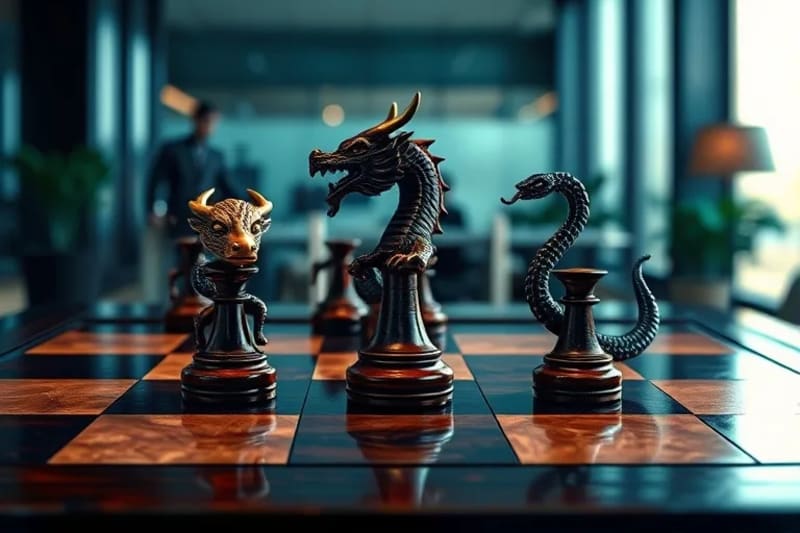
A strategic game of corporate dynamics, played out by the symbolic pieces of the Chinese Zodiac.
- Self-Assessment: Understand your own zodiac animal and elemental influences. What are your natural leadership strengths? What are your potential weaknesses or blind spots? How do you react under pressure based on your archetype? This self-awareness is the first step toward conscious leadership.
- Team Mapping: Encourage team members to learn about their own zodiac signs. Create a "zodiac map" of your team to visualize the distribution of archetypes and elemental energies. This can highlight areas of strength and potential gaps.
- Role Assignment: Assign roles and responsibilities that align with natural zodiac strengths. For example, a Rooster's meticulousness might be ideal for quality control, while a Horse's energy is perfect for launching new initiatives.
- Mentorship and Development: Pair individuals with complementary archetypes for mentorship. A patient Ox can mentor an impulsive Tiger, helping them to ground their energy. A diplomatic Rabbit can help a direct Metal leader refine their communication.
- Cultural Integration: Use this framework as a tool for fostering empathy and understanding within the workplace. It provides a common language to discuss differences in working styles and preferences, promoting a more inclusive and supportive culture.
By consciously applying these principles, leaders can move beyond a one-size-fits-all approach to management. They can cultivate a more dynamic, responsive, and ultimately more successful organization, where individual talents are recognized and harmonized for collective achievement. This integration of ancient wisdom into modern practices offers a sustainable path to enhanced leadership effectiveness.
Conclusion: Harmonizing Ancient Wisdom with Modern Leadership
The Chinese Zodiac, far from being a mere curiosity, offers a sophisticated and profound framework for understanding human behavior and leadership. By delving into the characteristics of the twelve animal archetypes and the modifying influences of the Five Elements, leaders can gain invaluable insights into themselves, their teams, and the broader corporate environment. This ancient system provides a rich vocabulary for discussing diverse strengths, potential challenges, and optimal strategies for collaboration and growth.
In an increasingly complex and interconnected world, the ability to navigate diverse personalities and leverage collective strengths is more critical than ever. Embracing the wisdom of the Chinese Zodiac allows leaders to foster greater self-awareness, build more cohesive and effective teams, and approach corporate dynamics with a nuanced understanding that transcends conventional management theories. It is a testament to the enduring power of ancient knowledge to illuminate and enrich modern professional life, guiding us toward more harmonious and successful leadership practices.
Source: Hybrid content assisted by AI and human editorial supervision.


Comments
Post a Comment