
Chinese Face Reading: Decoding Personality, Destiny | StarPluto
Chinese Face Reading, known as Mian Xiang (面相), is an ancient art and science that interprets a person's character, health, and destiny through the study of their facial features. Far more than mere physiognomy, Mian Xiang is deeply rooted in Taoist philosophy, integrating principles of Yin and Yang, the Five Elements (Wood, Fire, Earth, Metal, Water), and the flow of Qi (life force energy). This intricate system offers profound insights into an individual's inherent strengths, weaknesses, life path, and potential future, serving as a comprehensive guide for self-understanding and navigating life's challenges.
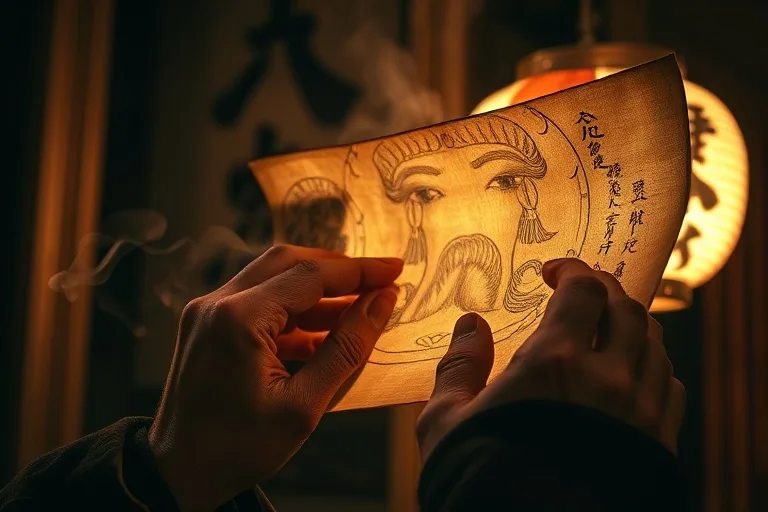
An ancient silk scroll depicting the intricate art of Chinese face reading, held by a scholar's hands, symbolizes the depth of Mian Xiang.
Unlike Western physiognomy, which often focuses on character assessment, Mian Xiang extends its reach to predict life events, health predispositions, and even financial fortunes. Practitioners believe that the face is a microcosm of one's entire life, with each feature corresponding to specific aspects of existence and different periods of life. By carefully analyzing the shape, size, color, and position of various facial components, a skilled Mian Xiang reader can construct a detailed narrative of an individual's past, present, and potential future.
The practice of Mian Xiang is not about rigid fortune-telling but rather about understanding tendencies and potentials. It provides a framework for individuals to make more informed decisions, leverage their natural talents, and mitigate potential obstacles. This guide delves into the core principles of Mian Xiang, exploring its historical origins, the significance of key facial features, the system of the Five Officers and Twelve Palaces, and its contemporary relevance in personal and professional development.
Table of Contents
- Historical Roots and Philosophical Foundations
- Key Facial Features and Their Interpretations
- The Five Officers (五官): Pillars of Perception
- The Twelve Palaces (十二宮): A Map of Destiny
- Facial Complexion and Moles: Subtle Indicators
- Mian Xiang in the Modern World
- Ethical Considerations and Limitations
Historical Roots and Philosophical Foundations
The origins of Chinese Face Reading can be traced back over 3,000 years, with its principles documented in ancient texts such as the "Yellow Emperor's Classic of Internal Medicine" (Huangdi Neijing). Initially, Mian Xiang was closely intertwined with traditional Chinese medicine, where facial diagnostics were used to assess a person's physical health and internal organ balance. Over time, it evolved to encompass psychological and prognostic aspects, becoming a sophisticated system for understanding human nature and fate.
Mian Xiang is deeply embedded in Taoist cosmology, which views the universe as a dynamic interplay of complementary forces. The face is seen as a microcosm reflecting these universal principles:
- Yin and Yang: The balance between light and shadow, soft and hard features, and the left (Yin, feminine, internal) and right (Yang, masculine, external) sides of the face.
- Five Elements (Wu Xing): Each facial feature is associated with one of the five elements—Wood, Fire, Earth, Metal, and Water—which represent different energies and characteristics. For example, a prominent nose might be linked to the Earth element, indicating stability and practicality.
- Qi (氣): The vital life force that flows through the body and is reflected in the vibrancy, color, and texture of the skin. A healthy flow of Qi suggests good fortune and well-being.
These philosophical underpinnings provide a holistic framework for interpretation, emphasizing that no single feature should be read in isolation. Instead, the face is analyzed as an integrated whole, where the harmony and balance between all its components reveal the true essence of an individual.
Key Facial Features and Their Interpretations
Each part of the face holds specific meanings and is often associated with different life stages. Here's a breakdown of the primary features and their general interpretations:
| Facial Feature | Associated Life Stage / Palace | General Interpretation |
|---|---|---|
| Forehead | Youth (ages 15-30), Career Palace | Intellect, career prospects, relationship with parents, early life fortune. A broad, smooth forehead indicates intelligence and good fortune. |
| Eyebrows | Ages 31-34, Fraternity Palace | Relationships with siblings, friends, and colleagues. Well-defined, long eyebrows suggest good social connections and a helpful nature. |
| Eyes | Ages 35-40, Supervision Palace | Spirit, character, intelligence, and emotional depth. Bright, clear eyes indicate vitality and a keen mind. |
| Nose | Ages 41-50, Wealth Palace | Wealth, health, and ambition. A straight, fleshy nose with well-formed nostrils is a sign of financial prosperity. |
| Mouth | Ages 51-60, Harmony Palace | Communication, relationships, and appetite for life. A well-proportioned mouth with full lips indicates good social skills and a generous nature. |
| Ears | Early Childhood (ages 1-14), Longevity Palace | Early life, wisdom, and longevity. Large, fleshy ears are often associated with good fortune and a long life. |
| Chin | Later Life (ages 61-75+), Servant Palace | Later life fortune, endurance, and relationship with subordinates/children. A strong, rounded chin suggests stability and a comfortable old age. |
| Cheekbones | Ages 46-47, Power Palace | Authority, ambition, and influence. Prominent but not overly sharp cheekbones indicate leadership qualities. |
The Five Officers (五官): Pillars of Perception
Beyond individual features, Mian Xiang emphasizes the importance of the "Five Officers" (Wu Guan), which are key sensory organs that serve as indicators of one's overall fortune and character. Their harmony, balance, and clarity are crucial for a well-rounded and prosperous life.
- Eyes (監察官 - Jian Cha Guan - Supervision Officer): Representing the spirit and intelligence. Clear, bright, and alert eyes indicate a sharp mind and good judgment.
- Ears (採聽官 - Cai Ting Guan - Listening Officer): Associated with early life, wisdom, and longevity. Well-formed, fleshy ears suggest good fortune and a receptive nature.
- Nose (審辨官 - Shen Bian Guan - Judgment Officer): Symbolizing wealth, health, and ambition. A strong, straight nose with fleshy tip and well-defined nostrils points to financial stability and good health.
- Mouth (出納官 - Chu Na Guan - Receiving/Giving Officer): Reflecting communication, relationships, and generosity. A well-proportioned mouth with full, red lips indicates good social skills and a benevolent heart.
- Eyebrows (保壽官 - Bao Shou Guan - Longevity Protection Officer): Linked to relationships, health, and reputation. Long, neat, and well-defined eyebrows suggest good friendships and a positive reputation.
A harmonious balance among these five officers signifies a person with good character, sound judgment, and a generally smooth life path. Any imbalance or defect in one of these features might indicate challenges in the corresponding life area.
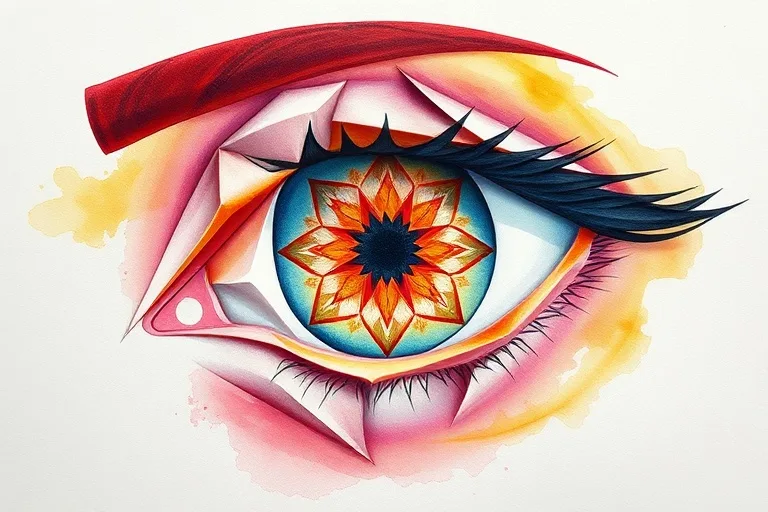
A vibrant watercolor depiction of an eye and eyebrow, symbolizing the depth of inner wisdom and perception in Mian Xiang.
The Twelve Palaces (十二宮): A Map of Destiny
One of the most profound aspects of Mian Xiang is the system of the "Twelve Palaces" (Shi Er Gong), which are specific areas on the face that correspond to different aspects of life and destiny. Each palace provides detailed insights into various life domains, offering a comprehensive map of an individual's potential and challenges. Understanding these palaces allows for a more nuanced reading of one's life trajectory.
| Palace Name | Location on Face | Significance |
|---|---|---|
| Life Palace (命宮) | Between the eyebrows (Yin Tang) | Overall destiny, personality, general fortune, and life direction. A clear, smooth, and full area indicates a bright future. |
| Wealth Palace (財帛宮) | The nose (especially the tip) | Financial fortune, earning capability, and material possessions. A fleshy, straight, and well-formed nose suggests prosperity. |
| Parents Palace (父母宮) | Upper forehead, near the hairline (left for father, right for mother) | Relationship with parents, ancestral blessings, and early life environment. Smooth, full areas indicate good parental support. |
| Career Palace (官祿宮) | Middle of the forehead | Career prospects, public image, and social status. A smooth, prominent area suggests a successful career. |
| Marriage Palace (夫妻宮) | Temples, at the outer corners of the eyes | Marital relationships, romantic partnerships, and harmony in love life. Smooth, full temples indicate a happy marriage. |
| Children Palace (子女宮) | Area directly under the eyes (lower eyelids) | Relationship with children, fertility, and creative endeavors. Full, clear areas suggest healthy children and creative success. |
| Travel Palace (遷移宮) | Outer corners of the forehead, near the hairline | Travel opportunities, relocation, and external affairs. A full, clear area indicates successful travel and opportunities abroad. |
| Health Palace (疾厄宮) | Area between the eyebrows and the bridge of the nose | Physical health, immunity, and predisposition to illness. A clear, smooth area suggests good health. |
| Friends/Servants Palace (奴僕宮) | Chin and jawline | Relationship with subordinates, employees, and social network. A strong, broad jawline indicates loyal support. |
| Property Palace (田宅宮) | Upper eyelids | Real estate, assets, and fixed property. Full, clear eyelids suggest good fortune in property matters. |
| Brother/Sister Palace (兄弟宮) | Eyebrows | Relationships with siblings, close friends, and peers. Well-formed, long eyebrows indicate strong bonds. |
| Blessing Palace (福德宮) | Upper forehead, above the temples | Overall blessings, luck, and spiritual well-being. A full, smooth area suggests good fortune and contentment. |
The condition of each palace—its fullness, color, clarity, and any marks or lines—provides specific clues. For instance, a recessed or scarred Wealth Palace (nose) might indicate financial struggles, while a clear and prominent Career Palace (forehead) could signify a successful professional life. The interplay between these palaces paints a holistic picture of an individual's destiny, offering insights into their strengths and areas requiring attention. For a deeper dive into similar concepts, explore our guide on Understanding the Twelve Houses: A Comprehensive Guide to Life's Spheres, which provides a Western astrological perspective on life domains.
Facial Complexion and Moles: Subtle Indicators
Beyond the structural features, Mian Xiang also pays close attention to the subtle nuances of facial complexion and the presence of moles. These elements are considered dynamic indicators that can change over time, reflecting shifts in health, fortune, and emotional states.
- Complexion (氣色 - Qi Se): The color and radiance of the skin are direct reflections of one's Qi and blood circulation. A bright, clear, and even complexion indicates good health, vitality, and positive fortune. Conversely, a dull, sallow, or uneven complexion might suggest health issues or impending challenges. Specific colorations also hold meaning:
- Redness: Can indicate anger, excitement, or issues related to the heart.
- Paleness: May suggest fatigue, fear, or lung-related concerns.
- Yellowish hue: Often linked to worry, spleen issues, or digestive problems.
- Dark or grayish tones: Can signify kidney issues, chronic stress, or deep-seated fears.
- Moles (痣 - Zhi): Moles are not merely cosmetic marks; in Mian Xiang, their size, color, and precise location carry significant meaning. While some moles are considered auspicious, others might indicate challenges or hidden traits.
- Auspicious Moles: Typically dark, shiny, and slightly raised, located in favorable palaces. For example, a mole on the chin can signify good fortune in later life.
- Inauspicious Moles: Often dull, light-colored, or located in less favorable positions, potentially indicating obstacles. A mole on the Wealth Palace (nose) might suggest financial leakage.
It's important to note that the interpretation of moles is highly contextual and depends on the overall facial reading. A mole that might be negative in one location could be neutral or even positive in another, especially when considering its interaction with other features.

An abstract 3D render illustrating the intricate energy lines and points across a facial outline, symbolizing the connection between features and destiny.
Mian Xiang in the Modern World
While deeply rooted in ancient traditions, Chinese Face Reading continues to find relevance in contemporary society. Its applications extend beyond personal destiny readings to various practical domains:
- Self-Awareness and Personal Development: Mian Xiang offers a unique lens through which individuals can understand their inherent personality traits, strengths, and potential challenges. This self-knowledge can empower them to make better life choices, cultivate positive habits, and work on areas that need improvement.
- Relationship Compatibility: By understanding the facial features of partners, friends, or family members, individuals can gain insights into their compatibility, communication styles, and potential areas of conflict, fostering stronger and more harmonious relationships.
- Business and Career Guidance: In some Asian cultures, Mian Xiang is still used in business contexts, such as hiring decisions or partnership evaluations. It can help identify individuals with leadership qualities, strong work ethics, or potential trustworthiness issues.
- Health Diagnostics: Although not a substitute for modern medicine, the principles of facial diagnostics (observing complexion, specific lines, or puffiness) can still offer complementary insights into potential health predispositions, guiding individuals towards preventative care.
- Strategic Planning: For entrepreneurs or those making significant life changes, Mian Xiang can provide a broader perspective on auspicious timing or potential outcomes, helping them align their actions with their inherent destiny patterns.
It serves as a tool for deeper introspection and a guide for navigating the complexities of life, offering a blend of ancient wisdom and practical application. While its interpretations are not absolute, they provide a valuable framework for understanding human potential and interaction.
Ethical Considerations and Limitations
Like any form of divination or interpretive art, Chinese Face Reading comes with important ethical considerations and inherent limitations. It is crucial to approach Mian Xiang with an open mind but also with a healthy dose of discernment. Here are some key points to remember:
- Not Deterministic: Mian Xiang provides insights into tendencies and potentials, not fixed, unchangeable destinies. Free will and personal effort play a significant role in shaping one's life. A "bad" feature does not condemn an individual to a life of misfortune, but rather highlights an area that might require more conscious effort or attention.
- Holistic Interpretation: No single feature should be interpreted in isolation. A skilled Mian Xiang reader considers the entire face, its balance, harmony, and the interplay of all its components. Drawing conclusions from a single mole or line is a misapplication of the art.
- Cultural Context: Interpretations can sometimes be culturally specific. What might be considered auspicious in one cultural context might be viewed differently elsewhere. It's essential to understand the philosophical framework from which Mian Xiang originates.
- Avoid Judgment: Using Mian Xiang to judge or stereotype individuals is unethical. Its purpose is to foster understanding and self-improvement, not to label or discriminate.
- Complementary Tool: Mian Xiang should be regarded as a complementary tool for self-reflection and guidance, not a definitive scientific diagnosis or a replacement for professional advice (medical, psychological, or financial).
Ultimately, the value of Mian Xiang lies in its ability to offer a unique perspective on the human condition, encouraging individuals to embrace their unique path while continuously striving for growth and balance. It serves as a reminder that our outer appearance can indeed reflect our inner world and our journey through life.
Fuente: Contenido híbrido asistido por IAs y supervisión editorial humana.


Comments
Post a Comment