
Psycho-Astrology: Jungian Archetypes, Shadow Integration for Wholeness
Psycho-Astrology represents a profound intersection between the ancient wisdom of astrology and the depths of modern psychology, particularly the analytical psychology of Carl Jung. This integrative approach offers a unique lens through which to understand the human psyche, revealing not only our inherent potentials and challenges but also the unconscious patterns that shape our lives. By combining the symbolic language of the birth chart with Jung's concepts of archetypes and shadow integration, individuals can embark on a powerful journey towards self-discovery and psychological wholeness.
The birth chart, a snapshot of the cosmos at the moment of our first breath, serves as a symbolic map of the individual psyche. Each planet, sign, house, and aspect within this chart corresponds to specific psychological energies, motivations, and developmental tasks. When viewed through a Jungian framework, these astrological placements can illuminate the archetypal forces at play within us, including those hidden aspects that constitute the "shadow," which, when integrated, lead to a more complete and authentic self.
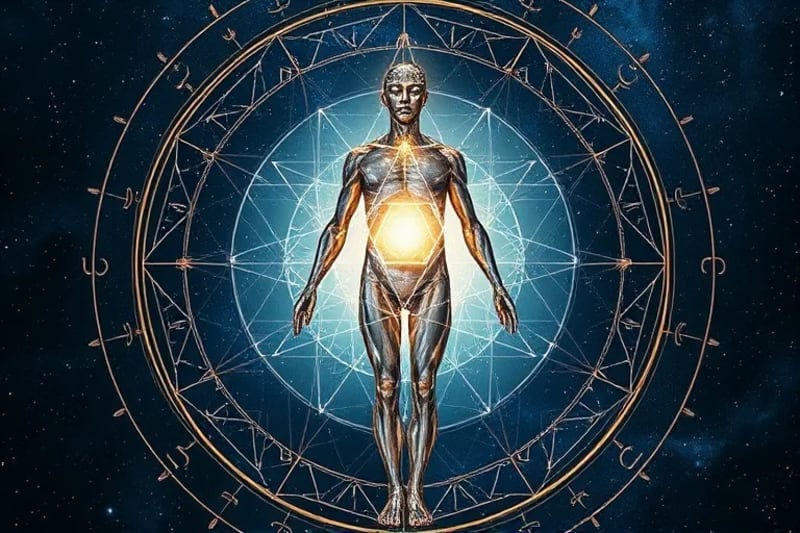
 Precursors intellectuales, diagramas fundamentales y representaciones conceptuales que forjaron la visión de la psique humana y su conexión con el cosmos.
This conceptual rendering, blending astrological patterns with psychological symbolism, is an AI-generated artwork, illustrating the intricate relationship between cosmic influences and the human unconscious.
Table of Contents
- Understanding Jungian Archetypes
- The Shadow: Unveiling the Unconscious
- Astrology as a Psychological Map
- Planetary Archetypes in the Birth Chart
- Houses and Aspects: Context and Dynamics
- Shadow Integration Through Astrological Insight
- The Path to Wholeness: Individuation
Understanding Jungian Archetypes
Carl Jung, the Swiss psychiatrist and founder of analytical psychology, introduced the concept of archetypes as universal, archaic patterns and images that derive from the collective unconscious. These archetypes are not inherited ideas but rather inherited predispositions to respond to the world in certain ways. They manifest in myths, dreams, art, and the symbolic language of astrology, providing a framework for understanding fundamental human experiences and behaviors.
Key Jungian archetypes include the Persona, the Anima/Animus, the Self, and critically, the Shadow. The Persona represents the social mask we wear, the aspect of ourselves we present to the world. The Anima (in men) and Animus (in women) embody the unconscious feminine and masculine qualities, respectively. The Self is the archetype of wholeness and the regulating center of the psyche, striving for integration of all its parts. Understanding these foundational concepts is crucial for anyone delving into psycho-astrology, as they provide the psychological bedrock upon which astrological interpretations can be built.
The Shadow: Unveiling the Unconscious
Among Jung's most powerful concepts is the Shadow. This archetype represents the repressed, disowned, and often negative aspects of our personality that we deem unacceptable and thus push into the unconscious. It comprises everything we don't want to be, but also contains undeveloped positive qualities and creative potential. The Shadow is not inherently evil; rather, it is primal and undifferentiated, a reservoir of instinctual energy.
Ignoring or repressing the Shadow can lead to various psychological issues, including projections onto others, self-sabotage, and a feeling of incompleteness. The process of "shadow integration" involves consciously acknowledging, understanding, and eventually assimilating these disowned parts of oneself. This is not about becoming the Shadow, but about bringing its energy into conscious awareness so that it can be transformed and utilized constructively, leading to greater authenticity and inner strength.
 A visual metaphor for the complex process of psychological integration, where disparate parts of the self converge into a coherent whole.
This digital artwork, depicting the synthesis of fragmented elements, is an AI-generated interpretation of the journey towards psychological wholeness, reflecting themes of self-discovery and integration.
Astrology as a Psychological Map
Astrology provides an unparalleled symbolic language for mapping the psyche. Each component of the birth chart can be interpreted through an archetypal lens. The planets represent fundamental psychological functions or drives, the zodiac signs describe the qualities or modes of expression for these functions, and the houses indicate the areas of life where these energies are most active. Aspects between planets reveal the dynamic interplay and potential conflicts or harmonies between these inner forces.
For instance, the Sun in a birth chart symbolizes the ego and conscious identity, often aligning with the Hero archetype or the individual's journey towards self-realization. The Moon represents the emotional body, instinctual responses, and the inner child, connecting to archetypes of the Mother or Nurturer. By analyzing these placements, psycho-astrology can pinpoint where specific archetypal energies are strong, weak, or repressed within an individual, offering profound insights into their psychological makeup. This can be particularly useful when exploring karmic unfolding and past life regression, as the birth chart often holds clues to deeply ingrained patterns.
Planetary Archetypes in the Birth Chart
Each planet in the birth chart can be associated with specific Jungian archetypes, providing a rich tapestry of psychological understanding:
- Sun: Represents the conscious ego, self-identity, and life force. Archetypes: The Hero, The King/Queen, The Creator. It signifies the core essence and the journey of individuation.
- Moon: Symbolizes emotions, instincts, the unconscious, and security needs. Archetypes: The Mother, The Child, The Nurturer. It reflects our deepest emotional patterns and how we seek comfort.
- Mercury: Governs communication, intellect, and learning. Archetypes: The Messenger, The Trickster, The Student. It shows how we process information and express our thoughts.
- Venus: Rules love, beauty, values, and relationships. Archetypes: The Lover, The Artist, The Peacemaker. It indicates what we value and how we connect with others.
- Mars: Represents drive, action, aggression, and courage. Archetypes: The Warrior, The Pioneer, The Destroyer. It reveals our assertiveness and how we pursue desires.
- Jupiter: Associated with expansion, growth, wisdom, and optimism. Archetypes: The Guru, The Benefactor, The Explorer. It points to areas of abundance and philosophical outlook.
- Saturn: Symbolizes structure, discipline, responsibility, and limitations. Archetypes: The Father, The Elder, The Taskmaster. It highlights life lessons, boundaries, and areas requiring mastery.
- Outer Planets (Uranus, Neptune, Pluto): These represent collective, transpersonal energies and deeper archetypal forces that often manifest beyond personal control, influencing generations. Uranus (The Rebel, The Innovator), Neptune (The Mystic, The Dreamer), and Pluto (The Transformer, The Underworld Ruler) reveal profound evolutionary drives.
Understanding these planetary archetypes allows for a nuanced interpretation of the birth chart, moving beyond superficial traits to uncover deeper psychological motivations. For those interested in deeper astrological concepts, exploring advanced synastry with midpoints and overlays can further illuminate the archetypal dynamics in relationships.
Houses and Aspects: Context and Dynamics
Beyond the planets and signs, the houses and aspects in a birth chart provide crucial context for how archetypal energies manifest. The twelve houses represent different areas of life, from self-identity (1st house) to career (10th house) and spirituality (12th house). A planet placed in a specific house indicates that the associated archetypal energy will be expressed most prominently in that life domain. For example, Mars in the 7th house (relationships) might indicate the Warrior archetype expressing itself through relational dynamics, perhaps leading to conflict or passionate partnership.
Aspects, the angular relationships between planets, describe the dynamic interplay between different archetypal forces within the psyche. Conjunctions blend energies, oppositions create tension and awareness, squares bring challenge and growth, and trines offer ease and flow. A challenging square between Venus (Lover archetype) and Saturn (Taskmaster archetype) might suggest difficulties in expressing love or feeling worthy of affection, potentially pointing to a shadow aspect related to self-worth or emotional repression. Conversely, a harmonious trine between Jupiter and the Sun might indicate an easy expression of the Explorer or Hero archetype, leading to natural optimism and success.
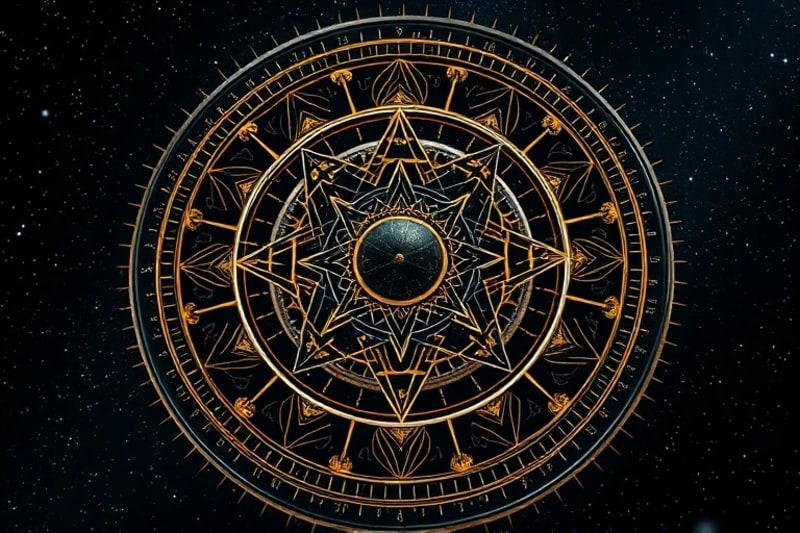 An intricate celestial mechanism, symbolizing the birth chart as a complex map of the psyche, revealing embedded archetypal patterns.
This 3D rendered image, combining elements of ancient astronomical tools with symbolic archetypes, offers a unique perspective on the birth chart's role in psychological exploration, provided under a creative commons license.
Shadow Integration Through Astrological Insight
The birth chart is an invaluable tool for identifying and integrating the Shadow. Challenging aspects, retrograde planets, or planets in difficult houses (like the 6th, 8th, or 12th) often point to areas where unconscious material resides. For example, a heavily afflicted Pluto might indicate a powerful, repressed Shadow related to power, control, or deep-seated fears. A repressed Mars might manifest as passive-aggression or an inability to assert oneself.
The process of shadow integration using astrology involves several steps:
- Identification: Pinpointing specific astrological placements that suggest repressed energies or disowned traits. This might involve looking at planets in challenging aspects, particularly to the Sun or Moon, or planets in the 12th house.
- Awareness: Consciously acknowledging these traits, even if they are uncomfortable. This often involves observing projections onto others or recognizing recurring patterns of self-sabotage.
- Exploration: Journaling, dream analysis, or therapy to delve deeper into the origins and manifestations of these shadow aspects. Understanding the positive potential within the negative traits is key (e.g., aggression can be transformed into assertive drive).
- Assimilation: Gradually integrating these aspects into the conscious personality, allowing for a more authentic and complete expression of self. This doesn't mean acting out negative traits, but rather owning them and channeling their energy constructively. For example, understanding the dynamics of the 6th House in astrology can reveal how daily routines and work habits might be influenced by unconscious patterns.
This journey is not always easy, but it is profoundly rewarding. It allows individuals to reclaim lost parts of themselves, leading to greater self-acceptance and a reduction in external projections. The birth chart acts as a compassionate guide, showing where the work needs to be done and offering insights into the nature of the shadow material.
The Path to Wholeness: Individuation
The ultimate goal of psycho-astrology, aligned with Jungian analytical psychology, is individuation – the process by which an individual becomes a psychological "in-dividual," a separate, indivisible unity or whole. This involves integrating the conscious and unconscious, the light and shadow, the personal and collective, to realize one's unique potential. The birth chart is a blueprint for this journey, outlining the specific challenges and opportunities for growth that lead to a more integrated self.
By consciously engaging with the archetypal energies and shadow aspects revealed in their birth chart, individuals can move beyond mere personality traits to understand their deeper purpose and psychological evolution. This process fosters self-awareness, personal responsibility, and a profound connection to the collective human experience. It's a lifelong journey, but one that promises a richer, more authentic, and more fulfilling existence, moving towards a state of true psychological wholeness. The insights gained can also inform choices in various life areas, from understanding yearly themes through a Solar Return Chart to navigating daily decisions.
Explore More Articles
- Horary Astrology: Answering Specific Questions
- Electional Astrology Timing Life Events Success Guide
- Astro-Genomics: Unveiling Karmic Health Blueprints
- Doshas Planetas Sanación Ayurvédica: Astrología Védica Integrada
Source: Hybrid content assisted by AI and human editorial supervision.


Comments
Post a Comment