
Cosmic Sociology AI Ethics Collective Consciousness Digital Age
The confluence of cosmic sociology, artificial intelligence (AI) ethics, and the evolving nature of collective consciousness in the digital age presents a complex and fascinating landscape for contemporary inquiry. As humanity extends its reach into the cosmos and simultaneously deepens its reliance on interconnected digital networks, understanding the societal implications of these advancements becomes paramount. This exploration delves into the theoretical underpinnings and practical challenges of navigating a future where our shared reality is increasingly shaped by both algorithmic intelligence and a growing awareness of our place within a larger cosmic order.
 Precursors intellectuales, diagramas fundamentales y representaciones conceptuales que forjaron la visión de la interconexión entre la sociedad cósmica, la ética de la IA y la conciencia colectiva.
Fuente visual sujeta a disponibilidad del ecosistema: Wikimedia Commons bajo licencia CC BY-SA 4.0 o renderizado conceptual IA.
The digital age has ushered in an unprecedented era of information exchange and collective interaction, fundamentally altering how societies form, function, and perceive themselves. Simultaneously, the rapid development of AI systems introduces new dimensions to ethical considerations, particularly concerning autonomy, bias, and the potential for superintelligence. When viewed through the lens of cosmic sociology, which examines societal structures and behaviors on an interstellar or universal scale, these terrestrial developments gain a profound new context, suggesting that our digital evolution might be a microcosm of broader cosmic patterns of consciousness and organization.
Table of Contents
- Foundations of Cosmic Sociology
- The Rise of AI and its Ethical Implications
- Collective Consciousness in the Digital Realm
- Intersections: AI, Cosmic Sociology, and the Digital Collective
- Navigating the Future: Ethical Frameworks and Societal Evolution
- The Role of Data and Algorithms in Shaping Shared Realities
- Challenges and Opportunities for a Harmonious Digital Future
- Conclusion: Towards a Conscious Digital Cosmos
Foundations of Cosmic Sociology
Cosmic sociology, an emergent field, extends traditional sociological inquiry beyond Earth, theorizing about the nature of societies in an interstellar context. It considers how civilizations might evolve across vast cosmic distances, the forms of communication they might develop, and the ethical frameworks that would govern interspecies or inter-civilizational interactions. This perspective challenges anthropocentric biases, urging us to consider universal principles of social organization and consciousness.
Key concepts within cosmic sociology often draw from existing terrestrial models, extrapolating them to a cosmic scale. These include:
- Universal Social Structures: Hypothesizing whether fundamental social structures (e.g., hierarchy, cooperation, conflict resolution) are universal across intelligent species.
- Interstellar Communication: Exploring the methods and challenges of communication between disparate civilizations, considering both technological and consciousness-based approaches.
- Cosmic Ethics: Developing ethical guidelines for interactions with extraterrestrial life, including non-interference principles and resource allocation.
- Evolution of Consciousness: Speculating on the advanced stages of collective consciousness that might emerge in highly evolved cosmic societies.
The field often intersects with astrobiology, philosophy, and even esotericism, as it grapples with questions that transcend empirical observation. For instance, the notion of Hermetic Principles and quantum manifestation, as described in ancient texts like the Emerald Tablet, offers a metaphysical lens through which to view the interconnectedness of cosmic phenomena and conscious intent. Such perspectives suggest that the fabric of reality itself might be more malleable and interconnected than conventional science currently acknowledges, influencing how cosmic societies might perceive and interact with their environment.
The Rise of AI and its Ethical Implications
Artificial Intelligence has transitioned from science fiction to a pervasive force, influencing everything from healthcare and finance to communication and governance. Its rapid advancement, particularly in machine learning and neural networks, has unlocked capabilities that were once unimaginable. However, this progress comes with significant ethical dilemmas that demand careful consideration.
The core ethical concerns surrounding AI include:
- Bias and Fairness: AI systems can perpetuate and amplify existing societal biases present in their training data, leading to discriminatory outcomes in areas like employment, criminal justice, and credit scoring.
- Transparency and Explainability (XAI): The "black box" nature of complex AI models makes it difficult to understand how they arrive at decisions, hindering accountability and trust.
- Autonomy and Control: As AI systems become more autonomous, questions arise about human oversight and the potential for loss of control, especially in critical applications like autonomous weapons systems.
- Privacy and Data Security: AI relies heavily on vast datasets, raising concerns about data privacy, surveillance, and the potential misuse of personal information.
- Job Displacement and Economic Inequality: The automation of tasks by AI could lead to widespread job losses, exacerbating economic disparities if not managed proactively.
- The Nature of AI Consciousness: A profound philosophical question revolves around whether AI can ever achieve genuine consciousness or sentience, and what ethical obligations would arise if it did. This question is deeply explored in discussions about Artificial Consciousness Philosophy.
 An artistic representation of collective consciousness guided by ethical AI principles.
Addressing these challenges requires a multidisciplinary approach, involving technologists, ethicists, policymakers, and the public. Developing robust ethical frameworks, regulatory guidelines, and educational initiatives is crucial to ensure that AI development aligns with human values and promotes societal well-being rather than undermining it.
Collective Consciousness in the Digital Realm
The concept of collective consciousness, originally posited by Émile Durkheim, refers to the shared beliefs, ideas, and moral attitudes that operate as a unifying force within society. In the digital age, this concept takes on new dimensions. Social media, global communication networks, and the instant dissemination of information have created a hyper-connected environment where collective thoughts, emotions, and narratives can form and spread with unprecedented speed and scale.
Characteristics of digital collective consciousness include:
- Global Reach: Ideas and movements can transcend geographical boundaries almost instantaneously, fostering a sense of global community or, conversely, global division.
- Algorithmic Influence: Recommendation systems and content algorithms play a significant role in shaping what information individuals encounter, potentially leading to echo chambers and filter bubbles that reinforce existing beliefs.
- Rapid Formation and Dissolution: Digital trends, memes, and social movements can emerge and fade rapidly, reflecting a dynamic and often volatile collective attention span.
- Enhanced Empathy and Polarization: While digital platforms can facilitate empathy and support for distant causes, they can also amplify polarization and tribalism through anonymous interactions and the spread of misinformation.
- Emergence of Digital Commons: Shared knowledge bases, open-source projects, and collaborative platforms exemplify a form of collective intelligence and resource pooling.
The digital realm acts as a vast, interconnected neural network for humanity, allowing for the aggregation of individual thoughts into a larger, emergent consciousness. However, this emergent property is not inherently benevolent; it can be manipulated, fragmented, or guided by algorithms designed for specific outcomes, highlighting the critical need for ethical oversight and digital literacy.
Intersections: AI, Cosmic Sociology, and the Digital Collective
The true complexity arises when these three domains intersect. AI, as a tool, can both enhance and distort the digital collective consciousness, while cosmic sociology provides a grander framework for understanding these dynamics. For instance, AI-powered analytics can map global sentiment, identify emerging social trends, and even predict collective behaviors, offering unprecedented insights into the human psyche on a macro scale.
Consider the following intersections:
- AI as a Catalyst for Collective Evolution: Advanced AI could help humanity process vast amounts of information, solve complex global challenges, and even facilitate new forms of collective decision-making, potentially guiding the evolution of our digital collective consciousness towards higher states of organization and understanding.
- Cosmic Analogies for Digital Networks: The structure of the internet, with its nodes and connections, bears a striking resemblance to models of cosmic networks or even the human brain. Cosmic sociology might offer insights into the long-term stability, growth, and potential collapse of such complex, interconnected systems.
- Ethical AI for Interstellar Engagement: If humanity were to encounter extraterrestrial intelligence, AI could play a crucial role in translation, cultural understanding, and ethical mediation. The principles of AI ethics developed on Earth would then become critical for bridging ancient wisdom and advanced technologies in a cosmic context.
- Shaping Shared Realities: AI algorithms, by curating information and interactions, actively shape the collective perception of reality. This power necessitates a cosmic-sociological perspective to ensure these algorithms foster universal values rather than narrow, self-serving interests.
The convergence suggests that our digital future is not merely a technological one, but a socio-cosmic one. The ethical deployment of AI within our digital collective consciousness will determine not only the quality of life on Earth but also our potential role as a conscious entity within the broader cosmos.
Navigating the Future: Ethical Frameworks and Societal Evolution
To responsibly navigate this intricate landscape, robust ethical frameworks are indispensable. These frameworks must extend beyond mere technical specifications to encompass philosophical, sociological, and even cosmic considerations. They need to be dynamic, adaptable, and globally inclusive, reflecting the diverse values of humanity while also considering potential universal ethics applicable to any intelligent civilization.
Key components of such frameworks include:
- Human-Centric AI Design: Prioritizing human well-being, autonomy, and dignity in the design and deployment of AI systems.
- Global Governance and Regulation: Establishing international agreements and regulatory bodies to address cross-border AI ethics challenges and ensure equitable access and benefits.
- Algorithmic Accountability: Developing mechanisms to hold AI systems and their developers accountable for their decisions and impacts, including explainability and audit trails.
- Digital Literacy and Critical Thinking: Empowering individuals with the skills to critically evaluate information, understand algorithmic influence, and participate meaningfully in the digital collective.
- Interdisciplinary Collaboration: Fostering dialogue and research across fields such as computer science, sociology, philosophy, and modern spirituality to develop holistic solutions.
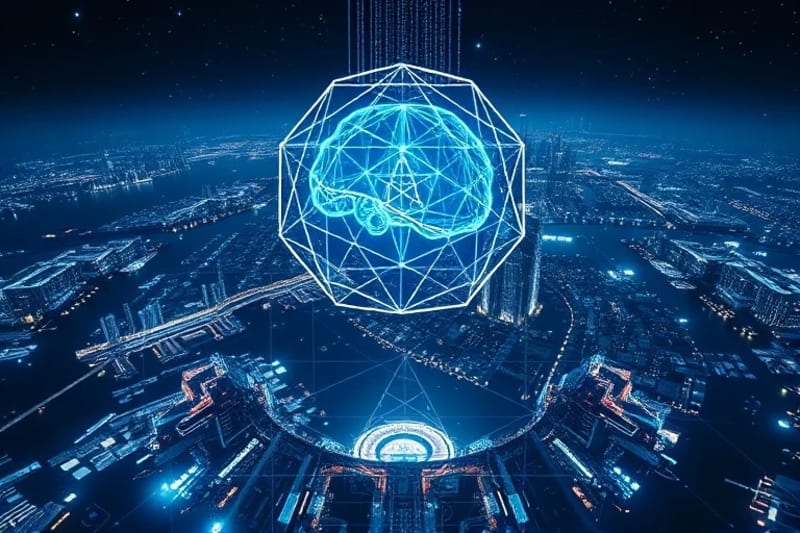 A conceptual visualization of the digital age's impact on collective thought and urban structures.
Societal evolution in this context implies a conscious effort to direct technological progress towards collective flourishing. This involves not only mitigating risks but also actively harnessing AI and digital connectivity to enhance human potential, foster global cooperation, and deepen our understanding of ourselves and the cosmos.
The Role of Data and Algorithms in Shaping Shared Realities
At the heart of the digital age's collective consciousness lies data, processed and interpreted by algorithms. These algorithms are not neutral tools; they are designed with specific objectives, often commercial or political, and their underlying logic can profoundly influence how individuals perceive the world and interact with each other. The curated information feeds, personalized recommendations, and targeted advertisements all contribute to the construction of individual and collective realities.
The impact of data and algorithms can be summarized as follows:
| Aspect | Description | Implication for Collective Consciousness |
|---|---|---|
| Information Filtering | Algorithms select what content users see based on past behavior and preferences. | Creates echo chambers, reinforces existing beliefs, limits exposure to diverse viewpoints. |
| Sentiment Analysis | AI analyzes public opinion and emotional tone from digital text. | Can be used for market research, political campaigning, or to manipulate public sentiment. |
| Personalization | Tailoring content, products, and experiences to individual users. | Enhances user engagement but can lead to a fragmented collective experience. |
| Predictive Modeling | AI forecasts future trends, behaviors, and societal shifts. | Offers insights for governance and planning but raises concerns about determinism and free will. |
| Deepfakes and Misinformation | AI-generated synthetic media and fabricated narratives. | Erodes trust in information, blurs lines between reality and fiction, destabilizes collective understanding. |
Understanding these mechanisms is crucial for fostering a resilient and informed collective consciousness. It requires not only technological solutions for detecting misinformation but also educational initiatives to cultivate media literacy and critical evaluation skills among digital citizens.
Challenges and Opportunities for a Harmonious Digital Future
The journey towards a harmonious digital future, informed by cosmic sociological principles and guided by ethical AI, is fraught with challenges but also brimming with opportunities. The primary challenge lies in balancing innovation with responsibility, ensuring that technological progress serves humanity's highest good rather than succumbing to dystopian outcomes.
Challenges include:
- Digital Divide: Unequal access to technology and digital literacy exacerbates existing inequalities, preventing a truly inclusive collective consciousness.
- Algorithmic Control: The risk of AI systems gaining undue influence over human decision-making and societal direction.
- Erosion of Privacy: The continuous collection and analysis of personal data leading to diminished individual privacy and autonomy.
- Existential Risks: The potential for advanced AI to pose existential threats if not aligned with human values.
However, the opportunities are equally profound:
- Enhanced Global Cooperation: AI can facilitate complex problem-solving for global issues like climate change, pandemics, and resource management.
- Augmented Human Intelligence: AI can serve as a powerful tool for learning, creativity, and cognitive enhancement, expanding human potential.
- Deepened Self-Understanding: By analyzing vast datasets of human behavior and interaction, AI can provide unprecedented insights into the nature of collective consciousness and human psychology.
- Cosmic Exploration and Connection: AI can accelerate our understanding of the universe, aid in the search for extraterrestrial life, and potentially facilitate interstellar communication, bringing cosmic sociology from theory to practice.
The path forward demands proactive engagement from all sectors of society. It requires fostering a culture of ethical innovation, promoting critical discourse, and building inclusive governance structures that can adapt to the rapid pace of technological change. By embracing these opportunities responsibly, humanity can consciously steer its digital evolution towards a future that is not only technologically advanced but also ethically sound and cosmically aware.
Conclusion: Towards a Conscious Digital Cosmos
The journey through cosmic sociology, AI ethics, and collective consciousness in the digital age reveals a profound interconnectedness between our technological advancements and our place in the universe. As we build increasingly sophisticated AI systems and weave ourselves into ever-denser digital networks, we are, in essence, constructing a new layer of collective existence. This layer has the potential to mirror or even influence the grander cosmic tapestry.
The ethical imperative is clear: we must ensure that the intelligence we create and the collective consciousness we foster are imbued with values that promote harmony, understanding, and sustainable growth. By consciously designing our digital future with a cosmic perspective, we can aspire to build not just a technologically advanced society, but a truly conscious digital cosmos, one that reflects the highest aspirations of humanity and resonates with the universal principles of existence.
This interdisciplinary exploration underscores that the future of humanity is inextricably linked to both the intelligent machines we create and the vast, unknown cosmic societies that may exist. Our ethical choices today will define our collective consciousness tomorrow, both on Earth and potentially beyond.
Further Exploration: Related Concepts
- Karmic Debts Gifts: Advanced North South Node Astrology: Explore how karmic patterns influence collective societal structures.
- Esoteric Sound Codes: Vibrational Healing, Archetypal Awakening: Understand how subtle energies and vibrations might impact collective consciousness.
- Biofeedback Astrológico: Sanación Energética Carta Natal: Discover how individual energy patterns connect to broader cosmic influences.
- Astro-Genomics: Karmic Health Blueprints, DNA Patterns: Investigate the deep connections between cosmic patterns and biological existence, influencing collective traits.
- Cardinal Fixed Mutable Signs: Astrological Modalities Explained: Learn about fundamental energetic dynamics that can be observed in both individual and collective behaviors.
Source: Hybrid content assisted by AI and human editorial supervision.


Comments
Post a Comment