
Tarot Feng Shui Fusion: Harmonizing Home Energy
In an increasingly complex world, the quest for harmony and balance within our living spaces has never been more pertinent. Ancient wisdom traditions offer profound insights into creating environments that nurture our well-being and support our personal growth. Among these, Tarot and Feng Shui stand out as powerful systems, each offering a unique lens through which to understand and influence energy. While seemingly disparate, a deeper exploration reveals a remarkable synergy between these two practices, leading to the innovative concept of Tarot Feng Shui Fusion.
This article delves into how these ancient arts can be interwoven to create a living space that is not only aesthetically pleasing but also deeply resonant with your inner self and life's intentions. By harmonizing your home's energy with elemental balance, you can transform your environment into a sanctuary that reflects and amplifies your spiritual journey. We will explore the foundational principles of both Tarot and Feng Shui, reveal their surprising commonalities, and provide practical guidance on how to integrate them for a truly holistic approach to home energy.
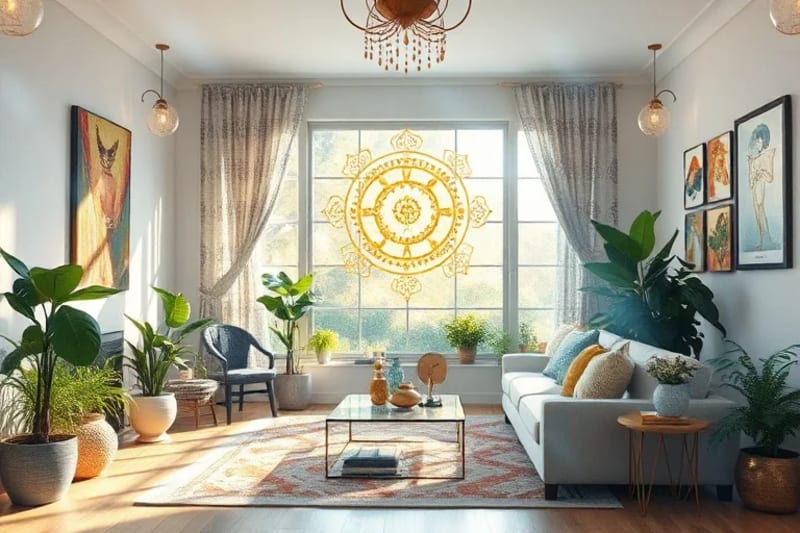 A mystical fusion of ancient Tarot cards intricately woven with traditional Feng Shui symbols, embodying profound tranquility and intuitive wisdom.
Table of Contents
- Foundational Principles of Tarot
- Foundational Principles of Feng Shui
- The Synergy Between Tarot and Feng Shui
- Elemental Correspondences: Tarot Suits and Feng Shui Elements
- Practical Application: Integrating Tarot into Feng Shui
- Room-by-Room Harmony: Applying the Fusion
- Benefits of Tarot Feng Shui Fusion for Holistic Living
- Conclusion
Foundational Principles of Tarot
Tarot is a deck of 78 cards, each rich with symbolic imagery and archetypal significance. Divided into the Major Arcana (22 cards representing life's major lessons and spiritual journeys) and the Minor Arcana (56 cards reflecting daily experiences and practical matters), Tarot serves as a powerful tool for self-reflection, introspection, and gaining insight into life's patterns. Its origins are debated, but its use as a divinatory and psychological tool has been documented for centuries, evolving from playing cards to a profound system of esoteric wisdom.
The core principle of Tarot lies in its ability to mirror the subconscious mind and the collective unconscious. When a question is posed, the cards drawn are believed to reflect the energies, challenges, and opportunities present in the querent's life. Each card tells a story, offering guidance, revealing hidden truths, and empowering individuals to make informed decisions. The four suits of the Minor Arcana—Wands, Cups, Swords, and Pentacles—are particularly relevant to our discussion, as they correspond directly to the classical elements and, by extension, to the elemental energies of Feng Shui.
- Major Arcana: Represents significant life events, spiritual growth, and universal themes.
- Minor Arcana: Reflects everyday situations, emotions, thoughts, and material concerns.
- Court Cards: Symbolize personalities, roles, or ways of being.
- Elemental Association: Each Minor Arcana suit is linked to an element (Wands-Fire, Cups-Water, Swords-Air, Pentacles-Earth).
Foundational Principles of Feng Shui
Feng Shui, an ancient Chinese art and science, literally translates to "wind and water." It is the practice of arranging living spaces to create balance with the natural world, promoting health, harmony, and prosperity. The fundamental concept in Feng Shui is Chi (Qi), the universal life force energy that flows through everything. The goal of Feng Shui is to optimize the flow of Chi within a home or environment, ensuring it is nourishing and supportive rather than stagnant or chaotic.
Key principles of Feng Shui include the Bagua map, the five elements, Yin and Yang, and the command position. The Bagua map is an energetic grid that overlays a floor plan, dividing it into nine life areas (e.g., wealth, relationships, health, career). Each area corresponds to specific colors, shapes, and elements. The five elements—Wood, Fire, Earth, Metal, and Water—are central to understanding energy interactions and are used to balance and enhance different areas of a space. For a deeper dive into how planetary cycles influence global trends, consider exploring Mundane Astrology Planetary Cycles Global Trends Explained, which offers a broader perspective on energetic patterns.
 A serene home interior, illustrating the gentle integration of Feng Shui elements through color and light.
- Chi (Qi): The vital life force energy.
- Bagua Map: A grid mapping nine life areas onto a space.
- Five Elements: Wood, Fire, Earth, Metal, Water, and their productive and destructive cycles.
- Yin and Yang: The balance of complementary opposites.
- Command Position: Strategic placement of key furniture for optimal energy flow.
The Synergy Between Tarot and Feng Shui
At first glance, Tarot, with its focus on divination and psychological insight, and Feng Shui, with its emphasis on spatial arrangement, might seem unrelated. However, both systems share a fundamental understanding of energy and symbolism. Both acknowledge that external environments and internal states are deeply interconnected. Tarot uses symbolic narratives to reflect inner realities, while Feng Shui uses spatial arrangements to influence inner realities and life outcomes.
The synergy emerges when we recognize that our homes are extensions of ourselves. Just as a Tarot reading can illuminate blockages or potentials in our lives, a Feng Shui analysis can reveal energetic imbalances in our homes that may be contributing to those same issues. By combining them, we move beyond merely decorating a space or interpreting cards; we actively create an environment that is consciously aligned with our intentions, supported by both intuitive guidance and energetic principles. This fusion allows for a more dynamic and personalized approach to harmonizing one's living space, making it a powerful tool for personal transformation. Understanding Zodiac Myths: Esoteric Symbolism, Celestial Archetypes Explained can further deepen this appreciation for symbolic systems.
Elemental Correspondences: Tarot Suits and Feng Shui Elements
The most direct point of connection between Tarot and Feng Shui lies in their shared emphasis on elemental energies. Both systems utilize elements to categorize and understand different types of energy and their interactions. Recognizing these correspondences is crucial for applying Tarot Feng Shui Fusion effectively.
The four suits of the Minor Arcana in Tarot correspond to the classical elements, which in turn have strong parallels with the five elements of Feng Shui. By understanding these links, we can use Tarot insights to inform our Feng Shui adjustments, and vice versa. For example, a predominance of Swords in a Tarot reading might indicate a need for more "Air" or "Metal" energy in a specific area of the home to promote clarity and structure.
| Tarot Suit | Classical Element | Feng Shui Element Parallel | Associated Qualities |
|---|---|---|---|
| Wands | Fire | Fire (and Wood, as Wood feeds Fire) | Creativity, passion, action, inspiration, growth, expansion |
| Cups | Water | Water | Emotions, intuition, relationships, spirituality, flow, introspection |
| Swords | Air | Metal (as Metal supports clear thought and structure) | Intellect, communication, challenges, truth, clarity, precision |
| Pentacles | Earth | Earth | Material world, finances, stability, nature, grounding, security |
Practical Application: Integrating Tarot into Feng Shui
The fusion of Tarot and Feng Shui begins with an intention. What area of your life do you wish to enhance or bring into balance? Once your intention is clear, you can use Tarot as a diagnostic tool to gain deeper insight, and then apply Feng Shui principles to manifest those insights in your physical space.
 An abstract representation of energetic flow within a home, highlighting the dynamic interplay of spiritual and spatial energies.
Here’s a step-by-step approach:
- Step 1: Set Your Intention. Clearly define what you want to achieve (e.g., attract abundance, improve relationships, enhance creativity).
- Step 2: Tarot Reading for Insight. Perform a Tarot spread (e.g., a Celtic Cross or a custom spread focusing on home energy) with your intention in mind. Pay attention to the elemental balance of the cards drawn. Do you see an abundance of Swords (Air/Metal), indicating a need for mental clarity, or many Cups (Water), suggesting emotional processing?
- Step 3: Identify Corresponding Bagua Area. Based on your intention, identify the relevant Bagua area in your home (e.g., Wealth & Prosperity for abundance, Love & Relationships for relationships).
- Step 4: Analyze Current Feng Shui. Assess the current state of that Bagua area. Is it cluttered? Does it lack the appropriate elemental colors or objects?
- Step 5: Implement Elemental Adjustments. Use the insights from your Tarot reading to guide your Feng Shui adjustments. If your Tarot reading showed a lack of "Fire" energy (Wands) for creativity, you might add red accents, candles, or triangular shapes to the corresponding Bagua area. If it indicated too much "Air" (Swords) leading to overthinking, you might introduce more "Earth" elements (Pentacles) like ceramics or square shapes to ground the energy.
This method creates a powerful feedback loop, where your intuitive insights from Tarot directly inform the energetic adjustments in your physical space, thereby amplifying your intentions. For those interested in understanding deeper subconscious messages, exploring Dream Interpretation: Unlocking Subconscious Messages & Astral Realm can provide complementary insights.
Room-by-Room Harmony: Applying the Fusion
Applying Tarot Feng Shui Fusion can be done systematically, room by room, or by focusing on specific Bagua areas that need attention. Each room in your home serves a particular purpose and thus resonates with different energies and intentions.
- Living Room (Social Area): If a Tarot reading for your social life shows cards like the Three of Cups or The Lovers, suggesting celebration and connection, ensure your living room fosters open communication and comfort. Use soft lighting, comfortable seating arrangements that encourage conversation, and elements corresponding to Water (Cups) or Wood (Wands) for flow and growth.
- Bedroom (Relationships/Rest): For relationship insights, Tarot cards like the Two of Cups or The Empress might appear. In Feng Shui, this relates to the Love & Relationship area. Ensure your bedroom is balanced, with pairs of objects, soft colors, and no clutter. Avoid sharp angles or harsh lighting. If a reading indicates emotional blockages (e.g., Five of Cups), introduce calming Water elements like blues or wavy patterns.
- Home Office (Career/Knowledge): If your Tarot reading for career brings up cards like the Eight of Pentacles (hard work) or The Magician (manifestation), your home office Feng Shui is crucial. Ensure a strong command position for your desk, good lighting, and elements that support focus and clarity (Metal/Swords) and stability (Earth/Pentacles). Keep the space organized to prevent mental clutter.
- Kitchen (Health/Nourishment): The kitchen is vital for health and family well-being. Tarot cards related to abundance or nurturing, such as the Ten of Pentacles or The Empress, would align well here. Feng Shui emphasizes cleanliness, good ventilation, and a balance of Fire (cooking) and Water (sink) elements. Introduce Wood elements (plants, wooden utensils) to promote growth and vitality.
By consciously aligning the intuitive messages from Tarot with the energetic principles of Feng Shui, you create a living space that actively supports your aspirations and well-being, fostering an environment where you can thrive. This holistic approach ensures that your home is not just a place to live, but a dynamic partner in your personal evolution.
Benefits of Tarot Feng Shui Fusion for Holistic Living
The integration of Tarot and Feng Shui offers a multitude of benefits that extend beyond mere aesthetics or occasional introspection. It cultivates a deeply holistic approach to living, where your external environment becomes a conscious reflection and amplifier of your internal state.
- Enhanced Intuition and Self-Awareness: Regular engagement with Tarot cards to inform your home adjustments sharpens your intuitive faculties and deepens your self-understanding. You become more attuned to the subtle energies around you and within you.
- Improved Well-being: A harmonized home environment, created through conscious elemental balance, can significantly reduce stress, improve sleep quality, and foster a sense of peace and security.
- Manifestation Acceleration: By aligning your physical space with your intentions (derived from Tarot insights), you create a powerful energetic field that supports the manifestation of your goals, whether they relate to career, relationships, or personal growth.
- Dynamic Problem Solving: When faced with a challenge, a Tarot reading can pinpoint the energetic root, and Feng Shui can provide practical, spatial solutions to address it, offering a comprehensive strategy for overcoming obstacles.
- Personalized Environment: Unlike generic design principles, Tarot Feng Shui Fusion allows you to create a space that is uniquely tailored to your current life phase, challenges, and aspirations, making your home a truly personal sanctuary.
- Deeper Connection to Your Home: This practice transforms your relationship with your living space, turning it from a mere dwelling into a sacred, supportive partner in your life's journey.
By embracing this fusion, you unlock a powerful methodology for creating a life and home that are vibrantly aligned, fostering continuous growth and profound harmony. The synergy between these ancient practices offers a contemporary path to holistic well-being and intentional living.
Conclusion
Tarot Feng Shui Fusion represents a powerful and innovative approach to harmonizing our living spaces. By recognizing the profound connections between the symbolic narratives of Tarot and the energetic principles of Feng Shui, we gain a comprehensive framework for creating environments that truly nourish our souls and support our life's intentions. This practice moves beyond superficial aesthetics, delving into the deeper energetic currents that shape our experiences.
Whether you are seeking to attract abundance, cultivate deeper relationships, enhance creativity, or simply foster a greater sense of peace, the fusion of these ancient arts offers a personalized and dynamic pathway. By consciously aligning your inner world with your outer environment, you transform your home into a vibrant sanctuary, a living testament to your journey of self-discovery and holistic well-being. Embrace the wisdom of Tarot and the balance of Feng Shui to unlock the full potential of your living space and, by extension, your life.
Source: Hybrid content assisted by AI and human editorial supervision.


Comments
Post a Comment