
Urban Geomancy: Aligning City Dwellings for Well-being
Introduction to Urban Geomancy and Cosmic Alignment
Urban geomancy represents a sophisticated and ancient art and science focused on harmonizing human dwellings and urban environments with the natural energies of the Earth and the cosmos. This discipline, often intertwined with practices like Feng Shui, seeks to understand how the subtle energetic currents of a landscape, known as "qi" or "chi," influence the well-being, prosperity, and health of its inhabitants. In an increasingly urbanized world, the principles of geomancy offer a crucial framework for creating balanced and supportive living spaces amidst the concrete jungles.
The core idea is that every location possesses a unique energetic signature, shaped by geological formations, water flows, magnetic fields, and even the history of human activity. When these energies are balanced and flowing harmoniously, they can support positive outcomes. Conversely, discordant or blocked energies can lead to stress, illness, and misfortune. Urban geomancy, therefore, provides practical methods to assess, mitigate, and enhance these energetic flows within city dwellings and their surrounding areas.
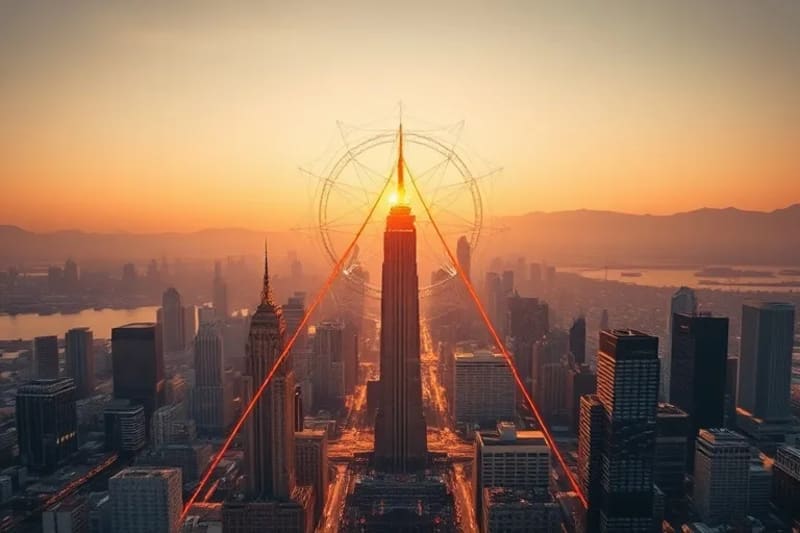
Conceptual representation of a city's energetic blueprint, illustrating the subtle forces that influence urban well-being and design.
This article delves into the foundational principles of urban geomancy, exploring its historical context, the scientific perspectives that lend credibility to its observations, and practical Feng Shui tips tailored for city dwellers. We will examine how to identify and address energetic imbalances, optimize living spaces for health and prosperity, and foster a deeper connection with the cosmic energies that permeate our environment, even in the heart of a bustling city.
Table of Contents
- Historical Roots and Evolution of Geomancy
- Key Principles of Urban Geomancy and Feng Shui
- Assessing Urban Energies: Identifying Qi Flow and Challenges
- Practical Feng Shui Tips for City Dwellings
- Specific Room Applications: Enhancing Every Space
- Addressing Modern Urban Challenges with Geomancy
- Benefits of Urban Geomancy and Conclusion
Historical Roots and Evolution of Geomancy
Geomancy, meaning "earth divination," has roots in various ancient cultures across the globe, from China's Feng Shui to the indigenous traditions of Europe and the Americas. These practices shared a common understanding: the Earth is a living entity with energetic pathways, and human structures should be built in harmony with these flows. Early geomancers were often priests, shamans, or scholars who advised on the placement of villages, temples, and burial sites to ensure prosperity and spiritual alignment.
In China, Feng Shui, meaning "wind and water," developed over thousands of years into a sophisticated system for arranging buildings and objects to optimize the flow of "qi." This involved observing landforms, water sources, and celestial alignments. The principles were applied not only to individual homes but also to entire cities, with careful consideration given to mountains (representing dragons) and rivers (representing their life-giving essence). The goal was always to create an environment that supported health, wealth, and harmonious relationships.
Beyond China, similar practices existed. European dowsers sought ley lines—invisible energetic pathways—to determine optimal building sites. Ancient Egyptians aligned their pyramids and temples with specific celestial bodies and geological features, believing these alignments channeled cosmic power. These diverse traditions underscore a universal human intuition about the subtle, yet profound, influence of our environment on our lives. The concept of Quantum Entanglement Synchronicity: Non-Local Connections can be seen as a modern parallel to these ancient understandings of interconnectedness across vast distances.
Key Principles of Urban Geomancy and Feng Shui
Urban geomancy and Feng Shui operate on several fundamental principles that guide the assessment and modification of energetic environments. Understanding these is crucial for anyone seeking to apply these practices in a city setting.
- Qi (Chi) Flow: This is the vital life force or energy that permeates everything. In geomancy, the goal is to ensure qi flows smoothly, gently, and abundantly through a space. Stagnant qi can lead to lethargy and illness, while overly fast or chaotic qi can cause anxiety and instability.
- Yin and Yang: These are the complementary opposing forces that create balance. Yin represents feminine, dark, passive, and cool energies, while Yang represents masculine, light, active, and warm energies. A balanced environment incorporates both, creating harmony.
- The Five Elements (Wu Xing): Wood, Fire, Earth, Metal, and Water are interconnected and constantly interacting. Each element is associated with specific colors, shapes, materials, directions, and emotions. Balancing these elements in a space is key to creating a supportive environment.
- Bagua Map: A fundamental tool in Feng Shui, the Bagua map divides a space (home, room, or property) into nine areas, each corresponding to a specific life aspiration (e.g., wealth, health, relationships, career). By analyzing and enhancing these areas, one can influence different aspects of life.
- Form School and Compass School: These are two main approaches in Feng Shui. Form School focuses on the physical environment—mountains, rivers, roads, and buildings—and their impact on qi. Compass School uses a Luopan (geomantic compass) and calculates directions and time cycles to determine optimal placements based on an individual's birth data and the building's orientation.
These principles are not merely superstitious beliefs but are rooted in centuries of observation of how natural environments affect human psychology and physiology. They provide a holistic framework for understanding and interacting with our surroundings.
Assessing Urban Energies: Identifying Qi Flow and Challenges
In an urban environment, assessing energy flow presents unique challenges compared to natural landscapes. Skyscrapers, busy roads, electromagnetic fields (EMFs), and dense populations all contribute to the energetic signature of a city dwelling. A geomancer or Feng Shui practitioner would consider several factors:
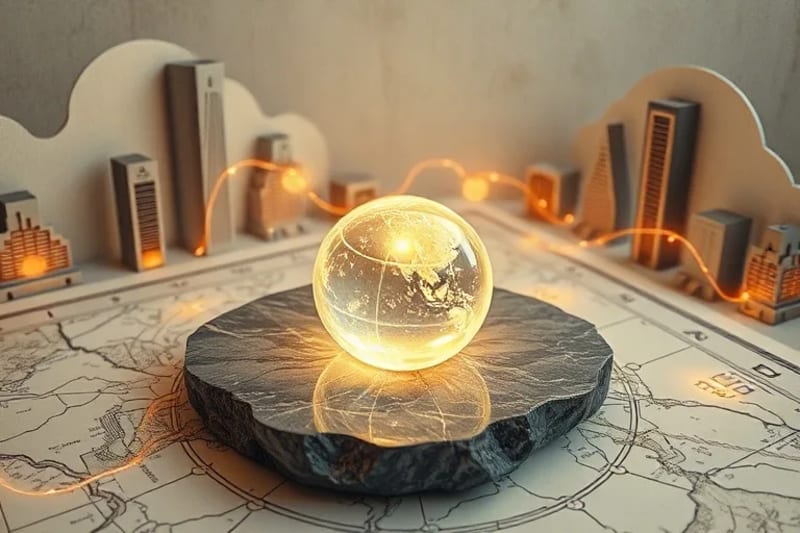
A conceptual representation of a geomantic compass used to interpret and balance the subtle energies within a city's complex environment.
- External Environment (Form School):
- Roads and Traffic: Fast-moving traffic can create "sha qi" (negative energy) that rushes past a building, making it difficult for positive qi to accumulate. Intersections, T-junctions, and dead-end streets are particularly scrutinized.
- Building Shapes and Angles: Sharp corners of neighboring buildings pointing at a dwelling are considered "poison arrows" that direct harmful energy. Irregular building shapes can also create energetic imbalances.
- Water Features: While natural water is auspicious, stagnant urban water bodies or large drains near a home can be problematic.
- Green Spaces: Parks and trees are vital for generating positive qi, acting as lungs for the city and softening harsh urban edges.
- High-Rise Buildings: Living too high can disconnect one from Earth energy, while being too low might expose one to street-level chaos.
- Internal Environment (Compass School & Bagua):
- Building Orientation: The direction a building faces relative to magnetic north significantly impacts its energetic properties.
- Room Layout: The placement of doors, windows, beds, and desks affects qi flow within individual rooms.
- Clutter: Clutter is a major source of stagnant qi, blocking energy flow and creating mental and emotional stagnation.
- Colors and Materials: These choices influence the elemental balance and mood of a space.
- Electromagnetic Fields (EMFs): Modern urban life is saturated with EMFs from electronics, Wi-Fi, and power lines, which can disrupt human bio-energetic fields. Addressing these is a contemporary geomantic concern.
A thorough assessment involves observing both the visible and invisible aspects of the environment, using tools like the Bagua map, compass, and intuitive perception to identify areas that need enhancement or remediation. This intricate analysis helps in understanding the unique energetic blueprint of each urban dwelling. For a deeper understanding of how planetary positions influence individual destinies, one might explore Pluto Astrology: Transformation, Power, and Rebirth, as cosmic energies extend beyond the terrestrial.
Practical Feng Shui Tips for City Dwellings
Applying Feng Shui in a city apartment or house requires adapting traditional principles to modern constraints. Here are practical tips to enhance your urban dwelling's energy:
1. Clear Clutter Regularly: This is the most fundamental and impactful Feng Shui adjustment. Clutter creates stagnant qi, blocking opportunities and draining energy. Regularly decluttering, organizing, and donating unused items creates space for fresh energy to enter your life.
2. Enhance the Main Entrance: The front door is where qi enters your home. Ensure it is well-lit, clean, and inviting. Add a welcome mat, healthy plants, and avoid any obstructions. The number of your apartment or house should be clearly visible.
3. Control Qi Flow:
- Slow Down Fast Qi: If your front door directly faces a window or another door, qi can rush out too quickly. Place a screen, a tall plant, or a piece of furniture to gently redirect the flow.
- Brighten Dark Corners: Stagnant qi accumulates in dark, unused corners. Add lighting, plants, or reflective surfaces to activate these areas.
- Avoid "Sha Qi" from External Structures: If sharp corners of neighboring buildings point at your home, use mirrors (Bagua mirrors should be used with caution and expert advice), plants, or wind chimes to deflect or neutralize the negative energy.
4. Balance the Five Elements:
| Element | Characteristics | Urban Application |
|---|---|---|
| Wood | Growth, vitality, creativity (green, brown, rectangular shapes, plants, wood) | Live plants, wooden furniture, green accents in home office or children's rooms. |
| Fire | Passion, energy, recognition (red, orange, triangular shapes, candles, bright lights) | Candles, fireplaces, red accents in living room or fame area (south). |
| Earth | Stability, grounding, nourishment (yellow, brown, square shapes, ceramics, stone) | Ceramic pots, earthy tones, square rugs, grounding elements in central areas. |
| Metal | Clarity, precision, organization (white, gray, metallic, round shapes, metal objects) | Metal decor, white/gray color schemes, round mirrors in creative or helpful people areas. |
| Water | Flow, wisdom, communication (blue, black, wavy shapes, water features, glass) | Small indoor fountains, aquariums, blue accents, glass objects in career or wealth areas. |
5. Maximize Natural Light and Airflow: Open curtains and blinds during the day. Ensure good ventilation to allow fresh qi to circulate and stale air to leave. If natural light is limited, use full-spectrum lighting.
6. Incorporate Nature: Even in a city, bring nature indoors. Plants purify the air and bring vibrant Wood energy. Fresh flowers, natural materials like wood and stone, and images of natural landscapes can also help connect your space to the Earth's energy.
Specific Room Applications: Enhancing Every Space
Each room in your city dwelling serves a different purpose and requires specific Feng Shui considerations to optimize its energetic contribution to your overall well-being.
- Bedroom: This is your sanctuary for rest and rejuvenation.
- Bed Placement: Position your bed against a solid wall, ideally not directly in line with the door. Avoid placing it under a window or a beam. Ensure you have a clear view of the door without being directly opposite it (the "commanding position").
- Symmetry: Use two nightstands and two lamps to promote balance and partnership.
- Colors: Opt for calming, earthy tones or soft blues and greens. Avoid overly stimulating colors like bright reds.
- Electronics: Minimize electronics in the bedroom to reduce EMFs and promote restful sleep.
- Living Room: A space for gathering, relaxation, and social interaction.
- Seating Arrangement: Arrange furniture to encourage conversation and ensure everyone has back support. Avoid placing the main sofa with its back to the main entrance.
- Focal Point: Create a clear focal point, such as a piece of art or a fireplace, to anchor the room's energy.
- Lighting: Use varied lighting (lamps, overhead, dimmers) to create different moods and activate qi.
- Kitchen: Represents health and prosperity.
- Cleanliness: Keep the kitchen clean and organized, especially the stovetop, which symbolizes wealth.
- Stove Placement: Ideally, the cook should be able to see the kitchen door without being directly in front of it.
- Balance Elements: Avoid placing the stove (Fire) directly opposite the sink or refrigerator (Water) to prevent elemental clash. If unavoidable, use a Wood element (e.g., a small plant or wooden cutting board) between them.
- Home Office/Study: A space for focus and career growth.
- Desk Placement: Position your desk in the commanding position, facing the door but not directly in line with it, with a solid wall behind you for support.
- Clutter-Free: Keep your workspace tidy and organized to promote mental clarity and productivity.
- Inspiration: Display inspiring images or objects that represent your career goals and aspirations.
- Bathroom: Often considered an area where energy can drain.
- Keep Doors Closed: Always keep bathroom doors closed and toilet lids down to prevent qi from escaping.
- Cleanliness: Maintain immaculate cleanliness.
- Plants: Use plants to absorb negative energy and introduce Wood element.
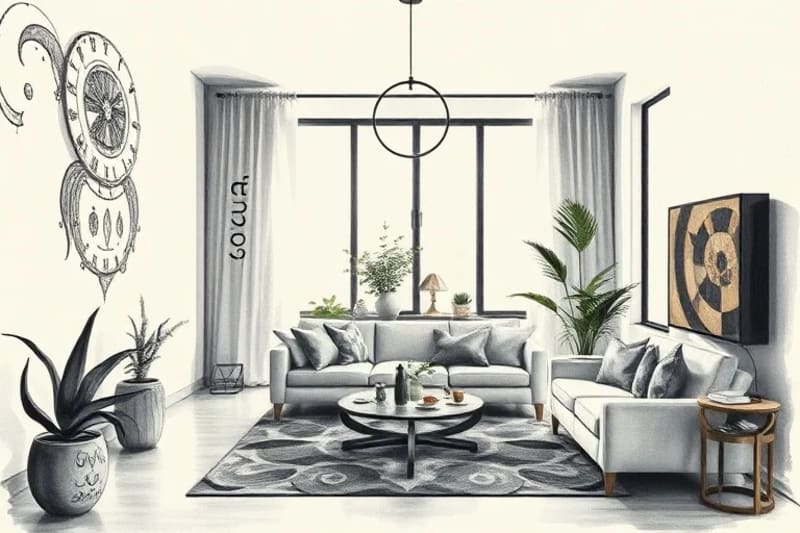
An artistic rendering of a harmoniously arranged urban living space, embodying the principles of balanced energy and thoughtful design.
Addressing Modern Urban Challenges with Geomancy
Modern cities introduce specific environmental stressors that traditional geomancy did not directly address, but its principles can be adapted. These include:
- Electromagnetic Fields (EMFs): From Wi-Fi routers to cell towers, EMFs are pervasive. While Feng Shui doesn't have a direct "cure," practitioners suggest minimizing devices in bedrooms, using wired connections where possible, and incorporating plants that are believed to absorb radiation. Grounding practices can also help.
- Noise Pollution: Constant urban noise can disrupt peace and focus. Use sound-dampening materials, thick curtains, double-glazed windows, and calming water features (small indoor fountains) to mitigate noise and introduce soothing sounds.
- Air Pollution: City air quality can be poor. Incorporate air-purifying plants (e.g., snake plant, peace lily), use air purifiers, and ensure good ventilation to bring in fresh air when possible.
- Lack of Nature: Combat the concrete environment by bringing natural elements indoors. Maximize views of nature if available, or create a small indoor garden or balcony oasis.
- High-Rise Living: To counteract the feeling of being disconnected from Earth energy, use grounding colors (earth tones), heavy furniture, and crystals like tourmaline or hematite. Ensure your bed is against a solid wall to provide a sense of security.
By consciously addressing these modern challenges, urban geomancy helps create a buffer against the negative impacts of city life, fostering a more resilient and harmonious personal environment. This proactive approach aligns with the broader understanding of how our environment shapes our spiritual and physical well-being, much like exploring Fixed Stars Karmic Destiny Natal Chart Analysis can reveal deeper cosmic influences on an individual's path.
Benefits of Urban Geomancy and Conclusion
The application of urban geomancy and Feng Shui principles offers a multitude of benefits for city dwellers. These range from tangible improvements in comfort and aesthetics to more subtle, yet profound, shifts in personal well-being and life outcomes.
- Enhanced Well-being: A harmonized environment can reduce stress, improve sleep quality, and boost overall physical and mental health.
- Increased Productivity and Focus: An optimized workspace or study area can lead to greater concentration and efficiency.
- Improved Relationships: Balanced energy in living spaces can foster better communication and harmony among household members.
- Attraction of Prosperity: By aligning with positive qi, individuals may experience more opportunities for financial growth and career advancement.
- Greater Sense of Peace and Security: A home that feels energetically supportive acts as a true sanctuary from the external world.
- Deeper Connection to Environment: Practicing geomancy encourages a more mindful interaction with one's surroundings, fostering a sense of belonging and connection to the Earth, even in an urban setting.
In conclusion, urban geomancy is not about rigid rules but about cultivating a conscious awareness of how our built environment interacts with natural and cosmic energies. By applying the timeless wisdom of Feng Shui and adapting it to the unique context of city living, we can transform our dwellings into powerful centers of support, creativity, and well-being. It's an ongoing journey of observation, adjustment, and intention, leading to a more balanced and fulfilling urban existence.
Explore More Insights
- Advanced Planetary Aspects: Trines, Sextiles, Quincunxes - Deepen your understanding of cosmic influences.
- Esoteric Symbolism Digital Art AI Consciousness Decoding - Explore the hidden meanings in art and consciousness.
- Biofeedback Mindfulness: Technology Spiritual Practice - Discover how technology aids spiritual growth.
- Psicología Astrológica Junguiana: Integrando Sombra Zodiacal - Connect with psychological and astrological insights.
- Astro-Botánica Cuántica: Elixires Vibracionales Sanación Planetaria - Learn about vibrational healing and planetary connections.
Source: Hybrid content assisted by AI and human editorial supervision.


Comments
Post a Comment