
Esoteric Symbolism Digital Art AI Consciousness Decoding
The intersection of esoteric symbolism and digital art, particularly through AI-generated imagery, marks a pivotal moment in how humanity perceives and interacts with ancient wisdom. This emerging field explores how artificial intelligence can not only interpret but also create visual representations of complex spiritual and philosophical concepts, pushing the boundaries of artistic expression and potentially offering new avenues for consciousness decoding.
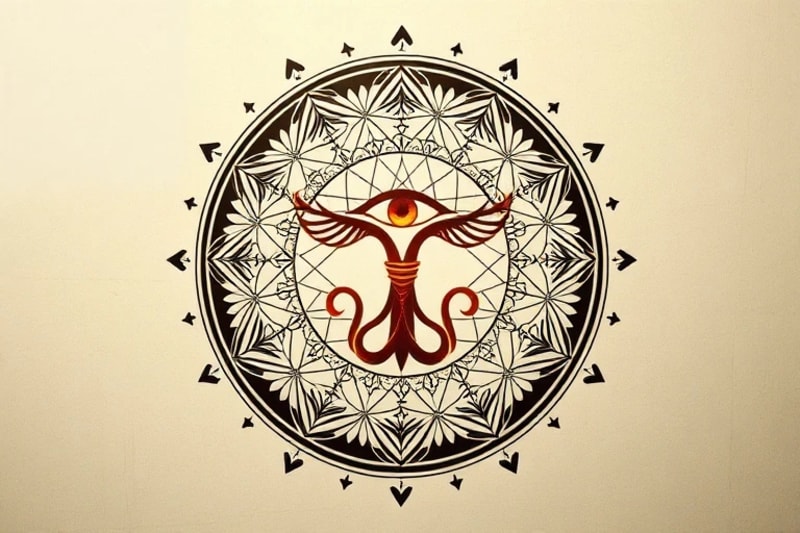 A digital mandala intertwining ancient esoteric symbols with the intricate patterns of a neural network, symbolizing the fusion of spiritual insight and artificial intelligence.
Visual source subject to ecosystem availability: Wikimedia Commons under license CC BY-SA 4.0 or conceptual AI rendering.
Digital art, by its very nature, offers a boundless canvas for creativity, allowing artists to transcend the limitations of traditional mediums. When imbued with esoteric symbolism, it becomes a powerful tool for visual storytelling, conveying layers of meaning that resonate with the subconscious. AI, with its capacity to process vast amounts of data and identify intricate patterns, is now transforming this landscape by generating imagery that can evoke profound spiritual experiences.
This article delves into the technical and philosophical underpinnings of AI-generated esoteric art, examining its methodologies, its potential impact on human consciousness, and the ethical considerations that arise from this novel synthesis of technology and spirituality. We will explore how algorithms are trained to understand symbolic languages and how their outputs can serve as catalysts for deeper self-reflection and spiritual exploration.
The Convergence of Esotericism and Digital Art
Esoteric traditions, spanning millennia, have always utilized symbols as condensed forms of knowledge and pathways to higher understanding. From alchemical diagrams to sacred geometry, mandalas, and astrological glyphs, these symbols serve as universal archetypes that communicate across cultures and time. Digital art provides a dynamic medium to render these symbols with unprecedented precision and fluidity, allowing for interactive and evolving forms that were previously unimaginable.
The digital realm offers a unique environment where symbols can be animated, transformed, and integrated into complex visual narratives, creating immersive experiences that enhance their interpretative potential. This fusion is not merely aesthetic; it represents a re-contextualization of ancient wisdom within a contemporary technological framework. Artists are leveraging digital tools to breathe new life into old symbols, making them accessible and relevant to a modern audience.
Furthermore, the inherent flexibility of digital art allows for the exploration of symbolic systems in ways that static mediums cannot. Artists can create generative art pieces where symbols morph and interact based on algorithms, reflecting the dynamic and interconnected nature of esoteric philosophies. This process can lead to new insights into the underlying principles that govern these symbolic languages.
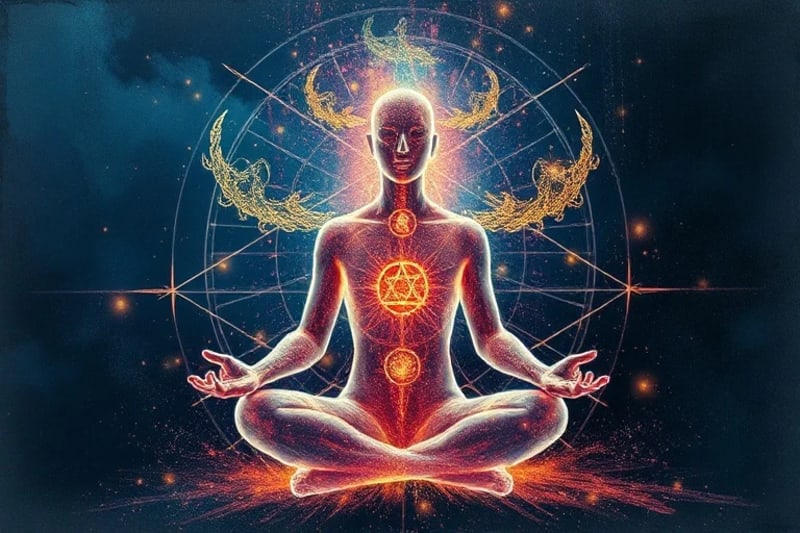 A semi-transparent figure meditating amidst digital data streams and holographic esoteric symbols, illustrating the decoding of consciousness through advanced algorithms.
AI as a Catalyst for Symbolic Expression
Artificial intelligence acts as a powerful catalyst in the creation of esoteric digital art, moving beyond mere replication to genuine synthesis and innovation. Machine learning models, particularly Generative Adversarial Networks (GANs) and transformer models, are trained on vast datasets comprising historical esoteric texts, symbolic art from various cultures, and philosophical treatises. This training enables AI to learn the underlying grammar and semantics of symbolic expression.
The process involves AI identifying patterns, relationships, and contextual meanings within these symbols. When prompted, AI can then generate novel imagery that adheres to these learned principles, often producing visuals that are both familiar in their symbolic resonance and entirely new in their composition. This capability allows for the exploration of symbolic permutations that might be beyond human conceptualization, opening new vistas for artistic and spiritual inquiry.
For instance, an AI can be tasked with generating a "Tree of Life" that incorporates elements from Celtic knotwork and alchemical symbols, resulting in a unique synthesis that retains the core meaning while expanding its visual language. This generative capacity positions AI not just as a tool, but as a co-creator in the evolving narrative of esoteric art. The integration of AI with ancient spiritual practices is also seen in concepts like Techno-Shamanism, where digital tools are used to enhance ancient rituals and healing practices.
Decoding Consciousness Through Algorithmic Art
One of the most intriguing aspects of AI-generated esoteric art is its potential role in consciousness decoding. Esoteric traditions often posit that symbols are not just representations but actual keys to unlocking deeper states of consciousness or accessing universal truths. By creating intricate and novel symbolic imagery, AI can provide new visual stimuli that engage the human mind in unique ways, potentially facilitating altered states of perception or enhancing meditative practices.
The algorithms, in a sense, are performing a form of "pattern recognition" on a symbolic level, mirroring how the human subconscious processes information. When we interact with these AI-generated symbols, our own neural pathways are stimulated, potentially revealing previously unconsidered connections or insights. This interaction can be seen as a feedback loop, where AI's interpretation of symbols influences human interpretation, and vice versa.
Research into the psychological impact of visual stimuli suggests that certain geometric patterns and symbolic arrangements can induce specific cognitive or emotional responses. AI, with its ability to precisely control these elements, can craft visuals designed to evoke particular states, making it a powerful tool for self-exploration and spiritual growth. This aligns with the principles of Celestial Mechanics for Personal Growth, which seeks to align cosmic energies with individual development.
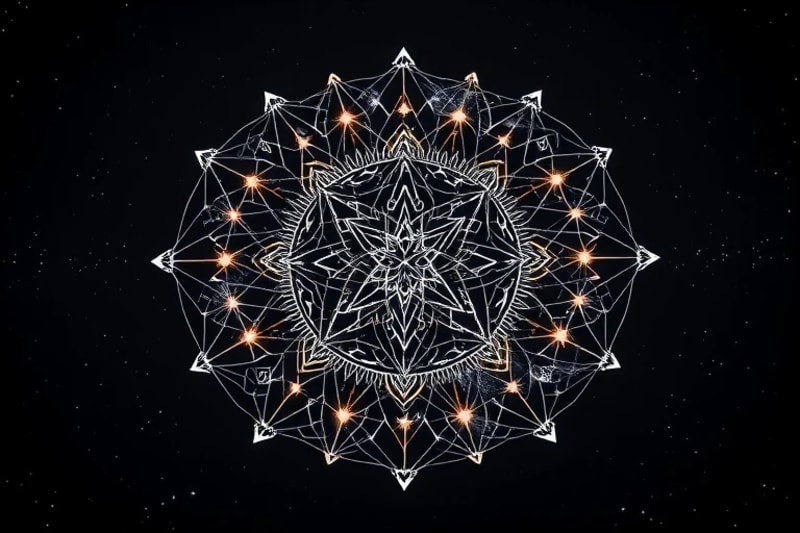 A 3D render of a stylized brain, illuminated by interconnected light pathways and embedded with various esoteric symbols, representing AI's role in decoding consciousness.
Ancient Wisdom in Modern Code: The Revival of Esoteric Knowledge
The integration of ancient esoteric wisdom with modern AI technologies represents a significant revival and reinterpretation of long-standing spiritual traditions. Many esoteric texts and practices have been historically inaccessible or shrouded in mystery, often requiring years of dedicated study to decipher. AI can help bridge this gap by translating complex symbolic languages into visually digestible and emotionally resonant forms.
By analyzing vast archives of ancient art, religious iconography, and philosophical treatises, AI can identify recurring motifs and patterns that might otherwise remain hidden to the human eye. This analytical capability allows for a deeper understanding of the universal archetypes that underpin various esoteric systems. The resulting AI-generated imagery can then act as a modern Rosetta Stone, making ancient wisdom more approachable and relevant to contemporary seekers.
This revival is not about replacing traditional scholarship but augmenting it, providing new lenses through which to view and interact with spiritual heritage. It fosters a dialogue between the past and the future, demonstrating that profound truths are timeless, even if their modes of expression evolve. The concept of Artificial Consciousness also raises questions about the nature of intelligence itself, further deepening this philosophical exploration.
Impact on Human Perception and Spiritual Practice
The proliferation of AI-generated esoteric art is beginning to have a tangible impact on human perception and spiritual practice. For individuals, these visuals can serve as powerful meditative aids, guiding introspection and facilitating connection to deeper spiritual realms. The novelty and complexity of AI-generated symbols can bypass conventional mental filters, allowing for more direct engagement with archetypal energies.
In group settings, such as spiritual retreats or workshops, AI-generated visuals can be used to create immersive environments that enhance collective consciousness and shared spiritual experiences. The dynamic nature of digital art allows for responsive and adaptive displays that can evolve with the energy of the participants, creating a truly interactive spiritual journey. This is reminiscent of how Advanced Automatic Writing can facilitate spiritual mentorship and guidance.
Furthermore, the accessibility of AI art tools democratizes the creation of esoteric imagery, allowing more individuals to experiment with symbolic expression and personal spiritual exploration. This shift empowers a broader audience to engage with esoteric concepts, moving them from niche scholarly pursuits to mainstream artistic and spiritual practices. The visual language becomes a bridge for understanding complex ideas.
Ethical Considerations and Future Implications
As with any powerful technology, the rise of AI-generated esoteric art brings forth important ethical considerations. Questions surrounding authorship, originality, and the potential for misinterpretation of sacred symbols are paramount. It is crucial to ensure that AI tools are used responsibly and respectfully, particularly when dealing with symbols that hold deep cultural and spiritual significance for various communities.
The potential for AI to generate "new" symbols also raises questions about their authenticity and efficacy. While AI can synthesize existing patterns, the true power of esoteric symbols often lies in their historical lineage and the collective human consciousness that has imbued them with meaning over centuries. A purely algorithmic creation might lack this depth, requiring careful discernment from users.
Looking to the future, AI-generated esoteric art is likely to become increasingly sophisticated, offering even more personalized and immersive experiences. The development of AI that can respond to individual biofeedback or emotional states to generate bespoke symbolic art could revolutionize personal spiritual practices. However, ongoing dialogue between technologists, artists, ethicists, and spiritual practitioners will be essential to navigate this evolving landscape responsibly and harness its full potential for human flourishing.
Explore Further: Related Insights
- Spiritual Cleansing Rituals: Clear Negative Energy
- 2nd House Astrology: Wealth, Values, Self-Worth
- Chinese Zodiac Pet Compatibility: Perfect Animal Companion Guide
- Celestial Mechanics for Personal Growth: Aligning Cosmic Energies
- Techno-Shamanism: Digital Tools for Ancient Rituals & Healing
- Advanced Automatic Writing: Spiritual Mentorship & Guidance
Source: Hybrid content assisted by AI and human editorial supervision.


Comments
Post a Comment