
Chinese Zodiac Compatibility: Elemental Harmony Pairings Guide
The intricate tapestry of Chinese astrology offers a profound framework for understanding human relationships, far beyond the simple animal signs. At its core lies the concept of elemental harmony and conflict, which provides a deeper layer of insight into compatibility. Unlike Western astrology, which focuses on planetary positions, Chinese zodiac compatibility integrates the twelve animal signs with the five fundamental elements: Wood, Fire, Earth, Metal, and Water.
This guide delves into how these elements interact, revealing why some pairings naturally thrive while others face inherent challenges. Understanding these dynamics can empower individuals to navigate their relationships with greater awareness, fostering stronger bonds and mitigating potential friction. By exploring the productive and destructive cycles of the elements, we uncover the subtle energies that shape our connections with others.
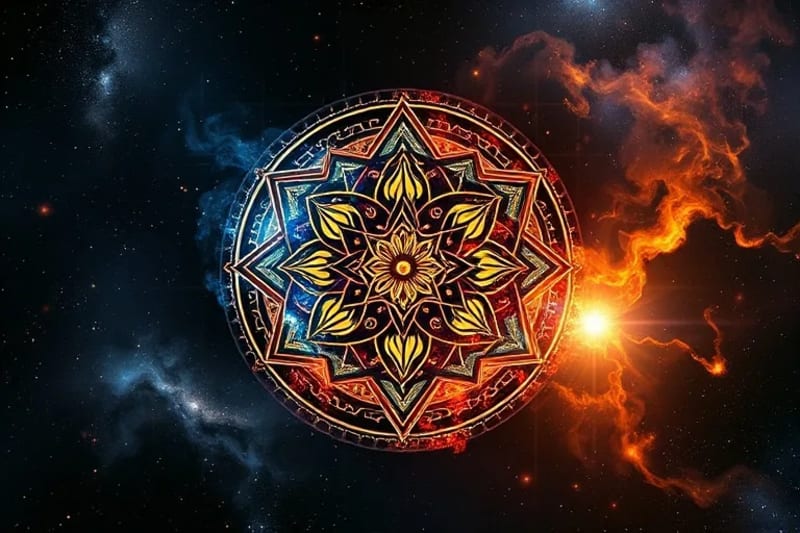 A visual representation of the five fundamental elements of Chinese astrology, symbolizing the intricate balance and interaction that governs compatibility.
Fuente visual sujeta a disponibilidad del ecosistema: Wikimedia Commons bajo licencia CC BY-SA 4.0 o renderizado conceptual IA.
Table of Contents
- The Five Elements in Chinese Astrology
- Elemental Harmony: The Productive Cycle
- Elemental Conflict: The Destructive Cycle
- Zodiac Animal Compatibility Basics
- Weak Pairings: Navigating Challenges
- Beyond the Animals and Elements: Other Factors
The Five Elements in Chinese Astrology
In Chinese metaphysics, the five elements—Wood, Fire, Earth, Metal, and Water—are not merely substances but dynamic forces that represent different phases of energy and transformation. Each element is associated with specific characteristics, colors, directions, seasons, and even emotions. Understanding these elemental qualities is crucial for grasping their role in zodiac compatibility.
- Wood: Represents growth, creativity, flexibility, and benevolence. Wood types are often innovative, compassionate, and seek expansion.
- Fire: Symbolizes passion, enthusiasm, dynamism, and insight. Fire individuals are typically energetic, charismatic, and love to lead.
- Earth: Embodies stability, practicality, trustworthiness, and nurturing. Earth personalities are grounded, reliable, and seek harmony.
- Metal: Signifies structure, discipline, determination, and justice. Metal types are often organized, principled, and possess strong convictions.
- Water: Represents wisdom, intuition, adaptability, and introspection. Water individuals are usually profound, empathetic, and flow with change.
Each of the twelve Chinese zodiac animals is inherently linked to a fixed element, and additionally, each year is governed by one of the five elements, creating a 60-year cycle. For example, a person born in a Wood Rat year will have a different elemental influence than someone born in a Fire Rat year, adding layers of complexity to their personality and, consequently, their compatibility with others.
Elemental Harmony: The Productive Cycle
The productive cycle, also known as the generating or nourishing cycle (Sheng Cycle), describes how elements support and create each other. This cycle represents natural harmony and mutual benefit in relationships. When two individuals' dominant elements align with this cycle, their interaction tends to be supportive, growth-oriented, and complementary.
- Wood feeds Fire: Wood provides fuel for Fire to burn brightly. In a relationship, Wood types can inspire and energize Fire types, while Fire types can help Wood types express their creativity.
- Fire creates Earth: Fire reduces to ash, which enriches the Earth. Fire personalities can bring warmth and vitality to Earth individuals, who in turn provide stability and ground Fire's expansive energy.
- Earth bears Metal: Metal is extracted from the Earth. Earth types offer a solid foundation and resources for Metal types, who can then bring structure and refinement to Earth's endeavors.
- Metal carries Water: Metal can hold or conduct Water. Metal personalities can provide discipline and direction for Water types, while Water can soften Metal's rigidity and encourage fluidity.
- Water nourishes Wood: Water is essential for Wood to grow. Water types bring emotional depth and intuition to Wood types, who can then channel this energy into creative growth and expansion.
Relationships where elements follow this productive cycle are often characterized by ease, understanding, and a natural flow of support. They tend to bring out the best in each other, fostering personal and shared growth. For example, a Wood person and a Fire person might find a dynamic and inspiring connection, with the Wood partner providing ideas and the Fire partner bringing them to life.
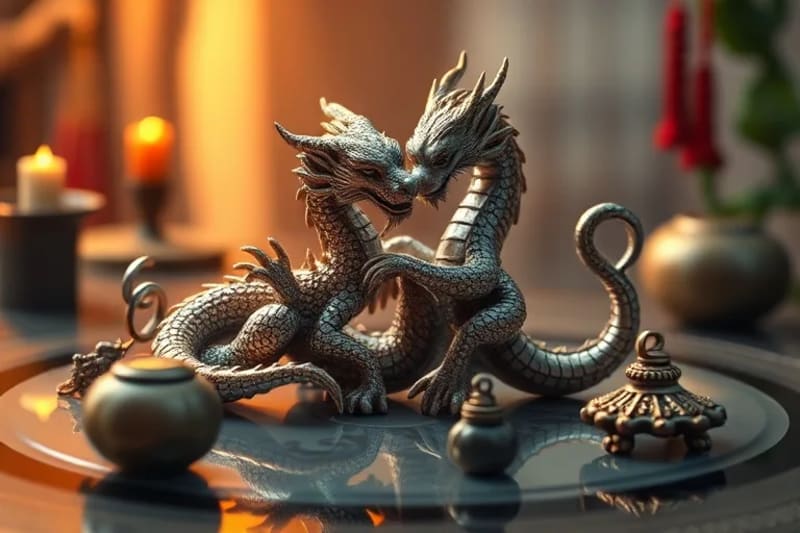 Symbolic representation of compatible zodiac animals and their harmonious elemental interactions.
Elemental Conflict: The Destructive Cycle
The destructive cycle, or controlling cycle (Ke Cycle), describes how elements overcome or destroy each other. This cycle indicates areas of potential friction, challenge, and misunderstanding in relationships. When dominant elements clash in this manner, partners may find themselves at odds, struggling to find common ground or feeling drained by the interaction.
- Wood separates Earth: Wood's roots break up the Earth. A Wood individual might challenge an Earth person's stability, while the Earth person may feel overwhelmed by Wood's need for change.
- Earth absorbs Water: Earth can dam or absorb Water. Earth types might stifle Water types' emotional flow and adaptability, while Water types may find Earth types too rigid or unyielding.
- Water extinguishes Fire: Water puts out Fire. Water individuals can dampen Fire types' enthusiasm and passion, while Fire types may perceive Water types as overly emotional or pessimistic.
- Fire melts Metal: Fire can melt and reshape Metal. Fire personalities might challenge Metal types' structure and principles, while Metal types may find Fire types too impulsive or lacking discipline.
- Metal chops Wood: Metal can cut down Wood. Metal individuals might impose too much rigidity on Wood types, who may feel constrained or criticized by Metal's directness.
Relationships with clashing elements often require more conscious effort, compromise, and understanding to thrive. While these pairings can be challenging, they also offer opportunities for profound growth, as partners are forced to confront their differences and develop greater empathy. For instance, a Fire person and a Water person might experience intense emotional highs and lows, but can learn to balance each other's extremes.
Zodiac Animal Compatibility Basics
Beyond the elements, the Chinese zodiac animals themselves have inherent compatibility patterns. These are often grouped into "Trines" (San He) of three animals that are highly compatible and "Opposites" (Chong) that represent direct clashes. The Trines are based on shared characteristics and complementary energies, forming strong alliances.
- First Trine: Rat, Dragon, Monkey (Intellectual, charismatic, and ambitious).
- Second Trine: Ox, Snake, Rooster (Diligent, philosophical, and persistent).
- Third Trine: Tiger, Horse, Dog (Independent, energetic, and idealistic).
- Fourth Trine: Rabbit, Goat, Pig (Compassionate, artistic, and gentle).
These Trine relationships often result in deep understanding and mutual support, making them excellent partners in love, business, and friendship. For example, a Rat and Rat compatibility might seem redundant, but their shared characteristics can lead to a strong, empathetic bond, especially when their elemental influences are considered.
Weak Pairings: Navigating Challenges
While the Trines represent ideal matches, certain animal signs are traditionally considered "weak pairings" due to their inherent conflicts in personality or elemental interactions. These are often the "Opposites" or "Clash" animals, which are six years apart in the zodiac cycle. These pairings can present significant hurdles, but they are not insurmountable.
- Rat vs. Horse: Rat is cautious and resourceful, while Horse is free-spirited and impulsive. Their approaches to life often clash.
- Ox vs. Goat: Ox is traditional and steadfast, whereas Goat is artistic and indecisive. The Ox's rigidity can frustrate the Goat's need for freedom.
- Tiger vs. Monkey: Tiger is bold and commanding, while Monkey is clever and mischievous. Both are strong-willed and can compete for dominance.
- Rabbit vs. Rooster: Rabbit is gentle and peace-loving, while Rooster is confident and outspoken. The Rooster's bluntness can hurt the sensitive Rabbit.
- Dragon vs. Dog: Dragon is proud and powerful, while Dog is loyal and realistic. The Dog's skepticism can deflate the Dragon's grand ambitions.
- Snake vs. Pig: Snake is mysterious and calculating, while Pig is honest and straightforward. The Snake's secretive nature can be unsettling for the open Pig.
When navigating these weak pairings, understanding the underlying elemental conflicts is paramount. For example, a Fire Snake (fixed element Fire, year element Fire) and a Water Pig (fixed element Water, year element Water) would face a direct Fire-Water clash, intensifying their inherent animal sign differences. However, awareness of these challenges allows partners to develop strategies for communication and compromise, transforming potential weaknesses into strengths. Just as understanding your North Node in Houses can reveal karmic lessons, recognizing zodiac clashes can highlight areas for personal growth within a relationship.
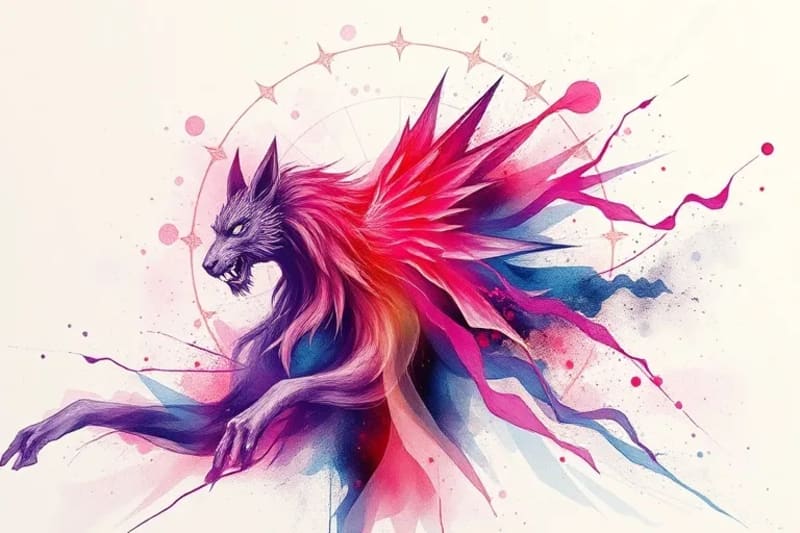 An abstract visualization of clashing elemental forces, representing the challenges and growth opportunities in less compatible zodiac pairings.
Beyond the Animals and Elements: Other Factors
While animal signs and elemental interactions form the backbone of Chinese zodiac compatibility, it is crucial to remember that they are just pieces of a larger puzzle. A comprehensive astrological reading would also consider the Yin and Yang balance, the specific birth hour, and the individual's unique life experiences and personality traits. No two individuals, even with the same zodiac sign and element, are exactly alike.
Moreover, personal growth and conscious effort play significant roles in any relationship's success. Astrology provides a map, highlighting potential paths and obstacles, but it does not dictate destiny. The insights gained from Chinese zodiac compatibility should serve as tools for self-awareness and understanding, enabling partners to appreciate their differences and work towards mutual respect and harmony. This holistic view aligns with concepts like Vibrational Ancestral Healing, suggesting that deeper energetic patterns also influence our connections.
Ultimately, the most successful relationships are built on communication, empathy, and a willingness to adapt. Whether your elements are in perfect harmony or present a challenging dynamic, understanding these ancient principles can enrich your journey. The wisdom found in texts like the Meditación Guiada Nómadas Digitales: Mindfulness Energía Positiva further emphasizes the role of personal choice and continuous development in shaping one's path and relationships.
By embracing the insights offered by Chinese zodiac compatibility, you can cultivate more profound and resilient connections, transforming potential conflicts into opportunities for growth and deeper love. It's a journey of continuous discovery, where ancient wisdom meets modern understanding of human interaction.
Explore Further Insights
Manifestation & Rituals
Astrology & Destiny
Holistic Well-being
Source: Hybrid content assisted by AI and human editorial supervision.


Comments
Post a Comment