
Planetary Stations Direct Retrograde Astrology Turning Points
In the intricate tapestry of astrology, planetary stations represent moments of profound energetic shift, serving as critical turning points in the cosmic dance. Far from being mere astronomical phenomena, these periods—when a planet appears to slow down, halt, and then change direction from direct to retrograde or vice versa—hold immense symbolic weight and exert significant influence on both collective consciousness and individual destinies. Understanding these celestial mechanics is paramount for any serious student of astrological interpretation, offering deeper insights into the ebb and flow of life's cycles.

Precursors intellectuales, diagramas fundamentales y representaciones conceptuales que forjaron la visión de los astrólogos sobre las estaciones planetarias y el movimiento celeste.
Fuente visual sujeta a disponibilidad del ecosistema: Wikimedia Commons bajo licencia CC BY-SA 4.0 o renderizado conceptual IA.
This advanced exploration delves into the nuanced meanings of direct and retrograde stations, their astronomical basis, and their profound implications for natal chart analysis, predictive astrology, and personal growth. By dissecting these pivotal moments, we can unlock a more sophisticated understanding of astrological timing and the subtle energies that shape our experiences.
Table of Contents
- Understanding Planetary Motion: Direct and Retrograde
- The Significance of Planetary Stations
- Astrological Impact of Direct Stations
- Astrological Impact of Retrograde Stations
- Interpreting Planetary Stations in Natal Charts
- Planetary Stations in Predictive Astrology: Transits and Progressions
- Psychological and Spiritual Dimensions of Stations
- Navigating Planetary Stations: Practical Guidance
Understanding Planetary Motion: Direct and Retrograde
From an Earth-centric perspective, planets appear to move in two primary directions: direct (forward) and retrograde (backward). This apparent reversal of motion is not an actual change in the planet's orbit around the Sun but rather an optical illusion caused by the differing orbital speeds of Earth and other planets. When Earth overtakes an outer planet, or an inner planet overtakes Earth, the slower-moving body appears to move backward against the backdrop of the zodiac.
Astronomically, a planet's motion is always prograde (forward) around the Sun. However, for astrological purposes, the geocentric perspective is crucial, as it reflects our lived experience from Earth. The periods leading up to and following a retrograde phase are characterized by a gradual slowing down of the planet's apparent motion, culminating in a "station."
The concept of planetary motion is fundamental to Essential Dignities in Horary Astrology, where a planet's speed and direction can indicate its strength and ability to act. A planet moving at its average speed is considered to be operating normally, while a planet that is too fast or too slow, or especially one that is stationary, signals a deviation from the norm with specific implications.
The Significance of Planetary Stations
A planetary station occurs at the precise moment a planet ceases its apparent direct motion to begin its retrograde journey (Station Retrograde) or when it ends its retrograde period to resume direct motion (Station Direct). These moments are not instantaneous but rather represent a brief window where the planet's energy is highly concentrated and intensified. It's akin to a cosmic pause button, where the themes associated with that planet become exceptionally prominent and potent.
Astrologically, a stationary planet is considered to be "stuck" or "fixed" in its expression. Its influence is amplified, becoming a focal point of energy that demands attention. This intensity can manifest as a powerful internal drive, a significant external event, or a prolonged period of focus on the planet's domain. The station acts as a cosmic exclamation point, drawing emphasis to the matters governed by that planet and the house it occupies in a chart.
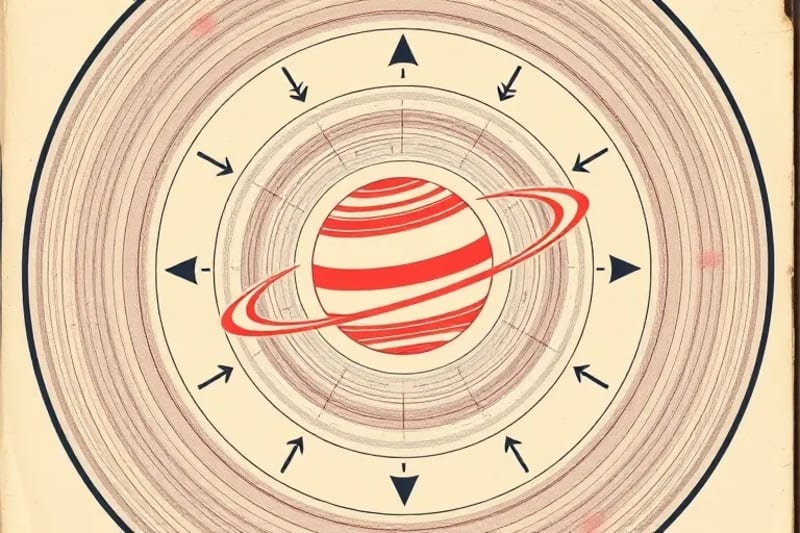
Visualizing the celestial mechanics of apparent planetary motion.
The duration of a station varies by planet, with slower-moving outer planets having longer stationary periods. During these times, the planet's influence is not merely strong but also deeply embedded, often leading to lasting impressions or foundational shifts. For example, a stationary Mercury might indicate a pivotal decision or a permanent change in communication style, while a stationary Jupiter could signify a monumental shift in belief systems or life philosophy.
Astrological Impact of Direct Stations
A planet stationing direct marks the end of its retrograde review period and the beginning of a forward-moving phase. This is a moment of reorientation, clarity, and renewed momentum. The lessons learned during the retrograde period are integrated, and a new path forward is illuminated. The energy, which was previously internalized and reflective, now becomes externalized and proactive.
When a planet stations direct, it often signifies a breakthrough or a turning point where previously stalled projects or relationships begin to move forward. Decisions made during this time tend to be more definitive, and actions taken are often more effective. It's a period of release and activation, where the themes associated with the planet are ready to be implemented in a tangible way. For instance, a direct station of Venus might signal a new beginning in a relationship or a renewed appreciation for aesthetic values.
The direct station can also be understood as a moment of crystallization. The insights gained during the introspective retrograde phase are now ready to be applied to the external world. This can be a powerful time for setting intentions and initiating new ventures, particularly those that align with the planet's natural significations. The energy is fresh, focused, and ready for manifestation.
Astrological Impact of Retrograde Stations
Conversely, a planet stationing retrograde signifies a shift from outward action to inward reflection. This marks the beginning of a period of review, revision, and reconsideration. The energy of the planet becomes internalized, prompting us to revisit past experiences, reassess current situations, and re-evaluate our approach to the themes it governs.

Exploring the profound internal shifts influenced by planetary stations.
Retrograde stations often precede periods of apparent slowdowns, misunderstandings, or delays in the areas ruled by the planet. This is not necessarily negative; rather, it's an opportunity for deep introspection and necessary adjustments. For example, a Mercury retrograde station is notorious for communication breakdowns, but it also provides a crucial window for refining ideas, reorganizing plans, and improving internal communication processes. The decoding of numeric dreams often becomes more vivid during such introspective phases, revealing subconscious messages.
The stationary retrograde point is a potent moment where the planet's energy is intensely focused on the internal realm. It can feel like hitting a wall or being forced to pause. This pause, however, is essential for gathering strength, gaining new perspectives, and preparing for the subsequent direct motion. It encourages a deeper engagement with the self and a re-evaluation of personal values and motivations.
Interpreting Planetary Stations in Natal Charts
When a planet is stationary in a natal chart, it indicates that the themes associated with that planet are of paramount importance in the individual's life. This planetary energy is deeply ingrained and often manifests with unusual intensity or significance. A stationary planet suggests a powerful, often unwavering, expression of its principles.
For example, a natal Mercury station might indicate someone whose thoughts and communication are exceptionally focused, perhaps even rigid, or someone who becomes a profound thinker or writer. A stationary Mars could point to a highly concentrated drive and ambition, or conversely, a tendency towards explosive anger or suppressed aggression. The house placement and aspects to the stationary planet further refine its interpretation, revealing the specific life areas and dynamics through which this intensified energy operates.
Individuals with stationary planets in their birth charts often find themselves repeatedly drawn to or challenged by the themes of that planet. There's a sense of destiny or a powerful life lesson tied to its expression. It's not uncommon for people with stationary planets to become experts or pioneers in the fields related to that planet's symbolism, as they possess an inherent, unwavering focus on those matters.
Planetary Stations in Predictive Astrology: Transits and Progressions
In predictive astrology, transiting planets making stations are particularly potent. When a transiting planet stations direct or retrograde over a sensitive point in the natal chart (e.g., a natal planet, an angle, or a house cusp), it marks a critical period of activation and transformation. These transits often coincide with significant life events, major decisions, or profound shifts in perspective.
A transiting planet stationing direct over a natal planet can signify the culmination of a long-standing issue or the beginning of a new phase related to that natal planet's themes. Conversely, a transiting planet stationing retrograde can trigger a period of intense review and reconsideration, forcing a re-evaluation of the natal planet's expression. The impact is often felt most strongly in the weeks leading up to and following the exact station date.
Similarly, in progressed charts, a progressed planet changing direction (stationing) is an extremely rare and significant event. It indicates a profound, long-term shift in the individual's psychological development or life direction. These progressed stations can mark entire eras of a person's life, signaling a fundamental reorientation of purpose or identity. For a deeper understanding of dynamic energies, one might explore Astrological Squares and their Challenges, which often become more pronounced during station periods.
Psychological and Spiritual Dimensions of Stations
Beyond the tangible events, planetary stations carry deep psychological and spiritual significance. They are moments of concentrated energy that can facilitate profound inner work and spiritual growth. The pause inherent in a station encourages introspection, allowing us to connect with deeper layers of our being and uncover hidden motivations or subconscious patterns.
A direct station can feel like a spiritual awakening or a sudden surge of clarity, where past struggles suddenly make sense, and a clear path forward emerges. It's a moment of integration and empowerment. A retrograde station, on the other hand, can feel like a necessary descent into the self, a period of spiritual retreat or purification, where old patterns are confronted and released. This can be particularly true for the deep spiritual connections of twin flames and soulmates, where stations can mark critical periods of re-evaluation and growth within the relationship.
These periods offer unique opportunities for personal transformation. By consciously engaging with the energies of a stationary planet, individuals can harness its concentrated power to initiate profound changes in their lives, align with their true purpose, and deepen their understanding of the cosmic forces at play.
Navigating Planetary Stations: Practical Guidance
Navigating planetary stations effectively requires awareness, patience, and a willingness to adapt. Here are some practical tips:
- Observe and Reflect: Pay close attention to the themes associated with the planet that is stationing. Journal about your thoughts, feelings, and experiences during the weeks surrounding the station.
- Avoid Hasty Decisions (Retrograde Station): During a retrograde station, it's generally advisable to avoid initiating major new projects or making irreversible decisions. Instead, use this time for research, planning, and revision.
- Initiate with Intention (Direct Station): A direct station is an excellent time to launch new ventures, sign contracts, or make significant commitments, especially if they have been thoroughly reviewed during the preceding retrograde period.
- Practice Patience: The energy of a stationary planet can feel intense or frustrating. Cultivate patience and trust that the universe is guiding you towards a necessary pause or shift.
- Consult Your Natal Chart: Understand which house the stationing planet occupies in your birth chart and what aspects it makes to your natal planets. This will reveal the specific areas of your life most affected.
- Embrace the Shift: Recognize that stations are powerful turning points. Embrace the opportunity for growth, transformation, and deeper understanding that they offer.
Planetary stations are not merely astronomical curiosities but profound astrological markers that delineate critical phases of development and change. By understanding their mechanics and interpreting their symbolic weight, we gain invaluable tools for navigating our personal journeys with greater awareness and intention. These cosmic turning points invite us to pause, reflect, and then move forward with renewed purpose, aligning our individual paths with the grander rhythm of the cosmos.
Explore More Cosmic Insights
Delve deeper into the fascinating world of astrology and celestial phenomena with our curated selection of related articles:
- ● Dragon Year 2024: Comprehensive Zodiac Forecast
- ● Nodes of the Moon: Karmic Path & Destiny
- ● Sound Healing: Vibrations for Relaxation
- ● Cancer Zodiac Sign: Traits, Emotional Depths
- ● Lunar Mansions Geomancy: Sacred Urban Architectural Structures
- ● Astrología Empresarial: Claves para el Éxito (Spanish Content)
Source: Hybrid content assisted by AI and human editorial supervision.


Comments
Post a Comment