
Tarot Esoteric Symbolism: Unlocking Universal Truths
Tarot Esoteric Symbolism: Unlocking Universal Truths with Sacred Geometry
The Tarot, far more than a simple fortune-telling tool, stands as a profound repository of esoteric symbolism, reflecting universal truths and ancient wisdom traditions. Its intricate imagery, rich with archetypal figures, astrological correspondences, and numerological significance, serves as a mirror to the human psyche and the cosmos itself. Understanding the esoteric layers within the Tarot allows practitioners to delve beyond surface interpretations, connecting with deeper spiritual insights and personal growth pathways.
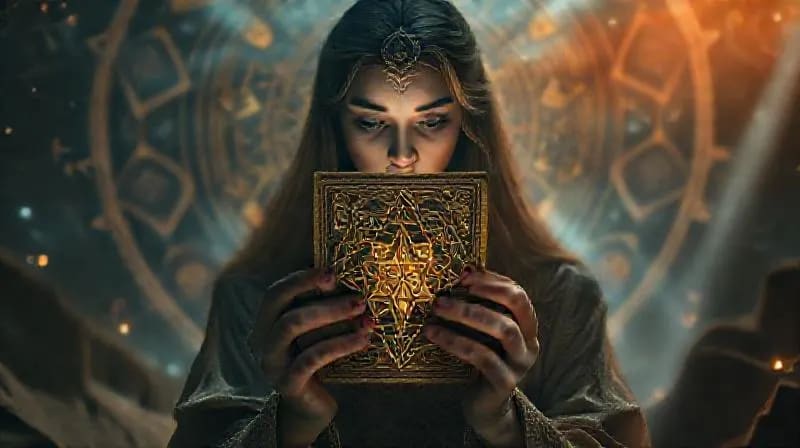
Precursors intellectuales, diagramas fundamentales y representaciones conceptuales que forjaron la visión del Tarot sobre la simbología esotérica y la geometría sagrada.
Fuente visual sujeta a disponibilidad del ecosistema: Wikimedia Commons bajo licencia CC BY-SA 4.0 o renderizado conceptual IA.
At its core, Tarot is a symbolic language, a visual lexicon designed to communicate complex philosophical and spiritual concepts. Each card, from the Fool's journey through the Major Arcana to the nuanced narratives of the Minor Arcana, is imbued with layers of meaning derived from various mystical systems. This article explores how sacred geometry, numerology, astrology, and Kabbalah intertwine within the Tarot to offer a comprehensive framework for self-discovery and understanding the fabric of existence.
The journey into Tarot's esoteric symbolism is an invitation to explore the hidden dimensions of reality and consciousness. It encourages a shift from passive observation to active engagement with universal principles, fostering a deeper connection to one's inner wisdom. By dissecting the symbolism, we can uncover the profound messages that have been encoded within these cards for centuries.
Table of Contents
- Introduction to Tarot and Esoteric Symbolism
- The Language of Sacred Geometry in Tarot
- Major Arcana: Archetypes and Universal Principles
- Minor Arcana: Daily Life and Elemental Forces
- Numerology and Astrological Correspondences
- The Tree of Life and Kabbalistic Connections
- Interpreting Tarot: Beyond the Cards
- Modern Applications and Personal Growth
Introduction to Tarot and Esoteric Symbolism
The Tarot deck, typically comprising 78 cards, is divided into two main sections: the Major Arcana and the Minor Arcana. Each section serves a distinct purpose in the grand narrative of human experience and spiritual evolution. The Major Arcana, with its 22 trump cards, represents significant life lessons, archetypal forces, and spiritual journeys, often reflecting the hero's journey.
The Minor Arcana, consisting of 56 cards divided into four suits (Wands, Cups, Swords, and Pentacles), addresses the more mundane, day-to-day aspects of life, emotions, intellect, and material concerns. Together, these cards form a comprehensive system that can be used for divination, meditation, and psychological introspection. The rich tapestry of symbols within each card draws from a myriad of ancient traditions, making the Tarot a powerful tool for understanding the self and the universe.
Esoteric symbolism in Tarot is not accidental; it is a meticulously crafted system designed to convey profound truths through visual metaphors. These symbols often operate on multiple levels, allowing for varied interpretations depending on the reader's knowledge and intuition. From the colors used to the posture of figures, every detail holds significance, inviting a deeper contemplation of its message.
The Language of Sacred Geometry in Tarot
Sacred geometry, the belief that certain geometric shapes and proportions have sacred meaning and are fundamental to the creation of the universe, is subtly woven into the fabric of Tarot imagery. These geometric patterns, often found in nature, art, and architecture, are believed to represent divine order and cosmic harmony. In Tarot, they provide an underlying structure that reinforces the esoteric messages of the cards.
For instance, the vesica piscis, the flower of life, and the golden ratio can be observed in the composition of many Tarot cards, particularly in decks influenced by esoteric traditions like the Rider-Waite-Smith or Thoth Tarot. These geometric forms are not merely decorative; they are integral to the card's meaning, suggesting balance, interconnectedness, and the unfolding of universal consciousness. Understanding these hidden patterns can deepen one's appreciation for the Tarot's intricate design and its connection to fundamental cosmic laws, much like exploring the Hermetic Principles of Esotericism.
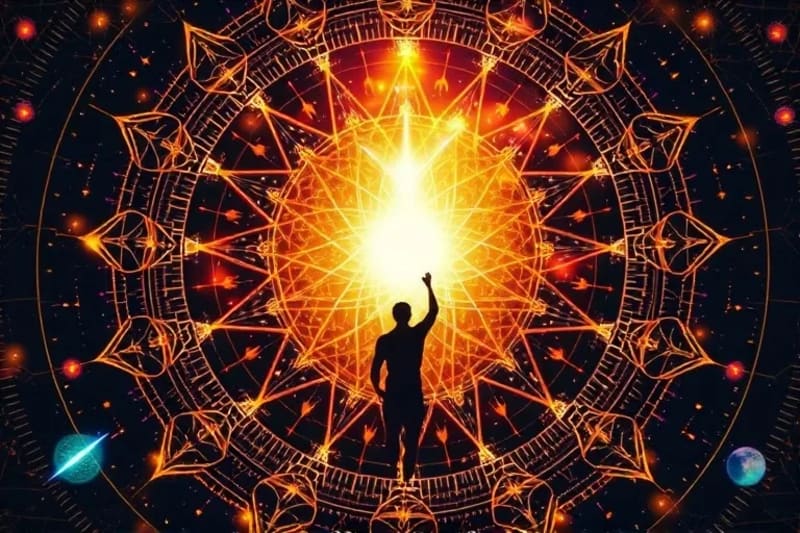
The intricate dance of sacred geometry reveals universal truths and cosmic order.
The presence of circles, triangles, and squares within card illustrations often signifies different aspects of existence. Circles might represent wholeness, infinity, or spirit; triangles, transformation, manifestation, or the divine trinity; and squares, stability, the material world, or the four elements. These shapes are not just static symbols but dynamic representations of energy and consciousness in motion, guiding the eye and the mind towards deeper contemplation.
Major Arcana: Archetypes and Universal Principles
The 22 cards of the Major Arcana are often considered the heart of the Tarot, each representing a significant stage or lesson in the journey of self-discovery and spiritual awakening. These cards embody universal archetypes, powerful symbolic figures that resonate deeply with the collective unconscious, as described by Carl Jung. From the innocent optimism of The Fool to the ultimate fulfillment of The World, they map the human experience.
Each Major Arcana card carries a rich tapestry of symbols: specific colors, objects, animals, and postures that convey its unique meaning. For example, The Magician, with one hand pointing to the heavens and the other to the earth, symbolizes the principle of "as above, so below," mastery, and manifestation. The High Priestess, seated between two pillars, represents intuition, hidden knowledge, and the subconscious mind.
The progression through the Major Arcana can be seen as a spiritual pilgrimage, where each card presents a challenge, an insight, or a transformation. This journey is not linear but cyclical, reflecting the continuous process of learning and evolving. The archetypes within these cards offer profound insights into our own inner workings and the universal patterns that govern our lives.
Minor Arcana: Daily Life and Elemental Forces
While the Major Arcana deals with grand universal themes, the 56 cards of the Minor Arcana delve into the more practical and everyday aspects of life. They are divided into four suits, each corresponding to one of the classical elements and a different sphere of human experience:
- Wands (Fire): Represents passion, creativity, inspiration, ambition, and action.
- Cups (Water): Symbolizes emotions, intuition, relationships, and the subconscious mind.
- Swords (Air): Pertains to intellect, logic, communication, challenges, and conflict.
- Pentacles (Earth): Relates to material possessions, finances, career, health, and the physical world.
Each suit progresses from Ace to Ten, illustrating the development of energy within that elemental sphere, followed by four court cards (Page, Knight, Queen, King) representing different personalities or ways of interacting with that energy. The Minor Arcana provides detailed insights into specific situations, emotional states, and practical challenges, offering guidance on navigating the complexities of daily existence.
The elemental associations are crucial for understanding the Minor Arcana. For example, a "Three of Cups" might signify emotional celebration and community, while a "Three of Swords" could indicate mental anguish or heartbreak. This elemental framework allows for a nuanced interpretation of events and feelings, grounding the esoteric wisdom of the Tarot in tangible experiences.
Numerology and Astrological Correspondences
Numerology, the study of the mystical relationship between numbers and events, is deeply embedded in the structure and meaning of the Tarot. Each number from one to ten carries specific vibrations and symbolic meanings that are reflected in the Minor Arcana cards. For instance, Aces represent new beginnings and potential, Twos signify balance and choice, Threes embody growth and creativity, and so on. This numerical progression provides a developmental narrative within each suit.
Beyond the Minor Arcana, the Major Arcana cards are also numbered, with each number adding another layer of meaning to the archetype it represents. The Fool (0 or 22), The Magician (I), The High Priestess (II), and so forth, all align with specific numerological principles that enhance their interpretation. This integration of numbers allows for a deeper understanding of the energetic patterns at play, similar to how esoteric numerology decodes karmic debt.
Abstract representations of metaphysical concepts and hidden knowledge.
Astrology also plays a significant role in Tarot symbolism, with many cards corresponding to specific planets, zodiac signs, or astrological houses. For example, The Empress is often associated with Venus and Taurus, embodying fertility and abundance, while The Emperor aligns with Aries, representing authority and leadership. These astrological correspondences provide an additional layer of interpretive depth, linking the personal narratives of the cards to broader cosmic influences.
Understanding these astrological links can help readers contextualize the energies of the cards within a larger celestial framework, offering insights into timing, personal predispositions, and potential challenges. For instance, cards like the "Eight of Swords" might be linked to specific critical degrees or karmic hotspots in a birth chart, indicating periods of restriction or mental confinement.
The Tree of Life and Kabbalistic Connections
The Kabbalistic Tree of Life, a central mystical symbol in Jewish Kabbalah, is another profound system deeply integrated into the esoteric structure of the Tarot. The Tree of Life consists of ten Sephiroth (emanations or attributes of God) connected by 22 paths, representing the different aspects of creation and the journey of spiritual ascent. Each of these 22 paths corresponds directly to a Major Arcana card, while the ten Sephiroth are often linked to the numbered cards of the Minor Arcana.
This intricate correspondence allows the Tarot to be viewed as a map of consciousness, mirroring the Kabbalistic understanding of the universe and the human soul. The Sephiroth, from Kether (Crown) to Malkuth (Kingdom), represent different stages of divine manifestation and human experience. By aligning Tarot cards with these Sephiroth and paths, practitioners can gain a deeper understanding of the spiritual forces at play in a reading and their connection to universal creation.
For example, The Fool is often associated with the path connecting Kether to Chokmah, representing the initial spark of divine will and pure potential. The Magician connects Kether to Binah, symbolizing the manifestation of divine wisdom into form. This Kabbalistic framework provides a profound philosophical backdrop for interpreting the Tarot, elevating it from a predictive tool to a comprehensive system of spiritual knowledge and self-realization.
Interpreting Tarot: Beyond the Cards
Effective Tarot interpretation goes far beyond memorizing card meanings; it involves synthesizing the complex interplay of symbols, numbers, astrological associations, and Kabbalistic principles within a given spread. A true Tarot reading is a dialogue between the conscious and subconscious mind, facilitated by the symbolic language of the cards. It requires intuition, empathy, and a deep understanding of the querent's situation.
The position of a card in a spread, its relationship to surrounding cards, and whether it appears upright or reversed all contribute to its nuanced meaning. Reversals often indicate blocked energy, an internal challenge, or an aspect of the card's energy that needs to be re-evaluated. The art of interpretation lies in weaving these individual threads into a coherent narrative that offers clarity, guidance, and empowerment.
Moreover, Tarot interpretation is an ongoing process of learning and self-reflection. Each reading offers an opportunity to deepen one's understanding of the cards and their connection to personal and universal experiences. It encourages practitioners to engage in shadow work, integrating unconscious aspects for greater wholeness and self-awareness.
Modern Applications and Personal Growth
In contemporary times, the Tarot has evolved beyond its traditional role in divination to become a powerful tool for personal growth, psychological insight, and creative inspiration. Many modern practitioners use Tarot as a journaling prompt, a meditation aid, or a way to explore different perspectives on life challenges. Its rich symbolic language can unlock creativity and provide fresh insights into complex problems.
The Tarot can be particularly effective in facilitating self-reflection and decision-making. By drawing cards and contemplating their meanings in relation to a specific question or situation, individuals can gain clarity on their motivations, fears, and potential paths forward. It acts as a visual guide, helping to articulate unspoken thoughts and feelings, and bringing subconscious patterns to the forefront of awareness.
Ultimately, the esoteric symbolism of the Tarot offers a timeless framework for understanding the intricate dance between the individual and the cosmos. By engaging with its layers of meaning—from sacred geometry to archetypal narratives—we can unlock profound universal truths and embark on a continuous journey of personal and spiritual evolution. It is a testament to the enduring power of symbols to illuminate the path to wisdom.
Related Searches & Deep Dives
- Hermetic Principles Esotericism: Deep Dive Guide
- Esoteric Numerology: Decoding Karmic Debt, Soul Contracts
- Shadow Work: Integrating Unconscious for Wholeness
- Critical Degrees Karmic Hotspots Birth Chart Lessons
- Galactic Center Fixed Stars Esoteric Influences Soul Purpose Natal Charts
- Asteroids in Natal Chart: Vesta, Juno, Pallas, Psyche & More Explained
- Feng Shui Chinese Zodiac Home Energy
- Tao Animal Sign: Chinese Zodiac Harmony Insights
- Psychology of Astrological Ages: Cycles Shaping Collective Consciousness
- The Cosmic Dance of Archangels: Divine Orchestration of Harmony
Source: Hybrid content assisted by AI and human editorial supervision.


Comments
Post a Comment