
Shadow Work: Integrating Unconscious for Wholeness | StarPluto
Shadow Work, a profound concept rooted in analytical psychology, offers a transformative path towards psychological and spiritual wholeness. It involves confronting and integrating the repressed, unacknowledged, and often negative aspects of our personality, collectively known as the "shadow." This journey is not merely about acknowledging our flaws but about understanding their origins and reclaiming the energy bound within them, leading to greater authenticity, self-acceptance, and personal power.
The concept of the shadow was popularized by Swiss psychiatrist Carl Jung, who believed that everyone possesses an unconscious "dark side" comprising all the traits and emotions we deem unacceptable and therefore hide from ourselves and others. While often associated with negative attributes, the shadow also contains undeveloped positive qualities and creative potential. Integrating these hidden facets is crucial for true self-realization and moving beyond limiting patterns.

An abstract oil painting illustrating the complex interplay of light and shadow, representing the integration process in Shadow Work.
Engaging in Shadow Work is an act of courage and self-compassion. It requires a willingness to look inward, explore uncomfortable truths, and challenge deeply ingrained beliefs about ourselves. However, the rewards are immense, promising a deeper connection to our authentic self, improved relationships, and a more fulfilling life. This article will delve into the principles of Shadow Work, its benefits, practical methods, and how it contributes to spiritual growth.
Table of Contents
- Understanding the Shadow: Jung's Perspective
- Why Shadow Work is Essential for Wholeness
- Identifying Your Shadow Aspects
- Practical Methods for Shadow Work
- Navigating Challenges and Resistance
- The Integration Process: Embracing All of You
- Shadow Work and Spiritual Awakening
- Conclusion: The Path to Authentic Self
Understanding the Shadow: Jung's Perspective
Carl Jung defined the shadow as the unconscious part of the personality that the conscious ego does not identify in itself. It is the "dark side" of our personality, consisting primarily of primitive, negative, and unadapted human qualities, but also containing positive, undeveloped attributes. These aspects are often repressed due to societal norms, parental expectations, or personal trauma, leading us to believe they are undesirable or unacceptable.
The shadow is not inherently evil; rather, it is amoral, a raw, untamed part of our psyche. It encompasses everything from our deepest fears and insecurities to our unexpressed anger, jealousy, and shame. Paradoxically, it also holds our untapped potential, creativity, and strength that we might be afraid to acknowledge. When we deny these parts, they don't disappear; instead, they operate from the unconscious, often manifesting in destructive ways through projections onto others or self-sabotaging behaviors.
Jung emphasized that the goal is not to eliminate the shadow, but to integrate it into the conscious personality. This process, known as individuation, is about becoming a whole, complete individual. By bringing unconscious material into conscious awareness, we gain a more comprehensive understanding of ourselves, reducing the likelihood of being unconsciously driven by these hidden forces. This integration allows for a more balanced and authentic expression of self.
Why Shadow Work is Essential for Wholeness
The benefits of engaging in Shadow Work extend far beyond mere self-awareness. It is a cornerstone of true personal growth and spiritual evolution. By acknowledging and integrating our shadow, we unlock a multitude of positive changes in our lives. One of the most significant advantages is achieving psychological wholeness, where all parts of the self are recognized and accepted, leading to a profound sense of inner peace and completeness.
Another critical benefit is enhanced authenticity. When we suppress parts of ourselves, we live inauthentically, constantly trying to maintain an image that doesn't fully represent who we are. Shadow Work allows us to shed these masks, revealing our true self and fostering genuine connections with others. This authenticity also translates into greater self-acceptance, as we learn to embrace our perceived flaws as integral parts of our unique being.
Furthermore, Shadow Work significantly reduces the tendency to project our unacknowledged traits onto others. When we refuse to own our anger, jealousy, or insecurity, we often see these qualities exaggerated in the people around us, leading to judgment and conflict. By integrating our shadow, we diminish these projections, fostering empathy and improving our relationships. This process also liberates immense amounts of energy previously spent on suppression and denial, which can then be redirected towards creative pursuits and personal development.
Identifying Your Shadow Aspects
Recognizing the presence of your shadow is the first crucial step in Shadow Work. The shadow often manifests in subtle yet persistent ways, influencing our thoughts, emotions, and behaviors without our conscious awareness. Paying attention to certain patterns and reactions can provide valuable clues about what lies hidden in your unconscious.
One of the most common indicators is strong emotional reactions to others. If someone's behavior triggers an intense feeling of anger, disgust, or judgment within you, it's often a sign that they are mirroring an unacknowledged aspect of your own shadow. This phenomenon, known as psychological projection, is a defense mechanism where we attribute our own unacceptable thoughts or feelings to another person.
Recurring patterns in your life, especially those that lead to frustration or self-sabotage, can also point to shadow aspects. For instance, if you repeatedly find yourself in similar dysfunctional relationships or consistently undermine your own success, there might be unconscious beliefs or fears at play. Additionally, unfulfilled desires, secret behaviors, or intense shame about certain aspects of your past can all be manifestations of the shadow seeking recognition.

A symbolic still life of a journal and a key, representing the introspective journey of uncovering hidden aspects of the self.
Practical Methods for Shadow Work
Once you've begun to identify potential shadow aspects, the next step is to actively engage with them. There are several powerful techniques that can facilitate this process, each offering a unique pathway into the unconscious. Consistency and a gentle, non-judgmental approach are key to successful Shadow Work.
Journaling: This is perhaps one of the most accessible and effective methods. Dedicate a journal specifically to Shadow Work. Write freely about your deepest fears, resentments, and judgments of others. Explore moments when you felt intense shame or anger. Ask yourself: "What do I dislike most about others?" or "What qualities do I suppress in myself?" The act of writing can bring unconscious thoughts to the surface.
Dream Analysis: Dreams are direct messages from the unconscious. Keep a dream journal and pay attention to recurring symbols, characters, and themes. Often, figures in your dreams represent aspects of yourself, including your shadow. Analyzing these narratives can provide profound insights into your hidden psyche.
Active Imagination: Developed by Jung, this technique involves consciously engaging with unconscious material. You might imagine a dialogue with a dream figure, a person you resent, or a symbolic representation of your shadow. Allow the conversation to unfold naturally, observing what arises without judgment. This can help to personify and understand your shadow.
Identifying Projections: Actively observe your reactions to others. When you feel a strong negative emotion towards someone, pause and ask yourself if that quality might exist within you. For example, if you're irritated by someone's arrogance, consider if there's a part of you that desires more recognition or struggles with humility. This is not about blaming yourself, but about reclaiming disowned parts.
Creative Expression: Art, music, dance, or any form of creative expression can be a powerful outlet for the unconscious. Allow yourself to create without judgment or expectation. The themes, colors, or movements that emerge can reveal hidden emotions and aspects of your shadow that words might not capture.
Therapy or Guidance: For deeper or more challenging shadow aspects, working with a qualified therapist, coach, or spiritual guide can be invaluable. They can provide a safe space, offer objective insights, and help you navigate potentially overwhelming emotions. This is especially important when dealing with past trauma.
Navigating Challenges and Resistance
Shadow Work is not always a comfortable process. It can bring up intense emotions, old wounds, and significant resistance. It's crucial to approach this work with self-compassion and patience. Expect periods of discomfort, as confronting repressed aspects of yourself can be unsettling. You might feel shame, guilt, anger, or sadness as these emotions surface.
Resistance is a natural part of the process. Your ego, which has worked hard to keep these aspects hidden, might try to protect you from the perceived threat of their emergence. This can manifest as procrastination, distraction, or a sudden urge to abandon the work. Recognizing resistance as a sign that you're nearing important unconscious material can help you gently push through it.
It is vital to create a safe container for this work. This means practicing self-care, having a support system, and knowing when to take breaks. Don't try to force insights or rush the process. Shadow Work is a marathon, not a sprint, and it unfolds in layers. Be kind to yourself, acknowledge your courage, and celebrate small breakthroughs. The goal is not to eradicate the shadow, but to understand, accept, and integrate it, transforming perceived weaknesses into sources of strength.
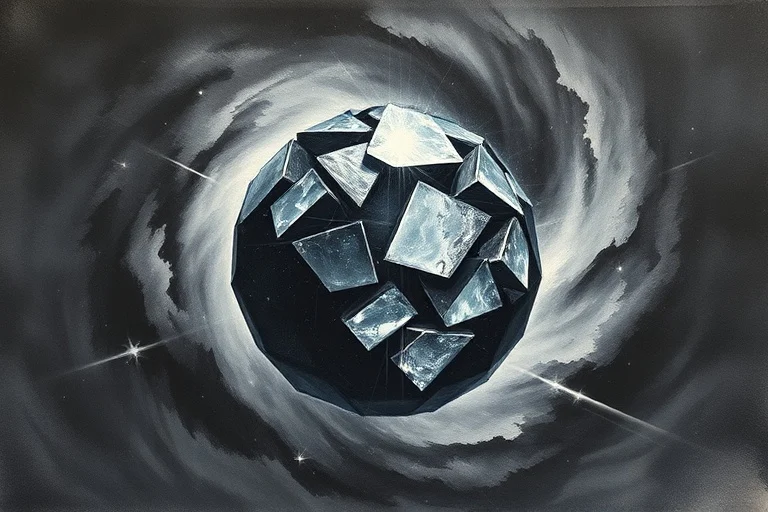
A digital illustration of a fragmented crystal sphere, representing the journey of integrating different aspects of the self into a unified whole.
The Integration Process: Embracing All of You
Integration is the ultimate goal of Shadow Work. It's not about becoming "perfect" or eliminating your shadow entirely, but about consciously acknowledging, accepting, and incorporating these previously disowned parts into your conscious self. This process transforms their potentially destructive influence into constructive energy and wisdom. Integration means understanding that your shadow aspects are not separate entities to be fought, but rather aspects of your complete being that need compassion and understanding.
One key aspect of integration is understanding the positive intent behind seemingly negative shadow traits. For example, anger, when integrated, can become a powerful force for setting boundaries or advocating for justice. Fear, when understood, can transform into caution and self-preservation. By recognizing the underlying needs and potential strengths within your shadow, you can consciously choose how to express these energies in healthy and productive ways.
Integration also involves forgiving yourself for past actions influenced by your unacknowledged shadow. This self-forgiveness is crucial for releasing guilt and shame, allowing you to move forward with greater freedom. It's a continuous process of self-discovery and acceptance, leading to a profound sense of inner peace and a more unified self. The integrated individual is less prone to external manipulation and more grounded in their authentic power, capable of navigating life's complexities with wisdom and resilience.
Shadow Work and Spiritual Awakening
For many, Shadow Work is an indispensable component of spiritual awakening and growth. True spirituality is not about bypassing difficult emotions or pretending to be constantly positive; it's about embracing the totality of the human experience, including its darker aspects. By engaging with the shadow, individuals often find a deeper connection to their higher self, their inner wisdom, and the universal consciousness.
The journey into the unconscious can reveal limiting beliefs, ancestral patterns, and karmic imprints that hinder spiritual progress. Confronting and healing these aspects allows for a clearer channel to spiritual insights and experiences. It purifies the psyche, removing blockages that prevent us from fully embodying our spiritual potential. This purification often leads to a heightened sense of intuition, empathy, and a more profound understanding of the interconnectedness of all things.
Moreover, Shadow Work fosters genuine humility. By acknowledging our own capacity for both light and dark, we become less judgmental of others and more compassionate towards the human condition. This expanded compassion is a hallmark of spiritual maturity. Ultimately, integrating the shadow is a sacred act of self-love, paving the way for a more authentic, empowered, and spiritually aligned existence, where the light of consciousness illuminates even the deepest corners of the soul.
Conclusion: The Path to Authentic Self
Shadow Work is a challenging yet immensely rewarding journey towards self-discovery and personal liberation. It invites us to bravely confront the hidden aspects of our psyche, transforming what was once repressed into a source of strength and wisdom. By integrating our shadow, we move beyond superficial self-perception, embracing our full, complex humanity. This process not only enhances our individual well-being but also fosters healthier relationships and a more compassionate engagement with the world.
Embracing Shadow Work is an ongoing commitment to growth, requiring patience, courage, and self-compassion. It is a testament to the profound capacity of the human spirit to heal, evolve, and ultimately achieve a state of genuine wholeness. As we illuminate our shadows, we not only become more authentic versions of ourselves but also contribute to the collective awakening of consciousness, one integrated self at a time.
Fuente: Contenido híbrido asistido por IAs y supervisión editorial humana.


Comments
Post a Comment