
AI Dream Interpretation Ethics: Unlocking Subconscious Algorithms
The human subconscious has long been a realm of mystery, a vast ocean of unexpressed thoughts, emotions, and desires that manifest in the enigmatic language of dreams. For centuries, dream interpretation has been a practice steeped in psychology, spirituality, and personal introspection. However, with the rapid advancement of artificial intelligence, a new frontier is emerging: the algorithmic interpretation of dreams. This presents a fascinating intersection of technology and the inner self, promising unprecedented insights but also raising a complex web of ethical considerations that demand careful scrutiny.
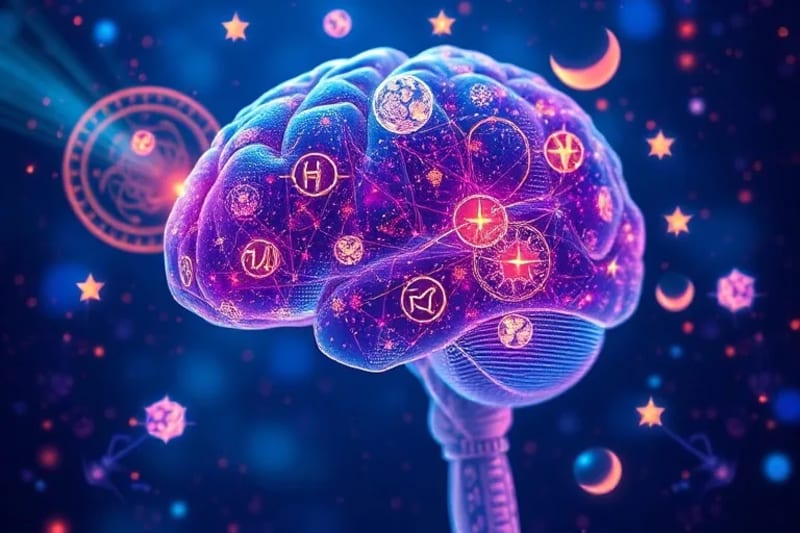 Conceptual representation of advanced AI systems interpreting the intricate and symbolic narratives of the human subconscious, revealing hidden patterns and meanings.
This image is a conceptual AI render, illustrating the intersection of technology and dream analysis, exploring the potential and complexity of algorithmic interpretation.
As AI systems become increasingly sophisticated, capable of processing vast amounts of data and identifying intricate patterns, the idea of applying these capabilities to dream analysis moves from science fiction to a tangible possibility. From analyzing linguistic patterns in dream journals to correlating physiological data during REM sleep with reported dream content, AI could potentially uncover connections that elude human perception. Yet, this profound capability comes with significant ethical baggage, touching upon privacy, bias, autonomy, and the very definition of self.
This article delves into the multifaceted ethical landscape of AI dream interpretation, exploring the promises it holds, the perils it introduces, and the critical need for robust ethical frameworks to guide its development and deployment. We will navigate the intricate balance between innovation and responsibility, ensuring that as we unlock the subconscious algorithmically, we do so with integrity and respect for human dignity.
Table of Contents
- The Promise of Algorithmic Dream Analysis
- Core Ethical Dilemmas: Privacy, Consent, and Data Ownership
- Bias and Misinterpretation in AI Dream Analysis
- Psychological and Existential Implications
- Therapeutic Applications and Associated Risks
- Regulatory Frameworks and the Future of AI Dream Interpretation
The Promise of Algorithmic Dream Analysis
The potential benefits of AI-driven dream interpretation are substantial, offering a new paradigm for understanding human consciousness and mental health. By leveraging machine learning algorithms, AI systems could analyze vast datasets of dream reports, physiological data (e.g., EEG, heart rate during REM sleep), and even contextual information about an individual's waking life. This holistic approach could reveal correlations and patterns that are imperceptible to human analysts, leading to more accurate and personalized interpretations.
One primary advantage lies in the ability to identify recurring themes, symbols, and emotional states across numerous dreams, providing a longitudinal perspective on an individual's subconscious landscape. Such insights could be invaluable for therapists and researchers, offering objective data points to complement subjective self-reporting. For instance, AI could detect subtle shifts in dream content indicative of emerging psychological issues, stress levels, or even the onset of certain neurological conditions, potentially enabling early intervention.
- Enhanced Pattern Recognition: AI excels at identifying complex patterns in large datasets, which is crucial for discerning recurring motifs and underlying structures in dream narratives.
- Objective Data Analysis: While human interpretation can be subjective, AI offers a more objective, data-driven approach, reducing the potential for personal biases in analysis.
- Personalized Insights: By learning from an individual's unique dream history and life context, AI can provide highly tailored interpretations that resonate more deeply with the user.
- Research Acceleration: AI tools can process and categorize dream data at scale, significantly accelerating research into dream theory, psychology, and neuroscience.
Moreover, AI dream interpretation could democratize access to self-understanding, making sophisticated analytical tools available to a broader audience. Individuals could use AI-powered applications to gain initial insights into their dreams, fostering greater self-awareness and potentially guiding them towards professional help if deeper issues are detected. This could be particularly impactful in regions with limited access to mental health professionals, offering a preliminary layer of support and insight.
Core Ethical Dilemmas: Privacy, Consent, and Data Ownership
The profound intimacy of dream content immediately brings to the forefront critical ethical questions concerning privacy, consent, and data ownership. Dreams are arguably one of the most private domains of human experience, reflecting our deepest fears, desires, and vulnerabilities. Allowing an AI to access and interpret this information raises significant concerns about how such sensitive data will be collected, stored, and utilized.
 A digital rendering depicting a neural network intertwined with a dream journal, symbolizing the algorithmic quest to unlock the mysteries of the subconscious.
The first major hurdle is informed consent. How can individuals truly understand and consent to the interpretation of their subconscious by an algorithm, especially when the workings of deep learning models can be opaque ("black box" problem)? Users must be fully aware of what data is being collected (dream narratives, physiological metrics, personal context), how it will be processed, who will have access to it, and for what purposes. This requires clear, transparent, and easily understandable privacy policies, moving beyond convoluted legal jargon.
Data privacy and security are paramount. Dream data, once digitized and analyzed, could reveal highly sensitive personal information, including mental health conditions, traumatic experiences, sexual preferences, or even criminal inclinations. A breach of such data could have devastating consequences for individuals, leading to discrimination, exploitation, or severe psychological distress. Robust encryption, anonymization techniques, and stringent access controls are non-negotiable requirements for any AI dream interpretation platform.
Furthermore, the question of data ownership is complex. If an AI system generates novel insights or interpretations from an individual's dream data, who owns these insights? The individual, the AI developer, or the platform provider? This has implications for commercialization, research, and the individual's right to control their own psychological profile. Establishing clear legal frameworks around the ownership and intellectual property of AI-generated insights from personal subconscious data is crucial to prevent exploitation.
The potential for misuse of this data is also a grave concern. Imagine insurance companies using AI dream analysis to assess risk profiles, employers evaluating candidates based on their subconscious patterns, or even governments monitoring citizens' inner lives. Such scenarios underscore the urgent need for strict ethical guidelines and legal prohibitions against the discriminatory or coercive use of AI-derived subconscious insights. The development of AI in this field must prioritize human well-being and autonomy above all else, as highlighted in discussions around Birth Chart Analysis AI Era Ethics Future Cosmic Readings, where the ethical implications of AI in personal insights are also debated.
Bias and Misinterpretation in AI Dream Analysis
Even with the most advanced algorithms, AI systems are not immune to biases, particularly when dealing with complex and culturally nuanced data like dreams. The training data used to develop AI dream interpretation models will inevitably reflect the biases present in the real world, including cultural, linguistic, and societal prejudices. If an AI is primarily trained on dream reports from a specific demographic or cultural group, its interpretations may be inaccurate or even harmful when applied to individuals from different backgrounds.
Dreams are deeply embedded in cultural contexts. A symbol that holds one meaning in one culture might have an entirely different, or even opposite, connotation in another. For example, a snake might symbolize wisdom in some traditions and treachery in others. An AI trained without sufficient cultural diversity in its dataset could easily misinterpret such symbols, leading to irrelevant or misleading analyses. This algorithmic bias could perpetuate stereotypes and reinforce cultural misunderstandings rather than fostering genuine insight.
- Cultural Context: Dreams are heavily influenced by cultural narratives, myths, and social norms. AI must be trained on diverse datasets to account for these variations.
- Linguistic Nuances: The subtle meanings and connotations of words used in dream reports can vary significantly across languages and dialects, posing a challenge for AI interpretation.
- Developer Bias: The biases of the developers—conscious or unconscious—can be encoded into the algorithms, influencing how dreams are categorized and interpreted.
- Lack of Lived Experience: AI lacks subjective consciousness and lived experience, which are often critical for truly understanding the emotional and personal resonance of dream symbols.
 A 3D render illustrating fragmented dream symbols interconnected by an unseen algorithmic current, representing the AI's attempt to find coherence in the subconscious.
Furthermore, the very nature of dream interpretation is often about ambiguity and multiple layers of meaning. An AI might reduce this complexity to a single, definitive interpretation, stripping away the richness and personal significance that comes from individual reflection and therapeutic dialogue. This reductionist approach could hinder, rather than help, an individual's journey of self-discovery. Developers must prioritize transparency in how AI models arrive at their interpretations, allowing users and experts to understand the reasoning and identify potential biases. The ethical development of such tools must involve interdisciplinary teams, including psychologists, anthropologists, and ethicists, to mitigate these risks.
Psychological and Existential Implications
Beyond the technical and data-related ethical concerns, AI dream interpretation carries profound psychological and existential implications for individuals and society. The act of interpreting one's dreams has traditionally been a deeply personal and often transformative process, fostering introspection and a unique connection to one's inner world. Outsourcing this process to an algorithm could fundamentally alter this relationship, potentially diminishing the individual's sense of agency and self-understanding.
There is a risk that individuals might become overly reliant on AI interpretations, accepting them as definitive truths rather than as starting points for personal reflection. This could lead to a de-skilling
of introspection, where people lose the capacity to engage with their own subconscious on a deeper, more intuitive level. If an AI tells someone their dream means X, they might stop exploring what X truly means to them personally, thereby losing a valuable avenue for growth. This echoes broader concerns about over-reliance on technology for self-discovery, as explored in topics like Biometric Divination Biofeedback Intuition Self-Discovery Digital.
The American Psychological Association (APA) emphasizes the importance of context and individual meaning in psychological interpretation, stating that "psychological assessments are valid only when interpreted by a qualified professional who understands the client's unique background and current situation." While AI can assist, it cannot replace this nuanced human understanding.
Moreover, the interpretations provided by AI, even if technically accurate based on its training data, might not always be psychologically beneficial. Revealing a traumatic memory or a deeply repressed desire without proper psychological support could be harmful. AI lacks empathy and the ability to gauge an individual's emotional readiness to confront certain truths. This highlights the critical need for AI dream interpretation tools to be designed as aids for human therapists, rather than replacements, ensuring that sensitive insights are delivered within a supportive and ethical therapeutic context.
The existential question arises: if an algorithm can fully decode our subconscious, what does that mean for the mystery of human consciousness itself? Does it reduce our inner world to a predictable set of algorithms? While AI can model patterns, it cannot replicate subjective experience or the profound, often irrational, nature of human creativity and emotion. Maintaining a clear distinction between algorithmic analysis and genuine human understanding is vital to preserve the richness and complexity of our inner lives.
Therapeutic Applications and Associated Risks
Despite the ethical challenges, the therapeutic potential of AI dream interpretation is undeniable. When used responsibly and as a supplementary tool, AI could enhance various aspects of mental health support. For example, AI could help individuals track recurring dream themes related to anxiety or depression, providing objective data for discussion with a therapist. It could also assist in identifying patterns that indicate progress in therapy or the need for adjustments to treatment plans.
AI could also be particularly useful in research settings, allowing psychologists to analyze dream content from large populations to identify common psychological stressors or cultural influences on mental well-being. This could lead to a deeper understanding of various psychological conditions and the development of more effective therapeutic interventions. For instance, understanding how collective anxieties manifest in dreams could inform public health strategies or crisis interventions.
However, these applications are not without risks. The primary concern is the potential for misdiagnosis or the provision of harmful advice if AI interpretations are taken as definitive. An AI might flag a dream as indicative of a severe psychological disorder when, in a human context, it might simply be a response to daily stress. Without the nuanced judgment of a human professional, such misinterpretations could lead to unnecessary distress, self-medication, or even a reluctance to seek professional help due to fear or misunderstanding.
- Over-reliance: Patients might rely too heavily on AI interpretations, potentially delaying or replacing professional psychological assessment.
- Emotional Distress: Unfiltered or poorly contextualized AI interpretations of sensitive dream content could trigger emotional distress or re-traumatization.
- Ethical Boundaries: The line between helpful insight and intrusive psychological profiling can become blurred, especially if AI systems are used without clear ethical guidelines.
- Lack of Empathy: AI cannot offer the empathetic support and human connection that are fundamental to effective psychotherapy.
To mitigate these risks, AI dream interpretation tools should be developed with a human-in-the-loop
approach. This means that AI acts as an assistant, providing data and insights to human therapists, who then use their professional judgment, empathy, and understanding of the individual's unique situation to provide interpretations and guidance. This collaborative model ensures that the power of AI is harnessed while safeguarding the ethical and psychological well-being of individuals. This aligns with approaches in other fields where technology assists human understanding of inner states, such as Guided Meditation Planetary Transits Aligning Inner Harmony.
Regulatory Frameworks and the Future of AI Dream Interpretation
Given the profound ethical implications, the development of robust regulatory frameworks is not merely desirable but absolutely essential for the responsible advancement of AI dream interpretation. These frameworks must address data privacy, algorithmic transparency, bias mitigation, and the appropriate use of AI in therapeutic contexts. International collaboration will be crucial, as dream data, like other forms of digital information, can transcend national borders, necessitating harmonized standards.
Key components of such a regulatory framework should include:
- Mandatory Data Protection: Strict regulations akin to GDPR or HIPAA for the collection, storage, and processing of highly sensitive dream data.
- Algorithmic Transparency and Explainability: Requirements for developers to provide clear explanations of how their AI models interpret dreams, allowing for auditing and bias detection.
- Ethical Review Boards: Establishment of independent ethical review boards to assess AI dream interpretation technologies before deployment, similar to those for medical devices.
- Professional Oversight: Clear guidelines on the role of AI in clinical settings, emphasizing that AI should augment, not replace, human psychological expertise.
- User Rights: Affirmation of individuals' rights to access, correct, and delete their dream data, as well as the right to opt-out of AI interpretation.
- Prohibition of Discriminatory Use: Legal prohibitions against using AI-derived subconscious insights for discriminatory purposes in employment, insurance, or legal contexts.
The future of AI dream interpretation hinges on our collective ability to navigate these ethical complexities with foresight and responsibility. As AI continues to evolve, its capacity to delve into the most intimate aspects of human experience will only grow. Therefore, a proactive approach to governance, involving policymakers, ethicists, AI developers, and psychological professionals, is paramount. This will ensure that AI serves as a tool for deeper self-understanding and healing, rather than becoming a source of new vulnerabilities or ethical quandaries.
Ultimately, the goal should be to create AI systems that empower individuals to explore their subconscious safely and constructively, fostering personal growth while upholding fundamental human rights and dignity. The journey into the algorithmic subconscious is just beginning, and the ethical compass we set now will determine its trajectory.
Explore More Insights
- Pig Rooster Compatibility: Chinese Zodiac Insights | StarPluto
- Astro-Botany: Celestial Influences on Plant Growth
- Chinese Zodiac & Career Paths: Best Professions for Each Animal Sign | StarPluto
- 11th House Astrology: Friendships, Hopes, Social Networks | StarPluto
- Yods Grand Crosses: Decoding Complex Astrological Patterns | StarPluto
- Planetary Herbalism: Crafting Remedies Astrological Imbalances
- Astral Projection Guide: Exploring Beyond Physical Consciousness | StarPluto
- Astro-Genomics Karmic Health Blueprints DNA Connections Decoded
- Astrología Kármica: Nodos Lunares, Vidas Pasadas Sanación
- Ciberdelincuencia Financiera 2.0: Amenazas IA Criptomonedas | Althox
Source: Hybrid content assisted by AI and human editorial supervision.


Comments
Post a Comment