
Asteroid Goddesses: Modern Relationship Dynamics Beyond Synastry
In the vast tapestry of astrological interpretation, the traditional planetary bodies have long been the primary focus for understanding personality and destiny. However, modern astrology has expanded its gaze to include the profound influence of celestial bodies beyond the classical seven: the asteroid goddesses. These minor planets, primarily orbiting between Mars and Jupiter, offer nuanced insights into our psychological makeup, relational patterns, and spiritual paths, especially when applied to the intricate dynamics of human connections. Moving beyond the foundational principles of synastry, the inclusion of these feminine archetypes provides a richer, more detailed map of compatibility, challenges, and growth opportunities within relationships.
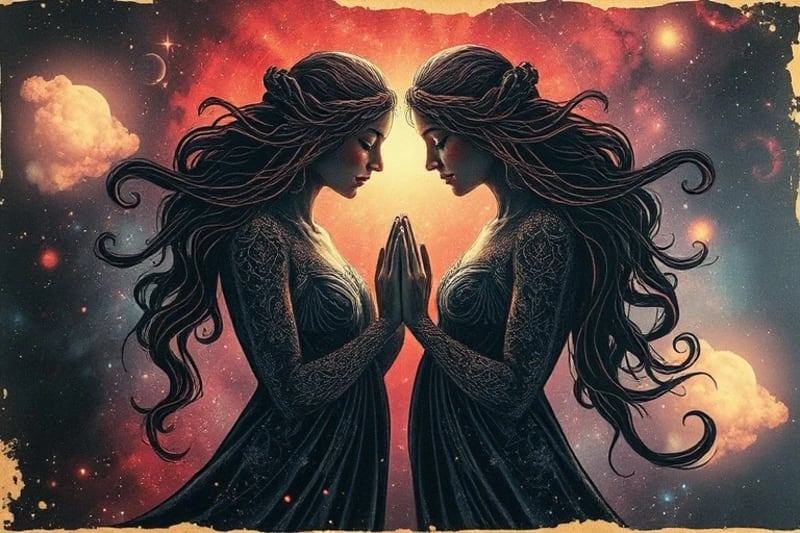
Precursors intelectuales, diagramas fundamentales y representaciones conceptuales que forjaron la visión de las diosas asteroides en la astrología moderna.
This evocative visual is a conceptual AI rendering, designed to capture the essence of ancient wisdom meeting contemporary understanding, drawing inspiration from various cultural and scientific interpretations.The traditional synastry chart compares two birth charts to identify areas of harmony and discord, primarily through aspects between the Sun, Moon, and personal planets. While invaluable, this approach can sometimes overlook the subtle yet powerful undercurrents that shape our interactions. The asteroid goddesses—Ceres, Pallas, Juno, and Vesta, among others—introduce a layer of complexity that speaks to our deepest needs, wounds, and expressions of feminine power, both within ourselves and in our partnerships. Understanding their placement and aspects in a composite or synastry chart can illuminate previously hidden aspects of a relationship, offering pathways for deeper empathy and conscious relating.
The Core Four Asteroid Goddesses and Their Archetypes
Each of the primary asteroid goddesses embodies a distinct archetypal energy, reflecting facets of the feminine experience that are crucial for comprehensive relationship analysis. Their mythology provides a rich framework for understanding their astrological significance.
The Core Four Asteroid Goddesses and Their Archetypes
Ceres: Nurturing, Loss, and Attachment
Pallas Athena: Wisdom, Strategy, and Creative Intelligence
Juno: Partnership, Commitment, and Justice
Vesta: Devotion, Sacred Space, and Inner Fire
Integrating Asteroid Goddesses into Synastry
Beyond Synastry: Evolutionary Paths and Healing
Practical Application: Charting Your Relationship Dynamics
Ceres: Nurturing, Loss, and Attachment
Ceres, named after the Roman goddess of agriculture and motherly love, symbolizes our capacity to nurture and be nurtured, our relationship with food and sustenance, and our experiences with loss and separation. In a relationship context, Ceres reveals how individuals give and receive care, their emotional attachment styles, and their responses to feelings of abandonment. A prominent Ceres in synastry can indicate a deeply nurturing bond, but also highlights potential areas of codependency or struggles with letting go. Understanding Ceres helps partners address their fundamental needs for security and emotional support.
Pallas Athena: Wisdom, Strategy, and Creative Intelligence
Pallas Athena, the Greek goddess of wisdom, warfare, and crafts, represents our intellectual prowess, strategic thinking, and creative problem-solving abilities. In relationships, Pallas reveals how partners approach conflict, communicate ideas, and collaborate on projects. It highlights the areas where intellectual stimulation and shared mental pursuits are vital. A strong Pallas connection can signify a partnership built on mutual respect for intelligence and a shared vision for creative endeavors, offering a unique dynamic that goes beyond mere emotional compatibility. This asteroid encourages partners to engage with their challenges not just emotionally, but with strategic insight.
An illustrative digital artwork capturing the intricate interplay of intellectual and emotional currents within human bonds, reflecting the influence of Pallas Athena.
Juno: Partnership, Commitment, and Justice
Juno, the Roman queen of the gods and protector of marriage, symbolizes commitment, partnership, and the desire for equitable relationships. In synastry, Juno points to the qualities we seek in a committed partner, our expectations for marriage or long-term unions, and our struggles with fidelity or perceived injustices within a relationship. Her placement can highlight karmic connections or fated relationships, where lessons about fairness and mutual respect are paramount. Understanding Juno’s role can help partners navigate the complexities of commitment and ensure that their union is built on a foundation of mutual understanding and justice.
Vesta: Devotion, Sacred Space, and Inner Fire
Vesta, the Roman goddess of the hearth and sacred fire, represents our capacity for devotion, our need for sacred space, and our inner spiritual focus. In relationships, Vesta indicates where we seek to dedicate ourselves, the boundaries we need to maintain our inner sanctuary, and how we express our spiritual or creative passion. A strong Vesta connection can signify a relationship where partners honor each other's individual paths and provide space for personal growth and spiritual development. It also highlights areas where one might feel their personal space or devotion is threatened. Vesta encourages a balanced approach to intimacy, ensuring that individual integrity is maintained within the partnership.
Integrating Asteroid Goddesses into Synastry
When analyzing asteroid goddesses in synastry, astrologers look at several key factors. The house placement of an asteroid in a partner's chart reveals the life area where its energy is most expressed. For instance, if one partner's Juno falls into the other's 7th House of Partnerships, it suggests a strong inclination towards commitment and marriage within that relationship. Aspects between an individual's asteroid and a partner's personal planets are also crucial. A conjunction of one person's Ceres to another's Moon could indicate a profound emotional and nurturing bond, while a square might point to challenges in providing or receiving care.
The interplay of these asteroid energies provides a more holistic view than traditional synastry alone. For example, while Venus and Mars describe attraction and passion, Juno speaks to the underlying framework of commitment, and Vesta to the sacred space each partner holds for the other. This layered approach helps to understand not just the initial spark, but the long-term sustainability and evolutionary potential of a relationship. For those seeking deeper insights into their connections, exploring these celestial bodies can be profoundly revealing, offering a roadmap for navigating complex emotional terrains.
Beyond Synastry: Evolutionary Paths and Healing
The role of asteroid goddesses extends beyond merely describing relationship dynamics; they also highlight areas for personal and relational growth. When an asteroid forms challenging aspects, it can point to unhealed wounds or unresolved patterns that manifest in relationships. For example, a difficult aspect involving Ceres might indicate unresolved issues around abandonment or self-nurturing, which then play out in how one gives or receives care from a partner. Recognizing these patterns through the lens of asteroid astrology provides an opportunity for conscious healing and transformation.
A striking 3D rendering that merges classical astrological instruments with advanced digital interfaces, reflecting the evolving nature of cosmic interpretation.
This approach aligns with the concept of Lunar Nodes in composite charts, which also speak to fated relationships and evolutionary paths. By understanding where our asteroid goddesses interact with a partner's chart, we can gain insight into the specific lessons we are meant to learn and the growth we are meant to achieve through our unions. This perspective shifts the focus from merely identifying compatibility to actively engaging with the transformative potential of each relationship. It encourages individuals to view their partnerships as vehicles for self-discovery and spiritual evolution.
Furthermore, the asteroid goddesses can shed light on the deeper, often subconscious, motivations behind our choices in partners. They can reveal the archetypal energies we are drawn to, the wounds we seek to heal, and the strengths we aim to cultivate through our interactions. This depth of understanding empowers individuals to make more conscious choices in their relationships, moving beyond superficial attractions to build connections that are truly resonant and growth-oriented. The insights gained from these celestial bodies can be particularly useful when navigating complex relationship issues, providing a framework for understanding underlying dynamics.
Practical Application: Charting Your Relationship Dynamics
To apply the wisdom of the asteroid goddesses, one typically needs an astrological chart that includes these bodies. Many online astrology tools and professional astrologers now offer charts that plot Ceres, Pallas, Juno, and Vesta, along with other significant asteroids. Once you have your chart and your partner's, you can begin to analyze their placements and aspects. Pay close attention to conjunctions, oppositions, squares, and trines between the asteroids and personal planets (Sun, Moon, Mercury, Venus, Mars) in both individual charts and synastry overlays.
Consider how the themes associated with each goddess manifest in your relationship. For instance, if Juno is prominent in a challenging aspect, it might indicate ongoing power struggles or issues with fairness that need to be addressed consciously. If Ceres is strongly aspected, it could highlight a need for deeper emotional nurturing or a healing of past abandonment wounds. This detailed analysis can provide a roadmap for communication, understanding, and personal growth within the partnership. It's a powerful tool for those committed to fostering more conscious and fulfilling relationships, moving beyond surface-level interactions to explore the profound depths of human connection.
For further exploration, consider how these insights complement other astrological tools like 7th House Astrology, which specifically deals with partnerships and open enemies. The asteroid goddesses add a layer of personal and archetypal nuance that enriches the traditional interpretations, making the astrological reading of relationships far more comprehensive. By embracing these lesser-known celestial influences, we unlock a deeper understanding of ourselves and our partners, paving the way for more authentic and transformative connections.
Explore More Related Content
Lunar Nodes Composite Charts Fated Relationships Evolutionary Paths
Astrología del Romance: Venus y Marte en tu Potencial Amoroso
Source: Hybrid content assisted by AI and human editorial supervision.


Comments
Post a Comment