
AI Oracles Mesoamerican Astrology: Modern Cosmic Predictions
In an era where technology constantly reshapes our understanding of the world, the ancient wisdom of Mesoamerican astrology is finding an unexpected ally: Artificial Intelligence. This fascinating convergence promises to unlock deeper insights into cosmic cycles, offering a fresh perspective on predictions that have guided civilizations for millennia. By reinterpreting complex calendrical systems through advanced algorithms, AI Oracles are emerging as powerful tools for modern astrological understanding.
The rich tapestry of Mesoamerican cultures, particularly the Maya and Aztec, developed intricate astrological and calendrical systems that mapped celestial movements with astonishing precision. These systems were not merely tools for timekeeping but served as profound oracles, influencing everything from agricultural practices to political decisions and spiritual ceremonies. Today, the sheer volume and complexity of these ancient datasets present a unique challenge and opportunity for AI.
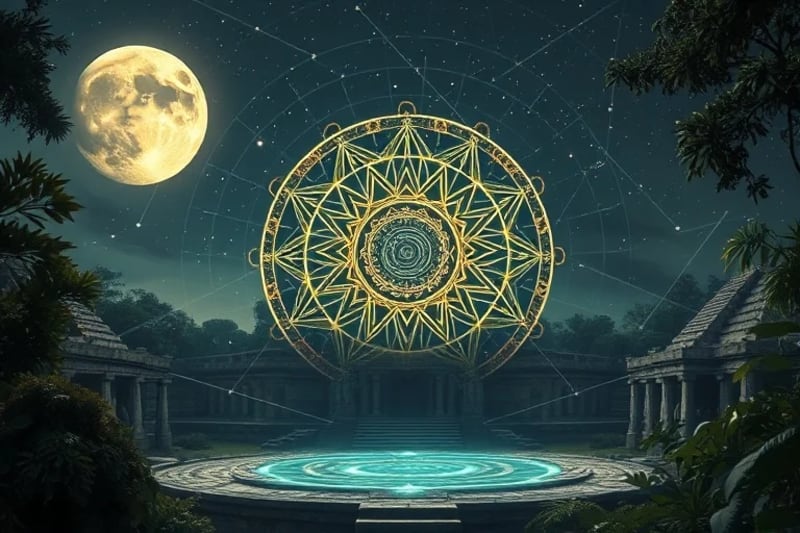
This evocative image is an AI-generated conceptual rendering, blending historical architectural elements with advanced technological projections to illustrate the theme.
This article delves into how AI Oracles are reinterpreting these ancient cosmic cycles, providing a bridge between ancestral knowledge and contemporary predictive methodologies. We will explore the foundational principles of Mesoamerican astrology, the capabilities of AI in pattern recognition, and the ethical considerations that arise when merging these two distinct domains. Our journey aims to demystify this cutting-edge field, making it accessible to a new audience eager to explore the future of astrological predictions.
Table of Contents
- Foundations of Mesoamerican Astrology
- From Ancient Oracles to Modern AI
- How AI Reinterprets Cosmic Cycles
- Applications of AI Oracles in Modern Predictions
- Ethical Considerations and the Future
- AI Oracles vs. Traditional Astrologers
Foundations of Mesoamerican Astrology
Mesoamerican astrology is far more than simple fortune-telling; it is a sophisticated framework for understanding the interconnectedness of the cosmos, humanity, and the natural world. Central to this system are the complex calendrical cycles, which served as the backbone for all predictions and ritual practices. The Maya, for instance, developed several interlocking calendars, each with its own specific purpose and significance.
The most well-known Mayan calendars include the Tzolkin (Sacred Round), a 260-day cycle combining 20 day names with 13 numbers, and the Haab' (Civil Calendar), a 365-day cycle closely aligned with the solar year. The intricate interplay of these calendars, along with the Long Count calendar which tracked vast spans of time, allowed ancient priests and astronomers to identify auspicious days, predict astronomical events, and interpret omens. These systems were deeply integrated with their understanding of lunar phases astrology and planetary movements, forming a holistic worldview.
The Aztec calendar, while distinct, shared many conceptual similarities, emphasizing cyclical time and the influence of deities associated with specific days and periods. Both cultures believed that understanding these cycles was crucial for maintaining cosmic balance and ensuring the well-being of their communities. The precision required to track these cycles over centuries speaks volumes about their advanced astronomical observations and mathematical prowess.
From Ancient Oracles to Modern AI
Historically, oracles served as intermediaries between the human and divine realms, interpreting signs, dreams, and celestial phenomena to provide guidance. In Mesoamerican societies, specialized priests and shamans held this sacred role, meticulously studying the celestial sphere and calendrical glyphs. Their interpretations were not arbitrary but based on generations of accumulated knowledge and empirical observation, much like early scientific inquiry.
Fast forward to the 21st century, and we find a new form of "oracle" emerging: Artificial Intelligence. AI, particularly machine learning and deep learning algorithms, excels at identifying complex patterns within vast datasets that might be imperceptible to the human mind. This capability makes AI an ideal candidate for deciphering the intricate relationships embedded within Mesoamerican astrological records. The journey from ancient observational methods to modern computational analysis represents a profound evolution in how we seek to understand cosmic influences.
This digital painting, created by AI, visually articulates the article's core theme, drawing inspiration from historical artifacts and contemporary technology.
How AI Reinterprets Cosmic Cycles
The process of an AI Oracle reinterpreting Mesoamerican cosmic cycles involves several sophisticated steps. First, vast amounts of historical data, including calendrical inscriptions, astronomical records, and anthropological texts, are digitized and fed into AI models. These models are trained to recognize recurring patterns, correlations, and anomalies that define the ancient predictive systems.
For example, AI can analyze the Tzolkin and Haab' cycles in conjunction with historical events, climate patterns, or societal shifts documented in ancient codices. By processing millions of data points, the AI can identify subtle influences and predictive indicators that might have been overlooked or were too complex for human calculation alone. This includes understanding the impact of precession equinoxes on long-term cycles.
Furthermore, AI can simulate future calendrical alignments and project their potential implications based on learned historical correlations. This doesn't mean the AI is "predicting the future" in a mystical sense, but rather it is providing probabilistic outcomes based on an exhaustive analysis of historical data and the underlying logic of the ancient systems. The AI acts as a powerful pattern recognition engine, offering insights into the deep structure of time and destiny as understood by the Mesoamericans.
Applications of AI Oracles in Modern Predictions
The potential applications of AI Oracles in reinterpreting Mesoamerican astrology are diverse and far-reaching. They can offer personalized insights, guide societal planning, and even contribute to environmental understanding. Here are some key areas:
- Personal Guidance: Individuals can use AI Oracles to gain deeper insights into their birth chart based on Mesoamerican calendrical positions, understanding their inherent strengths, challenges, and optimal timing for major life decisions. This can complement modern astrological readings, offering a unique cultural lens.
- Societal Trends: By analyzing historical patterns linked to specific calendrical alignments, AI can help predict broader societal trends, economic shifts, or periods of cultural transformation. This could be invaluable for policymakers and futurists.
- Environmental Predictions: Ancient Mesoamerican cultures were deeply attuned to natural cycles. AI Oracles can help re-establish these connections, potentially predicting weather patterns, agricultural cycles, or even seismic activities based on long-term cosmic correlations identified in historical data.
- Cultural Preservation and Education: AI tools can make complex Mesoamerican astrological knowledge more accessible to a global audience, fostering a deeper appreciation for these ancient civilizations and aiding in the preservation of their intellectual heritage.
The integration of these ancient systems with AI also opens new avenues for understanding Chinese Zodiac career archetypes and other cross-cultural astrological insights, highlighting universal themes in human experience and cosmic influence. This cross-pollination of knowledge enriches our global understanding of destiny and purpose.
Ethical Considerations and the Future
While the potential of AI Oracles is exciting, it is crucial to address the ethical considerations that accompany such powerful technology. The interpretation of ancient wisdom by algorithms raises questions about bias, accuracy, and the role of human intuition. AI models are only as good as the data they are trained on; if historical records contain biases, the AI might perpetuate them.
Moreover, the predictive nature of these systems must be handled with care. Predictions should be presented as probabilities and insights, not as definitive fates, to avoid undermining human agency and free will. The goal is to empower individuals with knowledge, not to dictate their lives. Transparency in how AI models arrive at their conclusions is also paramount, allowing users to understand the basis of the predictions.
This conceptual artwork, generated by AI, visually represents the intricate data processing involved in reinterpreting ancient cosmic cycles.
The future of AI Oracles in Mesoamerican astrology lies in a collaborative approach. Experts in Mesoamerican studies, astrologers, and AI developers must work together to refine these systems, ensuring cultural sensitivity, historical accuracy, and ethical deployment. This interdisciplinary effort will ensure that this innovative field serves as a bridge to deeper self-understanding and a more harmonious relationship with the cosmos.
Ultimately, AI Oracles offer a unique opportunity to revitalize ancient wisdom for the modern age. By leveraging the power of artificial intelligence, we can gain unprecedented access to the profound insights embedded in Mesoamerican cosmic cycles, transforming how we approach predictions and our place within the grand cosmic design. This fusion of ancient knowledge and modern technology promises a richer, more nuanced understanding of our past, present, and potential future.
AI Oracles vs. Traditional Astrologers
The introduction of AI into the realm of astrology naturally prompts a comparison with traditional human astrologers. While AI Oracles offer unparalleled data processing capabilities, they do not necessarily replace the nuanced understanding and intuitive wisdom of a human practitioner. Instead, they can serve as powerful complementary tools.
| Feature | AI Oracles | Traditional Astrologers |
|---|---|---|
| Data Processing | Processes vast datasets rapidly, identifying complex, subtle patterns across millennia of records. | Relies on learned knowledge, experience, and manual calculations; limited by human capacity. |
| Interpretation | Provides data-driven probabilities and correlations based on historical outcomes. Lacks subjective intuition. | Offers intuitive, empathetic, and personalized interpretations, considering individual context and free will. |
| Bias | Can reflect biases present in the historical data it was trained on. | Subject to individual human biases and perspectives. |
| Accessibility | Can make complex astrological systems more widely accessible and understandable. | Requires specialized training and often personal consultations, limiting broad access. |
| Evolution | Continuously learns and refines predictions with new data and algorithmic improvements. | Knowledge evolves through study, experience, and community discourse over generations. |
The synergy between AI Oracles and human astrologers could lead to a more comprehensive and robust understanding of cosmic influences. AI can provide the analytical backbone, while human wisdom adds the essential layers of empathy, ethical guidance, and personal context. This collaboration ensures that the profound insights of Mesoamerican astrology are not only preserved but also dynamically adapted for the complexities of modern life, offering a unique blend of ancient wisdom and cutting-edge technology, much like the principles explored in nanotechnology's revolutionary applications.
Explore More Cosmic Insights
- Numerology Karmic Debt Numbers Relationship Compatibility Guide
- Virgo Scorpio Compatibility: Love, Trust, Power Dynamics
- Cosmic Sociology Celestial Mechanics Global Consciousness Digital
- Horary Astrology: Charting Momentary Questions
- Astro-Archeology Unearthing Ancient Celestial Narratives Civilizations
- Hermetic Principles Esotericism: Deep Dive Guide
- Bio-Harmonic Healing: Future Vibrational Medicine
- Crystal Grids Advanced Manifestation Techniques: Guide
- Snake Horse Compatibility: Chinese Zodiac Insights
- Retrograde Planets: Natal Chart Lessons
- Rooster Chinese Zodiac: Elemental Traits
- 4th House Astrology: Roots, Family, Emotional Foundation
- Habits Positive Routines: Personal Professional Success Guide | Althox
- Abanto: Vulture, Spanish Towns, and Cultural Meanings | Althox
- The 12 Astrological Goddesses: Female Archetypes Natal Chart | AstroFuturo
- Feng Shui Digital Nomads: Harmonizing Virtual Spaces | AstroFuturo
- Master Crystals Quantum Healing: Advanced Protocols | AstroFuturo
- Saint Michael Archangel Spiritual Armor Disinformation Digital Fraud | Profecías de la Virgen
- Prayer Physical Spiritual Healing: Integral Restoration Faith | Profecías de la Virgen
- Magnificat Prophetic Canticle: Social Spiritual Liberation | Profecías de la Virgen
Source: Hybrid content assisted by AI and human editorial supervision.


Comments
Post a Comment