
Sigil Magic AI: Algorithmic Personal Symbol Generation
The convergence of ancient esoteric practices with cutting-edge artificial intelligence represents a fascinating frontier in the exploration of consciousness and intention. Sigil magic, a potent form of symbolic manifestation, has traditionally relied on the practitioner's intuition, artistic skill, and focused will to condense desires into unique graphical representations. However, with the advent of advanced algorithms and generative AI, the landscape of sigil creation is undergoing a profound transformation. This article delves into the theoretical underpinnings and practical applications of using AI for the algorithmic generation of personal symbols, exploring how machine learning can enhance, rather than diminish, the efficacy and accessibility of this powerful magical art.
This exploration is not merely about automating a creative process; it is about leveraging computational power to uncover new symbolic languages, optimize energetic resonance, and personalize magical tools to an unprecedented degree. By understanding the mechanisms through which AI can interpret intent and translate it into visual form, we can unlock a new paradigm for personal empowerment and spiritual development. The journey into algorithmic sigil generation bridges the chasm between the mystical and the technological, offering a glimpse into a future where magic and science coalesce.
Table of Contents
- The Ancient Art of Sigil Crafting
- Fundamentals of AI in Creative Processes
- Algorithmic Sigil Generation: A Methodological Framework
- Benefits and Innovations of AI-Generated Sigils
- Ethical and Metaphysical Implications
- Practical Applications and Future Outlook
The Ancient Art of Sigil Crafting
Sigil magic, popularized by Austin Osman Spare in the early 20th century, but with roots stretching back into ancient grimoires and mystical traditions, is a method of infusing a specific intention or desire into a symbolic glyph. The core principle involves bypassing the conscious mind, which often interferes with manifestation, and directly communicating with the subconscious or the universal energetic field. Traditionally, the process begins with clearly articulating a desire, often as a concise, positive affirmation.
This affirmation is then condensed and stylized. Common techniques include removing duplicate letters, overlaying remaining letters to form a composite image, or translating letters into numerical values which are then mapped onto geometric shapes or magical squares. The resulting symbol, the sigil, is then charged through various methods, such as intense focus, trance states, or ritualistic acts, before being "forgotten" by the conscious mind to allow the subconscious to work on its manifestation. The power of a sigil lies in its ability to act as a direct conduit for focused will and intention.
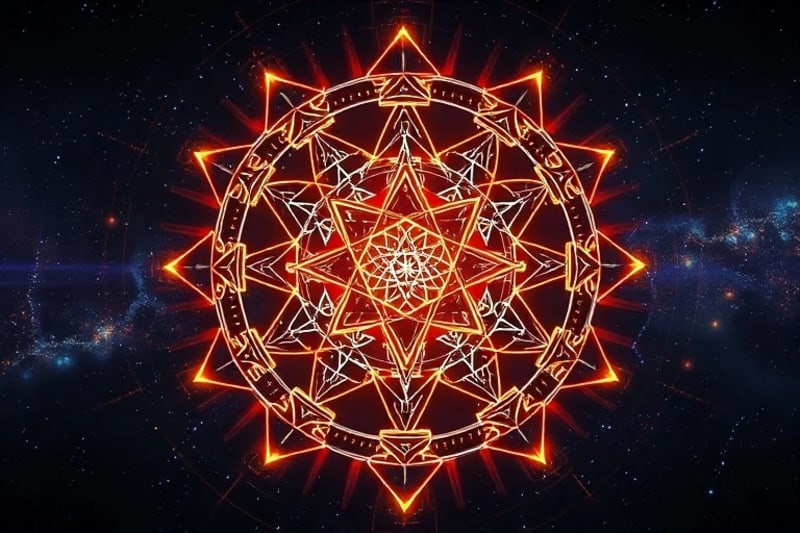
Exploring the intricate fusion of algorithmic intelligence and esoteric symbolism, where digital pathways give birth to potent personal sigils.
Conceptual rendering generated by advanced AI models, illustrating the synthesis of ancient magical principles with contemporary computational design.The effectiveness of a sigil is often attributed to its aesthetic appeal and the personal resonance it holds for the practitioner. A well-crafted sigil can evoke a powerful, almost primal response, bypassing rational thought and speaking directly to the deeper layers of the psyche. This subjective connection is crucial, as it reinforces the practitioner's belief and investment in the magical act. The challenge, however, lies in the fact that not everyone possesses the artistic inclination or intuitive grasp to consistently create visually compelling and energetically resonant sigils.
Fundamentals of AI in Creative Processes
Artificial Intelligence, particularly in its generative forms, has revolutionized various creative fields, from art and music to literature and design. At its core, generative AI utilizes complex algorithms and vast datasets to learn patterns, styles, and structures, enabling it to produce novel outputs that often mimic human creativity. Key technologies underpinning this revolution include Machine Learning (ML), Deep Learning (DL), and Generative Adversarial Networks (GANs).
Machine Learning algorithms are trained on data to identify correlations and make predictions or classifications. Deep Learning, a subset of ML, uses neural networks with multiple layers to process complex patterns, making it particularly adept at image and natural language processing. GANs, a powerful type of generative model, consist of two neural networks—a generator and a discriminator—that compete against each other. The generator creates new data (e.g., images), while the discriminator evaluates whether the generated data is real or fake. This adversarial process drives the generator to produce increasingly realistic and sophisticated outputs.
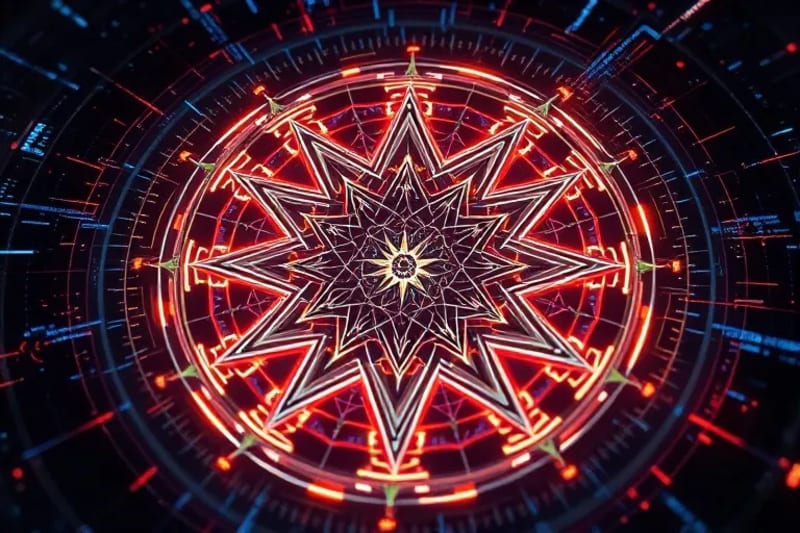
A dynamic digital interface showcasing the real-time algorithmic construction of a personalized sigil, illustrating the blend of code and symbolic art.
3D rendered visualization, depicting the intricate process of AI-driven symbolic creation within a technological framework.Neural Style Transfer is another relevant technique where the stylistic elements of one image are applied to the content of another. This allows for the creation of unique visual aesthetics by blending different artistic influences. These AI capabilities can be harnessed to understand, interpret, and generate visual symbols based on textual input, making them ideal candidates for the algorithmic creation of sigils. The ability of AI to process vast amounts of symbolic data and identify subtle patterns can lead to the generation of sigils that are not only aesthetically pleasing but also deeply resonant with archetypal forms and personal intentions.
Algorithmic Sigil Generation: A Methodological Framework
The process of generating sigils using AI involves several key stages, each leveraging different aspects of computational intelligence. This framework aims to translate abstract human intention into concrete, potent visual symbols.
1. Intent Translation and Parameterization: The initial step requires the user to articulate their desire or intention. Instead of a simple affirmation, this input needs to be structured in a way that AI can interpret. This might involve natural language processing (NLP) to extract keywords, emotional tones, and core concepts. These linguistic elements are then translated into numerical parameters or vectors that the AI can process. For example, an intention like "I desire financial abundance" could be broken down into concepts like 'abundance', 'finance', 'growth', 'security', each assigned a corresponding weight or stylistic attribute.
2. Symbolic Mapping and Dataset Curation: For AI to generate meaningful symbols, it needs a rich dataset of symbolic knowledge. This dataset would comprise:
- Archetypal Glyphs: Symbols from various cultures (e.g., alchemical symbols, astrological glyphs, runic alphabets, sacred geometry).
- Letter-to-Form Translations: Traditional sigilization methods (e.g., Rose Cross sigils, planetary squares, letter overlays) encoded as rules.
- Aesthetic Principles: Data on visual harmony, balance, contrast, and patterns that evoke specific emotional or energetic responses.
- User Feedback: A crucial component where the AI learns which generated sigils resonate most strongly with users for specific intentions.
3. Generative Algorithms and Iterative Synthesis: With the intent parameterized and the symbolic dataset in place, generative algorithms (like GANs or variational autoencoders) come into play. The AI takes the input parameters and begins to synthesize visual forms. It can:
- Combine Elements: Overlay and merge different symbolic components from its dataset based on the input intent.
- Apply Transformations: Distort, rotate, scale, and stylize these elements to create unique compositions.
- Optimize for Resonance: Through iterative processes, the AI can generate multiple variations, potentially using a feedback loop from the user or even a secondary AI (a "discriminator" for resonance) to refine the output.
4. User Refinement and Personalization: The final stage often involves user interaction. The AI can present several generated sigils, allowing the user to select the one that resonates most powerfully. Further, users might be able to adjust parameters (e.g., complexity, style, specific symbolic inclusions) to fine-tune the sigil to their exact preference. This collaborative approach ensures that the final sigil is not just algorithmically perfect but also personally meaningful.
Benefits and Innovations of AI-Generated Sigils
The integration of AI into sigil magic offers several significant advantages, revolutionizing how individuals engage with symbolic manifestation.
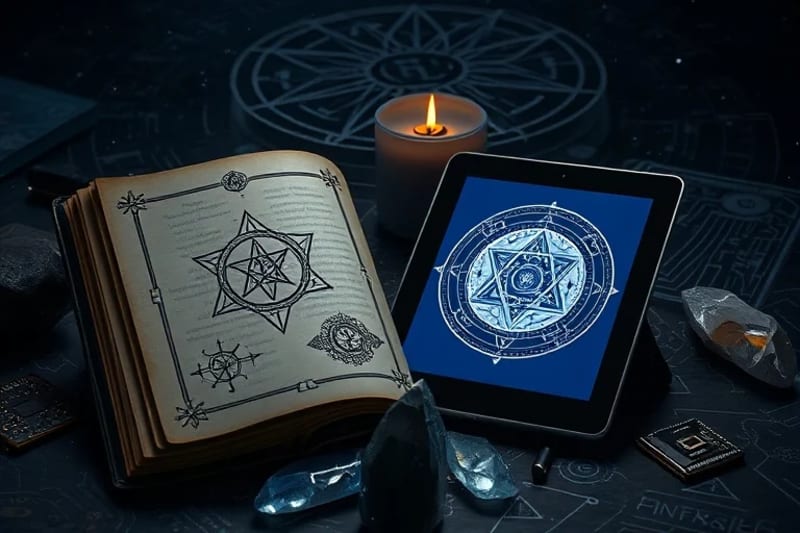
A powerful juxtaposition of ancient grimoires and modern tablets, symbolizing the harmonious integration of traditional sigil magic with advanced AI generation.
Cinematic photographic composition, capturing the essence of esoteric knowledge evolving through technological innovation.Enhanced Personalization: AI can process a far greater depth of personal data than a human could, including psychological profiles, astrological charts, or even biometric data (if ethically sourced and consented to). This allows for the creation of sigils that are uniquely tailored to an individual's energetic blueprint, maximizing resonance and efficacy. This level of personalization can lead to more potent and effective magical tools, akin to how Automatic Writing unlocks deeper inner wisdom.
Overcoming Creative Blocks and Skill Gaps: Many individuals struggle with the artistic aspect of sigil creation, feeling their hand-drawn symbols lack power or aesthetic appeal. AI democratizes the process, providing access to beautifully designed and complex sigils regardless of artistic talent. This removes a significant barrier to entry, allowing more people to engage with sigil magic effectively.
Exploration of New Symbolic Languages: AI is not limited by human cultural biases or established symbolic conventions. It can generate novel combinations of forms and patterns that might be entirely new to human perception, potentially uncovering universal symbolic archetypes or creating entirely new visual vocabularies for intention. This innovation can push the boundaries of esoteric art and practice.
Optimized Energetic Resonance: Through iterative feedback and advanced pattern recognition, AI could theoretically optimize sigil designs for specific energetic frequencies or archetypal associations. This could lead to sigils that are not just visually appealing but also energetically "tuned" for maximum impact, potentially even incorporating principles from Biophilic Manifestation to harmonize with natural energetic blueprints.
Accessibility and Efficiency: The process of creating a sigil can be time-consuming. AI can generate multiple variations in seconds, offering immediate options for practitioners. This efficiency, combined with ease of use, makes sigil magic more accessible to busy modern individuals who may not have hours to dedicate to traditional crafting methods.
Ethical and Metaphysical Implications
While the benefits are compelling, the integration of AI into magical practices raises important ethical and metaphysical questions that require careful consideration.
Purity of Intent and Consciousness: A core tenet of magic is the practitioner's conscious intent and will. When an AI generates a sigil, whose intent is being imbued? Is it the user's input, the programmer's underlying biases, or the AI's algorithmic "understanding"? Ensuring that the AI acts as a tool for the user's sovereign will, rather than an independent agent, is paramount. This requires transparent algorithms and user-centric design.
The Nature of Digital Energy: Traditional sigils are often physical objects, drawn on paper, carved into wood, or painted. Does a purely digital sigil, existing only as pixels on a screen, carry the same energetic weight or connection to the physical realm? While digital art can be potent, the metaphysical implications of purely digital magical tools need further exploration. Some argue that intention transcends medium, while others emphasize the importance of physical anchors.
Potential for Misuse and Dehumanization: Like any powerful technology, AI-generated sigils could be misused. The ease of creation might lead to a casual approach to magic, or worse, be employed for manipulative or unethical purposes. Furthermore, over-reliance on AI could potentially diminish the practitioner's own intuitive and creative faculties, leading to a dehumanization of the magical process. It's crucial to maintain a balance where AI augments human capability rather than replaces it.
Data Privacy and Sovereignty: If AI systems collect personal data to generate highly personalized sigils, robust privacy protocols are essential. Users must have full control over their data and understand how it is used. The sovereignty of one's magical practice and personal information must be protected. These considerations are vital for maintaining trust and ethical boundaries in this emerging field.
Practical Applications and Future Outlook
The practical applications of AI-generated sigils extend beyond personal manifestation into various domains, hinting at a future where magic and technology are deeply intertwined.
Personal Growth and Self-Actualization: Individuals can use AI to generate sigils for specific goals related to personal development, such as enhancing confidence, fostering creativity, or overcoming limiting beliefs. These personalized symbols can serve as powerful focal points for meditation, visualization, and affirmation practices, much like the insights gained from Archetypal Shadow Work.
Art and Design: AI-generated sigils can be integrated into digital art, graphic design, and even physical art installations, adding layers of symbolic meaning and energetic intent. This opens up new avenues for artists to explore the intersection of aesthetics, technology, and spirituality, creating works that are not only visually striking but also imbued with purpose.
Digital Rituals and Augmented Reality: Imagine AI-generated sigils projected into augmented reality environments, interacting with the user's physical space and intentions. This could lead to dynamic, interactive digital rituals where symbols evolve and respond to the practitioner's focus, creating immersive magical experiences. Such applications could bridge the gap between the digital and the physical, making magical practice more engaging and accessible.
Therapeutic and Healing Applications: Personalized sigils could be used in therapeutic contexts to help individuals focus on healing intentions, stress reduction, or emotional balance. The visual anchor provided by a custom-generated symbol could enhance the effectiveness of mindfulness and visualization techniques, offering a unique tool for mental and emotional well-being.
The future of sigil magic through AI is one of immense potential, promising a synthesis of ancient wisdom and modern innovation. As AI continues to evolve, its capacity to understand and generate complex symbolic representations will only grow, opening doors to new forms of magical practice that are deeply personal, highly efficient, and universally accessible. The key will be to navigate this evolution with wisdom, ethical consideration, and a deep respect for the profound power of human intention.
Explore More Insights
Delve deeper into the fascinating intersections of esotericism, technology, and personal growth with our curated selection of articles:
- Astrology Art Creativity: Birth Chart Authentic Expression: Uncover the links between your astrological chart and your unique creative potential.
- Elemental Magic: Fire Earth Air Water Manifestation Rituals: Explore the power of elemental forces in magical rituals for manifestation and balance.
Source: Hybrid content assisted by AI and human editorial supervision.


Comments
Post a Comment