
Tarot Feng Shui Fusion: Harmonizing Home Energy
In an increasingly complex world, the desire for sanctuary and harmony within our living spaces has never been more profound. Many spiritual and esoteric traditions offer pathways to achieve this balance, with Tarot and Feng Shui standing out as powerful, yet often distinct, systems. This article delves into the innovative concept of integrating Tarot insights with Feng Shui principles, creating a synergistic approach to harmonizing home energy through elemental balance and sacred geometry.
By fusing these ancient wisdom traditions, we unlock a deeper understanding of our environment and its profound impact on our well-being. This unique methodology allows for a more intuitive and personalized approach to space clearing, energy alignment, and intentional living, transforming a house into a true reflection of one's inner landscape and aspirations. It’s about creating a living space that not only looks good but feels right, supporting your spiritual and personal growth.
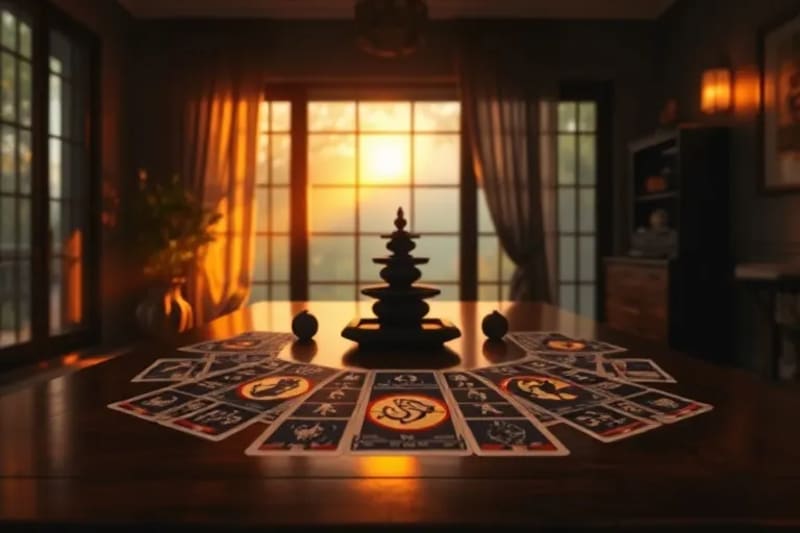 An intuitive approach to home energy: blending Tarot readings with Feng Shui principles to create a deeply personal and harmonious living space.
Table of Contents
- Foundational Principles: Tarot and Feng Shui
- The Synergy: Bridging Two Worlds
- Elemental Correspondence: Tarot Suits and Feng Shui Elements
- Sacred Geometry and Spatial Harmony
- Practical Application Guide: A Step-by-Step Fusion
- Benefits of This Holistic Fusion
Foundational Principles: Tarot and Feng Shui
To effectively merge these two disciplines, it's crucial to understand their individual core tenets. Both systems, though originating from different cultural contexts, share a common goal: to bring balance and insight into one's life.
Understanding Tarot
Tarot is a deck of 78 cards, each rich with symbolic imagery and archetypal meanings. It serves as a powerful tool for self-reflection, spiritual guidance, and understanding the energetic currents influencing one's life. A Tarot reading can illuminate hidden dynamics, offering perspectives on challenges, opportunities, and personal growth. It taps into the collective unconscious, providing intuitive insights that can guide decision-making and foster deeper self-awareness.
- Major Arcana: Represents significant life lessons, karmic influences, and overarching themes.
- Minor Arcana: Reflects daily life experiences, practical challenges, and emotional states.
- Court Cards: Symbolize personalities, roles, and ways of interacting with the world.
Understanding Feng Shui
Feng Shui, an ancient Chinese art and science, focuses on arranging living spaces to optimize the flow of "Qi" (life force energy). The goal is to create environments that support health, wealth, relationships, and overall well-being. It considers the orientation of buildings, the placement of furniture, colors, materials, and the presence of natural elements to achieve energetic balance. The Bagua map, a key tool in Feng Shui, divides a space into nine areas corresponding to different life aspects.
- Qi (Chi): The vital life force energy that flows through everything.
- Five Elements: Wood, Fire, Earth, Metal, and Water, each with specific qualities and interactions.
- Yin and Yang: The balance of complementary opposites (e.g., light/dark, active/passive).
- Bagua Map: A grid used to map areas of a home to life aspects like career, wealth, health, and relationships.
The Synergy: Bridging Two Worlds
The true power of this fusion lies in their complementary nature. Tarot provides the diagnostic insight into the energetic state of an individual or a situation, while Feng Shui offers the practical tools to adjust the external environment to support desired internal shifts. For instance, a Tarot reading might reveal a need for more nurturing energy, which Feng Shui can then address by suggesting specific colors, materials, or placements in the home.
Conversely, understanding the energetic layout of a home through Feng Shui can provide context for Tarot readings. If a particular area of the home (e.g., the wealth corner) is stagnant, a Tarot reading might reflect financial blockages. By addressing the physical space, one can then shift the energetic undercurrents influencing personal circumstances. This creates a feedback loop where inner and outer worlds continually inform and support each other.
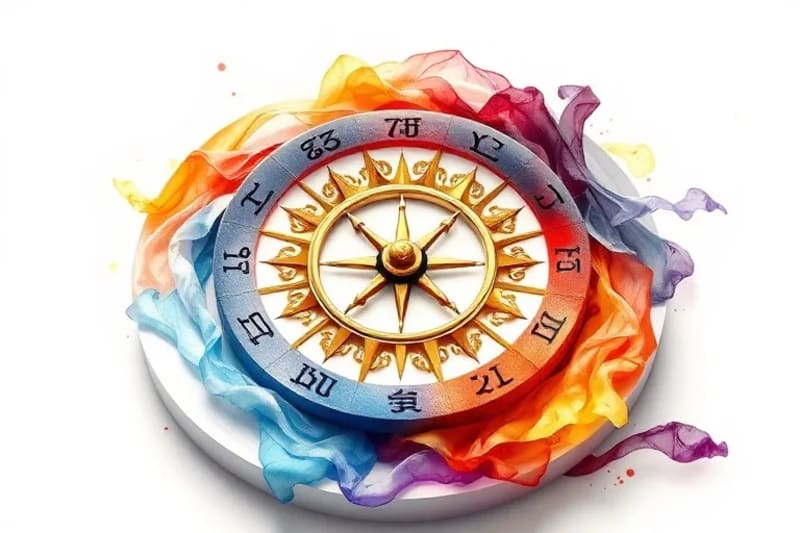 The harmonious interplay of Feng Shui elements and Tarot archetypes, creating a visual representation of their energetic correspondence.
Elemental Correspondence: Tarot Suits and Feng Shui Elements
A foundational bridge between Tarot and Feng Shui is their shared emphasis on elemental energies. Both systems utilize elements to describe different aspects of life and energy. Establishing these correspondences allows for a direct translation of insights from one system to the other.
| Tarot Suit | Associated Element (Western Esotericism) | Feng Shui Element Correspondence | Keywords & Qualities |
|---|---|---|---|
| Wands | Fire | Fire | Inspiration, passion, creativity, action, willpower, growth, expansion. |
| Cups | Water | Water | Emotions, intuition, relationships, compassion, healing, flow, reflection. |
| Swords | Air | Metal (for clarity, structure), Wood (for growth of ideas) | Intellect, communication, truth, challenges, logic, clarity, discernment. |
| Pentacles | Earth | Earth | Material world, finances, stability, grounding, nature, abundance, security. |
This elemental mapping is crucial. If a Tarot reading indicates an imbalance in the suit of Wands (e.g., lack of motivation or burnout), it suggests an imbalance in the Fire element. Feng Shui can then be used to introduce or balance the Fire element in the relevant areas of the home, perhaps by adding red accents, candles, or triangular shapes. This direct correspondence makes the integration highly practical.
Sacred Geometry and Spatial Harmony
Beyond elements, both Tarot and Feng Shui implicitly or explicitly utilize principles of sacred geometry. Sacred geometry refers to the universal patterns and forms that underlie all creation, believed to hold energetic and spiritual significance. The structure of a Tarot deck, the layout of a Mandala, or the proportions in classical architecture all reflect these timeless patterns. In Feng Shui, the Bagua map itself is a geometric representation of energetic zones, and the harmonious arrangement of objects often adheres to principles of balance and proportion that resonate with sacred geometry.
Incorporating sacred geometry consciously can amplify the energetic harmony of a space. This can involve using patterns like the Flower of Life, Metatron's Cube, or the Seed of Life in decor, or simply ensuring that the furniture arrangement creates balanced visual lines and clear energetic pathways. When a Tarot reading points to a need for greater structure or cosmic connection, integrating specific geometric patterns can provide a powerful energetic anchor. Explore more about visualizing intentions through digital creation and how it can aid in manifesting desired energetic patterns in your space, by reading about AI Art Manifestation: Visualizing Intentions Digital Creation.
Practical Application Guide: A Step-by-Step Fusion
Here’s how to practically merge Tarot and Feng Shui to harmonize your home energy:
Step 1: Tarot Reading for Home Energy Assessment
Perform a dedicated Tarot spread for your home. You can use a general Celtic Cross spread, asking "What is the current energy of my home?" or create a custom spread where each card position corresponds to a room or a Bagua area. For example, one card for the "Wealth Corner," one for "Relationships," etc. Pay attention to recurring themes, challenging cards (e.g., Tower, Swords), and uplifting cards (e.g., Star, Sun).
Step 2: Interpreting Tarot for Feng Shui Insights
Translate the Tarot insights into Feng Shui language using the elemental correspondences:
- Wands (Fire): If Wands are blocked or reversed, you might need more inspiration, passion, or energy. Feng Shui solutions could involve adding vibrant reds, candles, or lively artwork.
- Cups (Water): If Cups indicate emotional turmoil or stagnation, your home might need more flow, nurturing, or emotional cleansing. Feng Shui remedies include water features, blues, wavy patterns, or decluttering emotional items.
- Swords (Air/Metal): If Swords suggest mental clutter, conflict, or lack of clarity, your space might benefit from organization, clear pathways, or metallic elements for focus. Sharp, clear lines and decluttering are key.
- Pentacles (Earth): If Pentacles show instability or lack of abundance, your home might need more grounding, security, or connection to nature. Feng Shui solutions include earthy tones, plants, sturdy furniture, and ensuring the wealth corner is activated.
Step 3: Implementing Feng Shui Solutions based on Tarot Guidance
Based on your interpretation, implement specific Feng Shui cures. For example, if the "Relationship" area of your home (according to the Bagua) yielded a challenging Cups card, you might introduce pairs of objects, soft lighting, or colors associated with love and partnership, while ensuring clutter is removed from that zone. For a deeper understanding of space harmonization, consult resources on Feng Shui Principles Harmonizing Home Cosmic Energy Guide.
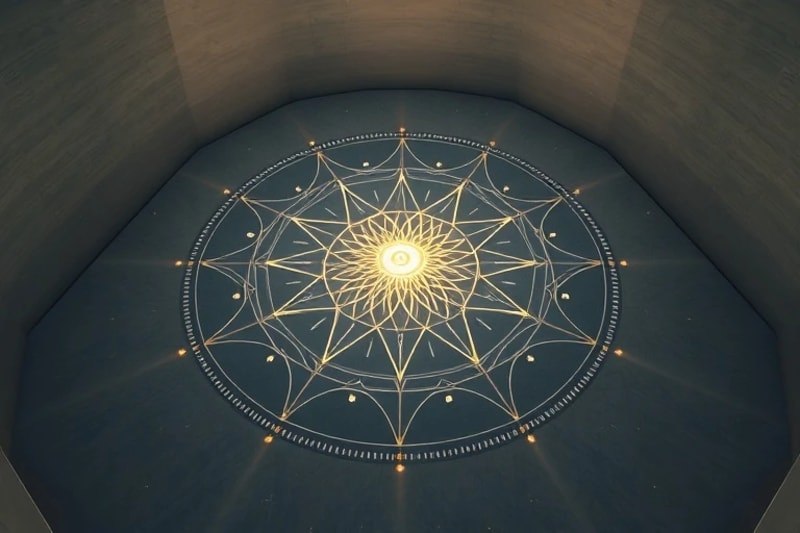 A conceptual visualization of harmonized home energy, where sacred geometry guides the flow and balance of the living space.
Step 4: Enhancing Tarot Practice with Feng Shui
Create a dedicated space for your Tarot readings that is energetically aligned using Feng Shui principles. This could be a quiet corner with good lighting, free from clutter, perhaps with elements that support intuition (Water element) or grounding (Earth element). This sacred space will enhance your connection to the cards and the clarity of your readings. For selecting and interpreting your personal guide, understanding Oracle Decks: Choosing & Interpreting Your Personal Guide can also be beneficial.
Benefits of This Holistic Fusion
The integration of Tarot and Feng Shui offers a multitude of benefits, creating a truly holistic approach to personal and environmental well-being:
- Deeper Self-Understanding: Tarot reveals inner dynamics, while Feng Shui provides a tangible way to support these insights in your physical space.
- Enhanced Intuition: A harmonized environment can foster greater clarity and receptivity, improving your intuitive abilities and Tarot readings.
- Personalized Space: Instead of generic Feng Shui advice, Tarot helps tailor adjustments to your unique energetic needs and current life circumstances.
- Holistic Well-being: By aligning your inner world with your outer environment, you create a powerful synergy that supports mental, emotional, spiritual, and physical health.
- Intentional Living: Every adjustment becomes a conscious act, imbuing your home with intention and purpose, transforming it into a sacred space that actively supports your goals and aspirations.
In conclusion, the fusion of Tarot and Feng Shui is more than just combining two systems; it's about creating a dynamic dialogue between your inner wisdom and your external environment. This powerful synergy empowers you to craft a living space that is not only aesthetically pleasing but also deeply supportive of your journey, fostering balance, harmony, and well-being in every corner of your life.
Explore More Related Content
- Astro-Linguistics Sigil Magic: Unleashing Power Words Manifestation
- Chrono-Astrology Ancestral Echoes Navigating Personal Time Cycles
- Fixed Stars: Electional Astrology for Success | StarPluto
- Advanced Synastry Intercepted Houses: Relationship Blockages Decoded | StarPluto
- Chinese Zodiac Triangles: Unveiling Deep Harmonious Groups | StarPluto
- Planetary Dignities: Electional Astrology, Synastry Mastery
- Filosofía Kintsugi: Belleza Imperfección Resiliencia Vida | Althox
- Astrología Educación: Diseñando Aprendizaje Ideal Carta Natal | AstroFuturo
Source: Hybrid content assisted by AI and human editorial supervision.


Comments
Post a Comment